TL;DR
Imagine this: after years of relentless hard work, late nights, and personal sacrifice, your business is finally thriving. It's more than a job; it's your passion, your legacy, and the financial bedrock for your family. A serious diagnosis means you can't work for months, maybe even years.
Key takeaways
- Immediate Income Loss (illustrative): Their personal income of 90,000 stops. With no corporate sick pay, the pressure on household finances is immediate.
- Business Stagnation: Without the owner to lead projects and win new clients, revenue plummets. Fixed costs like rent, software licences, and supplier contracts continue to drain cash reserves.
- Depleting Reserves & Incurring Debt: The business's "rainy day" fund is quickly exhausted covering overheads. Business loans or credit cards are used to stay afloat, adding debt and interest payments to the burden.
- Business Collapse (illustrative): After 6-12 months, the business may no longer be viable. It's forced to liquidate, making its 5 employees redundant. The business, once valued at 750,000, is now worthless.
- Personal Wealth Erosion: To cover personal bills and business debts with personal guarantees, the owner is forced to drain their life savings, remortgage their home, and halt pension contributions.
UK 2026 Shock New Data Reveals Over 1 in 3 UK Small Business Owners & Self
UK 2025 Shock New Data Reveals Over 1 in 3 UK Small Business Owners
Imagine this: after years of relentless hard work, late nights, and personal sacrifice, your business is finally thriving. It's more than a job; it's your passion, your legacy, and the financial bedrock for your family. Now, imagine a single phone call from your doctor changes everything. A serious diagnosis means you can't work for months, maybe even years. What happens to your business? Your income? Your home?
This isn't a rare hypothetical. New analysis for 2025 reveals a terrifying reality: more than one in three UK small business owners and self-employed professionals will face a health crisis so severe it threatens their very livelihood. This isn't just about a few missed weeks of work. It’s a cascade of financial devastation that can trigger a lifetime burden exceeding a staggering £4.3 million in collapsed business value, lost personal income, and decimated family wealth. (illustrative estimate)
For the 5.5 million small businesses that form the backbone of the UK economy, the greatest risk isn't market competition or a recession—it's the unforeseen health crisis that strikes the person at the helm. You are the business's most critical asset. Without you, the engine stops.
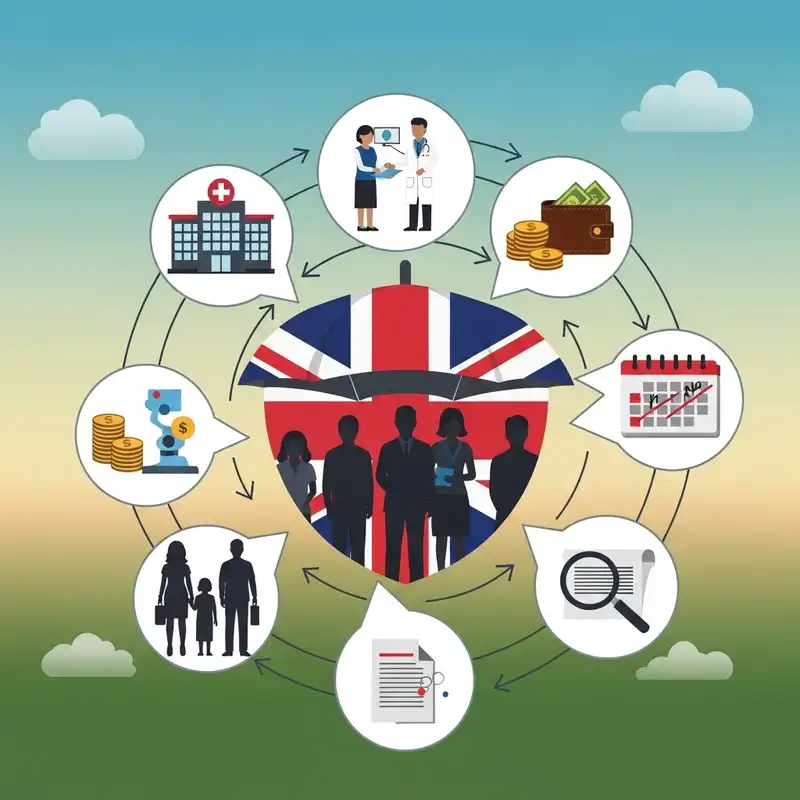
But what if there was an unseen force working in the background, a financial shield ready to deploy the moment crisis hits? A strategy that separates the businesses that crumble from those that emerge resilient and ready for future prosperity? This is the power of a robust Life, Critical Illness, and Income Protection (LCIIP) plan. This guide will expose the true scale of the risk and reveal how this essential protection is not an expense, but the most crucial investment you can make in your business and your future.
The £4.3 Million Domino Effect: How a Health Crisis Destroys More Than Just Your Health
When a business owner suffers a serious illness or injury, the financial consequences don't just unfold—they multiply. It’s a domino effect that can dismantle a lifetime of work with shocking speed. The £4.3 million figure isn't hyperbole; it represents a plausible, catastrophic chain reaction. Let's deconstruct it. (illustrative estimate)
Consider a 45-year-old owner of a successful small consultancy turning over £500,000, drawing a salary and dividends of £90,000 per year. A sudden heart attack renders them unable to work. (illustrative estimate)
The Financial Cascade Unfolds:
- Immediate Income Loss (illustrative): Their personal income of £90,000 stops. With no corporate sick pay, the pressure on household finances is immediate.
- Business Stagnation: Without the owner to lead projects and win new clients, revenue plummets. Fixed costs like rent, software licences, and supplier contracts continue to drain cash reserves.
- Depleting Reserves & Incurring Debt: The business's "rainy day" fund is quickly exhausted covering overheads. Business loans or credit cards are used to stay afloat, adding debt and interest payments to the burden.
- Business Collapse (illustrative): After 6-12 months, the business may no longer be viable. It's forced to liquidate, making its 5 employees redundant. The business, once valued at £750,000, is now worthless.
- Personal Wealth Erosion: To cover personal bills and business debts with personal guarantees, the owner is forced to drain their life savings, remortgage their home, and halt pension contributions.
Visualising the Lifetime Financial Burden
The total cost isn't just the value of the failed business. It’s a multi-layered financial catastrophe that affects the owner, their family, and their employees.
| Component of Financial Burden | Estimated Lifetime Cost | Description |
|---|---|---|
| Lost Personal Income | £1,900,000 | £90,000 per year for 20 years until retirement. |
| Lost Business Value | £750,000 | The complete collapse of a previously profitable business. |
| Lost Pension Growth | £450,000 | The devastating impact of 20 years of missed contributions and compound growth. |
| Employee Job Losses (Wider Impact) | £1,250,000 | The combined lost lifetime earnings of 5 redundant employees (£250k each). |
| Debt & Wealth Erosion | £100,000+ | Costs from interest on new debt, remortgaging fees, and selling assets at a loss. |
| Total Lifetime Burden | £4,350,000 | A catastrophic figure representing the total economic destruction. |
This scenario starkly illustrates how a personal health crisis becomes a widespread economic disaster. It’s a burden that shatters not just one life, but many.
The "It Won't Happen to Me" Myth: 2026 UK Health Statistics You Cannot Ignore
The single biggest barrier to protecting a business is optimism bias—the belief that serious illness only happens to other people. The data for 2025 paints a very different, and much more sobering, picture.
The "1 in 3" risk isn't based on a single condition. It's the cumulative probability of experiencing a life-altering health event during your working years. (illustrative estimate)
Key Health Risks for Working-Age Adults in the UK:
- Cancer (illustrative): According to Cancer Research UK, 1 in 2 people in the UK will be diagnosed with some form of cancer during their lifetime. A significant portion of these diagnoses occur during prime working years.
- Heart & Circulatory Diseases: The British Heart Foundation reports that there are around 7.6 million people living with these conditions in the UK. Every five minutes, someone is admitted to a UK hospital due to a heart attack.
- Strokes: The Stroke Association confirms there are over 100,000 strokes in the UK each year, with a quarter of them happening to people of working age. 8 million people** were out of work due to long-term sickness, with "depression, bad nerves or anxiety" being the most cited reason. Entrepreneurs are particularly vulnerable to burnout and severe stress.
- Musculoskeletal (MSK) Issues: Conditions affecting the back, neck, and joints are a leading cause of long-term work absence, impacting over 20 million people in the UK.
The Stark Probability
When you combine the probabilities of these common conditions, the chance of being unable to work for an extended period (e.g., 3 months or more) becomes alarmingly high.
| Illness / Condition | Stark UK Statistic (2025 Data) | Impact on a Business Owner |
|---|---|---|
| Cancer | 1 in 2 lifetime risk. | Extended time off for treatment and recovery. |
| Heart Attack | One hospital admission every 5 minutes. | Sudden inability to work, potential long-term lifestyle changes. |
| Stroke | 1 in 4 strokes occur in working-age people. | Can cause severe physical and cognitive impairment. |
| Severe Mental Health | Most common reason for long-term sickness. | Prevents clear decision-making and client management. |
Believing "it won't happen to you" is not a business strategy. It's a gamble with the highest possible stakes: your business, your home, and your family's future.
Your LCIIP Shield: A Three-Pronged Defence for Business Owners
Fortunately, there is a powerful and proven way to neutralise this threat. A comprehensive Life, Critical Illness, and Income Protection (LCIIP) strategy acts as your financial first responder, deploying funds precisely when you need them most. It’s not one single product, but a combination of three distinct shields.
1. Income Protection (IP): The Monthly Lifeline
This is arguably the most fundamental protection for any self-employed individual or small business owner.
- What it is: A policy that pays you a regular, potentially tax-efficient monthly income if you're unable to work due to any illness or injury that prevents you from doing your job.
- How it helps: It replaces your lost salary or dividends. This allows you to continue paying your personal bills—mortgage, utilities, food—without draining your savings or putting pressure on your business. It buys you the most precious commodity: time to recover without financial stress.
- Key Consideration - "Own Occupation" Definition: This is critical. An "own occupation" policy may pay out if you are unable to perform your specific job (e.g., a dentist with a hand injury). Cheaper policies might only pay if you can't do any job, offering far less protection.
2. Critical Illness Cover (CIC): The Lump Sum Saviour
This cover is designed for a different, but equally vital, purpose.
- What it is: A policy that may pay out a one-off, potentially tax-efficient lump sum on the diagnosis of a specific, serious condition listed in the policy (e.g., most cancers, heart attack, stroke, multiple sclerosis).
- How it helps: The lump sum is yours to use as you see fit. For a business owner, its power is transformative. You could:
- Inject cash into the business to hire a temporary manager or replacement.
- Clear business debts or loans that have personal guarantees.
- Adapt your home or workplace for a disability.
- Pay for private medical treatments to speed up recovery.
- Simply create a financial buffer to eliminate money worries and focus on getting better.
3. Life Insurance: The Ultimate Legacy Protector
This provides the foundational peace of mind that your family and business are secure if the worst should happen.
- What it is: A policy that may pay out a lump sum upon your death.
- How it helps:
- For your Family: It may pay off the mortgage, cover funeral costs, and provide a fund for your family to live on, ensuring they are not left in financial hardship.
- For your Business: It can be structured to clear any outstanding business loans. Crucially, it may fund a 'buy and sell' agreement, providing your business partner(s) with the cash to buy your shares from your estate, ensuring a smooth transition of ownership and preventing a forced sale.
Comparing Your Three Shields
| Feature | Income Protection | Critical Illness Cover | Life Insurance |
|---|---|---|---|
| Claim payment Trigger | Inability to work due to illness/injury | Diagnosis of a specified serious illness | Death (or terminal illness) |
| Claim payment Type | Regular Monthly Income | One-off Potentially tax-efficient Lump Sum | One-off Potentially tax-efficient Lump Sum |
| Primary Purpose | Replaces lost personal earnings | Provides a capital injection for flexibility | Protects family & business legacy |
| Best For | Covering ongoing living costs | Clearing debts, funding replacements | Paying off mortgage, funding buyouts |
Together, these three policies form a comprehensive shield. Income Protection keeps the lights on at home, Critical Illness Cover saves the business, and Life Insurance protects your ultimate legacy.
Weaving Your Protection Web: Practical Scenarios & Real-World Examples
Theory is one thing; seeing how protection works in the real world is another. Let's explore how an LCIIP strategy can change the outcome for business owners.
Scenario 1: Amelia, the Self-Employed Architect
- The Crisis: Amelia, 42, is diagnosed with breast cancer. She needs six months of intensive treatment followed by a long recovery.
- Without Cover: Her income stops instantly. She can't service her existing clients, who eventually go elsewhere. She burns through her £20,000 savings in four months just to cover her mortgage and bills. The stress of her financial situation severely hampers her recovery.
- With Her LCIIP Shield:
- Income Protection: After a 3-month deferred period, her policy starts paying her £3,500 a month, covering her essential outgoings.
- Critical Illness Cover (illustrative): Her £75,000 lump sum claim payment is a game-changer. She uses £15,000 to hire a freelance architect to keep her key projects moving, preserving her client relationships. The remaining £60,000 removes all financial stress, allowing her to focus entirely on getting well.
Scenario 2: Ben and Tom, Directors of a Small Tech Firm
- The Crisis (illustrative): Ben, 50, has a sudden, fatal heart attack. He and Tom own the company 50/50. The business has a £150,000 director's loan that Ben personally guaranteed.
- Without Cover (illustrative): It’s a catastrophe. Ben's wife inherits his shares but has no tech experience and needs money. The bank calls in the £150,000 loan. Tom doesn't have the personal funds to buy out Ben's shares or clear the loan. The business, once valued at £1 million, faces a forced sale or insolvency.
- With Their LCIIP Shield (Business Protection):
- Key Person Life Insurance (illustrative): The company had a £150,000 policy on Ben. This pays directly to the business, instantly clearing the bank loan.
- Shareholder Protection (illustrative): Ben and Tom had taken out life policies on each other, written into trust alongside a shareholder agreement. Tom receives a £500,000 claim payment, the agreed value of Ben's shares. He uses this to buy the shares from Ben's wife, providing her with financial security and giving him full control of the business. The company survives and thrives.
Choosing the Right Shield: Why Regulated Guidance from WeCovr is Non-Negotiable
As a business owner, you wouldn't handle your own corporate law or advanced accounting. Arranging your financial protection is no different. The UK protection market is complex, and a small mistake in the policy details can be the difference between a claim being paid or declined.
This is where a specialist broker becomes your most valuable partner. WeCovr specialists and broker partners understand this market. We understand the specific nuances and risks faced by company directors and the self-employed.
Why DIY Insurance is a False Economy:
- Incorrect Definitions: Choosing a cheaper policy with an "any occupation" definition could mean you get no claim payment, even if you can't do your highly skilled job.
- Under-insurance: It's easy to underestimate the amount of cover needed to truly protect your business and family.
- No Trust Planning: Placing a life insurance policy in trust is a simple step that ensures the money is paid out quickly and outside of your estate for Inheritance Tax purposes. Most people don't know how to do this correctly.
The WeCovr Advantage:
A WeCovr specialist or trusted broker partner can act as your professional guide, navigating the available market to build a protection plan that is tailored to you.
- Independent & Comprehensive: We are not tied to any single insurer. We compare policies from all the major UK providers, including Aviva, Legal & General, Royal London, Vitality, and Zurich, to find an appropriate level of cover at the most competitive price.
- Expertise for Business Owners: WeCovr specialises in the complex needs of entrepreneurs, including Key Person cover, Shareholder Protection, and tax-efficient Relevant Life Policies.
- Beyond the Policy: We believe in a holistic approach to our clients' well-being. That's why every WeCovr client receives complimentary access to CalorieHero, our exclusive AI-powered nutrition app. We want to help you stay healthy, whilst ensuring you're completely protected if you're not.
Your business is too important to leave its protection to guesswork. A conversation with an expert can uncover risks you haven't considered and solutions you didn't know existed.
Frequently Asked Questions (FAQ) for the Savvy Business Owner
How much cover do I actually need?
This is highly personal, but a good starting point is to calculate your:
- Income Protection: Aim to cover 50-65% of your gross pre-tax income.
- Critical Illness: Cover your major debts (mortgage, business loans), plus 1-2 years of income to give you a cushion.
- Life Insurance: Cover all debts, plus a lump sum for your dependents to maintain their lifestyle. An adviser can perform a detailed 'needs analysis' for you.
Isn't this kind of insurance really expensive?
Think of it as a non-negotiable business overhead, like professional indemnity or public liability insurance. The cost of a comprehensive plan is often less than a monthly phone contract or a few client lunches. For a healthy 40-year-old, a robust income protection policy might cost £40-£60 per month. The cost of not having it could be millions. (illustrative estimate)
Do insurers actually pay out? I've heard horror stories.
This is a persistent but outdated myth. The latest data from the Association of British Insurers (ABI) shows that in 2023, the industry paid out over 97% of all protection claims, totalling more than £6.8 billion. Claims are typically only declined due to non-disclosure (not being truthful on the application) or the condition not meeting the policy definition—reasons that regulated guidance helps to eliminate.
What if I have a pre-existing medical condition?
You can still get cover. It's vital that you declare any and all conditions on your application. The insurer might apply a "loading" (increase the premium) or place an "exclusion" (e.g., they won't cover claims related to a specific back problem you have). A WeCovr specialist or trusted broker partner can help you navigate this and find the insurer most sympathetic to your condition.
What's the difference between a personal policy and a business one?
- Personal policies (like the ones described above) are owned and paid for by you personally. The claim payment comes to you or your family.
- Business Protection policies (Key Person, Shareholder Protection) are owned and paid for by the business. The claim payment goes to the business to ensure continuity. A Relevant Life Policy is a tax-efficient way for a company to provide life insurance for a director, with premiums often allowable as a business expense.
From Vulnerable Entrepreneur to Resilient Leader
The path of an entrepreneur is one of calculated risk. You take risks on new ideas, new markets, and new people. But betting your entire life's work on your continued good health is not a calculated risk—it's a blind gamble.
The data is clear: a serious health crisis is a probable event, not a remote possibility. The financial consequences are not just damaging; they are catastrophic, capable of creating a multi-million-pound fallout that destroys your business, your personal wealth, and your family's security.
But this vulnerability can be transformed into a source of strength. A robust LCIIP shield is the unseen engine of business resilience. It's the silent partner that guarantees cash flow when you have none, injects capital when the business is bleeding, and secures your legacy when you're no longer there to protect it.
Taking action is not a sign of pessimism. It is the ultimate act of a strategic leader—protecting your assets, mitigating your greatest risks, and building a foundation so strong that it can withstand any storm. Don't wait for the diagnosis. Don't wait for the crisis to hit. Take control of your future today and forge the shield that will guarantee your prosperity for years to come.
Sources
- Office for National Statistics (ONS): Mortality and population data.
- Association of British Insurers (ABI): Life and protection market publications.
- MoneyHelper (MaPS): Consumer guidance on life insurance.
- NHS: Health information and screening guidance.
Important Information and Risks
No advice: This article is for general information only. It is not financial, legal, insurance, or tax advice, and it is not a personal recommendation. WeCovr does not assess your individual circumstances or recommend a specific product through this article.
Policy exclusions and underwriting: Insurance policies, including life insurance, private medical insurance, critical illness cover, and income protection, are subject to insurer underwriting, eligibility, acceptance criteria, terms, conditions, limits, and exclusions. Pre-existing medical conditions may be excluded, restricted, or accepted on special terms unless an insurer confirms otherwise in writing.
Tax treatment: References to tax treatment, HMRC rules, or business reliefs are based on current UK legislation and guidance, which can change. Tax treatment depends on your personal or business circumstances and may differ from examples in this article.
Before you buy: Always read the Insurance Product Information Document (IPID), policy summary, and full policy terms before buying, renewing, changing, or keeping cover. If you are unsure whether a policy is suitable for you, speak to an insurance adviser.
Measure your family’s protection gap, then get the right life cover quote
Start with the score to see whether your family would face a real financial shortfall before moving on to life cover options.
Check what happens if someone dies too soon
See whether debt, dependants and mortgage risk are covered
Move into tailored life cover options after the score
Get your score
Your next best move
Get your score in minutes, then decide what kind of protection help would be most useful.
Score your household protection
See how well your current setup protects dependants, debt and major commitments.
Find the shortfall
Know whether life cover, critical illness or income protection is the actual missing piece.
Continue to tailored life cover
If life cover is the gap, continue to tailored life cover options.
What you get
A quick view of your current protection position
A clearer idea of where the biggest gaps may be
A direct route to tailored help if you want it