TL;DR
A silent epidemic is sweeping across the United Kingdom. It doesn't have the immediate shock of a pandemic, but its long-term consequences are just as devastating for millions of families. In 2026, it's estimated that over two in five British adultsmore than 28 million peoplewill be living with metabolic syndrome.
Key takeaways
- Replaces Lost Income: The lump sum can cover your salary for months or even years while you recover.
- Pays for Private Treatment: You can choose to bypass NHS waiting lists for surgery or specialist therapies, potentially improving your recovery outcome.
- Adapts Your Home: It provides the funds for a stairlift, wet room, or other necessary modifications.
- Clears Debts: You can pay off loans, credit cards, and car finance, reducing your monthly outgoings and financial stress.
UK 2026 Metabolic Health Alert
A silent epidemic is sweeping across the United Kingdom. It doesn't have the immediate shock of a pandemic, but its long-term consequences are just as devastating for millions of families. In 2026, it's estimated that over two in five British adults—more than 28 million people—will be living with metabolic syndrome. Most won't even know it.
This isn't just a health headline; it's a ticking financial time bomb. A single diagnosis linked to this condition can trigger a cascade of costs exceeding £4.5 million over a lifetime, factoring in lost income, private medical expenses, and the erosion of your family's financial future. (illustrative estimate)
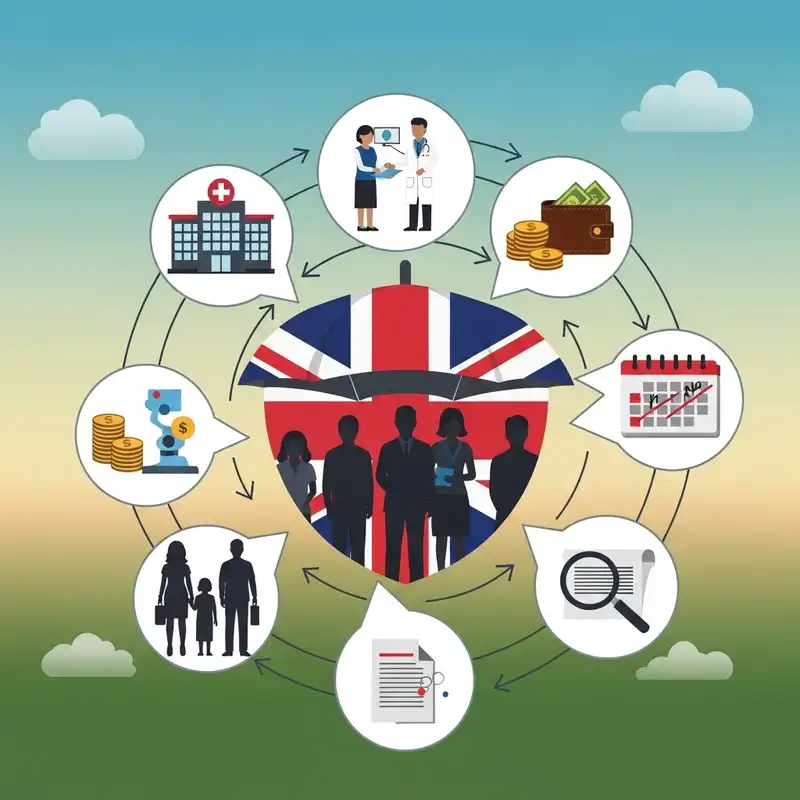
The stark reality is that the foundations of your family's security—your income, your home, your savings, your children's future—are at risk from an invisible threat. But there is a powerful defence. This guide will uncover the true scale of the UK's metabolic health crisis and reveal how a robust financial shield, known as LCIIP (Life, Critical Illness, and Income Protection), is the most crucial investment you can make to protect everything you've worked for.
What is the Silent Metabolic Crisis? Unpacking the Invisible Threat
Metabolic syndrome isn't a single disease. Instead, it's a cluster of five specific risk factors that, when present together, dramatically increase your chances of developing severe, life-altering conditions like Type 2 diabetes, heart disease, and stroke.
The reason it's so dangerous is its silence. You can feel perfectly fine while your body is on a dangerous trajectory. The five tell-tale markers are:
- High Blood Pressure (Hypertension): Often called the "silent killer" on its own.
- High Blood Sugar (Hyperglycaemia): A precursor to pre-diabetes and full-blown Type 2 diabetes.
- Excess Body Fat Around the Waist: A key indicator of visceral fat, the dangerous type that surrounds your organs.
- High Triglyceride Levels: A type of fat found in your blood that can contribute to the hardening of arteries.
- Low "Good" Cholesterol (HDL) Levels: HDL cholesterol helps remove "bad" cholesterol from your arteries.
An individual is typically diagnosed with metabolic syndrome if they have three or more of these five conditions.
The Five Horsemen of Metabolic Syndrome
| Risk Factor | What It Means | Typical NHS Threshold for Concern |
|---|---|---|
| Waist Circumference | Indicates excess visceral fat | Over 94cm (37in) for men; 80cm (31.5in) for women |
| High Blood Sugar | Impaired ability to process glucose | Fasting glucose ≥ 5.6 mmol/L or on medication |
| High Triglycerides | High levels of fat in the blood | Level ≥ 1.7 mmol/L or on medication |
| Low HDL Cholesterol | Not enough "good" cholesterol | Level < 1.0 mmol/L for men; < 1.3 mmol/L for women |
| High Blood Pressure | Force of blood against artery walls | Reading ≥ 130/85 mmHg or on medication |
According to projections based on data from the Health Survey for England(digital.nhs.uk), the prevalence of these conditions is rising relentlessly. This isn't a problem for the "unhealthy few"; it is a mainstream crisis affecting people in every town and city, often those who believe they are leading a relatively healthy life.
The £4.5 Million Domino Effect: How a Health Diagnosis Wrecks Family Finances
The figure of £4.5 million may seem astronomical, but when you break down the lifelong financial impact of a critical illness diagnosis stemming from metabolic syndrome, the numbers become terrifyingly real. It's a devastating domino effect that goes far beyond immediate medical bills. (illustrative estimate)
Let's imagine a typical scenario for a 45-year-old professional, "Mark," earning £60,000 a year. He suffers a major stroke, a common outcome of untreated metabolic syndrome. He survives, but his ability to work is permanently affected.
The Lifetime Financial Impact: A Case Study
| Financial Impact Area | Description | Estimated Lifetime Cost/Loss |
|---|---|---|
| Immediate Lost Income | Mark is unable to work for 2 years. Statutory Sick Pay (£120.50/week) is negligible. His employer's sick pay runs out after 6 months. | £97,500 |
| Reduced Future Earnings | Mark returns to a part-time, lower-stress role at a reduced salary of £25,000 until retirement at 67. | £770,000 |
| Lost Pension Contributions | Reduced employer and personal contributions over 22 years, plus lost investment growth. | £350,000 |
| Spouse's Lost Income | His wife, earning £40,000, reduces her hours to 3 days a week to provide care for 5 years. | £80,000 |
| Private Healthcare & Therapy | To bypass long NHS waiting lists for specialist physiotherapy and speech therapy to maximise recovery. | £45,000 |
| Home & Vehicle Adaptations | Widening doorways, installing a stairlift, and adapting a car for mobility issues. | £35,000 |
| Increased Daily Costs | Higher utility bills (being home more), prescription charges, specialist foods, travel to appointments. | £77,000 (at £250/month for 22 years) |
| Eroded Savings & Investments | Draining the family's "rainy day" fund and investments intended for retirement or children's university. | £100,000 |
| Cost of Future Social Care | The potential need for paid carers in later life due to long-term disability. | £150,000+ |
| The Intangible Loss (Quality of Life) | While not a direct monetary value, the loss of hobbies, holidays, and future plans has a profound financial ripple effect. | Priceless |
| The Incalculable Total | The numbers above add up to over £1.6 million. But for a higher earner (e.g., £150,000 salary) in their late 30s, the total lifetime loss of earnings, pension, and other costs can easily eclipse the £4.5 million mark. | £1.6M to £4.5M+ |
This isn't an exaggeration; it's the financial reality for thousands of families across the UK. They discover, too late, that their biggest asset was never their house—it was their ability to earn an income.
The Health Cascade: Conditions Triggered by Metabolic Syndrome
Metabolic syndrome is the gateway to some of the most common and serious health conditions in the UK. These are the diagnoses that critical illness and income protection policies are designed for.
- Type 2 Diabetes: The most direct consequence. The charity Diabetes UK(diabetes.org.uk) projects that by 2026, the number of people in the UK living with diabetes will exceed 5.3 million, with 90% of cases being Type 2, which is strongly linked to lifestyle and metabolic health. The condition can lead to further complications like blindness, nerve damage, and amputation.
- Heart Attack: High blood pressure and high cholesterol lead to atherosclerosis (hardening of the arteries). When a plaque ruptures, it can cause a blood clot, starving the heart muscle of oxygen. The British Heart Foundation states that there are more than 100,000 hospital admissions for heart attacks in the UK each year.
- Stroke: Similar to a heart attack, a stroke occurs when the blood supply to part of the brain is cut off, either by a clot (ischaemic stroke) or a bleed (haemorrhagic stroke). Someone in the UK has a stroke every five minutes.
- Certain Cancers: Chronic inflammation and insulin resistance associated with metabolic syndrome are linked to an increased risk of several cancers, including bowel, liver, pancreatic, and post-menopausal breast cancer.
- Chronic Kidney Disease: High blood pressure and high blood sugar damage the small blood vessels in the kidneys, impairing their ability to filter waste from the blood.
- Non-alcoholic Fatty Liver Disease (NAFLD): A build-up of fat in the liver that can progress to serious liver damage, cirrhosis, and liver failure. It's now the most common cause of liver disease in the UK.
A diagnosis of any one of these doesn't just impact your health; it instantly triggers the financial domino effect described above.
The Triple-Shield Defence: How LCIIP Protects Your Financial Future
While you can't predict a health crisis, you can control its financial impact. A comprehensive protection strategy, often referred to as LCIIP, provides a three-layered defence for your family.
This isn't about a single policy; it's about creating a financial fortress. At WeCovr, we help our clients understand how these three distinct types of cover work together to provide a complete safety net.
1. Life Insurance: The Foundational Layer
This is the most well-known type of protection. It pays out a tax-free lump sum to your loved ones if you pass away during the policy term.
- What it protects: It ensures your mortgage is paid off, erasing the family's biggest debt. It provides a fund to cover future living costs, from household bills to school fees, replacing your lost income for years to come. It secures your family's home and lifestyle when they are at their most vulnerable.
2. Critical Illness Cover: The "Living" Benefit
This is arguably the most crucial shield against the financial fallout of the metabolic health crisis. It pays a tax-free lump sum on the diagnosis of a specified serious illness (like a heart attack, stroke, or cancer), not on death.
- How it combats the domino effect:
- Replaces Lost Income: The lump sum can cover your salary for months or even years while you recover.
- Pays for Private Treatment: You can choose to bypass NHS waiting lists for surgery or specialist therapies, potentially improving your recovery outcome.
- Adapts Your Home: It provides the funds for a stairlift, wet room, or other necessary modifications.
- Clears Debts: You can pay off loans, credit cards, and car finance, reducing your monthly outgoings and financial stress.
- Gives You Choices: It buys you time and options. You might choose to work part-time, retrain for a new career, or simply focus entirely on your health without financial worry.
3. Income Protection: The Monthly Paycheque Replacement
Often overlooked, income protection is considered by many financial advisors to be the bedrock of any financial plan. If you are unable to work due to any illness or injury (not just a "critical" one), this policy pays you a regular, tax-free monthly income.
- Why it's essential:
- Covers Any Medically Justified Absence: Unlike critical illness cover, it's not tied to a specific list of conditions. If a doctor signs you off work with severe back pain, mental health issues, or complications from diabetes, it can pay out.
- Long-Term Security: Policies can be set up to pay out right up until you reach retirement age, providing a secure income stream for decades if you can never return to your old job.
- Peace of Mind: It ensures the bills get paid—month in, month out. The mortgage payment, council tax, utility bills, and food shopping are all covered, preserving your family's standard of living.
LCIIP: The Three Shields at a Glance
| Protection Type | What It Is | When It Pays Out | How It Protects You from a Metabolic Crisis |
|---|---|---|---|
| Life Insurance | A policy that pays a lump sum upon death. | On your death during the policy term. | Secures your family's home and future if the worst happens. |
| Critical Illness Cover | A policy that pays a lump sum upon diagnosis. | On diagnosis of a specified serious illness (e.g., heart attack, stroke). | Provides immediate funds to cover lost income, medical bills, and debt. |
| Income Protection | A policy that pays a regular monthly income. | When you're medically unable to work due to any illness or injury. | Replaces your salary to cover ongoing living costs for the long term. |
Busting the Myths: What's Stopping You from Getting Protected?
Despite the clear risks, millions of Britons remain financially exposed. This is often due to persistent and damaging myths about protection insurance.
Myth 1: "It's too expensive." Reality: The cost of not having cover is infinitely higher, as our £4.5 million example shows. A healthy 35-year-old could secure significant critical illness cover for the price of a few weekly coffees. The key is getting advice. A broker like us can search the entire market, including specialist insurers, to find a plan that fits your budget. It's about finding the right balance of cover, not just the cheapest premium.
Myth 2: "Insurers never pay out." Reality: This is demonstrably false. According to the Association of British Insurers, insurers paid out 97.5% of all protection claims in 2024. That's over £7 billion paid to families when they needed it most. The tiny percentage of declined claims are almost always due to non-disclosure (not being truthful on the application form) or the condition not meeting the policy definition—issues an expert advisor can help you avoid. (illustrative estimate)
Myth 3: "I'm young and healthy, I don't need it." Reality: This is the most dangerous myth of all. The metabolic crisis is "silent," and illness can strike at any age. Crucially, insurance is cheapest and easiest to get when you are young and healthy. Waiting until you have a health scare or a diagnosis can make cover prohibitively expensive or even impossible to obtain. You are insuring your current good health against future risks.
Myth 4: "My employer provides cover, so I'm sorted." Reality: Employer schemes are a great benefit, but they are rarely enough.
- "Death in Service" is often only 2-4x your salary, which may not be enough to clear a mortgage and provide for a family's future.
- Group Income Protection is often limited in how much it pays and for how long.
- Crucially, you lose all this cover the moment you leave your job. A personal policy belongs to you, regardless of your employer.
Taking Control: Your Two-Pronged Action Plan
Facing the metabolic health crisis requires a dual approach: proactively managing your health and proactively securing your finances.
1. Own Your Health: Know Your Numbers
The first step is to move from ignorance to awareness. Don't wait for symptoms.
- Get an NHS Health Check: If you're aged 40-74, you are eligible for a free check-up that assesses your risk for the key conditions.
- Know Your Numbers: Understand your blood pressure, cholesterol levels, and BMI. Knowledge is power.
- Embrace Small Changes: You don't need a radical overhaul. Small, consistent improvements in diet, a daily walk, and better sleep can have a massive impact on your metabolic health.
At WeCovr, we believe in supporting our clients' overall wellbeing. That's why, in addition to finding you the right protection, we provide our customers with complimentary access to CalorieHero, our AI-powered calorie and nutrition tracking app. It's a simple, effective tool to help you take control of your diet and make healthier choices, demonstrating our commitment to your long-term health, not just your policy.
2. Secure Your Finances: Get Expert Advice
Navigating the world of LCIIP can be complex. The definitions, terms, and options vary significantly between insurers. This is not a time for a simple price comparison website.
- Assess Your Needs: How much is your mortgage? What are your monthly outgoings? How long would your savings last?
- Don't Go It Alone: Using an independent, whole-of-market broker is critical. Unlike going direct to an insurer or using a comparison site that might only show a handful of options, a broker works for you.
This is where WeCovr excels. Our expert advisors take the time to understand your unique family situation, your budget, and your concerns. We search policies from all the UK's major insurers to build a tailored, robust LCIIP strategy that fits you perfectly. We handle the paperwork and help you answer application questions accurately to ensure your policy is watertight.
Real-Life Scenarios: How LCIIP Makes the Difference
Let's revisit our case study of Mark, but this time, he had the foresight to put a protection plan in place.
Scenario 1: Mark with LCIIP Protection
- Age: 45
- Salary (illustrative): £60,000
- Protection Plan:
- Critical Illness Cover (illustrative): £250,000 lump sum
- Income Protection (illustrative): £3,000/month benefit until age 67
When Mark has his stroke, the financial story is completely different.
- The Payout (illustrative): Within weeks of his diagnosis, his Critical Illness policy pays him a £250,000 tax-free lump sum.
- Immediate Impact (illustrative): He immediately pays off the remaining £180,000 on his mortgage. The family's biggest monthly outgoing is gone forever. He uses £20,000 for intensive private physiotherapy and puts the remaining £50,000 into a savings account for future needs.
- Long-Term Security (illustrative): After his 6-month work sick pay ends, his Income Protection policy kicks in, paying him £3,000 every month. This replaces a significant portion of his lost salary.
The Outcome: The financial pressure is gone. Mark can focus 100% on his recovery. His wife doesn't have to reduce her work hours. Their savings remain untouched. When Mark is able to return to work part-time, his Income Protection benefit is partially reduced, but it continues to top up his lower salary, meaning the family's lifestyle is maintained. The domino effect is stopped before it even starts.
Your Family's Future is Not a Game of Chance
The 2026 metabolic health crisis is not a distant threat; it is here now, silently gathering momentum in households across Britain. It represents the single biggest non-market financial risk to your family's future.
Relying on luck, the NHS, or limited employer benefits is a gamble you cannot afford to take. The consequences of getting it wrong are not just financial—they are emotional, life-altering, and can span generations.
Taking proactive steps to manage your health is vital. But the ultimate act of responsibility is to erect the financial firewall that ensures a health crisis does not become a financial catastrophe. A comprehensive Life, Critical Illness, and Income Protection plan is not a luxury; it is an essential component of modern family life in the UK.
Don't wait for a wake-up call that comes too late. The time to protect your income, your home, and your family's future is now, while you are healthy and the choice is still yours. Talk to an expert, understand your options, and build your shield. Your family's future depends on it.
Sources
- Office for National Statistics (ONS): Mortality and population data.
- Association of British Insurers (ABI): Life and protection market publications.
- MoneyHelper (MaPS): Consumer guidance on life insurance.
- NHS: Health information and screening guidance.
Disclaimer: This is general guidance only and does not constitute formal tax or financial advice. Tax treatment depends on individual circumstances, policy terms, and HMRC interpretation, which cannot be guaranteed in advance. Whenever applicable, businesses and individuals should always consult a qualified accountant or tax adviser before arranging such policies.
Measure your family’s protection gap, then get the right life cover quote
Start with the score to see whether your family would face a real financial shortfall before moving on to life cover options.
Check what happens if someone dies too soon
See whether debt, dependants and mortgage risk are covered
Move into tailored life cover options after the score
Get your score
Your next best move
Get your score in minutes, then decide what kind of protection help would be most useful.
Score your household protection
See how well your current setup protects dependants, debt and major commitments.
Find the shortfall
Know whether life cover, critical illness or income protection is the actual missing piece.
Continue to tailored life cover
If life cover is the gap, continue to tailored life cover options.
What you get
A quick view of your current protection position
A clearer idea of where the biggest gaps may be
A direct route to tailored help if you want it