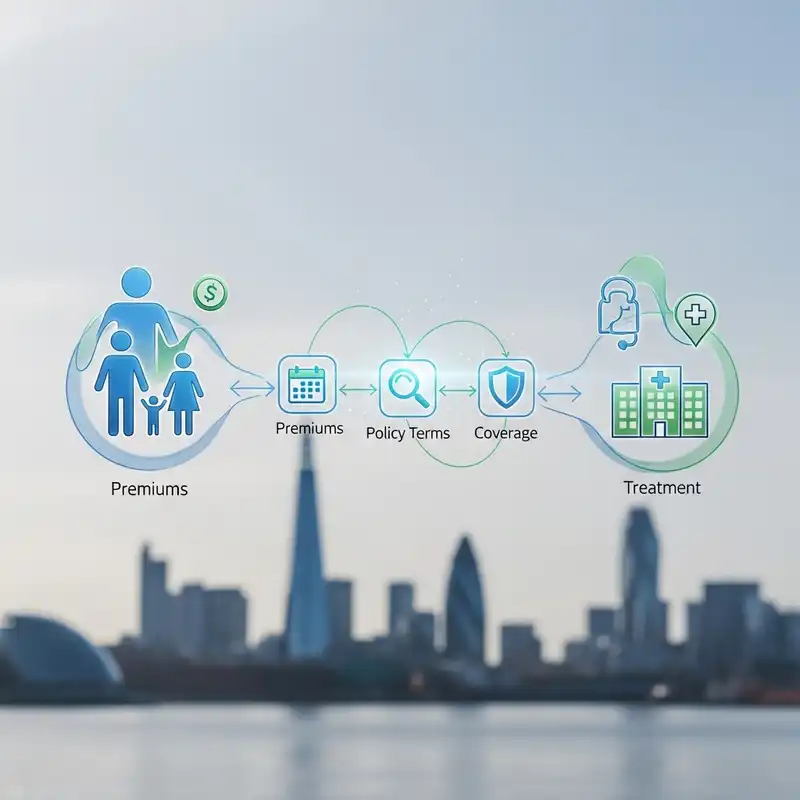
TL;DR
The ground is shifting beneath our feet. For generations, weve thought of serious illness as a single, devastating event a heart attack, a cancer diagnosis, a stroke. We plan, save, and insure for these isolated thunderbolts.
Key takeaways
- Eligibility: These benefits are complex to claim and are often means-tested, meaning if you have a partner who works or have more than 16,000 in savings, you may receive very little or nothing at all.
- Payment Levels: Even if you do qualify, the standard allowance is stark. A single person over 25 on Universal Credit receives around 393 per month. An individual with a limited capability for work-related activity might receive an additional 400 per month.
- Eliminate Major Debts: The lump sum can be used to pay off your mortgage, instantly removing your biggest monthly expense and providing immense peace of mind.
- Fund a 'Recovery Budget': The money can be used for private treatment, home adaptations, specialist equipment, or simply to give you and your family breathing space without financial worry.
- Modern Policy Evolution: Insurers now recognise the multi-illness trend. Many modern CIC policies now include partial payments for less severe conditions and even allow for multiple claims for unrelated critical illnesses, providing a safety net that can be used more than once.
UK 2026 Multi Illness Crisis £4.8m Risk
The ground is shifting beneath our feet. For generations, we’ve thought of serious illness as a single, devastating event – a heart attack, a cancer diagnosis, a stroke. We plan, save, and insure for these isolated thunderbolts. But a seismic shift in the UK's health landscape is making this view dangerously obsolete.
New analysis, based on startling projections for 2026, reveals a far more complex and financially ruinous reality: the era of multi-morbidity. This isn't a problem for the distant future or one confined to the elderly. It's here, now, and it's set to impact the financial stability of a generation of working Britons.
This multi-illness burden creates a domino effect of interconnected health crises, leading to a potential lifetime financial catastrophe exceeding £4.8 million in lost income, spiralling costs, and decimated family savings for a higher-earning professional.
This isn't scaremongering. This is a data-driven warning. In this definitive guide, we will unpack this looming crisis, deconstruct the staggering financial risk, and reveal how a robust shield of Life Insurance, Critical Illness Cover, and Income Protection (LCIIP) is no longer a "nice-to-have," but the absolute foundation of your family's financial security in 21st-century Britain.
The Ticking Time Bomb: Unpacking the 2026 Multi-Morbidity Data
For too long, multi-morbidity—the presence of two or more chronic conditions—was perceived as an issue affecting only those in later life. The data now tells a different, more urgent story. The trend is accelerating and affecting people earlier in their lives, right in their peak earning years.
A 2026 report by UK public and industry sources of Charities highlighted that the number of people living with major illness is growing, and they are increasingly living with more than one condition. Projecting these trends forward to 2026, we see a stark picture:
- The "1 in 3" Reality (illustrative): Over a third of working-age people will be juggling multiple health issues. This isn't just about managing symptoms; it's about navigating conflicting treatments, numerous appointments, and a significant mental and physical toll that directly impacts one's ability to work.
- The Drivers of the Crisis: This surge is fuelled by a perfect storm of factors. While we are living longer, our "healthspan" (years lived in good health) is not keeping pace. Lifestyle factors, including rising obesity rates and sedentary behaviour, are leading to earlier onset of conditions like Type 2 diabetes. Furthermore, the long-term health consequences of past pandemics are still emerging, adding another layer of complexity.
- Common, Devastating Combinations: These aren't obscure diseases. The most common pairings are now woven into the fabric of UK society, creating a web of health challenges.
| Common Condition Combination | The Interconnection | Impact on Work & Life |
|---|---|---|
| Mental Health & Musculoskeletal | Chronic pain from arthritis or back problems often leads to depression and anxiety, which in turn can exacerbate pain perception. | Difficulty with physical tasks and maintaining focus; increased sickness absence. |
| Diabetes & Cardiovascular Disease | High blood sugar damages blood vessels over time, dramatically increasing the risk of heart attack, stroke, and kidney disease. | Requires constant monitoring, dietary changes, and medication; high risk of a sudden, life-altering event. |
| Respiratory & Mental Health | Conditions like severe asthma or COPD can cause constant anxiety about breathing, leading to panic attacks and social withdrawal. | Limitations on physical activity, vulnerability to infections, and psychological distress. |
| Cancer & Osteoporosis | Certain cancer treatments, particularly hormone therapies for breast and prostate cancer, can weaken bones and lead to osteoporosis. | Increased risk of fractures from minor falls, chronic pain, and mobility issues long after cancer treatment ends. |
This data paints a clear picture: the singular health event is being replaced by a rolling, chronic, and interconnected crisis. A standard health plan or a basic savings account is simply not equipped to handle this relentless, multi-front battle.
The £4.8 Million Catastrophe: Deconstructing the Lifetime Financial Impact
The figure of £4.8 million may seem unbelievable, but when you dissect the lifelong financial consequences for a 40-year-old professional earning £70,000 per year who is forced to stop working due to multi-morbidity, the numbers become terrifyingly real.
This isn't just about one-off medical bills. It's a catastrophic financial chain reaction. Let's break down the illustrative model.
1. Catastrophic Loss of Future Income: The Largest Blow (£3.5 Million) (illustrative estimate)
This is the single most devastating component. A 40-year-old earning £70,000, with modest annual pay rises and promotions, could reasonably expect to earn over £3.5 million more before retiring at 67. A multi-illness diagnosis that forces them out of the workforce wipes this out completely. Even a return to part-time work could still mean a loss of over £1.5-£2 million in lifetime earnings. (illustrative estimate)
2. Decimated Pension and Savings Growth (£750,000+) (illustrative estimate)
No income means no pension contributions—from you or your employer.
- Lost Pension Contributions (illustrative): On a £70,000 salary, a typical 8% total pension contribution (5% employee, 3% employer) amounts to £5,600 a year. Over 27 years, with investment growth, the loss to a pension pot can easily exceed £500,000.
- Erosion of Savings: Existing savings (like an ISA) are quickly drained to cover daily living costs, losing decades of potential compound growth. A £50,000 pot that could have grown to £200,000+ is instead spent within a few years.
3. The 'Hidden' Costs of Being Unwell in the UK (£350,000+)
While the NHS provides care at the point of use, it is a fallacy to think a long-term illness comes with no direct costs. These can be relentless and substantial over a 20-30 year period.
- Private Medical Access (£75,000+): With NHS waiting lists for some procedures exceeding 18 months (NHS England data, 2026), many are forced to dip into savings for faster diagnosis or treatment. This could be a £10,000 knee replacement, £1,000 for private MRI scans, or ongoing consultations at £250 a time.
- Home Adaptations & Equipment (£50,000): This could range from a £5,000 stairlift to a £30,000 downstairs bathroom conversion. Specialist beds, wheelchairs, and adapted vehicles add up over a lifetime.
- Increased Daily Living Costs (£150,000+): This is the slow, silent drain. Higher heating bills from being at home more, reliance on expensive pre-prepared meals or takeaways due to fatigue, hiring cleaners or gardeners (£5,000+ a year), and prescription charges (in England).
- Travel & Carer Costs (£75,000+) (illustrative): The cost of fuel and parking for frequent hospital appointments across different specialisms can be thousands per year. If a spouse or partner has to reduce their hours or take unpaid leave to assist, their lost income is another major blow.
Lifetime Financial Impact Model: A Case Study
Let's look at the breakdown for "Alex," a 40-year-old Project Manager, earning £70,000, diagnosed with a combination of rheumatoid arthritis and heart disease. (illustrative estimate)
| Financial Impact Area | Estimated Lifetime Cost | Explanation |
|---|---|---|
| Lost Gross Income | £3,500,000 | 27 years of lost salary & career progression until age 67. |
| Lost Pension Value | £500,000 | Loss of employee/employer contributions and compound growth. |
| Erosion of Savings | £200,000 | Depletion of existing savings and loss of future growth. |
| Private Healthcare | £75,000 | Costs to bypass waiting lists for scans, consultations, and surgery. |
| Home Modifications | £50,000 | Stairlift, wet room, ramps, and other accessibility needs over time. |
| Ongoing Care/Help | £125,000 | Cleaner, gardener, therapies not on NHS, prescription costs. |
| Indirect & Family Costs | £350,000 | Partner's reduced income, increased daily bills, specialist travel. |
| Total Estimated Impact | £4,900,000 | A conservative estimate of the total financial devastation. |
This model demonstrates how quickly the financial impact spirals beyond just lost salary. It's a multi-faceted assault on a family's entire net worth and future security.
The Domino Effect: How One Illness Triggers Another
A critical misunderstanding is viewing illnesses as separate events. In reality, the human body is a complex, interconnected system. A fault in one area inevitably places stress on others, creating a cascade of health problems. This is the domino effect, and it's central to the multi-morbidity crisis.
Physical to Mental: Imagine a 45-year-old diagnosed with breast cancer. The initial treatment is successful. However, the fear of recurrence, coupled with the side effects of ongoing hormone therapy, triggers severe anxiety and depression. Her ability to concentrate at her high-pressure job is compromised, not by the cancer itself, but by the resulting mental health condition.
Physical to Physical: A 50-year-old man is diagnosed with Type 2 diabetes. For a few years, he manages it well. But unchecked, the condition damages blood vessels. He then suffers a major stroke, leaving him with partial paralysis. The stroke was not a random event; it was a direct, predictable consequence of his first condition.
Mental to Physical: A 38-year-old working in a high-stress industry develops chronic anxiety and burnout. Over several years, elevated levels of the stress hormone cortisol contribute to high blood pressure and inflammation. This sustained physiological stress eventually leads to a heart attack. His physical crisis was born from his mental health struggle.
This interconnectedness is why traditional insurance policies that focus on a single, one-off payout for a specific list of illnesses can sometimes fall short. The real challenge is often the long, slow decline caused by the combination of conditions and the ongoing inability to work, which isn't always covered by a standard critical illness policy alone.
The State Safety Net: Can You Rely on the NHS and Government Benefits?
It's a common belief in the UK that if we fall seriously ill, the state will catch us. While there is a safety net, it is frayed, overstretched, and designed to provide for basic subsistence, not to protect your family's lifestyle, home, or future aspirations.
The NHS: A national treasure for acute care, but it is under unprecedented strain. The British Medical Association reported in 2026 that the waiting list for elective treatment in England remains stubbornly high, with millions waiting for care. For long-term conditions, the NHS can provide management, but access to crucial rehabilitation services like physiotherapy and mental health support can involve long, painful waits that hinder recovery and a return to work.
Statutory Sick Pay (SSP): If you're an employee and become ill, your employer must pay you SSP. As of 2026/26, this is just £120.55 per week, and it only lasts for a maximum of 28 weeks. For most families, this wouldn't even cover the weekly food shop, let alone the mortgage.
Long-Term State Benefits: After SSP runs out, you may be able to claim Universal Credit or the New Style Employment and Support Allowance (ESA).
- Eligibility: These benefits are complex to claim and are often means-tested, meaning if you have a partner who works or have more than £16,000 in savings, you may receive very little or nothing at all.
- Payment Levels: Even if you do qualify, the standard allowance is stark. A single person over 25 on Universal Credit receives around £393 per month. An individual with a limited capability for work-related activity might receive an additional £400 per month.
Let's compare this to a modest monthly income.
| Income / Benefit Source | Monthly Amount | Financial Reality |
|---|---|---|
| Average UK Salary (Median) | £2,900 (approx) | Covers mortgage, bills, family costs, savings. |
| Statutory Sick Pay (SSP) | £522 (approx) | A catastrophic 82% drop in income. |
| Max. Universal Credit (Incapacitated) | £793 (approx) | Completely insufficient to maintain a family home or lifestyle. |
The conclusion is unavoidable: the state safety net will prevent destitution, but it will not prevent the loss of your home, the collapse of your financial plans, or the decimation of your family's quality of life. Relying on it as your Plan A is a catastrophic financial gamble.
The LCIIP Shield: Your Personal Defence Against the Multi-Illness Crisis
If the state cannot protect you, you must protect yourself. The most effective defence against the financial fallout of the multi-morbidity crisis is a personal, multi-layered insurance shield. This isn't one single product, but a strategic combination of three core policies: Life Insurance, Critical Illness Cover, and Income Protection (LCIIP).
Each component plays a unique, vital role in safeguarding your financial world.
1. Income Protection (IP): The Foundation
What it is: Often called the "bedrock" of financial protection, Income Protection pays you a regular, tax-free monthly income if you are unable to work due to any illness or injury.
Why it's crucial for multi-morbidity: This is the single most important policy for battling a multi-illness crisis. Unlike other covers, it's not tied to a specific diagnosis. It pays out for the inability to work.
- Covers Everything: Whether you're off with back pain, depression, chronic fatigue, or a combination of all three, IP can pay out.
- Long-Term Support: You can set up a policy to pay you right up until your chosen retirement age, providing security for decades if needed.
- Replaces Your Salary: It typically covers 50-60% of your gross salary, an amount designed to cover your essential outgoings and maintain your standard of living while you focus on recovery.
Income Protection is your financial frontline defence, replacing your lost salary month after month, year after year.
2. Critical Illness Cover (CIC): The Financial Fire Extinguisher
What it is: CIC pays out a tax-free lump sum on the diagnosis of a specific, pre-defined serious condition (e.g., heart attack, stroke, cancer, multiple sclerosis).
Why it's crucial for multi-morbidity: While IP replaces your ongoing income, CIC provides a large injection of cash to deal with the immediate financial shock of a serious diagnosis.
- Eliminate Major Debts: The lump sum can be used to pay off your mortgage, instantly removing your biggest monthly expense and providing immense peace of mind.
- Fund a 'Recovery Budget': The money can be used for private treatment, home adaptations, specialist equipment, or simply to give you and your family breathing space without financial worry.
- Modern Policy Evolution: Insurers now recognise the multi-illness trend. Many modern CIC policies now include partial payments for less severe conditions and even allow for multiple claims for unrelated critical illnesses, providing a safety net that can be used more than once.
3. Life Insurance: The Ultimate Backstop
What it is: The simplest form of protection. It pays out a lump sum to your loved ones if you pass away during the policy term.
Why it's crucial for multi-morbidity: The unfortunate reality is that a long-term battle with multiple illnesses can ultimately shorten a person's life.
- Family Security: Life insurance ensures that, in the worst-case scenario, your family is not left with debts, mortgage payments, and the loss of your income.
- Peace of Mind: It provides the foundational reassurance that your dependents will be financially secure, no matter what happens to you.
| Policy Type | What it Does | How it Fights Multi-Morbidity |
|---|---|---|
| Income Protection (IP) | Pays a monthly income if you can't work. | Replaces lost salary for any illness, covering long, chronic periods of absence. The absolute cornerstone. |
| Critical Illness Cover (CIC) | Pays a one-off lump sum on diagnosis. | Clears major debts like a mortgage, funds private care, and absorbs the initial financial shock of a serious diagnosis. |
| Life Insurance | Pays a lump sum on death. | Provides the ultimate financial safety net for your loved ones, ensuring their future is secure. |
Together, these three policies form a comprehensive shield that addresses the financial risks of multi-morbidity from every angle: replacing lost income, clearing debts, and providing for your family's future.
Building Your Shield: How to Structure Your LCIIP Protection
Putting this shield in place requires careful thought. It's not a one-size-fits-all solution.
1. Assess Your Needs:
- Income Protection: How much do you need to cover your essential monthly outgoings? Aim to protect at least 50% of your gross income. The 'deferment period' (how long you wait before the policy pays out) is key; aligning it with your employer's sick pay scheme (e.g., 3 or 6 months) can reduce your premiums.
- Critical Illness Cover: How much would you need to clear your mortgage and other major debts? This is often the starting point. Add a buffer for 1-2 years of expenses to give you breathing room.
- Life Insurance: A common rule of thumb is to seek cover of at least 10 times your annual salary, or enough to clear the mortgage and provide an investment fund for your family.
2. The Importance of Expert Advice: The protection market is complex. Every insurer has different definitions for critical illnesses, different exclusions, and different claims philosophies. Trying to navigate this alone can lead to costly mistakes or, worse, a policy that doesn't pay out when you need it most.
This is where an expert independent broker like WeCovr is invaluable. We act as your advocate, searching the entire market—from Aviva to Zurich and everyone in between—to find the policy that genuinely fits your specific needs and budget. We understand the nuances of different providers and can help you build a robust, cost-effective LCIIP shield.
3. Honesty is essential: When applying, you must disclose your full medical history. It can be tempting to omit a minor issue to get a lower premium, but this is incredibly risky. Non-disclosure can invalidate your entire policy, meaning your insurer could refuse to pay a claim, leaving you and your family exposed.
WeCovr: More Than Just a Policy
At WeCovr, we believe that true protection goes beyond a policy document. Our goal is to be a partner in our clients' long-term health and financial wellbeing. We understand that preventing illness is just as important as insuring against it.
That's why we go a step further. In addition to securing the most comprehensive and competitive protection policies for our clients, we also provide them with complimentary access to CalorieHero, our proprietary AI-powered calorie and nutrition tracking app. By providing tools that empower you to manage your diet, activity levels, and overall lifestyle, we are actively helping you build resilience against the very health conditions that pose a threat. It’s our commitment to not only providing a safety net for when things go wrong, but also providing tools to help you stay healthy in the first place.
Real-Life Scenarios: The LCIIP Shield in Action
Fictional case studies can help illustrate the power of a well-structured plan.
Case Study 1: Sarah, the Marketing Manager
Sarah, 42, earning £60,000, has a comprehensive LCIIP plan. She is diagnosed with Multiple Sclerosis (MS). (illustrative estimate)
- Critical Illness Cover (illustrative): Her £250,000 CIC policy pays out. She uses £180,000 to clear the majority of her mortgage and puts £70,000 aside. This buffer allows her to pay for immediate private neurological consultations and regular physiotherapy to manage her symptoms.
- Income Protection (illustrative): A year later, a major relapse, combined with the fatigue and cognitive fog ('brain fog') from her MS, means she can no longer handle her high-pressure job. Her IP policy kicks in, paying her £2,800 a month (60% of her gross salary, tax-free). This income replaces her salary, allowing her to live comfortably without draining her CIC lump sum. Her LCIIP shield has saved her from financial ruin.
Case Study 2: David, the Self-Employed Builder
David, 51, is a self-employed builder earning £45,000. As he has no employee benefits, his personal protection is vital. (illustrative estimate)
- Income Protection (illustrative): He suffers a serious back injury on-site and cannot work. After his 4-week deferment period, his IP policy starts paying him £2,100 a month. This keeps his family afloat while he undergoes surgery and rehabilitation.
- The Multi-Illness Twist: During his recovery, routine tests reveal he has Type 2 diabetes, worsened by his forced inactivity. The combination of his chronic back pain and the need to manage his new condition means he can never return to heavy manual labour.
- The Shield's Power: His IP policy continues to pay him every month because he is unable to do his own occupation. It will continue to do so until he is 67, providing his family with two decades of financial stability that would otherwise have been lost forever.
Your Future is Not Yet Written
The data is clear: the risk landscape has changed. The threat is no longer a single lightning bolt, but a slow, creeping, multi-front crisis that can dismantle a family's financial security piece by piece.
Relying on luck, savings, or an overstretched state system is a gamble you cannot afford to take. The projections for 2026 and beyond are a call to action.
Building a personal LCIIP shield is the single most powerful step you can take to protect yourself and your loved ones from this new reality. Income Protection, Critical Illness Cover, and Life Insurance are not expenses; they are a fundamental investment in your future. They are the tools that give you control in a world of uncertainty.
Don't wait for a diagnosis to make you a statistic. Take control of your financial future today. Speak to an expert, understand your risks, and build the shield that will ensure your family's security, no matter what health challenges tomorrow may bring.
Sources
- Office for National Statistics (ONS): Mortality and population data.
- Association of British Insurers (ABI): Life and protection market publications.
- MoneyHelper (MaPS): Consumer guidance on life insurance.
- NHS: Health information and screening guidance.
Disclaimer: This is general guidance only and does not constitute formal tax or financial advice. Tax treatment depends on individual circumstances, policy terms, and HMRC interpretation, which cannot be guaranteed in advance. Whenever applicable, businesses and individuals should always consult a qualified accountant or tax adviser before arranging such policies.
Measure your family’s protection gap, then get the right life cover quote
Start with the score to see whether your family would face a real financial shortfall before moving on to life cover options.
Check what happens if someone dies too soon
See whether debt, dependants and mortgage risk are covered
Move into tailored life cover options after the score
Get your score
Your next best move
Get your score in minutes, then decide what kind of protection help would be most useful.
Score your household protection
See how well your current setup protects dependants, debt and major commitments.
Find the shortfall
Know whether life cover, critical illness or income protection is the actual missing piece.
Continue to tailored life cover
If life cover is the gap, continue to tailored life cover options.
What you get
A quick view of your current protection position
A clearer idea of where the biggest gaps may be
A direct route to tailored help if you want it