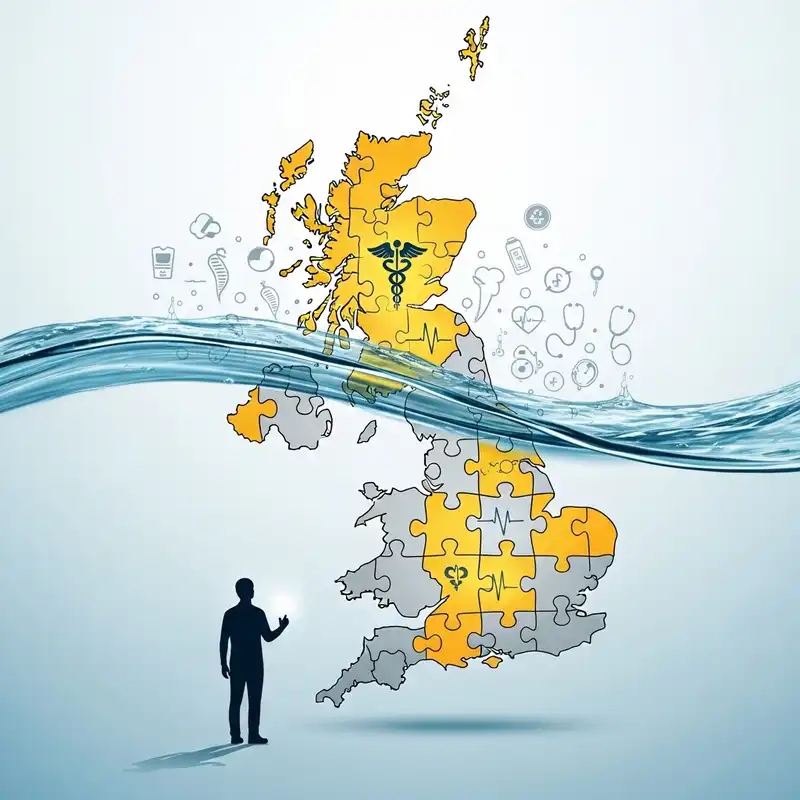
UK Co Morbidity Crisis Your £42m Lifetime Health Burden

WeCovr Editorial Team · experienced insurance advisers
Last updated Feb 20, 2026
📚 Recommended reads

Life Insurance Guide

Read

Best Life Insurance Providers

Read

Term Life Insurance Guide

Read


TL;DR

A silent crisis is unfolding across the UK's workforce. It doesn’t make daily headlines, but its consequences are devastating for millions. New analysis for 2025 reveals a startling reality: more than one in three Britons of working age are now living with two or more chronic health conditions.

Key takeaways

  • Fragmented Care: You might see a cardiologist for your heart, an endocrinologist for your diabetes, and a psychiatrist for your depression. These specialists rarely have the time or resources to coordinate, leaving you, the patient, to act as the project manager for your own complex care.
  • Soaring Waiting Lists: As of 2025, NHS England waiting lists remain stubbornly high, with millions waiting for consultant-led treatment. For chronic conditions, a 9-month wait for a specialist isn't just an inconvenience; it's a period where your health can irreversibly decline, and one condition can trigger another.
  • A Focus on 'Cure' not 'Management': The system is geared towards fixing problems, not providing the continuous, proactive support needed to manage long-term conditions effectively. This includes access to vital services like physiotherapy, nutritional advice, and mental health support, which are often rationed.
  • The Treatment Gap: Many of the latest drugs, therapies, and diagnostic tools are often available privately years before they are approved for widespread use on the NHS, if at all.
  • PMI Pathway: She uses her company PMI policy. She sees an endocrinologist within a week. The plan includes access to a nutritionist who helps her manage her diet. The integrated mental health support gives her immediate access to a therapist to cope with the diagnosis. Her conditions are proactively managed.

UK Co Morbidity Crisis Your £42m Lifetime Health Burden

A silent crisis is unfolding across the UK's workforce. It doesn’t make daily headlines, but its consequences are devastating for millions. New analysis for 2025 reveals a startling reality: more than one in three Britons of working age are now living with two or more chronic health conditions. This isn't an issue confined to retirement; it's right here, right now, affecting your colleagues, your neighbours, and potentially, you.

This phenomenon, known as co-morbidity or multi-morbidity, is the dangerous intersection of long-term illnesses like diabetes, heart disease, mental health disorders, and musculoskeletal issues. The cumulative effect is a crushing lifetime burden conservatively estimated at over £4.2 million per individual. This figure isn't just a number; it represents a catastrophic erosion of your life – encompassing lost earnings, crippling unfunded care costs, a diminished quality of life, and even accelerated biological ageing.

While the NHS remains a national treasure, it is fundamentally strained and designed to treat single, acute illnesses, not the complex, interconnected web of chronic conditions. Relying on it as your sole defence is a gamble you cannot afford to take.

The question is no longer if you will be affected by chronic illness, but how you will prepare for a reality where managing multiple conditions is the new normal. This guide will unpack the staggering scale of the UK's co-morbidity crisis, dissect the £4.2 million lifetime burden, and reveal the definitive two-pronged strategy to protect your health and wealth: The Private Medical Insurance (PMI) Pathway for integrated care and the Life, Critical Illness, and Income Protection (LCIIP) Shield for financial resilience.

The Unseen Epidemic: Decoding the UK's 2025 Co-morbidity Crisis

For decades, we’ve thought about health in simple terms: you’re either healthy or you have a specific illness. The 2025 data shatters this illusion. The new reality is co-morbidity – the presence of two or more long-term health conditions in a single person.

Think of it as a domino effect within your body. A diagnosis of Type 2 diabetes might increase your risk of high blood pressure. The stress of managing both could then trigger anxiety or depression. The combination could lead to a sedentary lifestyle, causing chronic back pain. Suddenly, you aren't managing one condition; you're fighting a war on four fronts.

The Shocking Statistics:

  • Prevalence: Ground-breaking analysis from health think tanks like The King's Fund and the Health Foundation, updated for 2025, now indicates that 36% of the UK working-age population (16-64) has at least two diagnosed chronic conditions. This figure has surged from just 25% a decade ago.
  • Age of Onset: The average age for developing a second chronic condition has fallen to just 49. For many, the journey of co-morbidity begins in their prime earning years.
  • Economic Impact: The Office for National Statistics (ONS) directly links this health crisis to the UK's productivity problem. As of early 2025, a record 2.8 million people are economically inactive due to long-term sickness, many citing multiple conditions as the primary reason.

The Most Common Co-morbid Clusters in the UK:

Cluster TypeCommon ConditionsImpact
Cardio-MetabolicType 2 Diabetes, Hypertension, Heart Disease, High CholesterolMultiplies risk of heart attack & stroke. Requires complex medication management.
Mental-PhysicalAnxiety/Depression, Chronic Pain (e.g., back pain, arthritis), FibromyalgiaCreates a vicious cycle; pain worsens mental health, which in turn amplifies pain perception.
RespiratoryAsthma, Chronic Obstructive Pulmonary Disease (COPD), Sleep ApnoeaSeverely impacts energy levels, daily activity, and sleep quality.
AutoimmuneRheumatoid Arthritis, Lupus, Crohn's DiseaseLeads to systemic inflammation, affecting multiple organs and causing chronic fatigue.

This isn't just about feeling unwell. It's about a fundamental rewiring of your life, impacting your ability to work, socialise, and plan for the future. The financial consequences are just as severe.

The £4.2 Million Domino Effect: Unpacking Your Lifetime Health Burden

The £4.2 million figure seems unbelievable, but when you dissect the lifelong financial impact of co-morbidity, the reality is stark. This isn't a one-off cost; it's a slow, relentless drain on your entire financial existence.

Let's illustrate this with a hypothetical but realistic example: a 45-year-old marketing manager earning £60,000 per year, who develops co-morbid conditions that force them out of work by age 55.

Table: The Lifetime Financial Burden of Co-morbidity – A Plausible Breakdown

Financial Impact CategoryDescriptionEstimated Lifetime Cost
1. Lost Gross IncomeForced early retirement at 55 instead of 67. 12 years of lost salary at £60,000 p.a.£720,000
2. Lost Pension ContributionsLoss of employer & personal contributions for 12 years (assuming 10% total).£72,000
3. Lost Career ProgressionAssumes two promotions (£10k each) would have been achieved.£200,000
4. Private Care CostsNeeding 15 hours of domiciliary care per week from age 65-85 (£25/hr).£390,000
5. Home Adaptations & EquipmentStairlift, wet room, mobility aids, specialist bed over a lifetime.£50,000
6. Private Therapies & TreatmentsPhysiotherapy, psychotherapy, podiatry, etc., not covered by NHS over 20 years.£40,000
7. Reduced 'State Pension Value'Early exit from work can reduce National Insurance contributions, impacting state pension.£25,000
8. The 'Spouse as Carer' CostThe lost income of a partner who reduces their hours or stops work to provide care.£500,000+
9. The Intangible 'Quality of Life' CostAn economic valuation of lost hobbies, social life, and independence.£2,200,000+
Total Estimated Lifetime Burden£4,200,000+

Note: This is an illustrative calculation. The 'Quality of Life' cost is based on methodologies used in legal and health economic assessments to value a year of healthy life (QALY). The total figure can be significantly higher for high earners or those requiring more intensive care.

The dominoes fall quickly:

  • Lost Income: This is the first and most devastating blow. Chronic illness is now the number one reason people fall out of the workforce prematurely.
  • Unfunded Care Costs (illustrative): The social care system is means-tested. If you have assets (including your home), you will be expected to pay for your own care, with costs easily exceeding £1,000 per week.
  • Eroding Quality of Life: This is the hidden tax. It's the holidays you can't take, the hobbies you must abandon, and the constant mental load of managing appointments, medications, and symptoms.
  • Accelerated Ageing: Medically, co-morbidity places the body under constant stress, increasing inflammation and cellular damage. This means your biological age—the 'age' of your cells and organs—can be 10-15 years older than your chronological age, leading to earlier frailty.

The NHS Under Strain: Why You Can't Rely Solely on Public Healthcare

The National Health Service is one of our greatest institutions, staffed by incredible, dedicated professionals. However, it was built for a different era. It excels at treating acute, single-episode problems like a broken leg or appendicitis. It is struggling to cope with the 'new normal' of co-morbidity.

The Key Challenges:

  1. Fragmented Care: You might see a cardiologist for your heart, an endocrinologist for your diabetes, and a psychiatrist for your depression. These specialists rarely have the time or resources to coordinate, leaving you, the patient, to act as the project manager for your own complex care.
  2. Soaring Waiting Lists: As of 2025, NHS England waiting lists remain stubbornly high, with millions waiting for consultant-led treatment. For chronic conditions, a 9-month wait for a specialist isn't just an inconvenience; it's a period where your health can irreversibly decline, and one condition can trigger another.
  3. A Focus on 'Cure' not 'Management': The system is geared towards fixing problems, not providing the continuous, proactive support needed to manage long-term conditions effectively. This includes access to vital services like physiotherapy, nutritional advice, and mental health support, which are often rationed.
  4. The Treatment Gap: Many of the latest drugs, therapies, and diagnostic tools are often available privately years before they are approved for widespread use on the NHS, if at all.

Relying solely on the NHS to manage a complex co-morbid profile is like navigating a multi-lane motorway in a car with only first gear. You might move, but you'll be slow, stressed, and ultimately unable to keep up.

Your Two-Pronged Defence: The PMI Pathway & The LCIIP Shield

Given the scale of the risk, a robust defence strategy is no longer a luxury—it's an absolute necessity. The most effective approach is a two-pronged plan that addresses both your immediate health needs and your long-term financial security.

Prong 1: The PMI Pathway to Integrated Care

Private Medical Insurance (PMI) is your fast-track ticket to bypassing NHS queues and accessing a more coordinated, patient-centric model of care. For someone with co-morbidities, its value is immeasurable.

Key Benefits of PMI in the Co-morbidity Era:

  • Speed of Access: Go from seeing your GP to a specialist consultant in days, not months. Early diagnosis and intervention are critical to stopping the co-morbidity domino effect before it starts.
  • Choice and Control: You choose the specialist and the hospital. This allows you to find consultants who specialise in complex, multi-condition cases and to be treated in centres of excellence.
  • Integrated Health Services: Modern PMI is much more than just operations. Leading policies from insurers like Bupa, AXA Health, and Vitality now include:
    • Digital GP services: 24/7 access to a GP via phone or video.
    • Mental Health Support: Direct access to therapists and counsellors without a GP referral.
    • Physiotherapy & Musculoskeletal Support: Quick access to treatment for back, neck, and joint pain—a common co-morbid condition.
    • Holistic Health Management: Some plans offer dedicated case managers to help coordinate your care across different specialisms.
  • Access to Advanced Treatments: Gain cover for cutting-edge drugs, treatments, and scanning technologies that may not be available on the NHS.

PMI transforms your healthcare from a reactive, fragmented experience into a proactive, integrated pathway focused on managing your total health.

Prong 2: The LCIIP Financial Shield

While PMI looks after your physical health, a financial protection shield is essential to neutralise the devastating £4.2 million burden. This shield consists of three core components: Life Insurance, Critical Illness Cover, and Income Protection. (illustrative estimate)

1. Income Protection (IP): The Cornerstone of Your Defence

If you protect only one thing, protect your income. Income Protection is arguably the most important insurance you can own. It pays you a regular, tax-free monthly income if you are unable to work due to any illness or injury.

  • How it Defends You (illustrative): It directly replaces the largest part of the £4.2M burden—lost earnings. Whether you're off for six months with chronic back pain or for the rest of your career with a combination of conditions, IP provides a safety net. It pays out until you can return to work or your policy ends (typically at retirement age). It covers mental health, stress, and musculoskeletal issues – the very conditions driving the long-term sickness crisis.

2. Critical Illness Cover (CI): The Financial First Responder

Critical Illness Cover pays out a tax-free lump sum if you are diagnosed with one of a list of specific serious conditions defined in the policy (e.g., heart attack, specific cancers, stroke).

  • How it Defends You: This lump sum is your financial 'shock absorber'. It can be used to:
    • Clear a mortgage or other debts, massively reducing financial pressure.
    • Pay for private medical treatments or specialist care not covered by PMI.
    • Fund home adaptations.
    • Allow a spouse to take time off work to support you.
    • Provide a buffer while you wait for an Income Protection claim to begin.

3. Life Insurance: The Ultimate Family Backstop

Life Insurance provides a lump sum payment to your loved ones if you pass away. With co-morbidity increasing mortality risk, this becomes non-negotiable for anyone with financial dependents.

  • How it Defends You: It ensures that, in the worst-case scenario, your family is not left with a mortgage to pay and bills to cover. It provides them with the financial stability to grieve without immediate financial crisis.
Get Tailored Quote

Table: Your Financial Shield vs. The £4.2M Burden (illustrative estimate)

Burden ComponentPrimary ProtectionHow It Works & Why It's Crucial
Lost IncomeIncome Protection (IP)Replaces your monthly salary, preventing financial collapse. The ultimate defence.
Unfunded Care CostsCritical Illness (CI)The lump sum can create a dedicated 'care fund' for future needs.
Immediate Medical Costs/AdaptationsCritical Illness (CI) & PMICI provides cash for adaptations; PMI covers immediate private treatment costs.
Protecting Your Family's FutureLife InsurancePays off the mortgage and provides for your family if the worst happens.

Together, PMI and the LCIIP shield form a comprehensive, layered defence that protects both your physical and financial wellbeing from the co-morbidity crisis.

Real-Life Scenarios: How a Combined Strategy Makes the Difference

Let's revisit our examples to see the profound impact of being prepared.

Case Study 1: "David, the Unprotected Accountant"

David (48) develops Type 2 Diabetes. Relying solely on the NHS, he waits five months for an endocrinology appointment. During this time, his unmanaged condition contributes to high blood pressure. The stress leads to anxiety, for which there is a 12-month waiting list for talking therapies. His health spirals, he becomes too unwell to work, and with only statutory sick pay, his income vanishes. His savings are decimated within two years to cover bills. The family home is now at risk. David’s story is one of a preventable health and financial catastrophe.

Case Study 2: "Sarah, the Protected Project Manager"

Sarah (46) also develops Type 2 Diabetes. Her story is different.

  1. PMI Pathway: She uses her company PMI policy. She sees an endocrinologist within a week. The plan includes access to a nutritionist who helps her manage her diet. The integrated mental health support gives her immediate access to a therapist to cope with the diagnosis. Her conditions are proactively managed.
  2. LCIIP Shield: Two years later, despite good management, she suffers a minor stroke (a condition covered by her Critical Illness policy).
    • Critical Illness Payout: Her policy pays a £100,000 tax-free lump sum. She uses this to pay off a large chunk of her mortgage, eliminating her biggest financial worry.
    • Income Protection Kicks In (illustrative): She is unable to work for 14 months during her recovery. After a 3-month deferred period, her Income Protection policy starts paying her £3,500 every month. This covers her bills and allows her to focus entirely on rehabilitation without financial stress.

Sarah is able to return to work part-time, her finances are secure, and her long-term health outlook is far better. She didn't prevent the illness, but she completely neutralised its financial and logistical devastation.

Building your personal protection shield can feel complex. Policies have different definitions, exclusions, and benefits. This is not a journey to take alone.

The single most important step is to work with an independent specialist protection broker. An expert adviser does the heavy lifting for you, saving you time and potentially thousands of pounds by avoiding unsuitable cover.

At WeCovr, we specialise in helping people navigate this exact challenge. We compare plans from all the UK's major insurers—including Aviva, Legal & General, Scottish Widows, Bupa, and Zurich—to find cover that is tailored to your unique health profile, job, and family circumstances. We understand the nuances of underwriting for pre-existing conditions and can advocate on your behalf to find the most favourable terms.

Furthermore, our commitment to your health goes beyond just insurance policies. We believe in the power of proactive, preventative wellness. That’s why WeCovr provides all our valued clients with complimentary access to CalorieHero, our exclusive AI-powered calorie and nutrition tracking app. It’s a practical tool to help you build healthier habits today, empowering you to better manage your health and reduce your long-term risks.

Frequently Asked Questions (FAQ)

Q: Can I get cover if I already have one or more chronic conditions?

A: Yes, it is often still possible. The insurer will likely place an 'exclusion' on your existing condition(s), meaning they won't cover that specific illness. However, you would still be covered for all other conditions. In some cases, they may charge a higher premium. A specialist broker is essential to navigate this process and find the most inclusive cover available.

Q: Isn't a full protection plan expensive?

A: The cost must be weighed against the risk. A comprehensive plan might cost £100-£200 per month, depending on your age, health, and the level of cover. When you compare that to the potential loss of a £60,000 salary and a £4.2 million lifetime burden, the value becomes crystal clear. It's an investment in your financial survival.

Q: What is the main difference between Critical Illness Cover and Income Protection?

A: Think of it as Lump Sum vs. Long-Term. Critical Illness pays a one-off lump sum for a specific list of major illnesses. Income Protection pays a continuous monthly income for (potentially) a very long time if any illness or injury stops you from working. Most experts agree that IP is the more foundational cover, but they work best together.

Q: My employer gives me 'death in service' and sick pay. Isn't that enough?

A: Rarely. Employer benefits are a great perk, but are often basic. 'Death in service' is typically 2-4x your salary, which may not be enough to clear a mortgage and provide for a family long-term. Sick pay schemes are often limited to 3-6 months. Most importantly, these benefits disappear the moment you leave your job. Personal policies are owned by you and stay with you regardless of your employer.

Q: How much cover do I actually need?

A: This is a personal calculation based on your mortgage, debts, monthly expenses, and the number of dependents you have. As a rule of thumb for Income Protection, aim to cover 60-70% of your gross monthly income. For Life and Critical Illness, a good starting point is to cover your mortgage plus an additional buffer for living costs. An adviser can perform a detailed needs analysis for you.

Conclusion: Your Health is Your Wealth – It's Time to Insure It

The UK's co-morbidity crisis is a silent, creeping epidemic that represents the single biggest threat to the long-term health and financial security of the working population. The data is clear: the risk is high, it is growing, and it is starting earlier in life.

Relying on a strained NHS and hoping for the best is no longer a viable strategy. The potential £4.2 million lifetime burden of lost income, unfunded care, and eroded quality of life is a price no family can afford to pay.

The solution is to be proactive and build a resilient, two-pronged defence. The PMI Pathway gives you control over your healthcare, providing rapid, integrated treatment to manage your conditions effectively. The LCIIP Shield (Life, Critical Illness, and Income Protection) fireproofs your finances, ensuring that a health crisis does not become a financial catastrophe.

Don't wait for a diagnosis to force your hand. The secret battle with co-morbidity is being fought by millions across Britain. The time to build your fortress is now. Take the first, most crucial step today.

Speak to the expert team at WeCovr for a free, no-obligation review of your personal protection needs. Let us help you build the shield that will secure your family's future, whatever life throws at you.

Sources

  • Office for National Statistics (ONS): Mortality and population data.
  • Association of British Insurers (ABI): Life and protection market publications.
  • MoneyHelper (MaPS): Consumer guidance on life insurance.
  • NHS: Health information and screening guidance.

Related tools


WeCovr is an FCA‑regulated insurance broker. We may earn a commission if you purchase a policy via us. This guide is written to be impartial and informational.


Explore insurance hubs

Why life insurance and how does it work?

What is Life Insurance?

Life insurance is an insurance policy that can provide financial support for your loved ones when you or your joint policy holder passes away. It can help clear any outstanding debts, such as a mortgage, and cover your family's living and other expenses such costs of education, so your family can continue to pay bills and living expenses. In addition to life insurance, insurance providers offer related products such as income protection and critical illness, which we will touch upon below.

How does it work?

Life insurance pays out if you die. The payout can be in the form of a lump sum payment or can be paid as a replacement for a regular income. It's your decision how much cover you'd like to take based on your financial resources and how much you'd like to leave to your family to help them deal with any outstanding debts and living expenses. Your premium depends on a number of factors, including your occupation, health and other criteria.

The payout amount can change over time or can be fixed. A level term or whole of life policy offers a fixed payout. A decreasing term policy offers a payout that decreases over the term of the cover.

With critical illness policies, a payout is made if you’re diagnosed with a terminal illness with a remaining life expectancy of less than 12 months. While income protection policies ensure you can continue to meet your financial commitments if you are forced to take an extended break from work. If you can’t work because you’ve had an accident, fallen sick, or lost your job through no fault of your own, income protection insurance pays you an agreed portion of your salary each month.

Income protection is particularly helpful for people in dangerous occupations who want to be sure their mortgage will always be covered. Income protection only covers events beyond your control: you’re much less likely to be covered if you’re fired from your job or if you injure yourself deliberately.

Questions to ask yourself regarding life insurance

Just ask yourself:
👉 Who would pay your mortgage or rent if you were to pass away or fall seriously ill?
👉 Who would pay for your family’s food, clothing, study fees or lifestyle?
👉 Who would provide for the costs of your funeral or clear your debts?
👉 Who would pay for your costs if you're unable to work due to serious illness or disability?

Many families don’t realise that life, income protection and critical illness insurance is one of the most effective ways to protect their finances. A great insurance policy can cover costs, protect a family from inheriting debts and even pay off a mortgage.

Many would think that the costs for all the benefits provided by life insurance, income protection insurance or critical illness insurance are too high, but the great news is in the current market policies are actually very inexpensive.

Benefits offered by income protection, life and critical illness insurance

Life insurance, income protection and critical illness insurance are indispensable for every family because a child loses a parent every 22 minutes in the UK, while every single day tragically 60 people suffer major injuries on the UK roads. Some people become unable to work because of sickness or disability.

Life insurance cover pays out a lump sum to your family, loved ones or whomever you choose to get the money. This can be used to secure the financial future of your loved ones meaning they would not have to struggle financially in the event of your death.

If it's a critical illness cover, the payout happens sooner - upon diagnosis of a serious illness, disability or medical condition, easing the financial hardship such an event inevitably brings.

Income protection insurance can be very important for anyone who relies on a pay check to cover their living costs, but it's especially important if you’re self-employed or own a small business, where your employment and income is a bit less stable. It pays a regular income if you can't work because of sickness or disability and continues until you return to paid work or you retire.

In a world where 1 in 4 of us would struggle financially after just four weeks without work, the stark reality hits hard – a mere 7% of UK adults possess the vital shield of income protection. The urgency of safeguarding our financial well-being has never been more palpable.

Let's face it – relying on savings isn't a solution for everyone. Almost 25% of people have no savings at all, and a whopping 50% have £1,000 or less tucked away. Even more concerning, 51% of Brits – that's a huge 27 million people – wouldn't last more than one month living off their savings. That's a 10% increase from 2022.

And don't even think about state benefits being a safety net. The maximum you can expect from statutory sick pay is a mere £109.40 per week for up to 28 weeks. Not exactly a financial lifeline, right?

Now, let's tackle a common objection: "But I have critical illness insurance. I don't need income protection too." Here's the deal – the two policies apply to very different situations. In a nutshell:

  • Critical illness insurance pays a single lump sum if you're diagnosed with or undergo surgery for a specified potentially life-threatening illness. It's great for handling big one-off expenses or debts.
  • Income protection, on the other hand, pays a percentage of your salary as a regular payment if you can't work due to illness or injury. It's the superhero that tackles those relentless monthly bills.

Types of life insurance policies

Common reasons for getting a life insurance policy are to:
✅ Leave behind an amount of money to keep your family comfortable
✅ Protect the family home and pay off the mortgage in full or in part
✅ Pay for funeral costs

Starting from as little as a couple of pounds per week, you can do all that with a Life Policy.

Level Term Life Insurance
One of the simplest forms of life insurance, level term life insurance works by selecting a length of time for which you would want to be covered and then deciding how much you would like your loved ones to receive should the worst happen. Should your life insurance policy pay out to your family, it would be in a lump sum amount that can be used in whatever way the beneficiary may wish.

Decreasing Term Life Insurance
Decreasing term life insurance works in the same way as level term, except the lump sum payment amount upon death decreases with time. The common use for decreasing term life cover is to protect against mortgage repayment as the lump sum decreases along with the principal of the mortgage itself.

Increasing Term Life Insurance
Increasing term life insurance aims to pay out a cash sum growing each year if the worst happens while covered by the policy. With increasing term life cover amount insured increases annually by a fixed amount for the length of the policy. This can protect your policy's value against inflation, which could be advantageous if you’re looking to maintain your loved ones’ living standards, continue paying off your mortgage in line with its repayment schedule and cover your children’s education fees.

Whole of Life Insurance
Whereas term life insurance policies only pay out if you pass away during their term, whole of life insurance pays out to your beneficiaries whenever this should happen. The most common uses for whole life insurance are to cover the costs of a funeral or as a vehicle for your family's inheritance tax planning.

Family Income Benefit
Family income benefit is a somewhat lesser-known product in the family of life insurance products. Paying out a set amount every month of year to your beneficiaries, it is the most cost-effective way of maintaining your family's living standards to an age where you'd expect them to be able to support themselves financially. The most common use would be for a family with children who are not working yet so are unable to take care of themselves financially.

Relevant Life Insurance
Relevant Life Insurance is a tax-efficient policy for a director or single employee. A simple level term life insurance product, it is placed in a specific trust to ensure its tax efficiency. The premiums are tax deductible and any benefit payable should a claim arise is also paid out tax free, which makes it an attractive product for entrepreneurs and their businesses.

Important Fact!

There is no need to wait until the renewal of your current policy.
We can look at a more suitable option mid-term!

Why is it important to get life insurance early?

👉 Many people are very thankful that they had their life, income protection, and critical illness insurance cover in place before running into some serious issues. Critical illness and income protection insurance is as important as life insurance for protecting your family's finances.

👉 We insure our cars, houses, bicycles and even bags! Yet our life and health are the most precious things we have.

Easily one of the most important insurance purchases an individual or family can make in their lifetime, the decision to buy life, income protection, critical illness and private medical health insurance can be made much simpler with the help of experienced advisers. They are the specialists who do the searching and analysis helping people choose between various types of life insurance policies available in the market, including income protection, critical illness and other types of policies most suitable to the client's individual circumstances.

It certainly won't do any harm if you speak with one of our experienced FCA-authorised insurance partner experts who are passionate about advising people on financial matters related to life insurance and are keen to provide you with a free consultation.

You can discuss with them in detail what affordable life, income protection, critical illness or private medical health insurance plan for the necessary peace of mind they would recommend! WeCovr works with some of the best advisers in the market.

By tapping the button below, you can book a free call with them in less than 30 seconds right now:

Our Group Is Proud To Have Issued 900,000+ Policies!

We've established collaboration agreements with leading insurance groups to create tailored coverage
Working with leading UK insurers
Allianz Logo
Ageas Logo
Covea Logo
AIG Logo
Zurich Logo
BUPA Logo
Aviva Logo
Axa Logo
Vitality Logo
Exeter Logo
WPA Logo
National Friendly Logo
General & Medical Logo
Legal & General Logo
ARAG Logo
Scottish Widows Logo
Metlife Logo
HSBC Logo
Guardian Logo
Royal London Logo
Cigna Logo
NIG Logo
CanadaLife Logo
TMHCC Logo

How It Works

1. Complete a brief form
Complete a brief form
2. Our experts analyse your information and find you best quotes
Experts discuss your quotes
3. Enjoy your protection!
Enjoy your protection

Any questions?

Life, income protection, and/or critical illness insurance are safety nets, very important at a difficult time. If anything happened to you before your cover ends, your life or critical illness insurance would pay a lump sum to your family and/or you (if you took a critical illness or income protection cover) to help cover the losses. Being diagnosed with a critical illness can be devastating, and it won't help matters to be also worrying about how you would cope financially. With a life, income protection, or critical illness policy, you can choose how much cover you need, how you want the policy to pay out, and whether you want cover for both you and your partner. Income protection insurance pays you a regular income if you can't work because of sickness or disability and continues until you return to paid work or you retire. Also known as permanent health insurance, it is quite important for anyone who relies on a paycheck to cover their living costs, but it's particularly important if you're self-employed or own a small business, where your income might be a bit less stable.

Life, income protection, and critical illness insurance pay out millions to families every day. Your expert will explain to you that you need to be honest and open when applying for your insurance.

If you're single with no dependants then it may be that you don't need life assurance. However, if you were to become seriously ill and unable to work, you may benefit from a critical illness or income protection policy. They can help you keep up to date with your rent, bills, food, and other expenses.

It's free to use WeCovr to find life, income protection, and critical illness insurance - we never charge you for quotes. Critical illness, income protection, and life insurance is an investment that pays many times over for you and/or your loved ones.

Life, income protection, and critical illness insurance are important financial products that insurance companies take a lot of care and diligence, so speaking to real human beings ensures that they understand your requirements fully so that you can get the right cover.

All of our partners are carefully vetted and authorised by the FCA, which means they are held to the highest standards that the FCA expects from them and treat all customers fairly!

Our insurance partners give us a few pounds when you take out a policy with one of their experts.

The cost of life insurance depends on several factors, including your age, occupation, health status, and the level of coverage you choose. Your life insurance policy is tailored to your needs, and the cost can vary based on the sum assured, policy term, and other factors.

Some life insurance policies offer an option to add critical illness cover as a rider or as a separate policy. This provides a lump sum payment if you are diagnosed with a critical illness covered by your policy, offering financial support during a difficult time.

Yes, life insurance is available to self-employed individuals to provide financial protection for their loved ones in the event of their death. It ensures that your family can maintain their standard of living and cover expenses such as mortgage payments, bills, and education costs.

If you outlive your life insurance policy and it expires without a claim, you will not receive any payout. Term life insurance policies are designed to provide coverage for a specific period, and once that period ends, the policy terminates without any residual value. However, you can typically renew or purchase a new policy if you still need coverage.

Critical illness insurance provides a lump sum payment if you're diagnosed with a serious illness covered by your policy, offering financial support during a difficult time. It can help cover medical expenses, mortgage payments, and other financial obligations while you focus on recovery.

Critical illness insurance covers a range of serious illnesses and medical conditions specified in your policy, such as cancer, heart attack, stroke, and organ failure. The lump sum payment can be used to cover medical treatment, ongoing care, and living expenses during your recovery.

The cost of critical illness insurance varies depending on factors such as your age, health status, lifestyle, and the level of coverage you choose. Our experts can provide personalised quotes to help you find affordable coverage.

Yes, you can have critical illness insurance alongside your health insurance coverage. Critical illness insurance provides additional financial protection specifically for serious illnesses, complementing your health insurance benefits.

Critical illness insurance policies typically have exclusions for pre-existing conditions and certain medical conditions not covered by the policy. It's essential to review the terms and conditions of your policy to understand what is and isn't covered.

Some critical illness insurance policies may provide coverage for recurring illnesses, while others may not. It's crucial to review the policy terms and understand the specific conditions under which you can make additional claims for recurring illnesses. Your insurer can provide more details on their coverage for recurring critical illnesses.

Yes, you can customise your life insurance policy to suit your individual needs and circumstances. Options may include choosing the sum assured, policy term, premium payment frequency, and additional riders for enhanced coverage.

If you miss a premium payment for your life insurance policy, your coverage may lapse, and your policy could be terminated. However, many insurers offer a grace period during which you can make the payment to keep your policy active. It's essential to contact your insurer to discuss your options if you're unable to make a payment.

Yes, you can typically change the beneficiary of your life insurance policy at any time by completing a beneficiary change form provided by your insurer. It's essential to keep your beneficiary designation up to date to ensure that the proceeds are distributed according to your wishes.

Term life insurance provides cover for a fixed period, such as 10, 20 or 30 years, and pays out a lump sum if you die during that time. It’s often chosen to protect a mortgage or to provide financial support while dependants still rely on your income. Whole-of-life insurance is designed to last for the rest of your life and guarantees a payout whenever you die, as long as premiums are maintained. It’s usually more expensive than term insurance and is sometimes used to help with inheritance tax planning or to leave a guaranteed legacy.

Some term life insurance policies offer the option to convert to a whole life insurance policy without the need for a medical exam or new underwriting. This conversion feature allows you to maintain coverage beyond the term of your policy and provides lifelong protection.

Some life insurance policies offer accelerated death benefits or living benefits that allow you to access a portion of the death benefit if you are diagnosed with a terminal illness. This feature provides financial assistance to help cover medical expenses and other costs during your final months.

While having savings can provide a financial cushion during tough times, income protection insurance offers additional security by replacing a portion of your income if you're unable to work due to illness or disability. It ensures that you can maintain your standard of living and cover essential expenses even if your savings are depleted.

Yes, self-employed individuals can claim income protection insurance if they're unable to work due to illness or disability. Income protection provides a regular income stream to replace lost earnings, helping self-employed individuals cover their living expenses and business costs during periods of incapacity.

The waiting period, also known as the elimination period, is the length of time you must wait after becoming unable to work due to illness or disability before you can start receiving benefits from your income protection insurance policy. Waiting periods typically range from 30 to 90 days, but longer waiting periods may result in lower premiums.

Income protection insurance is designed to provide financial support if you're unable to work due to illness or disability, not for redundancy. However, some policies may offer optional redundancy cover or unemployment cover as an additional benefit, providing a lump sum or monthly payments if you're made redundant.

The tax treatment of income protection insurance benefits depends on whether the premiums were paid with pre-tax or after-tax dollars. Benefits from policies funded with after-tax dollars are typically tax-free, while benefits from policies funded with pre-tax dollars may be subject to income tax. It's essential to consult with a tax advisor to understand the tax implications of your income protection insurance benefits.

Income protection insurance provides a regular income stream if you're unable to work due to illness or disability, while critical illness insurance provides a lump sum payment if you're diagnosed with a covered critical illness, such as cancer, heart attack, or stroke. Critical illness insurance offers financial support to cover medical expenses, living costs, or other obligations during your recovery.

Income protection insurance policies typically have a waiting period (also known as an elimination period) during which you do not receive benefits. If you become unable to work before this waiting period ends, you will not receive any income protection benefits until the waiting period has elapsed. It's important to have sufficient savings or other financial resources to cover your expenses during this initial period.

Many income protection insurance policies allow you to increase your coverage amount if your income rises, without the need for additional underwriting or medical examinations. This feature, sometimes called a 'guaranteed insurability option,' ensures that your coverage keeps pace with your increasing income and financial obligations.

The maximum age to purchase critical illness insurance varies depending on the insurer and the specific policy. While some insurers may offer critical illness insurance up to age 70 or beyond, others may have lower age limits. It's essential to check with insurers to determine their age eligibility criteria for purchasing critical illness insurance.

Whether you can get critical illness insurance if you have pre-existing conditions depends on the insurer's underwriting guidelines and the specific medical conditions. Some insurers may offer coverage with exclusions for pre-existing conditions, while others may decline coverage altogether. It's essential to disclose any pre-existing conditions when applying for critical illness insurance and discuss your options with insurers.

While health insurance provides coverage for medical expenses, critical illness insurance offers financial protection for broader expenses associated with a serious illness, such as lost income, household bills, and lifestyle changes. Critical illness insurance complements health insurance by providing additional financial support during a challenging time, ensuring that you can focus on recovery without worrying about financial burdens.

If you don't make a claim on your critical illness insurance during the policy term, you won't receive a benefit payout. However, having critical illness insurance provides peace of mind knowing that you're financially protected if you're diagnosed with a covered critical illness during the policy term. It's a form of financial preparation for unexpected events and offers valuable protection for you and your family.

If you outlive your critical illness insurance policy and don't make a claim for a covered critical illness during the policy term, the coverage will expire, and you won't receive a benefit payout. Critical illness insurance provides financial protection for a specific period, typically until a specified age or policy term, and offers peace of mind knowing that you're prepared for the unexpected.

Yes, many insurers offer optional riders or add-ons that you can add to your critical illness insurance policy for enhanced coverage. Common riders may include waiver of premium, which waives future premium payments if you become disabled, or return of premium, which refunds a portion of your premiums if you don't make a claim during the policy term. It's essential to review available riders with insurers to customise your coverage to meet your specific needs.

To make a claim on your critical illness insurance policy, you'll need to notify your insurer of your diagnosis and submit a claim form along with any required medical documentation, such as medical reports, test results, and physician statements. Once your claim is reviewed and approved by the insurer, you'll receive the lump sum benefit payment, which you can use to cover medical expenses, living costs, or other financial needs during your recovery.

As we age, the likelihood of encountering health complications increases for us all. In the event that you develop a severe medical condition, critical illness protection can assist with the expenses of crucial bills – enabling you to concentrate on recuperation or adjusting to your new health circumstance.

The typical expense of a Critical Illness protection policy will fluctuate based on aspects such as your age and medical background. As per our investigation, you can secure a policy starting from as low as £8 (for a non-smoking 21-year-old individual).

The most prevalent critical illnesses in the UK are cancer, cardiac arrest, and cerebrovascular accident (stroke).

Cancer is one of the primary causes for critical illness insurance claims in the UK. Cancer constitutes over 80% of critical illness cover claims for females and about 45% of critical illness claims for males.


...

Who Are WeCovr?

WeCovr is an insurance specialist for people valuing their peace of mind and a great service.

👍 WeCovr will help you get your private medical insurance, life insurance, critical illness insurance and others in no time thanks to our wonderful super-friendly experts ready to assist you every step of the way.

Just a quick and simple form and an easy conversation with one of our experts and your valuable insurance policy is in place for that needed peace of mind!