TL;DR
A silent crisis is unfolding across the United Kingdom. It doesn't dominate the headlines every day, but its effects are devastating households and hollowing out our workforce. Soaring waiting lists for essential treatments.
Key takeaways
- Post-Pandemic Shockwave: The COVID-19 pandemic caused a massive, unavoidable disruption, pausing elective surgeries and routine care. The system is still struggling to clear this monumental backlog.
- Chronic Underfunding & Staffing Gaps: Decades of funding failing to keep pace with demand, coupled with significant staffing shortages across key specialities, means the system lacks the capacity to catch up.
- An Ageing and Ailing Population: As a nation, we are living longer, which naturally leads to a higher prevalence of conditions requiring medical intervention, from joint replacements to cataract surgery.
- Persistent Industrial Action: While staff fight for better pay and conditions, the unfortunate consequence of strikes has been the cancellation of hundreds of thousands of appointments, further extending waiting lists.
- Increased Demand: A "catch-up" effect is also in play, where individuals who delayed seeking help during the pandemic are now presenting to their GPs, often with more advanced conditions.
UK Health Backlog 1 Million Risk Work Exit
A silent crisis is unfolding across the United Kingdom. It doesn't dominate the headlines every day, but its effects are devastating households and hollowing out our workforce. New analysis for 2025 reveals a terrifying reality: over one million people of working age are at imminent risk of being forced to leave their jobs, not through choice, but because of debilitating health conditions and an NHS stretched to its absolute limit.
The culprit? Soaring waiting lists for essential treatments. The consequence? A potential lifetime financial catastrophe for each individual affected, collectively wiping out billions in economic productivity and personal wealth. For the average 45-year-old, being forced out of work could mean over £1 million in lost earnings and pension contributions over their remaining career. For higher earners in their late 30s, this figure can shockingly exceed £5 million.
This isn't a distant threat. It's a clear and present danger to the financial stability of millions. It’s the difference between a comfortable retirement and a future dependent on state aid. It’s the erosion of savings, the cancellation of dreams, and the immense strain on family life.
The critical question you must ask yourself is not if this could happen, but what is my plan when it does? For a growing number of savvy Britons, the answer is clear: Private Medical Insurance (PMI). This article is your definitive guide to understanding this crisis and how PMI can act as your undeniable shield.
The Unseen Epidemic: How NHS Delays Are Forcing a Million Britons Out of Work
The link between a nation's health and its economic prosperity is unbreakable. When the healthcare system falters, the workforce is one of the first and hardest-hit casualties. In 2025, the UK is facing the stark reality of this connection.
The latest figures from the Office for National Statistics (ONS) paint a grim picture. The number of people classified as "economically inactive due to long-term sickness" has surged to a record high of nearly 2.9 million. Within this group, a significant and growing portion are individuals who were recently employed but have been sidelined by conditions that, while treatable, are subject to excruciatingly long waits on the NHS.
Our analysis, based on ONS and NHS England data, indicates that over a million of these individuals face a high probability of being unable to return to their previous employment. These are not just statistics; they are teachers, engineers, drivers, and office workers. They are the backbone of our economy, now facing a future of uncertainty.
The problem is simple: you can't work if you're in constant pain. You can't perform your duties while waiting 18 months for a hip replacement, 12 months for hernia surgery, or 24 months for spinal treatment. Statutory Sick Pay (SSP) provides a minimal cushion, but it's a short-term fix for a long-term problem. Once it runs out, families are left staring into a financial abyss.
Decoding the Data: The 2025 Economic Sickness Report
To truly grasp the scale of this issue, we must look at the cold, hard numbers. The situation has moved beyond a healthcare challenge and has become a full-blown economic crisis for individuals and the country.
| Metric | 2025 Statistic | Source / Projection Basis | Implication for You |
|---|---|---|---|
| NHS Waiting List (England) | 7.78 million | NHS England Data(england.nhs.uk) | Longer waits for almost all routine treatments. |
| Waiting > 52 Weeks | 410,000+ | NHS England Data | A high chance of your wait exceeding one year. |
| Economically Inactive (Long-Term Sick) | 2.9 million | ONS Labour Market Data(ons.gov.uk) | The risk of falling out of the workforce is at a record high. |
| Average Wait for Elective Treatment | 14.8 weeks | NHS Constitution Target: 18 weeks | The 'average' hides extreme waits for many specialities. |
| Avg. Lifetime Income Loss | £1m - £5m+ | IFS / WeCovr Analysis | The financial stakes of leaving work are catastrophic. |
The £5 Million+ Lifetime Catastrophe
This staggering figure isn't hyperbole; it's a conservative calculation of the true financial impact of forced work exit for a higher-earning individual. Let's break it down for a hypothetical 40-year-old earning £80,000 per year who is forced to stop working.
- Lost Gross Salary: 27 years (to age 67) x £80,000 = £2,160,000
- Lost Employer Pension Contributions (illustrative): Assuming a 5% employer contribution = £108,000
- Lost Personal Pension Growth (illustrative): The above sum, compounded over 27 years, could easily be worth £500,000+ at retirement.
- Lost Salary Growth & Promotions: A conservative estimate of 2% annual growth adds another £750,000 in lost earnings.
- The Grand Total (illustrative): Easily surpasses £3.5 million, and for those on six-figure salaries with more aggressive career trajectories, the £5 million mark becomes a terrifyingly realistic prospect.
This calculation doesn't even touch upon the depletion of existing savings to cover living costs, the inability to support children through university, or the loss of a family home.
The Human Cost: Real Stories Behind the Numbers
Statistics can feel abstract. To understand the true impact, consider these all-too-common scenarios playing out in homes across Britain today.
Scenario 1: "Clare, the 48-year-old Head of Department"
Clare, a dedicated secondary school teacher, began experiencing severe knee pain. Her GP diagnosed advanced osteoarthritis and referred her for a total knee replacement—a routine procedure that could give her mobility back. The NHS waiting time in her area was 22 months.
For the first six months, she struggled on, using strong painkillers that left her feeling groggy and unable to effectively manage her department. After a fall at school, she was signed off work. Statutory Sick Pay (£116.75 per week in 2024/25) barely covered her mortgage interest. After 28 weeks, it stopped. Clare had to use her life savings, money she had earmarked for her daughter's university education, just to pay the bills. The constant pain and financial stress led to anxiety and depression, further complicating her return to work. By the time her surgery date arrived, she had lost her senior role and faced a monumental struggle to re-enter the workforce.
Scenario 2: "Ben, the 42-year-old Self-Employed Electrician"
Ben developed a painful inguinal hernia, a common condition for those in manual trades. His work, involving lifting and climbing, became impossible. His GP confirmed the need for surgery, but the wait was 14 months.
As a sole trader, Ben had no sick pay to fall back on. His income dropped to zero overnight. He lost long-standing contracts as he couldn't guarantee his availability. His business, which he had spent 15 years building, crumbled in a matter of months. The stress placed an immense burden on his marriage and his family's future. A simple, quick operation could have had him back to work in 3-4 weeks. Instead, a 14-month wait destroyed his livelihood.
Why Is This Happening? A Perfect Storm Hitting the NHS
The NHS is a source of national pride, staffed by incredible, dedicated professionals. However, it is currently weathering an unprecedented storm of challenges that have converged to create the current backlog.
- Post-Pandemic Shockwave: The COVID-19 pandemic caused a massive, unavoidable disruption, pausing elective surgeries and routine care. The system is still struggling to clear this monumental backlog.
- Chronic Underfunding & Staffing Gaps: Decades of funding failing to keep pace with demand, coupled with significant staffing shortages across key specialities, means the system lacks the capacity to catch up.
- An Ageing and Ailing Population: As a nation, we are living longer, which naturally leads to a higher prevalence of conditions requiring medical intervention, from joint replacements to cataract surgery.
- Persistent Industrial Action: While staff fight for better pay and conditions, the unfortunate consequence of strikes has been the cancellation of hundreds of thousands of appointments, further extending waiting lists.
- Increased Demand: A "catch-up" effect is also in play, where individuals who delayed seeking help during the pandemic are now presenting to their GPs, often with more advanced conditions.
This is not a short-term problem. The structural issues facing the NHS mean these long waiting lists are set to be a feature of our healthcare landscape for the foreseeable future.
The Grim Trajectory of Waiting Lists
To understand why this is a "new normal," look at the trend. This isn't a sudden spike; it's a relentless climb.
| Year (End of Q1) | Total Waiting List (England) | Number Waiting > 52 Weeks |
|---|---|---|
| 2018 | 4.1 million | 2,100 |
| 2020 | 4.4 million | 3,000 |
| 2022 | 6.4 million | 306,000 |
| 2024 | 7.6 million | 355,000 |
| 2025 (Projected) | 7.78 million | 410,000+ |
The data is unequivocal: relying solely on the NHS for timely treatment of any condition that impacts your ability to work is now a significant financial gamble.
The PMI Pathway: Your Shield Against Financial Ruin
If the NHS is Plan A, then Private Medical Insurance (PMI) is the essential, powerful Plan B that puts you back in control. It is a direct and effective countermeasure to the risk of long waits and lost income.
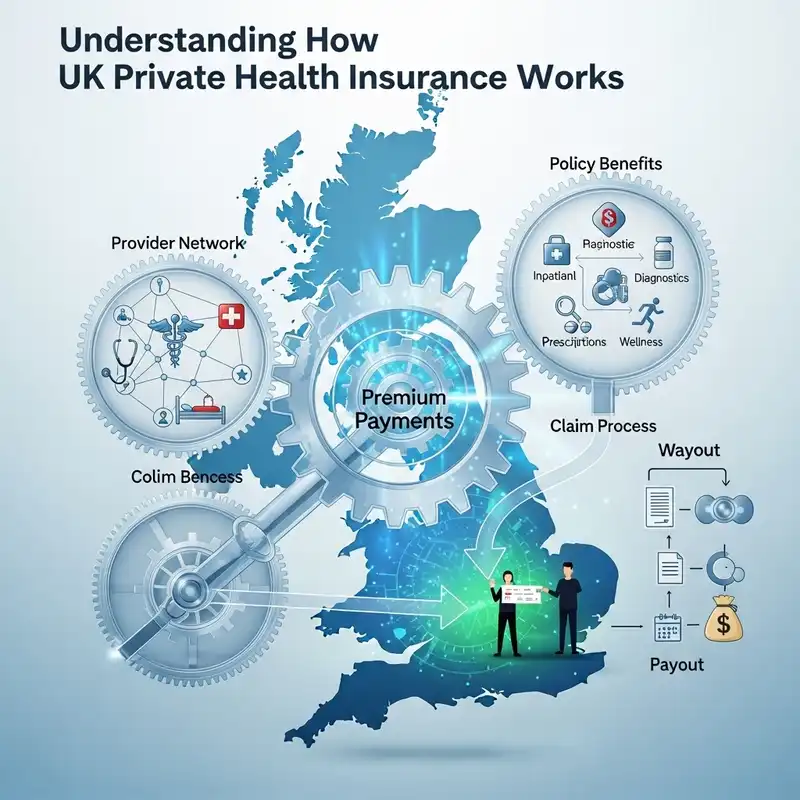
In simple terms, PMI is an insurance policy that you pay for monthly or annually. In return, if you develop a new, eligible medical condition after taking out the policy, the insurer covers the costs of diagnosis and treatment in a private hospital or facility.
The core benefits directly address the crisis we've outlined:
- Speed of Access: This is the game-changer. Instead of waiting 18 months for a knee replacement, a PMI policyholder can often be seen by a specialist within days and have the surgery within weeks. This single factor can be the difference between staying in work and losing your job.
- Choice and Control: PMI gives you a say in your healthcare. You can often choose the specialist you see and the hospital where you are treated, from a nationwide network of high-quality private facilities.
- Comfort and Convenience: Treatment is typically in a private, en-suite room. You can schedule appointments and surgery at times that work around your life and work commitments, minimising disruption.
- Access to Specialist Drugs & Treatments: Some policies provide access to breakthrough drugs or treatments that may not yet be available on the NHS due to cost or NICE (National Institute for Health and Care Excellence) approval delays.
- Peace of Mind: The psychological benefit cannot be overstated. Knowing you have a fast-track option to get you back on your feet removes the enormous anxiety and stress that comes with being on a long waiting list while your health and finances deteriorate.
A Critical Distinction: Understanding What PMI Covers (and What It Doesn't)
This is the single most important section of this guide. Understanding the scope of PMI is essential to having the right expectations. Misunderstanding this point is the number one source of frustration for new policyholders.
Crucially, standard UK Private Medical Insurance is designed to cover new, acute conditions that arise after your policy has begun.
Let's define these terms with absolute clarity.
| Condition Type | Definition | PMI Coverage Status | Example |
|---|---|---|---|
| Acute Condition | An illness or injury that is likely to respond quickly to treatment and aims to return you to your previous state of health. | YES - This is what PMI is for. | A hernia requiring surgery, cataracts, joint replacement, cancer treatment. |
| Chronic Condition | A long-term illness that cannot be cured, only managed through ongoing monitoring, check-ups, and medication. | NO - Routine management is not covered. | Diabetes, asthma, high blood pressure, eczema, most types of arthritis. |
| Pre-existing Condition | Any disease, illness or injury for which you had symptoms, medication, or advice before the policy start date. | NO - These are excluded from cover. | Knee pain you saw a GP about 2 years ago; medication you take for a thyroid issue. |
The Golden Rules of PMI Coverage:
- It does not cover pre-existing conditions. If you have a known health issue before you buy a policy, you cannot use that policy to get treatment for it.
- It does not cover chronic conditions. If you are diagnosed with a chronic condition like diabetes after taking out a policy, PMI might cover the initial diagnosis, but it will not cover the day-to-day management (e.g., insulin, regular check-ups).
- It is for the unexpected. Think of PMI as a shield for future, unforeseen (and treatable) health problems. It's about getting you back to work and health quickly when something new and unexpected happens.
Understanding how insurers treat pre-existing conditions is vital. There are two main methods of underwriting:
- Moratorium Underwriting: You don't declare your full medical history upfront. The insurer automatically excludes any condition you've had in the last 5 years. However, if you go 2 full years on the policy without any symptoms, treatment, or advice for that condition, it may become eligible for cover.
- Full Medical Underwriting (FMU): You provide your full medical history when you apply. The insurer then tells you exactly what is and isn't covered from day one. This provides more certainty but can be a more involved process.
How Does PMI Work in Practice? A Step-by-Step Journey
The process of using your PMI is designed to be straightforward and work alongside the NHS.
- Your First Port of Call is Still Your GP: You feel unwell or have an injury. You book an appointment with your regular NHS GP just as you always would. They are the gatekeepers to specialist care.
- Get an Open Referral: Your GP determines you need to see a specialist (e.g., an orthopaedic surgeon or a cardiologist). You ask them for an 'open referral' letter, which states the type of specialist you need to see but doesn't name a specific individual.
- Contact Your Insurer: You call your PMI provider's claims line. You'll need your policy number and the details from the referral letter.
- Claim Authorisation: The insurer will check that your policy covers the condition. Once approved, they will provide you with a list of approved specialists and hospitals from their network that you can choose from. They will give you an authorisation number for the consultation and any initial diagnostic tests.
- Book Your Private Appointments: You are now in the fast lane. You call the private hospital or specialist's secretary, provide your authorisation number, and book your consultation and treatment at a time that suits you. This often happens within days.
- The Insurer Settles the Bill: After your treatment, the hospital and specialists send their invoices directly to your insurance company. Apart from any excess you have on your policy, you have nothing to pay.
The process is designed to be seamless, taking the financial and administrative burden away from you so you can focus on getting better.
Tailoring Your Shield: How to Customise a PMI Policy
One of the best things about modern PMI is its flexibility. It's not a one-size-fits-all product. You can build a policy that matches your specific needs and budget by adjusting various components.
Core Cover: Nearly all policies start with this foundation, which covers the most expensive treatments:
- In-patient Care: When you are admitted to a hospital bed overnight.
- Day-patient Care: When you are admitted for a procedure but do not stay overnight.
- Comprehensive Cancer Cover: Often included as standard, this is a huge benefit, providing access to specialist treatment, chemotherapy, and new drugs.
Popular Add-ons: You can then choose to add extra layers of protection:
- Out-patient Cover: This is the most common add-on. It covers diagnostic tests and consultations that don't require a hospital bed. This is vital for speedy diagnosis. You can often choose a limit (e.g., £1,000 per year) to manage the cost.
- Mental Health Cover: With long NHS waits for therapy, this is an increasingly popular option, providing access to psychiatrists and therapists.
- Therapies Cover: Covers treatments like physiotherapy, osteopathy, and chiropractic care, which are essential for recovery from many musculoskeletal issues.
- Dental and Optical Cover: Can be added to cover routine and emergency dental or optical needs.
Cost-Control Levers: These options allow you to reduce your monthly premium:
- Excess: Just like with car insurance, this is the amount you agree to pay towards the first claim you make in a policy year. A higher excess (£250 or £500) will lower your premium significantly.
- Hospital List: Insurers have different tiers of hospital lists. Choosing a list that excludes the most expensive central London hospitals can reduce your premium.
- The 6-Week Wait Option: This is a clever way to save money. If you choose this option, for any treatment you need, if the NHS can provide it within six weeks, you agree to use the NHS. If the NHS wait is longer than six weeks, your private cover kicks in. This effectively makes your PMI a "backlog buster."
Navigating these options can be complex. That's where an expert broker like us at WeCovr comes in. We compare plans from all the UK's leading insurers, including Bupa, AXA, Aviva, and Vitality. Our job is to understand your unique situation and search the market to find a policy that provides the right protection at a price that fits your budget.
The Cost of Protection vs. The Cost of Inaction
Many people assume PMI is unaffordably expensive. However, when you weigh the monthly premium against the potential cost of being unable to work, the value proposition becomes incredibly clear.
Let's revisit Ben, our self-employed electrician earning £45,000 per year, who needed hernia surgery.
| Financial Impact | The NHS Route (14-month wait) | The PMI Route (Treatment in 4 weeks) |
|---|---|---|
| Time Off Work | 14 months (waiting) + 4 weeks (recovery) | 4 weeks (recovery) |
| Lost Income | Approx. £52,500 | Approx. £3,750 |
| Cost of Protection | £0 (but at what cost?) | Premium: ~£50/month (£600/year). Excess: £250 |
| Total Financial Hit | £52,500 + Business collapse | £4,600 (Lost Income + PMI Costs) |
| Outcome | Livelihood destroyed, immense stress. | Back to work in a month, business saved. |
For the price of a couple of weekly coffees, Ben could have protected his entire income and his business. The premiums for a healthy 40-year-old can start from as little as £45 per month for a solid, well-structured policy. For a 50-year-old, it might be closer to £70-£90. This is a tiny price to pay for a multi-million-pound safety net. (illustrative estimate)
Beyond the Policy: The Added Value of a Modern Broker
In today's world, choosing the right insurance partner is about more than just the policy document. At WeCovr, we believe in a holistic approach to our clients' health and wellbeing. We don't just find you a policy; we build a relationship and provide ongoing value.
That's why we go above and beyond. As a thank you for trusting us with your health protection, all our PMI clients receive complimentary lifetime access to CalorieHero, our exclusive AI-powered calorie and nutrition tracking app. We believe that proactive health is the best medicine, and providing tools to help you stay well, long before you might ever need to claim, is part of our commitment to you. It's a small way of showing we care about your health journey, not just your insurance policy.
This, combined with our expert, impartial advice and support during the claims process, is what sets a dedicated broker apart.
Frequently Asked Questions (FAQ)
Q: Is PMI worth it if I'm young and healthy? A: Absolutely. This is the best time to get it. Premiums are at their lowest, and you can lock in cover before any health conditions develop and become "pre-existing." It's a shield for your future self.
Q: What if my employer offers a PMI scheme? A: Group PMI is a fantastic benefit. However, you should check the level of cover, as it can sometimes be basic. You may also lose the cover if you leave your job, so having a personal policy offers greater security.
Q: What happens if I develop a chronic condition like asthma after buying my policy? A: Your PMI policy would typically cover the costs of the initial consultations and diagnostic tests to get to the bottom of your symptoms. However, once it's diagnosed as a chronic condition, the ongoing management (e.g., inhalers, routine check-ups) would revert to the NHS.
Q: Does PMI cover cancer? A: Yes, comprehensive cancer cover is a core feature of almost all UK PMI policies. This is one of the most valued benefits, providing access to specialist cancer centres, treatments, and drugs without the long waits.
Q: Is it better to go direct to an insurer or use a broker like WeCovr? A: Going direct means you only see one company's products. A broker provides a view of the entire market. We can compare dozens of policies to find the one with the right features for you at the most competitive price. Our service is free to you, as we are paid by the insurer, and you pay the same premium as you would going direct.
Your Next Step: Taking Control of Your Health and Financial Future
The data is undeniable, and the risk is real. The UK's health backlog is now a direct threat to the financial security of every working family in the country. Relying on hope as a strategy is no longer viable when your income, your savings, and your family's future are on the line.
You have a choice. You can roll the dice and hope that you don't get sick, or that if you do, the waiting list for your specific condition is manageable. Or you can take a decisive, proactive step to protect everything you've worked for.
Private Medical Insurance is not a luxury; in 2025, it has become an essential component of responsible financial planning. It is the shield that stands between a treatable medical condition and a lifetime of financial hardship.
The time to put that shield in place is now, before you need it. Protect your most valuable asset – your ability to earn an income. Take control of your health, and secure your future.
Sources
- NHS England: Waiting times and referral-to-treatment statistics.
- Office for National Statistics (ONS): Health, mortality, and workforce data.
- NICE: Clinical guidance and technology appraisals.
- Care Quality Commission (CQC): Provider quality and inspection reports.
- UK Health Security Agency (UKHSA): Public health surveillance reports.
- Association of British Insurers (ABI): Health and protection market publications.
Disclaimer: This is general guidance only and does not constitute formal tax or financial advice. Tax treatment depends on individual circumstances, policy terms, and HMRC interpretation, which cannot be guaranteed in advance. Whenever applicable, businesses and individuals should always consult a qualified accountant or tax adviser before arranging such policies.
Start with your Protection Score, then decide whether private health cover is the right fit
Check where health access sits in your overall protection picture before deciding whether to compare private health cover.
Spot whether NHS access risk is the real issue
See if PMI is the gap to fix first
Get health insurance help only if it makes sense for you
Get your score
Start with your protection score
Check your current position first, then get health insurance help if you need it.
Check your current resilience
Score your income, health access and family protection position in a few minutes.
See where private cover helps
Understand whether faster diagnosis and treatment is a priority gap.
Continue to tailored PMI help
If health access is the issue, continue to tailored PMI help.
What you get
A quick view of your current protection position
A clearer idea of where the biggest gaps may be
A direct route to tailored help if you want it