TL;DR
The UK's healthcare landscape is at a critical juncture. As we navigate 2025, the cherished National Health Service (NHS) is facing unprecedented pressure. Waiting lists have reached historic highs, leaving millions in discomfort and uncertainty.
Key takeaways
- Accident & Emergency (A&E): If you have an accident or a medical emergency, you go to your local A&E. PMI does not cover this.
- GP Services: Your NHS GP remains your first point of contact for any health concerns.
- Chronic Conditions: The NHS will continue to manage long-term, incurable conditions.
- You Feel Unwell: You develop a new symptom (e.g., a painful knee, persistent backache, a concerning lump).
- Visit Your NHS GP: You see your GP (or use a Digital GP service if included in your policy) as you normally would. They assess your condition.
UK Health Choice
The UK's healthcare landscape is at a critical juncture. As we navigate 2025, the cherished National Health Service (NHS) is facing unprecedented pressure. Waiting lists have reached historic highs, leaving millions in discomfort and uncertainty. This has forced a difficult choice upon a significant portion of the population: endure potentially lengthy waits for NHS treatment or dip into personal savings for costly private care.
Recent surveys paint a stark picture: more than one in three Britons are now actively considering private healthcare due to these delays. While the impulse to regain control over one's health is understandable, going it alone without insurance—known as 'self-pay'—can be a high-stakes financial gamble. A single surgical procedure can cost tens of thousands of pounds, an unplanned expense that few can comfortably absorb.
This is where Private Medical Insurance (PMI) emerges not as a luxury, but as a strategic solution. It provides a vital third path, offering the speed and choice of the private sector without the crippling financial risk. This definitive guide will demystify the world of UK health insurance, equipping you with the knowledge to decide if it's the right choice for you and your family's future.
The State of UK Healthcare in 2026: A Statistical Snapshot
To understand the value of PMI, we must first grasp the scale of the challenge. The statistics for 2025 are not just numbers on a page; they represent millions of individual stories of pain, anxiety, and delayed lives.
- The Waiting List Elephant: The number of people waiting for routine consultant-led hospital treatment in England is projected to hover around a staggering 7.8 million throughout 2025. This means more than one in every eight people in England is on a waiting list.
- The Long Wait: Within this list, a concerning number—often exceeding 350,000 people—have been waiting for over a year for their treatment to begin.
- Cancer Care Under Strain: While the NHS strives to meet urgent cancer referral targets, the two-month wait from referral to treatment goal is consistently being missed, causing immense distress for patients at their most vulnerable.
- The Rise of Self-Pay: The number of people choosing to self-fund private treatment has surged by over 35% compared to pre-pandemic levels. This trend, while demonstrating a demand for faster care, also highlights a growing two-tier system based on the ability to pay out-of-pocket.
Let's put this into the context of common procedures.
| Procedure | Typical NHS Waiting Time (Referral to Treatment) | Typical Private Sector Access Time |
|---|---|---|
| Hip or Knee Replacement | 12 - 18+ months | 4 - 6 weeks |
| Cataract Surgery | 9 - 12 months | 3 - 5 weeks |
| Hernia Repair | 8 - 14 months | 3 - 6 weeks |
| MRI or CT Scan | 6 - 10 weeks | 1 - 7 days |
Source: Analysis of NHS England referral to treatment (RTT) data and private hospital network estimates, 2025.
The conclusion is clear. For non-emergency, or 'elective', care, the system is struggling to keep pace. This is precisely the gap that Private Medical Insurance is designed to fill.
What is Private Medical Insurance (PMI) and How Does It Work?
At its core, Private Medical Insurance is a policy you purchase to cover the costs of private healthcare for specific conditions. Think of it like car insurance for your body; you pay a regular premium, and should you need eligible treatment, the insurer covers the bill, minus any agreed excess.
It's crucial to understand that PMI is designed to complement, not replace, the NHS. The NHS remains the cornerstone of UK healthcare, particularly for:
- Accident & Emergency (A&E): If you have an accident or a medical emergency, you go to your local A&E. PMI does not cover this.
- GP Services: Your NHS GP remains your first point of contact for any health concerns.
- Chronic Conditions: The NHS will continue to manage long-term, incurable conditions.
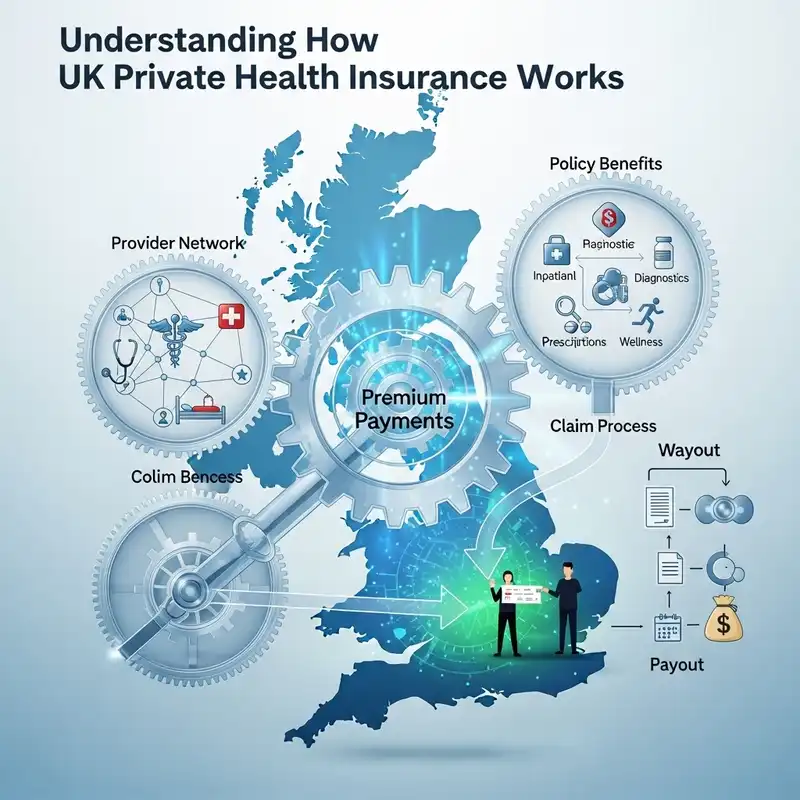
So, how does the PMI process typically unfold?
- You Feel Unwell: You develop a new symptom (e.g., a painful knee, persistent backache, a concerning lump).
- Visit Your NHS GP: You see your GP (or use a Digital GP service if included in your policy) as you normally would. They assess your condition.
- Receive a Referral: If your GP believes you need to see a specialist or have diagnostic tests, they will write you an 'open referral' or a referral to a specific specialist.
- Contact Your Insurer: You call your PMI provider with your referral details. They will check your policy to ensure the condition and proposed treatment are covered.
- Authorisation is Granted: Once approved, the insurer provides an authorisation number. You are now free to book your appointment.
- Receive Private Treatment: You see a private consultant, have your tests (like an MRI scan, often within days), and receive any necessary surgery or treatment in a private hospital at a time that suits you.
- The Bill is Settled: The private hospital and consultant send their invoices directly to your insurance company for payment. You only pay the pre-agreed excess.
This streamlined process grants you speed, choice, and control over your healthcare journey when you need it most.
The Crucial Distinction: What PMI Covers (and What It Doesn't)
This is the most important section of this guide. Understanding the scope of cover is essential to avoid disappointment and ensure you have the right expectations.
Standard UK Private Medical Insurance is designed to cover ACUTE conditions that arise AFTER your policy begins.
- An acute condition is a disease, illness, or injury that is likely to respond quickly to treatment and lead to a full recovery. Examples include cataracts, joint problems requiring replacement, hernias, and most cancers.
Conversely, there are key areas that PMI does not typically cover.
The Golden Rule: No Cover for Pre-existing or Chronic Conditions
This cannot be overstated. If you have a health condition before you take out a policy, it will be considered pre-existing and will not be covered.
Similarly, chronic conditions—illnesses that are long-term and cannot be cured, only managed—are also excluded.
The NHS remains the provider of care for these conditions.
| Covered (Examples of Acute Conditions) | Not Covered (Examples of Exclusions) |
|---|---|
| Joint replacement (hip, knee) | Chronic Conditions: Diabetes, Asthma, Arthritis |
| Cancer diagnosis & treatment | Pre-existing Conditions: Any illness you had before the policy |
| Cataract & glaucoma surgery | Accident & Emergency (A&E) visits |
| Diagnostic tests (MRI, CT, PET scans) | Routine pregnancy and childbirth |
| Hernia repair | Cosmetic surgery (unless reconstructive) |
| Heart surgery (e.g., bypass) | Organ transplants |
| Mental health support (on many plans) | Treatment for drug or alcohol addiction |
Failing to understand this distinction is the single biggest source of complaints and frustration for policyholders. PMI is for new, curable health problems that occur in the future.
The Tangible Benefits of PMI: Beyond Just Skipping the Queue
While rapid access is the headline benefit, the advantages of a good PMI policy run much deeper, enhancing your entire healthcare experience.
-
Rapid Access to Diagnostics and Specialists: As the table above shows, the difference is stark. Waiting weeks for a diagnostic scan can be an anxious time. With PMI, it can often be done within a few days, leading to a faster diagnosis and a quicker start to treatment.
-
Choice and Control: This is a powerful benefit. PMI often gives you a choice of:
- Hospitals: You can choose from a list of high-quality private hospitals across the country.
- Consultants: You can research and select a leading specialist in their field.
- Timing: You can schedule surgery and appointments around your work and family commitments, not the other way around.
-
A More Comfortable Experience: Private hospitals are known for providing a higher level of comfort and privacy. This typically includes:
- A private, en-suite room.
- More flexible visiting hours for family.
- Better food and amenities. While not a medical necessity, a comfortable and calm environment can significantly aid recovery.
-
Access to Advanced Treatments: Sometimes, a new drug, treatment, or surgical technique is approved for use by the National Institute for Health and Care Excellence (NICE) but is not yet widely available on the NHS due to funding or rollout delays. Many comprehensive PMI policies will cover these treatments, giving you access to the very latest medical advancements.
-
Integrated Digital Services: The majority of modern PMI plans come with valuable digital health perks, such as:
- 24/7 Virtual GP: Get a video consultation with a GP from your smartphone, often within a couple of hours. This is perfect for getting quick advice, prescriptions, or a referral without waiting for an appointment at your local surgery.
- Mental Health Support: Many insurers now offer a set number of therapy sessions (e.g., CBT) or access to mental health support apps without needing a GP referral first.
Deconstructing the Cost: What Determines Your PMI Premium?
The cost of a PMI policy isn't a one-size-fits-all figure. It's a tailored price based on a combination of your personal circumstances and the level of cover you choose. Understanding these levers is key to finding a policy that fits your budget.
1. Personal Factors
- Age: This is the single biggest determinant of your premium. The likelihood of needing medical treatment increases with age, so premiums rise accordingly.
- Location: Where you live matters. The cost of private treatment is highest in Central London, so postcodes in and around the capital typically command higher premiums.
- Smoker Status: Smokers pay more than non-smokers due to the associated health risks.
- Medical History: Your past health can influence the price, though this is more about what's excluded than the premium itself under most underwriting types.
2. Policy Factors
This is where you have the most control to tailor the price.
-
Level of Cover: Policies are generally tiered:
- Basic/Entry-Level: Covers in-patient and day-patient treatment only (i.e., when you need a hospital bed). It's designed to protect against the cost of major surgery.
- Mid-Range: The most popular choice. It includes the above plus a contribution towards out-patient costs (specialist consultations, diagnostic scans).
- Comprehensive: Covers in-patient, day-patient, and full out-patient costs. It often includes extra benefits like mental health, dental, and optical cover.
-
The Excess: Just like with car insurance, this is the amount you agree to pay towards a claim. An excess can range from £0 to £1,000 or more. Opting for a higher excess is one of the most effective ways to reduce your monthly premium. A £500 excess can lower your premium by 20-30% compared to a £0 excess.
-
Hospital List: Insurers have different lists of hospitals where you can be treated.
- Local Lists: Restrict you to hospitals in your immediate area, offering a lower premium.
- National Lists: Give you access to hundreds of private hospitals across the UK (excluding the most expensive in Central London).
- Premium Lists: Include the top-tier London hospitals, carrying the highest premium.
-
Optional Add-ons: You can often add benefits like extensive cancer cover, dental and optical care, international cover, and enhanced mental health support for an additional cost.
Example PMI Premium Costs (2026 Estimates)
To give you a clearer idea, here are some illustrative monthly premiums. These are for non-smokers living outside London with a £250 excess.
| Profile | Basic In-Patient Cover | Mid-Range Cover (with Out-Patient) | Comprehensive Cover |
|---|---|---|---|
| 30-year-old individual | £35 - £45 | £55 - £70 | £80 - £100 |
| 45-year-old couple | £90 - £110 | £140 - £170 | £190 - £230 |
| Family (2 adults, 2 kids) | £120 - £150 | £180 - £220 | £250 - £300+ |
| 60-year-old individual | £95 - £120 | £140 - £180 | £200 - £250 |
These are indicative prices. For a precise figure, a personalised quote is essential.
Navigating the Market: How to Choose the Right PMI Policy
The UK PMI market is competitive, with several major insurers including Bupa, AXA Health, Aviva, Vitality, and The Exeter. Each has its own strengths, policy structures, and hospital networks. Trying to compare them all on a like-for-like basis can be complex and time-consuming.
This is where an independent expert broker becomes invaluable. At WeCovr, we specialise in navigating this complexity for our clients. Using a broker like us has several key advantages:
- Whole-of-Market Access: We compare plans and prices from all the leading UK insurers, not just one or two.
- Expert, Unbiased Advice: We don't work for the insurers; we work for you. Our job is to understand your needs and budget and recommend the most suitable policy.
- Saves You Time and Hassle: We do the research, handle the paperwork, and explain the jargon, making the process simple and clear.
- No Extra Cost: Our service is paid for by the insurer you choose, so you get expert guidance without paying a penny extra.
We also believe in supporting our clients' long-term health. That's why, in addition to the benefits of the insurance policy itself, we provide our customers with complimentary access to CalorieHero, our proprietary AI-powered nutrition and calorie tracking app. It's our way of going above and beyond, helping you stay proactive about your wellness.
Underwriting Explained Simply: Mori vs. FMU
When you apply for PMI, the insurer needs to know about your medical history to apply the 'pre-existing conditions' exclusion. This is done in one of two ways.
| Feature | Moratorium (Mori) Underwriting | Full Medical Underwriting (FMU) |
|---|---|---|
| The Process | No medical questionnaire upfront. Quick and simple to set up. | You complete a detailed health questionnaire. |
| How it Works | Automatically excludes any condition you've had symptoms of, or treatment for, in the last 5 years. | The insurer assesses your health history and lists specific, permanent exclusions on your policy document. |
| Covering Old Conditions | The exclusion can be lifted if you remain completely symptom, treatment, and advice-free for that condition for a continuous 2-year period after your policy starts. | Exclusions are typically permanent and will not be covered in the future. |
| Claim Process | Slower. The insurer will investigate your medical history at the point of a claim to see if it's pre-existing. | Faster and more certain. It's clear from the start what is and isn't covered. |
| Best For | People who want a quick start and have a clean bill of health or minor past issues they expect to remain clear of. | People who want absolute certainty on what's covered from day one, or have a more complex medical history. |
Choosing the right underwriting method is a key decision. A broker can help you decide which approach is best for your personal circumstances.
Is PMI Worth It? A Real-World Cost-Benefit Analysis
The ultimate question is one of value. Is paying a monthly premium a worthwhile investment? Let's consider a common, real-world scenario.
Scenario: A 50-year-old teacher, David, develops severe knee pain.
- The Problem: David's GP diagnoses osteoarthritis and refers him for a knee replacement.
- The Premium: David has a mid-range PMI policy costing him £80 per month (£960 per year). He has had it for three years. His excess is £250.
Here are his three potential paths:
-
The NHS Path:
- Wait Time: David is placed on the NHS waiting list. The current average wait for this surgery is 16 months.
- The Impact: During this time, his mobility is poor. He struggles at work, can't play with his grandchildren, and his quality of life is severely diminished. He may need to take extended sick leave, impacting his income.
- Cost: The surgery is free at the point of use.
-
The Self-Pay Private Path:
- Wait Time: David can book the surgery for next month.
- The Impact: He gets his life back quickly.
- Cost (illustrative): The average all-inclusive cost for a private knee replacement in the UK is £15,000 - £18,000. This is a huge, unplanned expense that would wipe out a significant portion of his savings.
-
The PMI Path:
- Wait Time: David calls his insurer. He sees a private consultant within a week, has an MRI scan two days later, and is booked for surgery in a private hospital 4 weeks from his initial GP visit.
- The Impact: Minimal disruption to his life and work. He is back on his feet and enjoying life within a few months.
- Cost (illustrative): He pays his £250 excess. His insurer pays the remaining £14,750+ directly to the hospital and consultant. His total outlay is his premiums plus the excess.
In this scenario, the value of PMI is overwhelmingly clear. It provides the speed of the private sector for a fraction of the self-pay cost, protecting both his health and his financial wellbeing. The true benefit isn't just the money saved on the operation, but the 15 months of quality of life he regained.
The Future of Health Insurance: Trends to Watch in 2026 and Beyond
The PMI industry is not static. It's continually evolving to meet changing customer needs and leverage new technology. Here are the key trends shaping the future of private health cover:
- Focus on Prevention and Wellness: Insurers are moving beyond simply paying for sickness. Led by providers like Vitality, the market is increasingly focused on rewarding healthy behaviour. Expect more policies that offer discounts on gym memberships, fitness trackers, and even your premium for demonstrating a healthy lifestyle.
- Deeper Digital Integration: The virtual GP is just the beginning. The future lies in fully integrated digital health pathways, from app-based triage and symptom checkers to remote monitoring and digital mental health programmes.
- Hyper-Personalisation: Using data and AI, insurers will move towards creating more personalised policies. Instead of rigid tiers, you might be able to build a plan that precisely matches your health priorities and budget, adding or removing specific cover elements.
- Mental Health Parity: There is a growing recognition that mental health is as important as physical health. Insurers are expanding their mental health cover, offering more comprehensive support for therapy, psychiatric care, and wellness apps, often with a focus on early intervention.
Final Thoughts: Taking Control of Your Health in 2026
The choice facing millions of Britons is a stark one, but it doesn't have to be a binary decision between long waits and financial jeopardy. Private Medical Insurance offers a powerful and increasingly necessary solution, providing a bridge to rapid, high-quality medical care when you need it most.
It acts as a safety net, ensuring that a diagnosis for a treatable condition doesn't mean a year or more of pain and uncertainty. It gives you back a sense of control, offering choice over where, when, and by whom you are treated.
However, PMI is a significant financial product, and it's vital to enter into it with your eyes open. Understanding what is and isn't covered—especially the universal exclusions for pre-existing and chronic conditions—is paramount.
If you are one of the millions considering your healthcare options, the best first step is to seek expert advice. If you're ready to explore how PMI could provide you and your family with peace of mind and financial certainty, the team here at WeCovr can provide a free, no-obligation market review to find the plan that's right for you. In a world of uncertainty, securing your health is one of the wisest investments you can make.
Sources
- NHS England: Waiting times and referral-to-treatment statistics.
- Office for National Statistics (ONS): Health, mortality, and workforce data.
- NICE: Clinical guidance and technology appraisals.
- Care Quality Commission (CQC): Provider quality and inspection reports.
- UK Health Security Agency (UKHSA): Public health surveillance reports.
- Association of British Insurers (ABI): Health and protection market publications.