TL;DR
The latest figures for 2025 paint a sobering picture of the nation's health. While we are living longer than ever before, a significant and growing portion of that life is spent in ill health. New analysis from the Office for National Statistics (ONS) reveals a startling truth: the average Briton can now expect to spend over 15 yearsnearly two decades of their lifegrappling with illness and disability.
Key takeaways
- Direct Healthcare Costs: These are the most obvious expenses, especially for those who turn to self-funding to bypass NHS queues. This includes private consultations, diagnostic scans, therapies, and potential home modifications.
- Indirect Economic Costs: This is where the financial impact truly escalates. It represents the loss of income and career potential. Sickness absence in the UK hit a record high in 2024, with over 186 million working days lost. For individuals, chronic illness can mean reduced hours, being passed over for promotion, or forced early retirement, decimating pension pots and savings.
- Opportunity & Quality of Life Costs: How do you price a missed family holiday, the inability to play with your grandchildren, or giving up a beloved sport? While hard to quantify, these losses are perhaps the most painful. They represent a fundamental erosion of the life you planned to live.
- Speedy Diagnosis & Treatment: This is the cornerstone. Instead of waiting months for a specialist referral or a crucial MRI scan, you can often be seen in days or weeks. This reduces anxiety and leads to faster treatment and recovery.
- Choice and Control: PMI puts you in the driver's seat. You can choose the specialist you want to see and the hospital where you receive treatment from a nationwide list. You can schedule appointments and surgery at times that suit your life and work commitments.
UK Health Decline the Hidden Years
The latest figures for 2025 paint a sobering picture of the nation's health. While we are living longer than ever before, a significant and growing portion of that life is spent in ill health. New analysis from the Office for National Statistics (ONS) reveals a startling truth: the average Briton can now expect to spend over 15 years—nearly two decades of their life—grappling with illness and disability.
These aren't just statistics on a page. They are the "hidden years" – a period of diminished vitality, chronic pain, and missed opportunities. This health decline carries a devastating personal and economic cost. 2 million per person. This figure encompasses lost earnings, healthcare costs, and the profound, unquantifiable cost to our quality of life.
Against a backdrop of an NHS stretched to its limits, with record-breaking waiting lists for diagnostics and treatment, the need for a proactive health strategy has never been more urgent. This guide unpacks the reality of the UK's health decline, explores the true cost of these "hidden years," and reveals how Private Health Insurance can act as a powerful shield, protecting not just your health, but your financial future and overall well-being.
The Looming Health Crisis: Unpacking the 2025 Data
For decades, rising life expectancy has been a benchmark of societal progress. However, the 2025 ONS data forces us to look beyond the headline number and focus on a more critical metric: Healthy Life Expectancy (HLE).
- Life Expectancy: The total number of years an individual is expected to live.
- Healthy Life Expectancy: The number of years an individual is expected to live in a state of "good" or "very good" health.
The gap between these two figures represents the time spent in poor health. In 2025, this gap has widened to an alarming degree. For a male born today, life expectancy is 79.8 years, but healthy life expectancy is just 63.1 years. For a female, the figures are 83.5 and 64.9 years, respectively. This means an average of 16.7 years for men and 18.6 years for women will be lived with a health-related limitation.
This period is characterised by:
- Managing long-term illnesses.
- Reduced mobility and independence.
- Chronic pain and discomfort.
- An inability to work, socialise, or enjoy hobbies to the fullest.
This isn't a future problem; it's a present reality. The pressures on the NHS are a direct consequence of this trend, making personal health planning more critical than ever.
The £4.2 Million Question: Deconstructing the Lifetime Cost of Poor Health
The £4.2 million figure seems astronomical, but when broken down, its logic becomes terrifyingly clear. This is not simply the cost of prescriptions or hospital stays; it's a holistic measure of the economic devastation wrought by long-term illness. (illustrative estimate)
The burden is composed of three key areas:
- Direct Healthcare Costs: These are the most obvious expenses, especially for those who turn to self-funding to bypass NHS queues. This includes private consultations, diagnostic scans, therapies, and potential home modifications.
- Indirect Economic Costs: This is where the financial impact truly escalates. It represents the loss of income and career potential. Sickness absence in the UK hit a record high in 2024, with over 186 million working days lost. For individuals, chronic illness can mean reduced hours, being passed over for promotion, or forced early retirement, decimating pension pots and savings.
- Opportunity & Quality of Life Costs: How do you price a missed family holiday, the inability to play with your grandchildren, or giving up a beloved sport? While hard to quantify, these losses are perhaps the most painful. They represent a fundamental erosion of the life you planned to live.
Let's look at an illustrative breakdown of how these costs can accumulate over a lifetime for someone developing a significant chronic condition, such as severe arthritis or type 2 diabetes, in their 50s.
| Cost Category | Estimated Lifetime Impact | Examples |
|---|---|---|
| Direct Costs | £150,000 - £300,000 | Private consultations, scans, physiotherapy, medication, home adaptations. |
| Lost Earnings | £500,000 - £1,000,000+ | Reduced work hours, career stagnation, forced early retirement. |
| Lost Pension Value | £250,000 - £500,000 | Lower contributions due to reduced earnings and early retirement. |
| Opportunity Costs | £2,000,000+ | Inability to start a business, lost investment growth, caregiver costs. |
| Quality of Life | Incalculable | Missed travel, hobbies, social events; impact on mental health. |
| Total Lifetime Burden | ~£4,200,000+ | A combination of direct financial loss and profound life impact. |
This table starkly illustrates that the primary financial danger of ill-health isn't the medical bill itself, but the cascading effect it has on your ability to earn, save, and enjoy your life.
The New Normal? Rising Chronic Conditions in the UK
What is driving this decline in our healthy years? The causes are complex and interconnected, stemming from a perfect storm of lifestyle, demographic, and societal shifts.
1. The Rise of Lifestyle-Related Conditions: Modern life has, for many, become more sedentary. This, combined with diets high in processed foods, has fuelled an epidemic of conditions that were once far rarer.
2. An Ageing Population: We are victims of our own success. Advances in medicine mean we are living longer, but this also means more people are living with multiple, complex health issues. The number of people in the UK over 85 is projected to double in the next 25 years, placing an unprecedented demand on health and social care systems.
3. The Mental Health Parallel: The mind and body are inextricably linked. The latest NHS data shows a staggering one in five adults experienced some form of depression or anxiety in the past year. Poor mental health is a leading cause of long-term sickness absence and can exacerbate physical conditions, creating a vicious cycle of illness.
Here are the most common long-term conditions affecting the UK population today.
| Condition | Percentage of Population Affected (2025 est.) | Key Impact |
|---|---|---|
| High Blood Pressure | ~31% | Major risk factor for heart attack and stroke. |
| Musculoskeletal | ~28% | Chronic pain (e.g., back pain, arthritis), reduced mobility. |
| Mental Health | ~20% | Affects ability to work, socialise, and manage physical health. |
| Type 2 Diabetes | ~8% | Can lead to vision loss, nerve damage, heart disease. |
| Asthma / COPD | ~12% | Breathing difficulties, limits physical activity. |
These conditions are "chronic," meaning they require long-term management. As we will explore, this is a critical distinction in the context of health insurance.
The NHS Under Strain: A Reality Check on UK Healthcare in 2025
The National Health Service remains a source of immense national pride, providing care to millions, free at the point of use. However, it is undeniable that the system is operating under historic levels of pressure. For anyone needing non-urgent diagnosis or treatment, the reality can be one of long, anxious waits.
- Record Waiting Lists: The total NHS waiting list for elective care in England surpassed 8 million in early 2025. This includes millions waiting for essential diagnostic tests and procedures.
- The Diagnostic Bottleneck: Waiting for a scan can be one of the most stressful periods. The target is for 95% of patients to wait less than 6 weeks for a diagnostic test. The current reality? Over 450,000 people are waiting longer, with average waits for some MRI and CT scans stretching to 14 weeks or more in some trusts.
- The "Postcode Lottery": Your access to timely care can depend heavily on where you live. Waiting times for the same hip replacement surgery can vary from 18 weeks in one part of the country to over a year in another.
- GP Access: The "front door" to the NHS is also under pressure. Many struggle to get a timely appointment, leading to delays in referrals and diagnosis, allowing conditions to worsen.
This is the environment in which individuals are increasingly seeking alternatives. It's not about abandoning the NHS, but about having another option when you need it most.
The Private Health Insurance Solution: Your Shield Against the Unexpected
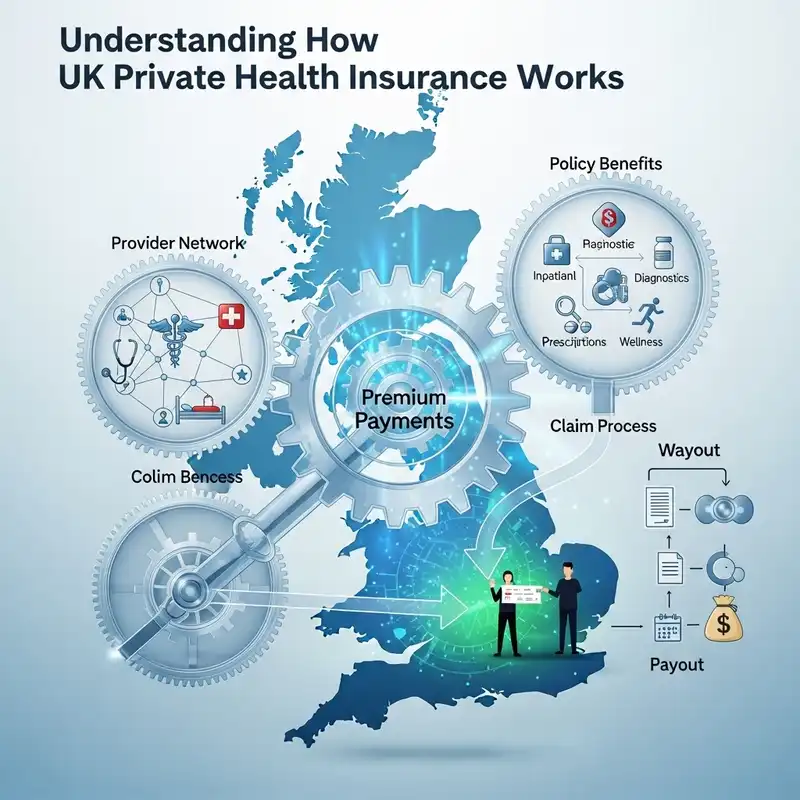
Private Medical Insurance (PMI) is a policy designed to work alongside the NHS. It gives you fast-track access to private diagnosis, treatment, and care for specific types of health conditions. Think of it as a key that unlocks a parallel system, allowing you to bypass queues and take control of your healthcare journey.
However, before we explore the powerful benefits, we must address the single most important rule of UK health insurance.
The Golden Rule: Acute vs. Chronic Conditions
This is a non-negotiable principle and one you must understand fully. Standard Private Medical Insurance in the UK is designed to cover acute conditions that arise after your policy has begun.
-
✔️ What is an Acute Condition? An acute condition is a disease, illness, or injury that is short-lived. It is expected to respond quickly to treatment, leading to a full recovery or a return to your previous state of health.
- Examples: A broken arm, appendicitis, a hernia, joint pain requiring a replacement, cataracts, or diagnosing the cause of new, unexplained symptoms. PMI is designed for this.
-
❌ What is a Chronic Condition? A chronic condition is one that is long-lasting and has no known definitive cure. It requires ongoing management, monitoring, and/or medication.
- Examples: Diabetes, asthma, high blood pressure, arthritis, Crohn's disease, epilepsy. Standard PMI policies do NOT cover the routine management of chronic conditions.
-
❌ What is a Pre-existing Condition? This is any disease, illness, or injury for which you have experienced symptoms, received medication, advice, or treatment before the start of your PMI policy. Standard PMI policies do NOT cover pre-existing conditions.
This distinction is fundamental. PMI is not a replacement for the NHS in managing long-term illnesses. It is a tool for rapidly resolving new, curable health issues that could otherwise leave you waiting in pain and uncertainty, impacting your ability to work and live your life. By fixing the acute problems quickly, you preserve your overall long-term health.
Core Benefits of PMI: More Than Just Skipping the Queue
While speed is the most famous benefit, the advantages of a good PMI policy run much deeper, offering a superior healthcare experience when you are at your most vulnerable.
- Speedy Diagnosis & Treatment: This is the cornerstone. Instead of waiting months for a specialist referral or a crucial MRI scan, you can often be seen in days or weeks. This reduces anxiety and leads to faster treatment and recovery.
- Choice and Control: PMI puts you in the driver's seat. You can choose the specialist you want to see and the hospital where you receive treatment from a nationwide list. You can schedule appointments and surgery at times that suit your life and work commitments.
- Comfort and Privacy: A private en-suite room can make a world of difference to your recovery. More flexible visiting hours and a quieter environment reduce stress and allow you to rest and heal more effectively.
- Access to Specialist Drugs & Treatments: Some advanced cancer drugs or surgical techniques may not be available on the NHS due to cost constraints or delays in approval by the National Institute for Health and Care Excellence (NICE). A comprehensive PMI policy can provide access to these breakthrough treatments.
- Extensive Mental Health Support: Recognising the mental health crisis, most modern policies now offer significant cover for psychiatric care, including access to therapy and counselling sessions without a long wait.
- Digital GP Services: Nearly all PMI plans now include a 24/7 virtual GP service. This allows you to speak to a doctor via phone or video call at any time, often getting a prescription or referral instantly without leaving your home.
A Practical Guide: How Does Private Health Insurance Actually Work?
Let's walk through a common, real-world scenario to see how PMI functions in practice.
Meet David: David is a 52-year-old project manager with a mid-level health insurance policy. He starts experiencing persistent shoulder pain that is affecting his sleep and his ability to concentrate at work.
The NHS Pathway (Without PMI):
- GP Visit: David manages to get a GP appointment after a week. The GP suspects a rotator cuff injury and prescribes painkillers, referring him for physiotherapy. The physio waiting list is 12 weeks.
- Waiting: After 12 weeks, David starts physio. After six sessions, there is little improvement. The physiotherapist recommends an MRI scan to get a clearer picture.
- Another Wait: The GP refers him for an MRI. The waiting list at the local hospital is 16 weeks.
- Diagnosis: Four months later, the MRI confirms a significant tear requiring surgery. He is placed on the surgical waiting list. The estimated wait is 40 weeks.
- Total Time to Treatment: Over a year from his initial GP visit. During this time, his pain has worsened, he's used up his sick pay, and his performance at work has suffered.
The PMI Pathway:
- GP Visit: David sees his NHS GP, who gives him an open referral letter for an orthopaedic specialist.
- Activate PMI: David calls his insurance provider. They approve the consultation and give him a list of recognised specialists in his area.
- Private Consultation & Scan: David sees a top shoulder surgeon nine days later. The specialist agrees an MRI is needed. David has the scan two days after that at a private imaging centre.
- Diagnosis & Treatment Plan: The MRI confirms a tear. The surgeon discusses the options, and they agree surgery is the best course. The operation is scheduled for three weeks later at a private hospital of David's choice.
- Recovery: David has the surgery, recovers in a private room, and his policy covers a full course of post-operative physiotherapy, which starts the week after his operation.
- Total Time to Treatment: Around five weeks. David is back at work and pain-free while his NHS counterpart is still waiting for his first physio appointment.
This example highlights the core value of PMI: it buys you time and dramatically shortens the path from symptom to solution.
Decoding Your Policy: What to Look For in a UK Health Insurance Plan
Not all health insurance policies are created equal. The market can be complex, but understanding the key components will empower you to make an informed choice. This is where an expert broker like WeCovr becomes invaluable, as we can help you navigate these options to find the perfect fit for your needs and budget.
Key things to consider:
-
Levels of Cover:
- Basic/In-patient only: Covers tests and treatment when you are admitted to a hospital bed. It won't cover the initial consultations or diagnostics.
- Mid-Range: The most popular level. Covers everything in a basic plan, plus out-patient consultations and diagnostics up to a set annual limit (e.g., £1,000).
- Comprehensive: Covers in-patient and out-patient treatment in full, and often includes extra benefits like mental health, dental, and therapies cover.
-
The Excess: This is the amount you agree to pay towards a claim. For example, if you have a £250 excess, you pay the first £250 of a claim, and the insurer pays the rest. A higher excess will lower your monthly premium.
-
Hospital List: Insurers have different lists of approved hospitals. A more comprehensive (and expensive) plan will include premium central London hospitals, while a cheaper plan might have a more restricted regional list.
-
Optional Extras: You can tailor your policy by adding cover for:
- Mental Health: Highly recommended.
- Therapies: Covers physiotherapy, osteopathy, etc.
- Dental & Optical: For routine check-ups and treatment.
-
Underwriting:
- Moratorium: You don't declare your medical history upfront. The insurer will automatically exclude any condition you've had in the last 5 years. This exclusion is lifted if you go 2 years without symptoms or treatment for that condition after your policy starts.
- Full Medical Underwriting (FMU): You complete a full health questionnaire. The insurer will then state upfront exactly what is and isn't covered. It provides more certainty but can be more complex.
Here is a simple comparison of cover levels:
| Feature | Basic Plan | Comprehensive Plan |
|---|---|---|
| Private Room | Yes | Yes |
| Surgeon/Anaesthetist Fees | Yes (In-patient) | Yes (In-patient) |
| Out-patient Consultations | No | Yes (Usually unlimited) |
| Out-patient Diagnostics | No | Yes (Usually unlimited) |
| Cancer Cover | Yes (Core treatments) | Yes (Advanced drugs) |
| Mental Health Cover | No (or very limited) | Yes (Extensive cover) |
| Therapies Cover | No | Optional Add-on |
| Digital GP | Yes | Yes |
Proactive Health: Beyond Insurance with WeCovr
The best insurance claim is the one you never have to make. At WeCovr, we believe that true health security comes from a combination of excellent protection for when things go wrong and proactive tools to help you stay well. We see our role as more than just a broker; we are your partner in health.
This philosophy is why we go a step further for our clients. In addition to sourcing the most competitive and comprehensive insurance plans from every major UK provider, we provide our customers with a unique, complimentary benefit.
All WeCovr customers gain free access to CalorieHero, our exclusive, AI-powered nutrition and calorie tracking app.
CalorieHero is designed to be a simple, effective tool to help you build and maintain a healthy lifestyle. By understanding your nutrition, you take a powerful step towards preventing the very lifestyle-related chronic conditions that are driving the UK's health decline. It’s a tangible demonstration of our commitment to your long-term vitality, helping you safeguard your health for tomorrow, starting today.
Is Private Health Insurance Worth It? A Cost-Benefit Analysis
This is the ultimate question. The cost of a PMI policy varies widely based on age, location, level of cover, and excess. A healthy 30-year-old might pay £40 per month for a mid-range plan, while a 60-year-old seeking comprehensive cover could be looking at £150 or more.
To assess its value, you must weigh this premium against two things: the cost of not having it, and the cost of self-funding treatment.
Let's look at the average cost of going private without insurance in 2025.
| Procedure / Service | Average Self-Fund Cost (UK) | Illustrative Annual PMI Premium |
|---|---|---|
| Private MRI Scan | £400 - £800 | |
| Initial Specialist Consultation | £250 - £350 | |
| Cataract Surgery (per eye) | £2,500 - £4,000 | £720 (for a 50-year-old) |
| Hip Replacement Surgery | £13,000 - £16,000 | |
| Knee Replacement Surgery | £14,000 - £17,000 |
As you can see, the cost of a single major procedure would pay for many years of PMI premiums. A policy is essentially a hedge against these huge, unpredictable costs.
However, the true value isn't just financial. It's about:
- Peace of Mind: Knowing you have a plan if you get sick.
- Reduced Stress: Not having to endure a long and anxious wait for a diagnosis.
- Faster Return to Normality: Getting back to your job, your family, and your life as quickly as possible.
Finding the right balance between a premium you can afford and cover that gives you genuine security is a complex task. An independent, expert broker like WeCovr can be your greatest asset. We analyse the entire market, explain the nuances of each policy, and ensure you get the best possible protection for your investment.
Taking Control of Your Health Journey
The 2025 data is a clear warning. The "hidden years" of poor health are becoming a defining feature of modern British life, carrying an immense personal and financial toll. While we are fortunate to have the NHS, its current pressures mean it cannot always provide the speed of access we need when faced with a new and worrying health problem.
Private Medical Insurance is not a panacea. It does not cover chronic or pre-existing conditions. But it is an incredibly powerful tool for what it is designed for: the rapid diagnosis and treatment of new, acute conditions. By resolving these issues swiftly, you protect yourself from the pain, anxiety, and financial disruption that long waits can cause. You get back on your feet faster, preserving your long-term health, your career, and your quality of life.
Investing in a PMI policy is an investment in your future self. It’s a proactive decision to shield your vitality, secure your finances, and ensure that when illness strikes, you have the control, choice, and speed you need to get better. Don't wait for a health scare to force your hand. The time to explore your options and build your health security strategy is now.
Sources
- NHS England: Waiting times and referral-to-treatment statistics.
- Office for National Statistics (ONS): Health, mortality, and workforce data.
- NICE: Clinical guidance and technology appraisals.
- Care Quality Commission (CQC): Provider quality and inspection reports.
- UK Health Security Agency (UKHSA): Public health surveillance reports.
- Association of British Insurers (ABI): Health and protection market publications.
Disclaimer: This is general guidance only and does not constitute formal tax or financial advice. Tax treatment depends on individual circumstances, policy terms, and HMRC interpretation, which cannot be guaranteed in advance. Whenever applicable, businesses and individuals should always consult a qualified accountant or tax adviser before arranging such policies.
Start with your Protection Score, then move into the right health cover journey
This keeps the article useful but gives readers a concrete next step. They can see where health access risk sits within their overall protection picture before requesting a quote.
Spot whether NHS access risk is the real issue
See if PMI is the gap to fix first
Move into a quote journey only when it fits
Get your score
Start with your protection score
Check your current position first, then get health insurance help if you need it.
Check your current resilience
Score your income, health access and family protection position in a few minutes.
See where private cover helps
Understand whether faster diagnosis and treatment is a priority gap.
Continue to tailored PMI help
If health access is the issue, move straight into the quote flow.
What you get
A quick view of your current protection position
A clearer idea of where the biggest gaps may be
A direct route to tailored help if you want it