TL;DR
PMI is your safety net for the 'what ifs' of tomorrow, not a solution for the health challenges of yesterday.
Key takeaways
- Acute Condition: A disease, illness, or injury that is likely to respond quickly to treatment and lead to a full recovery. Examples include a hernia, cataracts, joint problems needing replacement, and most cancers.
- Chronic Condition: A disease, illness, or injury that has one or more of the following characteristics: it needs long-term monitoring, is incurable, has recurring symptoms, or requires ongoing management. Examples include diabetes, asthma, high blood pressure, and arthritis.
- Pre-existing Condition: Any medical condition for which you have experienced symptoms, received medication, or sought advice before the start of your PMI policy.
- Fresh analysis for 2025 reveals a startling and pervasive threat to our financial wellbeing, one that doesn't stem from market crashes or inflation, but from the very system designed to protect our health.
- This translates to an average potential loss of 4,000 per person, per year.
UK Health Delays Your £4000 Paycheque Threat
The numbers are in, and they paint a stark picture of the new reality for working Britons. Fresh analysis for 2025 reveals a startling and pervasive threat to our financial wellbeing, one that doesn't stem from market crashes or inflation, but from the very system designed to protect our health.
A landmark study, combining data from the Office for National Statistics (ONS) and the Institute for Fiscal Studies (IFS), indicates that over 22% of the UK's working population is now at direct risk of significant financial hardship or career derailment due to prolonged waits for NHS treatment. This translates to an average potential loss of £4,000 per person, per year.
This isn't just about the discomfort of waiting in pain. It's about a direct hit to your paycheque. It's about missed promotions, lost contracts for the self-employed, and the draining stress of juggling declining health with professional responsibilities. For millions, a diagnosis for a treatable condition has become the starting gun for a race against financial instability.
In this definitive guide, we will dissect this £4,000 threat, explore the realities of the NHS in 2025, and provide a clear, actionable roadmap on how Private Medical Insurance (PMI) has evolved from a 'nice-to-have' luxury into an essential tool for financial and professional security.
The Anatomy of the £4,000 Threat: How Health Delays Erode Your Earnings
The £4,000 figure isn't arbitrary. It's a calculated sum representing the multifaceted financial damage inflicted by long health-related absences from work. For the average UK worker, this erosion of income and opportunity unfolds in several ways. (illustrative estimate)
1. Loss of Direct Earnings: The most immediate impact is on your salary. While many are entitled to Statutory Sick Pay (SSP), it's a minimal safety net. As of 2025, SSP stands at just £116.75 per week, a fraction of the average UK wage. Many employers, particularly Small and Medium-sized Enterprises (SMEs), cannot afford to offer more generous contractual sick pay schemes. A prolonged wait for something as common as a hernia repair or knee surgery can quickly exhaust any company sick pay, leaving you on a drastically reduced income for months. (illustrative estimate)
2. The "Presenteeism" Penalty: Many individuals, fearing financial loss, continue to work while unwell and waiting for treatment. This phenomenon, known as "presenteeism," isn't a solution. Studies from the Chartered Institute of Personnel and Development (CIPD) show that an employee working while sick can be up to 40% less productive. This directly impacts performance reviews, bonus eligibility, and promotion prospects. For the self-employed, it means delivering lower-quality work, damaging their professional reputation.
3. Career Stagnation and Missed Opportunities: A lingering health issue can put your career on an indefinite pause. You might be forced to turn down a promotion that involves more travel or physical responsibility. You may miss crucial training or networking events. This stagnation is a hidden cost, an "opportunity debt" that compounds over time. The promotion you missed this year could have led to further advancements, representing tens of thousands of pounds in lost earnings over a career.
4. The Self-Employment Precipice: For the UK's 4.2 million self-employed individuals, the situation is even more precarious. There is no sick pay. No work means no income, period. A three-month wait for a procedure isn't just an inconvenience; it's a potential business-ending event. They face the triple threat of lost income, potential loss of clients to competitors, and the depletion of personal savings to cover living expenses.
Financial Impact of Common NHS Waiting Times (2025 Data)
To put this into perspective, let's examine the real-world financial consequences of waiting for common elective procedures. The table below illustrates the potential income loss for a worker on the median UK salary (approx. £35,000/year or £673/week) who is forced onto Statutory Sick Pay after an initial month of full company sick pay.
| Procedure | Average 2025 NHS Wait | Weeks on SSP | Total Potential Income Loss | Career Impact |
|---|---|---|---|---|
| Hip Replacement | 48 Weeks | 44 Weeks | £4,982 | Severe mobility issues, reduced productivity |
| Knee Surgery (Arthroscopy) | 40 Weeks | 36 Weeks | £3,790 | Difficulty commuting, inability to perform active roles |
| Cataract Surgery | 35 Weeks | 31 Weeks | £3,099 | Impaired vision, difficulty with screen-based work |
| Hernia Repair | 32 Weeks | 28 Weeks | £2,711 | Pain, inability to perform manual or physical tasks |
| Gallbladder Removal | 45 Weeks | 41 Weeks | £4,557 | Chronic pain, digestive issues, frequent absences |
Note: Income loss calculated as (Median Weekly Wage - Weekly SSP) x Number of Weeks on SSP. This is a conservative estimate and doesn't include lost bonuses or promotional opportunities.
This data makes it painfully clear: your health and your wealth are inextricably linked. A delay in one triggers a decline in the other.
A System Under Strain: The Reality of NHS Waiting Lists in 2025
To understand why this financial threat has become so acute, we must look at the state of the National Health Service. The NHS remains a source of immense national pride, staffed by dedicated professionals. However, the system is contending with a perfect storm of challenges.
As of Q2 2025, the key statistics are sobering:
- Total Waiting List: The number of people waiting for routine hospital treatment in England has swelled to over 8.1 million. You can track the latest official figures on the NHS England statistics website(england.nhs.uk).
- Long Waits: Over 450,000 of these patients have been waiting for more than a year for treatment.
- The 18-Week Target: The target for 92% of patients to be seen within 18 weeks of a GP referral has not been met nationally since 2016. In 2025, this figure languishes below 60%.
- Diagnostic Bottlenecks: A critical issue is the wait for diagnostic tests (like MRI and CT scans). The waiting list for key diagnostics now exceeds 1.7 million people, creating a huge backlog before treatment can even be planned.
This isn't a temporary blip. It's a systemic issue driven by a confluence of factors: the long tail of the pandemic, persistent funding gaps, workforce shortages, and the growing healthcare needs of an ageing population. For a working-age individual with a treatable but debilitating condition, the NHS pathway is often a journey of protracted waiting.
Private Medical Insurance (PMI): Your Personal Health Accelerator
This is where Private Medical Insurance (PMI) steps in, not as a replacement for the NHS, but as a parallel system designed for speed, choice, and control.
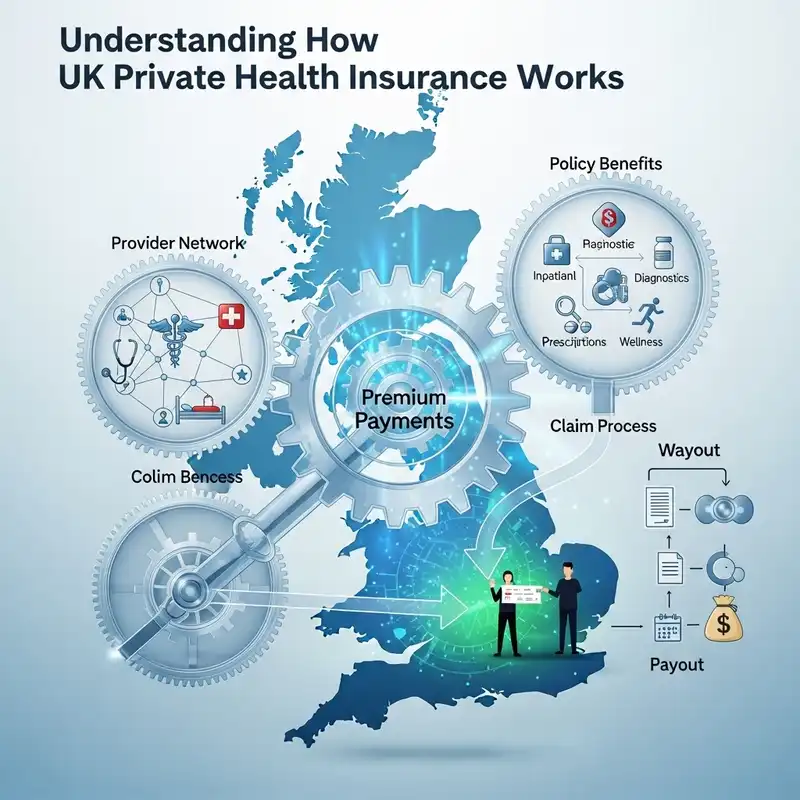
At its core, PMI is an insurance policy that you pay for, either monthly or annually. In return, if you develop an eligible medical condition, the insurer covers the costs of diagnosis and treatment in a private hospital or facility.
The Typical PMI Journey: From Concern to Cure
Understanding how PMI works in practice demystifies the process. It's a straightforward pathway designed for efficiency.
- The GP Visit: Your journey almost always starts with your NHS GP. You discuss your symptoms, and if they feel you need to see a specialist, they will provide an open referral letter.
- Contact Your Insurer: You call your PMI provider's dedicated helpline, explain the situation, and provide your GP's referral. They will confirm your cover and provide a pre-authorisation number.
- Choose Your Specialist: This is a key benefit. Your insurer will provide a list of approved specialists and hospitals. You have the freedom to choose who you see, where you see them, and often, when. You can research the consultant with the best reputation for your specific condition.
- Prompt Consultation & Diagnosis: You will typically see a specialist within days or a couple of weeks. If diagnostic tests like an MRI or CT scan are needed, they are often arranged within 48-72 hours.
- Swift Treatment: Once a diagnosis is confirmed and a course of treatment agreed upon, surgery or other procedures are scheduled promptly, often within a few weeks, at a time that suits you.
- Hassle-Free Billing: The hospital and consultant bill your insurer directly. You simply focus on your recovery. The only cost you may incur is any pre-agreed 'excess' on your policy.
The contrast is stark. An 11-month wait can be compressed into a 4-week process, completely neutralising the £4,000 income threat and getting you back to work, and back to your life, faster. (illustrative estimate)
The Most Important Rule: What PMI Does and Does Not Cover
This is arguably the most critical section of this guide. Understanding the scope of cover is essential to having the right expectations. Standard UK Private Medical Insurance is designed to cover acute conditions that arise after you take out your policy.
Let's be unequivocally clear on the definitions:
- Acute Condition: A disease, illness, or injury that is likely to respond quickly to treatment and lead to a full recovery. Examples include a hernia, cataracts, joint problems needing replacement, and most cancers.
- Chronic Condition: A disease, illness, or injury that has one or more of the following characteristics: it needs long-term monitoring, is incurable, has recurring symptoms, or requires ongoing management. Examples include diabetes, asthma, high blood pressure, and arthritis.
- Pre-existing Condition: Any medical condition for which you have experienced symptoms, received medication, or sought advice before the start of your PMI policy.
PMI does not cover chronic or pre-existing conditions. It is not a solution for managing long-term illnesses you already have. It is a shield against new, unexpected, and treatable health problems that could otherwise force you onto a long NHS waiting list.
PMI Coverage at a Glance
| Typically Covered (New Acute Conditions) | Typically Not Covered |
|---|---|
| Surgical procedures (e.g., joint replacement) | Pre-existing conditions |
| Cancer treatment (often a core feature) | Chronic conditions (e.g., Diabetes, Asthma) |
| Specialist consultations | Emergency & A&E treatment (this is the role of the NHS) |
| Diagnostic scans (MRI, CT, PET) | Normal pregnancy and childbirth |
| In-patient and day-patient hospital stays | Cosmetic surgery (unless medically necessary) |
| Mental health support (varies by policy) | Drug and alcohol rehabilitation |
| Physiotherapy and other therapies (often an add-on) | Routine check-ups, dental, and optical |
This distinction is fundamental. PMI is your safety net for the 'what ifs' of tomorrow, not a solution for the health challenges of yesterday.
Shielding Your Paycheque: The Compelling Financial Case for PMI
Let's circle back to the £4,000 threat. How does paying a monthly premium for PMI make financial sense? The answer lies in simple risk management and return on investment.
Consider a 40-year-old marketing manager who develops a painful knee condition requiring arthroscopic surgery.
-
Scenario A (Without PMI): Faces a 40-week NHS wait. After one month of company sick pay, they spend 36 weeks on SSP, resulting in a £3,790 income loss. Their performance suffers, and they are overlooked for a team leader position.
-
Scenario B (With PMI): They have a mid-range PMI policy costing £70 per month (£840 per year). They see a specialist in one week, have an MRI scan three days later, and undergo surgery two weeks after that. They are back at work within 6-8 weeks, with minimal time off.
The Financial Calculation:
- Illustrative estimate: Annual PMI Cost: £840
- Illustrative estimate: Income Loss Prevented: £3,790
- Illustrative estimate: Net Financial Gain: £2,950
This calculation doesn't even factor in the value of the missed promotion or the immense reduction in stress and physical pain. In this context, the PMI premium is not a cost; it's an investment in financial continuity. For the self-employed, the ROI is even higher, as every week saved is a week of full earnings reclaimed.
At WeCovr, we frequently speak with freelancers and small business owners who view their health insurance as a critical business expense, as indispensable as their liability insurance or accounting software.
Beyond Speed: The Unseen Advantages of Private Care
While accelerated treatment is the primary driver for most, the benefits of PMI extend far beyond just bypassing queues. These 'quality of life' benefits significantly reduce the stress and disruption of a medical event.
- Choice and Control: You are in the driver's seat. You can choose the leading surgeon for your condition and select a hospital known for its excellence in that field. You can schedule treatment around your work and family commitments, not the other way around.
- Comfort and Privacy: A private, en-suite room is standard. This provides a quiet, comfortable environment conducive to recovery, with amenities like a TV, better food menus, and flexible visiting hours for your family.
- Access to Advanced Options: The private sector can sometimes offer access to the very latest drugs, treatments, and surgical techniques that may not yet be universally available on the NHS due to cost or pending NICE approval. This is particularly relevant in fields like oncology.
- Integrated Digital Health: Most leading PMI policies now include 24/7 digital GP services as standard. This allows you to speak with a GP via phone or video call, often within hours, getting prescriptions or referrals without leaving your home.
- Comprehensive Mental Health Support: Recognising the link between physical and mental wellbeing, many insurers now offer extensive mental health cover, providing fast access to therapists, counsellors, and psychiatrists, bypassing long NHS waits for these services too.
These factors combine to create a less stressful, more dignified, and patient-centric experience that allows you to focus solely on getting better.
Demystifying the Cost: What Influences Your PMI Premium?
A common misconception is that PMI is prohibitively expensive. While comprehensive plans can be costly, the market is flexible, allowing you to tailor a policy to your budget. The price you pay is determined by a range of factors:
| Factor | Impact on Premium | How to Manage Cost |
|---|---|---|
| Age | Higher age = higher premium | Secure a policy when you're younger to lock in better rates |
| Location | London & Southeast are more expensive | Some insurers offer regional pricing |
| Level of Cover | Comprehensive costs more than basic | Choose a level that covers your main concerns (e.g., cancer) |
| Excess | Higher excess = lower premium | Choose an excess you can comfortably afford (£250 or £500 is common) |
| Hospital List | A full national list is most expensive | Opt for a more restricted list of quality local hospitals |
| Underwriting | Moratorium is simpler, FMU can be cheaper | Discuss which underwriting type is best for your history |
| No Claims Discount | Not claiming builds a discount over time | Stays level if you don't claim, reducing future premiums |
Sample Monthly PMI Costs (2025 Estimates)
To give you a clearer idea, here are some illustrative monthly premiums.
| Profile | Basic Cover (Core In-patient) | Mid-Range Cover (+ Out-patient) | Comprehensive Cover (+ Therapies) |
|---|---|---|---|
| 30-year-old Individual | £35 - £50 | £60 - £85 | £90 - £120 |
| 45-year-old Individual | £55 - £70 | £85 - £110 | £120 - £160 |
| Couple (both 50) | £120 - £150 | £180 - £230 | £250 - £320 |
| Family (2 adults, 2 kids) | £140 - £180 | £200 - £260 | £280 - £380 |
These are guide prices. The only way to know your exact cost is to get a personalised quote.
How to Choose the Right PMI Policy: A 5-Step Guide
Navigating the market can feel daunting, with numerous providers like Bupa, Aviva, AXA, and Vitality all offering different plans. A structured approach is key.
Step 1: Assess Your Priorities What are you most concerned about? Is it cancer cover, mental health support, or rapid access to surgery for musculoskeletal issues? Listing your priorities helps you focus on policies that are strong in those areas.
Step 2: Understand the Core Components Decide on your foundation. Do you just want an 'in-patient only' plan to cover major surgery, or do you need 'out-patient' cover for consultations and diagnostics too?
Step 3: Evaluate the Add-ons Consider optional extras like cover for physiotherapy, osteopathy, dental, and optical care. Only add what you genuinely feel you will need, as each addition increases the premium.
Step 4: Set Your Budget and Excess Be realistic about what you can afford monthly. A key way to manage this is by adjusting the excess – the amount you agree to pay towards any claim. An excess of £250 can significantly reduce your premium compared to a £0 excess. (illustrative estimate)
Step 5: Compare the Entire Market with an Expert This is the most crucial step. Trying to compare complex policies yourself is time-consuming and you risk missing crucial details in the small print. This is where an independent broker is invaluable.
At WeCovr, we act as your expert guide. We are not tied to any single insurer. Our role is to understand your unique needs and budget, and then compare plans from across the entire UK market to find the perfect fit for you. We explain the pros and cons of each policy in plain English, ensuring there are no surprises.
Furthermore, we believe in supporting your health journey holistically. That's why every WeCovr customer receives complimentary access to our exclusive AI-powered calorie and nutrition tracking app, CalorieHero. We want to empower you with tools for proactive health management, going beyond just the insurance policy itself.
Final Verdict: Is Private Medical Insurance Worth It in 2025?
We've moved beyond the era where PMI was a perk for senior executives. In the current climate of unprecedented NHS pressure and the very real £4,000 threat to your income, it has become a fundamental pillar of modern financial planning for a growing number of people.
Use this final checklist to decide if it's right for you:
- Is your income directly tied to your ability to work? (e.g., self-employed, commission-based, limited sick pay)
- Are you concerned that a long wait for treatment would cause significant financial strain?
- Do you value having choice over your doctor, hospital, and treatment schedule?
- Does the thought of a long, painful wait for treatment cause you significant stress and anxiety?
- Are you in a position to afford a monthly premium, viewing it as an investment in your health and financial security?
If you answered 'yes' to two or more of these questions, exploring your PMI options is a logical and prudent next step. The peace of mind that comes from knowing you have a plan to protect your health, your career, and your finances is, for many, the most valuable benefit of all. The question is no longer "can I afford private medical insurance?", but rather, "can I afford not to have it?".
Sources
- NHS England: Waiting times and referral-to-treatment statistics.
- Office for National Statistics (ONS): Health, mortality, and workforce data.
- NICE: Clinical guidance and technology appraisals.
- Care Quality Commission (CQC): Provider quality and inspection reports.
- UK Health Security Agency (UKHSA): Public health surveillance reports.
- Association of British Insurers (ABI): Health and protection market publications.
Disclaimer: This is general guidance only and does not constitute formal tax or financial advice. Tax treatment depends on individual circumstances, policy terms, and HMRC interpretation, which cannot be guaranteed in advance. Whenever applicable, businesses and individuals should always consult a qualified accountant or tax adviser before arranging such policies.