TL;DR
PMI is your safety net for new, curable conditions that arise after your policy begins, protecting you from the long waits that can cause your health to decline.
Key takeaways
- In-patient and Day-patient Treatment: This is the core of all policies. It covers costs if you are admitted to hospital for treatment, including surgery, hospital accommodation, and nursing care.
- Cancer Care: Most comprehensive policies offer extensive cancer cover, including access to specialist drugs and treatments that may not be available on the NHS.
- Specialist Consultations: Seeing a consultant privately.
- Diagnostic Tests: Crucial for a speedy diagnosis, this includes MRI, CT, and PET scans, X-rays, and blood tests.
- Out-patient Cover (Often an Add-on): This is a vital component that covers diagnostic tests and consultations that do not require a hospital stay. Without it, you may still face NHS waits for diagnosis.
UK Health Deterioration 2 Million At Risk By
The United Kingdom is facing a silent health crisis. Beyond the staggering headlines of record-breaking NHS waiting lists, a more alarming story is unfolding. New analysis and projections for 2025 reveal a deeply concerning trend: an estimated two million people are at significant risk of their health deteriorating—in some cases, irreversibly—while they wait for essential diagnosis and treatment.
This isn't just about the inconvenience of waiting. It's about manageable conditions becoming chronic, treatable pain turning into a debilitating reality, and the profound mental and financial toll this takes on individuals and their families. While the NHS remains a cherished institution, the current pressure it's under means that for millions, timely care is no longer a guarantee.
The consequences are stark. A delayed hip replacement means months, or even years, of lost mobility and independence. A long wait for a cardiac consultation creates prolonged anxiety and the risk of a serious event. A postponed diagnostic scan could allow a condition to progress unchecked.
This in-depth guide will unpack the data behind this looming crisis, explore the real-human cost of waiting, and provide a clear, authoritative overview of the solution that is giving hundreds of thousands of Britons control over their health: Private Medical Insurance (PMI). We will explore how PMI works, what it covers, and how it can provide a vital lifeline, offering immediate access to the care you need, when you need it most.
The Anatomy of a Crisis: Unpacking the 2026 NHS Waiting List Projections
To understand the risk, we must first grasp the scale of the challenge. The official figures paint a sobering picture, and the projections for 2025 suggest the situation is set to remain critical.
As of early 2025, the NHS England waiting list for consultant-led elective care stands at a staggering 7.54 million cases. This number, which represents around 6.3 million unique patients, has become a stubborn feature of our post-pandemic landscape.
But the headline figure only tells part of the story. The real danger lies in the duration of the waits.
- 18-Week Target: The NHS constitution states that 92% of patients should wait no more than 18 weeks from referral to treatment. In 2025, this target is being missed by a significant margin, with only around 60% of patients being seen within this timeframe.
- Long Waits: Over 350,000 people have been waiting for more than a year (52 weeks) for treatment. Thousands have been waiting even longer, with some waits exceeding 18 months.
- The "Hidden" Waiting List: These figures don't even include the millions waiting for initial GP appointments, community service referrals, or crucial diagnostic tests, which can add many more months to a patient's journey.
According to analysis from leading health think tanks like The Health Foundation(health.org.uk), even with significant efforts, the waiting list is projected to remain well above pre-pandemic levels for the foreseeable future, likely staying above 7 million into 2026.
Waiting Times for Common Procedures (2026 Data)
| Speciality | Median Wait Time (Weeks) | Number on Waiting List |
|---|---|---|
| Trauma & Orthopaedics | 14.5 | ~780,000 |
| Ophthalmology | 12.1 | ~650,000 |
| Gynaecology | 11.8 | ~550,000 |
| General Surgery | 11.5 | ~450,000 |
| Ear, Nose & Throat (ENT) | 13.2 | ~590,000 |
| Cardiology | 8.9 | ~380,000 |
Source: Aggregated data based on NHS England and ONS statistics, Q1 2025.
These aren't just numbers on a spreadsheet. Behind each statistic is a person whose life is on hold, often in increasing pain and anxiety.
The Human Cost: How Waiting Leads to Critical Health Deterioration
The prediction that over two million people will see their health worsen is based on a simple, clinical reality: conditions do not stay static. For many illnesses and injuries, time is a critical factor. Delays in diagnosis and treatment can lead to a cascade of negative consequences.
1. Physical Decline and Complications
For many, waiting means living with escalating pain and reduced physical function. A condition that could have been resolved with a straightforward procedure can become far more complex.
- Musculoskeletal Issues: Someone waiting for a hip or knee replacement may experience muscle wastage, reduced mobility in other joints due to compensation, and an increased reliance on strong painkillers, which have their own side effects. Their condition can deteriorate to the point where the eventual surgery is more complex and the recovery longer.
- Cardiac Conditions: A patient waiting for an angiogram or heart valve surgery faces the ongoing risk of a serious cardiac event. The underlying condition can worsen, making treatment more urgent and high-risk when it finally occurs.
- Gynaecological Problems: Conditions like endometriosis or fibroids can cause severe, chronic pain. Delays in treatment can lead to worsening symptoms, fertility issues, and a significant impact on quality of life.
- Cataracts: A routine cataract operation can be delayed to the point where a person's vision deteriorates significantly, leading to loss of independence, an inability to drive, and an increased risk of falls.
2. The Mental Health Toll
The psychological burden of being on a waiting list is immense and often overlooked. The uncertainty, coupled with chronic pain and a loss of normal life, is a perfect storm for mental health problems.
- Anxiety and Stress: Constantly wondering when you'll get the call, worrying your condition is getting worse, and feeling powerless over your own health is a major source of stress.
- Depression: Studies have shown a direct link between long waits for surgery and the onset of depression. The feeling of being 'in limbo' can erode a person's sense of hope and well-being.
- Impact on Relationships: Living with chronic pain and anxiety can strain relationships with family and friends, leading to social isolation.
3. The Economic Fallout
Health deterioration has a direct financial impact, creating a vicious cycle for many.
- Loss of Income: Many conditions prevent people from working. A self-employed tradesperson with a bad back or a knee injury simply cannot earn a living while waiting for surgery. This leads to lost income, depleted savings, and financial hardship.
- Presenteeism: For those who can still work, they may be less productive due to pain or fatigue, impacting their career progression and job security.
- Increased Costs: Patients often spend money on private physiotherapy or painkillers just to manage their symptoms while they wait, adding to the financial burden.
The Office for National Statistics (ONS) has highlighted the economic impact, with a record number of people out of the workforce due to long-term sickness, a trend exacerbated by the current waiting list crisis.
The Pathways to Deterioration
| Type of Impact | Examples |
|---|---|
| Physical | Muscle atrophy, worsening pain, disease progression, need for more complex surgery. |
| Mental | Anxiety, depression, stress, feelings of hopelessness, social withdrawal. |
| Financial | Inability to work, loss of earnings, reliance on benefits, cost of pain management. |
| Social | Loss of hobbies, inability to care for family, strained relationships, loss of independence. |
It's this combination of physical, mental, and financial decline that defines the experience for millions. The projection that over two million will be affected is derived from applying clinical deterioration rates to the vast number of people on these long-term lists.
Private Medical Insurance: Your Fast-Track to Diagnosis and Treatment
Faced with this stark reality, a growing number of people are refusing to let their health be a lottery. They are turning to Private Medical Insurance (PMI) to regain control and access the timely care they need.
PMI is not a replacement for the NHS—it works alongside it. You still use your NHS GP, and A&E services remain the first port of call for emergencies. Where PMI steps in is for elective, non-emergency care, which is precisely where the NHS waiting lists are longest.
The core promise of private health insurance is simple: speed and choice.
- Prompt Diagnosis: Perhaps the most crucial benefit. If your GP suspects something is wrong, PMI allows you to see a specialist consultant in days, not months. It gives you immediate access to diagnostic tests like MRI, CT, and PET scans, which can have long waits on the NHS. A swift diagnosis is the first step to preventing deterioration.
- Bypass NHS Queues: Once diagnosed, you can bypass the NHS treatment queue entirely. A surgical procedure that might have an 18-month NHS wait can often be scheduled within a few weeks at a private hospital.
- Choice and Control: PMI gives you control over your healthcare. You can choose your specialist consultant based on their reputation and expertise. You can choose the hospital where you receive treatment. You can schedule appointments and surgery at times that are convenient for you, minimising disruption to your work and family life.
- Enhanced Comfort: Treatment is typically in a private, en-suite room. You benefit from more flexible visiting hours, better food, and a more comfortable and restful environment for your recovery.
For the two million at risk of deterioration, these benefits are not luxuries; they are a lifeline. They represent the difference between a swift recovery and a long, painful decline.
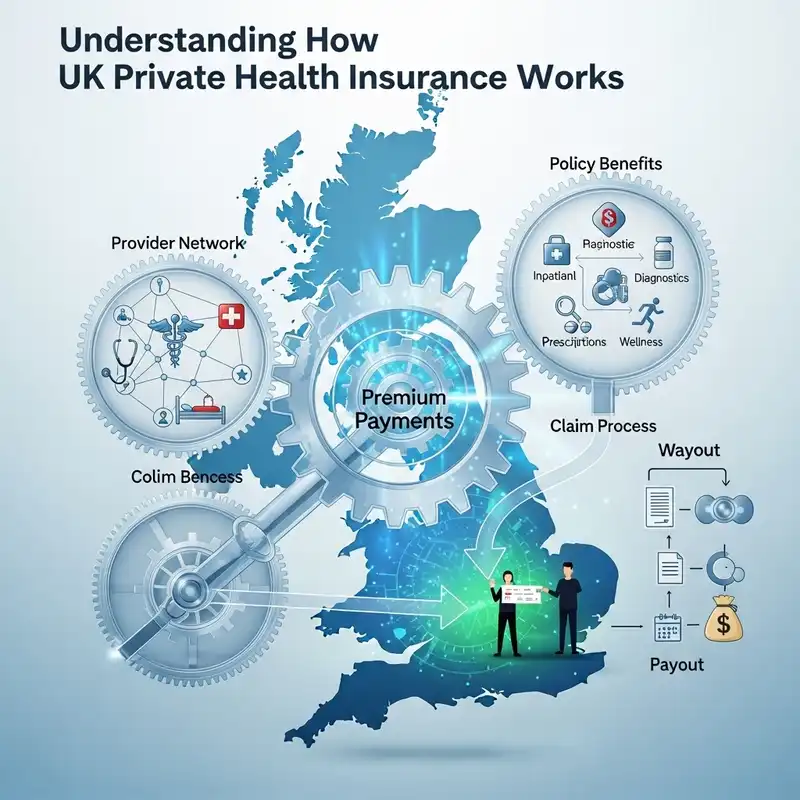
How Does the Private Health Insurance Journey Work?
For those unfamiliar with it, the process can seem daunting. In reality, it's a clear and straightforward journey designed to get you from referral to treatment as quickly as possible.
Step 1: The GP Referral Your journey almost always starts at your local NHS GP surgery. If you have a health concern, you see your GP who assesses you. If they believe you need to see a specialist, they will write you a referral letter.
Step 2: Contact Your Insurer With your GP referral in hand, you call your private health insurance provider. You'll give them the details of the referral and your policy number. This is often called 'pre-authorisation'.
Step 3: Authorisation and Choice Your insurer checks that your policy covers the required consultation and any subsequent tests or treatment. Once authorised, they will typically provide you with a list of approved specialists and hospitals from which you can choose.
Step 4: Book Your Private Appointment You are now free to contact the specialist's private secretary directly to book a consultation. This can usually be arranged within a matter of days.
Step 5: Consultation and Diagnostics You attend your private consultation. If the specialist recommends further tests, like an MRI or blood tests, you contact your insurer again for authorisation, and these can be booked promptly.
Step 6: Treatment and Billing If treatment or surgery is needed, the specialist and hospital will arrange it with your insurer. The bills are settled directly between the hospital, the consultant, and the insurance company. You simply focus on your recovery.
This efficient process is the mechanism that allows you to avoid the queues and prevent the health deterioration that plagues the public system.
The Crucial Question: What's Covered and What's Not?
This is the most important section for any potential policyholder to understand. Private Medical Insurance is designed for a specific purpose, and being clear on its scope is vital to avoid disappointment.
What UK Health Insurance Typically Covers
PMI is designed to cover acute conditions. An acute condition is a disease, illness, or injury that is likely to respond quickly to treatment and lead to a full recovery.
Here are the cornerstones of most policies:
- In-patient and Day-patient Treatment: This is the core of all policies. It covers costs if you are admitted to hospital for treatment, including surgery, hospital accommodation, and nursing care.
- Cancer Care: Most comprehensive policies offer extensive cancer cover, including access to specialist drugs and treatments that may not be available on the NHS.
- Specialist Consultations: Seeing a consultant privately.
- Diagnostic Tests: Crucial for a speedy diagnosis, this includes MRI, CT, and PET scans, X-rays, and blood tests.
- Out-patient Cover (Often an Add-on): This is a vital component that covers diagnostic tests and consultations that do not require a hospital stay. Without it, you may still face NHS waits for diagnosis.
What UK Health Insurance Does NOT Cover
This is non-negotiable and a fundamental rule of the UK PMI market. You must understand these exclusions.
- Chronic Conditions: Standard PMI does not cover the management of chronic conditions. A chronic condition is one that is long-lasting and cannot be cured, only managed. This includes conditions like diabetes, asthma, high blood pressure, and multiple sclerosis. The NHS remains the best place for the ongoing management of these illnesses.
- Pre-existing Conditions: A policy will not cover you for medical conditions you had before you took out the insurance. How this is handled depends on the type of underwriting:
- Moratorium Underwriting: The most common type. Any condition you've had symptoms, treatment, or advice for in the 5 years before your policy starts is excluded, typically for the first 2 years of the policy. If you remain symptom-free for that 2-year period, the condition may then be covered.
- Full Medical Underwriting: You disclose your full medical history upfront. The insurer then tells you exactly what is and isn't covered from day one. It's more administration initially but provides complete clarity.
- Other Standard Exclusions:
- Emergency services (A&E visits)
- Normal pregnancy and childbirth
- Cosmetic surgery (unless for reconstructive purposes after an accident)
- Treatment for drug and alcohol abuse
- Organ transplants
At a Glance: PMI Cover vs Exclusions
| ✅ Typically Covered (Acute Conditions) | ❌ Typically Excluded |
|---|---|
| Joint replacement surgery (hip, knee) | Chronic conditions (e.g., Diabetes, Asthma) |
| Hernia repair | Pre-existing conditions (from last 5 years) |
| Cataract surgery | A&E / Emergency treatment |
| Cancer diagnosis and treatment | Normal pregnancy and childbirth |
| Specialist consultations | Cosmetic surgery |
| MRI, CT, PET scans & other diagnostics | Treatment for substance abuse |
| Physiotherapy (often as an add-on) | Unproven or experimental treatments |
Understanding this distinction is key. PMI is your safety net for new, curable conditions that arise after your policy begins, protecting you from the long waits that can cause your health to decline.
Customising Your Cover: How to Choose a strong fit for your needs
Health insurance isn't a one-size-fits-all product. Insurers offer a range of options that allow you to tailor your cover to your needs and budget. Getting this balance right is essential.
The Building Blocks of a Policy
- Core Cover: As mentioned, this is your foundation, covering in-patient and day-patient treatment.
- Out-patient Cover: This is arguably the most important add-on. You can choose different levels, from a set monetary amount per year (e.g., £1,000) to full cover. A good level of out-patient cover ensures you can get diagnosed quickly.
- Therapies: This adds cover for treatments like physiotherapy, osteopathy, and chiropractic care, which are essential for recovery from many musculoskeletal issues.
- Mental Health Cover: With long waits for NHS mental health services, this add-on provides access to counsellors, therapists, and psychiatrists.
- Dental and Optical: A less common add-on, but can provide cover for routine check-ups or unexpected dental work.
Levers to Control Your Premium
- Excess: This is the amount you agree to pay towards any claim. For example, with a £250 excess, you pay the first £250 of a claim, and the insurer pays the rest. A higher excess leads to a lower monthly premium.
- Hospital List: Insurers have tiered hospital lists. A policy covering a nationwide list including premium central London hospitals will be more expensive than one covering a list of quality local private hospitals.
- The 6-Week Wait Option: This is a clever way to reduce costs. If you choose this option, you agree to use the NHS if the required treatment has a waiting list of less than six weeks. If the wait is longer, your private cover kicks in. As most significant procedures have waits far exceeding this, it can be a very effective way to save money.
Navigating these options can be complex, and the cheapest policy is rarely the best. That's where an expert independent broker like WeCovr is invaluable. We take the time to understand your concerns and budget, and we search the entire market—including major insurers like Aviva, Bupa, AXA Health, and Vitality—to find the policy that offers the right protection for you.
The Cost of Peace of Mind: How Much is Private Health Insurance?
The cost of a policy varies significantly based on a few key factors:
- Age: Premiums increase with age as the risk of needing treatment rises.
- Location: Premiums are often higher in major cities like London where hospital costs are greater.
- Cover Level: A comprehensive policy with no excess will cost more than a basic policy with a high excess.
- Lifestyle: Smokers will pay significantly more than non-smokers.
To give you a realistic idea, here are some sample monthly premiums for 2025.
Sample Monthly PMI Premiums (Mid-Range Cover, £250 Excess)
| Profile | Location: Manchester | Location: London |
|---|---|---|
| 30-year-old individual | £45 - £60 | £55 - £75 |
| 45-year-old individual | £65 - £90 | £80 - £110 |
| Couple, both aged 55 | £180 - £250 | £220 - £300 |
| Family of 4 (Parents 40, Children 10, 12) | £150 - £220 | £180 - £260 |
While this is a monthly outgoing, it's vital to frame it against the alternative. The cost of 'self-funding' a single common procedure can be enormous:
- Illustrative estimate: Private hip replacement: £13,000 - £15,000
- Illustrative estimate: Private cataract surgery (one eye): £2,500 - £4,000
- Illustrative estimate: Private MRI scan: £400 - £800
For a premium of £50-£80 a month, you are protecting yourself against these huge bills and, more importantly, against the physical and mental cost of a long wait. (illustrative estimate)
Real-World Scenarios: When PMI Makes the Difference
Let's move from the theoretical to the practical. Here are a few anonymised scenarios that illustrate the power of private cover.
Case Study 1: Mark, the Self-Employed Electrician Mark, 48, develops severe shoulder pain that restricts his ability to work. His GP suspects a torn rotator cuff and refers him to an orthopaedic specialist. The NHS wait for a consultation is 9 months, plus another 12 months for potential surgery. Mark's income plummets as he can't perform his job.
- With PMI: Mark calls his insurer. He sees a private specialist in four days. An MRI scan the following week confirms the tear. Surgery is scheduled for three weeks later at a local private hospital. After a course of physiotherapy (also covered), he is back at work within three months of his first GP visit. His policy prevented a year of pain and lost earnings.
Case Study 2: Chloe, the Worried Mother Chloe's 7-year-old daughter, Emily, suffers from recurrent tonsillitis, missing weeks of school and suffering from sleep apnoea. The NHS waiting list for an ENT consultation is over a year, with no guarantee of surgery.
- With PMI (on a family policy): Chloe gets a GP referral and sees a private paediatric ENT consultant within a week. The consultant recommends a tonsillectomy, which is performed ten days later. Emily's health is transformed, she's sleeping soundly and no longer missing school. The family's stress is lifted.
WeCovr: Your Partner in Health and Well-being
Choosing the right health insurance is one of the most important financial decisions you can make. At WeCovr, we believe everyone deserves access to clear, impartial, and expert advice. As a leading independent broker, we are not tied to any single insurer. Our loyalty is to you, our client.
Our process is simple. We listen to your needs, explain your options in plain English, and then compare policies from across the UK's top providers to find the perfect fit. We handle the details so you can have the confidence that you and your family are protected.
But our commitment doesn't stop there. We believe in proactive health. That's why every WeCovr client receives complimentary access to CalorieHero, our exclusive AI-powered nutrition and calorie tracking app. It's a powerful tool to help you manage your diet, stay healthy, and take positive steps towards long-term well-being. It’s our way of showing we care about your health journey, not just your insurance policy.
Frequently Asked Questions (FAQ)
Q1: Is private health insurance really worth it in the UK? For a growing number of people, yes. If you value quick access to diagnostics and treatment, choice over your care, and want to avoid the risk of your health declining on a long waiting list, PMI offers invaluable peace of mind and protection. It's particularly valuable for the self-employed or those who cannot afford a long period of ill-health.
Q2: Can I get cover for a health problem I already have? No. This is the golden rule. Standard PMI does not cover pre-existing conditions. It is designed to cover new, acute conditions that arise after your policy has started.
Q3: If I have PMI, do I still have to pay National Insurance? Yes. Private health insurance is an addition to the NHS, not a replacement. You continue to pay your taxes and National Insurance, which entitles you to all NHS services, including A&E, GP visits, and chronic care management.
Q4: Can I add my family to my policy? Absolutely. Most insurers offer policies for individuals, couples, and families. It's often more cost-effective to have everyone on a single family policy.
Q5: What is a 'moratorium' on a policy? This is the most common form of underwriting. The insurer doesn't ask for your full medical history upfront. Instead, they apply a 'moratorium period', usually the first two years of the policy. During this time, they won't cover any condition you've had symptoms of or treatment for in the five years prior to joining.
Securing Your Health in Uncertain Times: The Final Word
The NHS is one of our country's greatest achievements, but it is operating under unprecedented strain. The stark reality is that for the foreseeable future, millions of us will face long and anxious waits for care—waits that carry the genuine risk of physical deterioration, mental distress, and financial hardship.
Waiting is not a passive activity. While you wait, your condition can worsen, your pain can increase, and your life can be put on hold. The projection that two million people will experience this by 2025 should serve as a wake-up call.
Private Medical Insurance offers a proven, effective, and increasingly necessary alternative. It empowers you to bypass the queues, get a fast diagnosis, and receive prompt treatment. It gives you back control over your health and your life.
Making the decision to invest in your health is a personal one. But in an era of uncertainty, securing your future well-being is perhaps the wisest investment you can make. Don't wait for your health to get worse. Take control today. Speak to an expert, understand your options, and build a safety net that gives you and your family the peace of mind you deserve.
Sources
- NHS England: Waiting times and referral-to-treatment statistics.
- Office for National Statistics (ONS): Health, mortality, and workforce data.
- NICE: Clinical guidance and technology appraisals.
- Care Quality Commission (CQC): Provider quality and inspection reports.
- UK Health Security Agency (UKHSA): Public health surveillance reports.
- Association of British Insurers (ABI): Health and protection market publications.
Disclaimer: This is general guidance only and does not constitute formal tax or financial advice. Tax treatment depends on individual circumstances, policy terms, and HMRC interpretation, which cannot be guaranteed in advance. Whenever applicable, businesses and individuals should always consult a qualified accountant or tax adviser before arranging such policies.
Start with your Protection Score, then decide whether private health cover is the right fit
Check where health access sits in your overall protection picture before deciding whether to compare private health cover.
Spot whether NHS access risk is the real issue
See if PMI is the gap to fix first
Get health insurance help only if it makes sense for you
Get your score
Start with your protection score
Check your current position first, then get health insurance help if you need it.
Check your current resilience
Score your income, health access and family protection position in a few minutes.
See where private cover helps
Understand whether faster diagnosis and treatment is a priority gap.
Continue to tailored PMI help
If health access is the issue, continue to tailored PMI help.
What you get
A quick view of your current protection position
A clearer idea of where the biggest gaps may be
A direct route to tailored help if you want it