TL;DR
The United Kingdom is facing a silent but seismic crisis. Its not about how long we live, but how well we live. Shocking new projections for 2025 reveal a stark and uncomfortable truth: the gap between our lifespan and our "health span" has widened into a chasm.
Key takeaways
- Private Consultations & Diagnostics: Frustrated by a 9-month wait for an NHS MRI? A private scan can cost 400-800. A consultation with a specialist can be 250+. These costs quickly add up.
- Elective Surgery: The wait for a hip or knee replacement on the NHS can be over a year. Privately, this can cost 13,000-15,000 per joint.
- Social Care: This is the elephant in the room. Local authority support is means-tested. If you have assets (including your home), you will be expected to pay for your own care. Residential care can cost 40,000-70,000 per year, while at-home care can easily reach 20,000-30,000 annually. Over 15 years, this alone can exceed half a million pounds.
- Home Modifications: Installing a stairlift (3,000+), converting a bathroom into a wet room (5,000+), or adding ramps (1,000+) are common necessities.
- Ongoing Therapies & Equipment: Physiotherapy, occupational therapy, specialist wheelchairs, and other mobility aids are often subject to long waits or limited provision on the NHS.
UK Health Span Crisis 15 Years in Poor Health
The United Kingdom is facing a silent but seismic crisis. It’s not about how long we live, but how well we live. Shocking new projections for 2025 reveal a stark and uncomfortable truth: the gap between our lifespan and our "health span" has widened into a chasm. The average person in the UK is now expected to spend a staggering 15 years in a state of poor health before they die.
This isn't just a matter of aches and pains in our later years. This is a decade and a half potentially defined by chronic illness, reduced mobility, dependency on others, and a relentless drain on personal and family finances. The total economic burden—factoring in lost earnings, private treatment, social care, and the cost to family caregivers—is estimated to exceed an eye-watering £5.5 million per individual over their lifetime.
This prolonged period of ill-health dismantles more than just physical well-being. It erodes savings, jeopardises retirement plans, and can force families into making heart-breaking financial decisions. With the NHS under unprecedented strain, the old certainties of state-provided care are no longer guaranteed to be timely or sufficient.
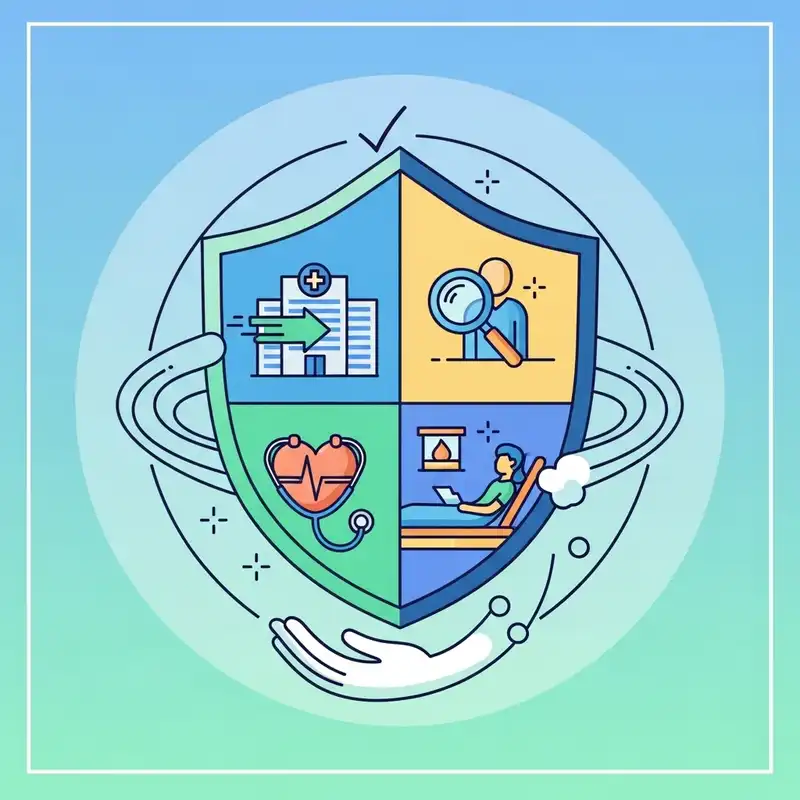
But this future is not set in stone. There is a pathway to reclaiming control over your health and securing your family's financial future. This comprehensive guide will illuminate the scale of the UK's health span crisis and introduce the powerful, proactive solutions available: Private Medical Insurance (PMI) to manage your health, and the LCIIP shield (Life Insurance, Critical Illness Cover, and Income Protection) to protect your wealth.
The Alarming Reality: Unpacking the 2025 Health Span Data
For decades, rising life expectancy was a headline sign of national progress. We were living longer than ever before. But the data now tells a more complex and worrying story. The focus is shifting from lifespan (total years lived) to health span (years lived in good health). And the numbers are grim.
While a baby boy born today might expect to live to 80, his "healthy life expectancy" is just 65. For a baby girl, life expectancy is around 83, but she can only expect to be in good health until age 68.
This creates an average "ill-health gap" of 15 years. This is time spent managing one or more long-term conditions such as:
- Cardiovascular disease (heart attacks, strokes)
- Type 2 diabetes
- Musculoskeletal disorders (arthritis, chronic back pain)
- Cancer
- Dementia and Alzheimer's disease
- Chronic respiratory diseases
- Mental health conditions like depression and anxiety
The ONS report on health-state life expectancies(ons.gov.uk) provides the foundational data for these worrying trends, showing a persistent gap that is projected to widen as the population ages and lifestyle-related diseases become more prevalent.
| Metric (Projected 2025) | Male | Female |
|---|---|---|
| Average Life Expectancy | 80.1 years | 83.5 years |
| Average Healthy Life Expectancy | 65.1 years | 68.3 years |
| Years in Poor Health | 15.0 years | 15.2 years |
Source: Projections based on ONS and The King's Fund data trends.
What's Driving This Decline in Our Healthy Years?
This isn't a random statistical blip. It's the result of several powerful, converging factors:
- The Rise of Chronic, Lifestyle-Related Conditions: Modern life, with its sedentary nature, processed diets, and high stress levels, is a major contributor to the increase in diseases like type 2 diabetes, obesity, and heart disease. These conditions often require decades of management.
- An Ageing Population: We are, thankfully, living longer. But this means more people are living to an age where they are more likely to develop multiple, complex health issues (comorbidities), placing a huge demand on health and social care.
- NHS Pressures: Our cherished National Health Service is grappling with record waiting lists, staff shortages, and budget constraints. This means longer waits for diagnosis, referrals, and treatment, allowing conditions to worsen and impacting long-term outcomes.
- Mental Health Epidemic: There is a growing awareness of the prevalence of mental health conditions, which can be as debilitating as physical illnesses and have a profound impact on an individual's ability to work and enjoy life.
The 15-year period of poor health is not a gentle decline in old age. For many, it will begin in their 50s or 60s, smack in the middle of their peak earning years and just as they are preparing for retirement. The consequences are not just physical, but devastatingly financial.
The £4 Million+ Lifetime Burden: Deconstructing the Financial Tsunami
The £5.5 million figure is a headline-grabber, and for good reason. It represents the total potential economic cost and loss associated with a prolonged period of chronic ill-health. It’s a combination of direct out-of-pocket expenses, lost potential, and the wider financial impact on a family unit.
Let's break down how this staggering sum accumulates over a 15-20 year period of ill health.
Direct Costs: The Immediate Drain on Your Finances
These are the tangible expenses you and your family may face when navigating the health system outside of standard NHS care.
- Private Consultations & Diagnostics: Frustrated by a 9-month wait for an NHS MRI? A private scan can cost £400-£800. A consultation with a specialist can be £250+. These costs quickly add up.
- Elective Surgery: The wait for a hip or knee replacement on the NHS can be over a year. Privately, this can cost £13,000-£15,000 per joint.
- Social Care: This is the elephant in the room. Local authority support is means-tested. If you have assets (including your home), you will be expected to pay for your own care. Residential care can cost £40,000-£70,000 per year, while at-home care can easily reach £20,000-£30,000 annually. Over 15 years, this alone can exceed half a million pounds.
- Home Modifications: Installing a stairlift (£3,000+), converting a bathroom into a wet room (£5,000+), or adding ramps (£1,000+) are common necessities.
- Ongoing Therapies & Equipment: Physiotherapy, occupational therapy, specialist wheelchairs, and other mobility aids are often subject to long waits or limited provision on the NHS.
Indirect Costs: The Hidden Financial Devastation
These costs are less obvious but often far larger and more damaging to a family's long-term financial health.
- Loss of Earnings (The Individual): A major illness can force you to reduce your hours, take a less demanding (and lower-paid) role, or stop working altogether. For a professional earning £60,000, being forced out of work 10 years before retirement represents a loss of over £600,000 in gross income, plus lost pension contributions.
- Loss of Earnings (The Family Carer): It's often a spouse, partner, or adult child who steps in to provide care. This frequently means they too must reduce their working hours or give up their career, decimating household income and their own pension prospects.
- Erosion of Savings & Investments: Your retirement nest egg, carefully built over decades, can be wiped out in a few years to pay for private care or supplement a reduced income.
- Impact on Inheritance: The dream of passing on wealth and property to children and grandchildren is often the first casualty. The family home may need to be sold to fund care costs.
Here’s a simplified breakdown of the potential lifetime economic burden:
| Cost Category | Estimated Lifetime Impact (£) | Explanation |
|---|---|---|
| Lost Gross Earnings | £1,500,000+ | Based on an average professional salary lost over 15-20 years. |
| Lost Pension Growth | £500,000+ | Compounded loss of personal and employer contributions. |
| Private Social Care | £750,000+ | Based on 15 years of combined at-home and residential care. |
| Private Medical Costs | £150,000+ | Includes surgeries, diagnostics, and therapies over a lifetime. |
| Family Carer Lost Earnings | £1,000,000+ | A spouse or child's lost income and pension potential. |
| Wider Economic Impact | £1,600,000+ | Reduced consumer spending, lost tax revenues, etc. |
| TOTAL | £5,500,000+ | A representation of the total economic drag on a family unit. |
This isn't just a hypothetical calculation. It's the lived reality for millions of families across the UK who find their financial foundations washed away by the tide of long-term illness.
The NHS in 2025: A System Under Unprecedented Strain
The National Health Service remains a source of immense national pride, staffed by dedicated and brilliant professionals. However, we must be realistic about the challenges it faces in 2025 and beyond. Relying on it as the sole safety net for your health is becoming an increasingly risky strategy.
The core issue is a mismatch between demand and capacity.
- Record Waiting Lists: As of early 2025, the total waiting list for consultant-led elective care in England continues to hover around the 7.england.nhs.uk/statistics/statistical-work-areas/rtt-waiting-times/). This translates into real-world delays that have a tangible impact on health. A longer wait for a diagnosis can allow a condition to progress, making it harder and more expensive to treat, and leading to poorer long-term outcomes.
- The "Postcode Lottery": Access to specific treatments, drugs, and therapies can vary significantly depending on where you live. This creates an unfair system where your health outcome can be determined by your address.
- A Focus on Acute Care: The NHS is, by design, brilliant at dealing with emergencies and acute conditions. It is less well-equipped to manage the long-term, preventative, and wellness-focused care needed to combat the health span crisis.
Waiting is not a benign activity. For someone with debilitating joint pain, a year-long wait for surgery is a year of lost mobility, potential unemployment, and declining mental health. For someone with worrying symptoms, a six-month wait for a diagnostic scan is six months of anxiety and the risk of a cancer advancing to a later stage.
This is the gap that Private Medical Insurance (PMI) is designed to fill.
Your First Line of Defence: Private Medical Insurance (PMI) as a Proactive Health Tool
Historically, PMI was often seen as a luxury item. In the context of the 2025 health span crisis, it should be re-framed as an essential tool for proactive health management. It's about taking control, minimising delays, and accessing care on your own terms.
PMI is not a replacement for the NHS. You will still use the NHS for accidents and emergencies. Instead, it works alongside it, providing a parallel route for planned, non-emergency care.
The Core Benefits of Modern PMI
The value of PMI extends far beyond just "skipping the queue." It offers a fundamentally different healthcare experience.
- Speed of Access: This is the most well-known benefit. PMI allows you to bypass lengthy NHS waiting lists for specialist consultations, diagnostic tests (like MRI, CT, and PET scans), and elective surgery. This can mean the difference between getting a diagnosis in days versus months.
- Choice and Control: You can choose the specialist or consultant who treats you and the hospital where you receive your care. You can schedule appointments and procedures at times that suit you, minimising disruption to your work and family life.
- Access to Advanced Treatments: PMI policies often provide cover for new and innovative drugs, treatments, and surgical techniques that may not be available on the NHS due to cost or NICE (National Institute for Health and Care Excellence) approval delays.
- Enhanced Comfort and Privacy: A private en-suite room can make a significant difference to your comfort and dignity during a stressful hospital stay, aiding your recovery.
The Evolution: From Reactive Cure to Proactive Care
Crucially, leading PMI providers have evolved. Their offerings are no longer just about what happens when you get sick. They now include a wealth of value-added services designed to keep you healthy and address problems early.
- 24/7 Virtual GP Services: Get a consultation with a GP via phone or video call, often within hours. You can get advice, prescriptions, and referrals without waiting weeks for an appointment at your local surgery.
- Mental Health Support: Most policies now include extensive mental health cover, providing access to counsellors, therapists, and psychiatrists without a long wait.
- Wellness Programmes: Many insurers incentivise healthy living with discounts on gym memberships, fitness trackers, and health food.
- Health Screenings: Access to regular health checks can help spot potential issues like high cholesterol or blood pressure before they become serious problems.
This proactive element is key. By using these services, you are actively managing your health span and reducing your risk of developing the chronic conditions that lead to those 15 years of ill health.
| Feature | NHS | Private Medical Insurance (PMI) |
|---|---|---|
| GP Appointment | Average wait of 1-2 weeks | Often same-day via virtual GP |
| Specialist Referral | Weeks or months | Days or a few weeks |
| Diagnostic Scans | Months | Days or a few weeks |
| Elective Surgery | Can be over a year | Scheduled at your convenience |
| Choice of Hospital | Limited to local area | Extensive choice of UK hospitals |
| Choice of Specialist | Assigned by hospital | Your choice from an approved list |
| Mental Health Support | Long waiting lists for therapy | Fast access to a network of therapists |
| Proactive Health | Limited | Extensive wellness benefits & screenings |
Navigating the world of PMI can be complex, with different levels of cover and policy options. This is where an expert broker like WeCovr is invaluable. We can analyse your specific needs and budget, and compare policies from all the UK's major insurers to find the one that provides the right protection for you and your family.
The LCIIP Shield: Protecting Your Family’s Financial Foundations
PMI is your tool for tackling the health side of the crisis. But what about the £5.5 million financial burden? This is where the LCIIP shield comes into play. (illustrative estimate)
LCIIP stands for:
- Life Insurance
- Critical Illness Cover
- Income Protection
These three policies form a comprehensive financial safety net, designed to protect your family from the devastating economic consequences of serious illness and death. They address the "what if" scenarios that can derail even the most carefully laid plans.
Life Insurance: The Ultimate Backstop
This is the most straightforward form of protection. A life insurance policy pays out a tax-free lump sum to your chosen beneficiaries if you die during the term of the policy.
- What it does: It ensures that even in the worst-case scenario, your family is not left with a financial crisis. The payout can be used to:
- Clear an outstanding mortgage, securing the family home.
- Cover funeral expenses.
- Replace your lost future income to cover daily living costs.
- Provide a fund for your children's education.
- Leave a legacy and ease financial stress at a difficult time.
Critical Illness Cover (CIC): A Lifeline During a Health Crisis
CIC is arguably one of the most important policies in the context of the health span crisis. It pays out a tax-free lump sum if you are diagnosed with one of a list of specific serious—but not necessarily fatal—illnesses, such as cancer, heart attack, stroke, or multiple sclerosis.
- What it does: It provides you with a significant sum of money to use while you are alive and dealing with your illness. This is crucial for bridging the financial gap during the "15 years of poor health." The money is yours to use as you see fit:
- Cover monthly bills and mortgage payments if you can't work.
- Pay for private medical treatments not covered by PMI.
- Adapt your home to your new needs.
- Allow your partner to take time off work to care for you without financial penalty.
- Simply reduce financial stress, allowing you to focus 100% on your recovery.
Income Protection (IP): The Bedrock of Your Financial Plan
Often described by financial advisors as the one policy every working adult should consider, Income Protection is the true defender of your lifestyle. If you are unable to work for an extended period due to any illness or injury, an IP policy will pay you a regular, tax-free monthly income.
- What it does: Unlike the lump-sum payouts of Life Insurance or CIC, IP provides a replacement for your salary. It typically covers 50-70% of your gross income and can continue to pay out until you are able to return to work, retire, or the policy term ends. This is what stops your entire financial world from collapsing. It ensures that:
- Your mortgage or rent gets paid.
- Your utility bills are covered.
- You can continue to pay into your pension.
- Your family's standard of living is maintained.
- You don't have to burn through your life savings just to survive.
| Insurance Type | What It Does | Who Needs It Most? |
|---|---|---|
| Life Insurance | Pays a lump sum on death to clear debts & provide for family. | Anyone with dependents (spouse, children) or a mortgage. |
| Critical Illness Cover | Pays a lump sum on diagnosis of a serious illness to cover costs. | Everyone, but especially those with limited savings. |
| Income Protection | Provides a regular income if you can't work due to illness/injury. | Every working person whose lifestyle depends on their salary. |
These policies work in concert. A critical illness diagnosis might trigger a CIC payout for immediate needs, while your IP policy kicks in to cover the monthly bills for the long term. Your life insurance stands ready as the final safety net for your loved ones.
Taking Control: A Practical Action Plan for Your Health & Wealth
The statistics are sobering, but the message is one of empowerment. You have the ability to take decisive action now to protect yourself and your family from the worst impacts of the health span crisis. Here is a simple, four-step plan.
Step 1: Honestly Assess Your Situation Take a moment to review your personal circumstances. Consider your lifestyle, your family's medical history, your financial commitments (mortgage, debts, school fees), and who depends on your income. This personal risk assessment is the foundation of a solid plan.
Step 2: Understand Your Existing Cover Check your employment contract. Do you have any "death in service" benefits (a form of life insurance) or group income protection through your employer? This is a great starting point, but often the cover is not sufficient for a family's total needs and it ceases if you change jobs.
Step 3: Explore Your Personalised Insurance Options This is the most critical step. Trying to navigate the insurance market alone can be overwhelming. A specialist broker can do the heavy lifting for you. At WeCovr, we provide independent, expert advice. Our team will take the time to understand your assessment from Step 1 and review your benefits from Step 2. We then search the entire UK market, comparing policies from leading insurers like Aviva, Bupa, Legal & General, and Vitality, to build a protection portfolio that is tailored to you. We find the right cover at the most competitive price.
As part of our commitment to your holistic well-being, all our clients also receive complimentary access to CalorieHero, our proprietary AI-powered calorie and nutrition tracking app. It’s a practical tool to help you make informed choices every day, empowering you to actively improve your health span.
Step 4: Embrace Proactive Health Habits Insurance is your safety net, but your lifestyle is your first line of defence. Use the wake-up call of the health span crisis to make positive changes.
- Utilise the wellness services provided by your PMI policy.
- Prioritise a balanced diet and regular physical activity.
- Take your mental health as seriously as your physical health.
- Don't ignore symptoms – use your virtual GP service to get checked out early.
Conclusion: Invest in Your Health Span, Secure Your Future
The UK's health span crisis is a defining challenge of our time. The prospect of living for 15 years in poor health, burdened by chronic illness and financial strain, is a future no one wants for themselves or their loved ones.
Relying on an over-stretched state system is no longer a viable plan. The passive approach of waiting for illness to strike is a gamble against deteriorating odds. The solution lies in a proactive, two-pronged strategy: actively manage your health and build a robust financial shield.
Private Medical Insurance (PMI) empowers you to take control of your healthcare journey, ensuring fast access to the best possible diagnosis and treatment. It is your key to shortening periods of illness and maximising your years of good health.
The LCIIP Shield (Life Insurance, Critical Illness Cover, and Income Protection) is your financial fortress. It protects your income, your assets, and your family's future from the economic devastation that so often accompanies long-term illness.
Investing in this protection isn't an expense; it is a profound investment in your most valuable assets: your health, your well-being, and your family's security. Don't wait for the statistics to become your reality. Take control, take action, and build your pathway to a longer, healthier, and more prosperous life.
Sources
- Office for National Statistics (ONS): Mortality and population data.
- Association of British Insurers (ABI): Life and protection market publications.
- MoneyHelper (MaPS): Consumer guidance on life insurance.
- NHS: Health information and screening guidance.
Disclaimer: This is general guidance only and does not constitute formal tax or financial advice. Tax treatment depends on individual circumstances, policy terms, and HMRC interpretation, which cannot be guaranteed in advance. Whenever applicable, businesses and individuals should always consult a qualified accountant or tax adviser before arranging such policies.
Measure your family’s protection gap, then get the right life cover quote
Start with the score to see whether your family would face a real financial shortfall before moving on to life cover options.
Check what happens if someone dies too soon
See whether debt, dependants and mortgage risk are covered
Move into tailored life cover options after the score
Get your score
Your next best move
Get your score in minutes, then decide what kind of protection help would be most useful.
Score your household protection
See how well your current setup protects dependants, debt and major commitments.
Find the shortfall
Know whether life cover, critical illness or income protection is the actual missing piece.
Continue to tailored life cover
If life cover is the gap, continue to tailored life cover options.
What you get
A quick view of your current protection position
A clearer idea of where the biggest gaps may be
A direct route to tailored help if you want it