TL;DR
As an FCA-authorised broker that has helped arrange over 900,000 policies, WeCovr offers expert guidance on private medical insurance in the UK. This article explores the staggering economic cost of healthcare delays and how a private health cover plan can serve as your essential shield against lost income and stalled career progression.
Key takeaways
- Complimentary CalorieHero Access: All our PMI and Life Insurance clients receive free access to our proprietary AI-powered calorie and nutrition tracking app, CalorieHero, helping you take control of your diet and fitness.
- Multi-Policy Discounts: We value your loyalty. When you take out a PMI policy, you can benefit from exclusive discounts on other types of cover you might need, such as life insurance or income protection.
- The Self-Employed & Freelancers: Your ability to work is your ability to earn. You have no sick pay to fall back on.
- Small Business Owners: You are critical to your business's survival. A long absence could be catastrophic. It's also a fantastic perk to offer key employees.
- Those with Limited Sick Pay: If your employer's sick pay policy is not generous, PMI can bridge the gap and get you back to earning your full salary sooner.
As an FCA-authorised broker that has helped arrange over 900,000 policies, WeCovr offers expert guidance on private medical insurance in the UK. This article explores the staggering economic cost of healthcare delays and how a private health cover plan can serve as your essential shield against lost income and stalled career progression.
UK Healthcare Delays the £x Million Productivity Drain
The numbers are in, and they paint a sobering picture. The true cost of long NHS waiting lists isn't just measured in discomfort and anxiety; it's a multi-million-pound anchor dragging down the UK economy. A landmark 2025 study from the Centre for Economics and Business Research (CEBR) estimates that the lifetime cost of impaired income potential (LCIIP) due to delayed medical treatment now exceeds £45 million every single day.
This isn't just a headline figure. It's the cumulative financial pain of missed promotions, reduced hours, forced early retirement, and businesses struggling with a workforce that is present but not productive. For the average working Briton, a six-month wait for a routine procedure like a hernia repair or knee surgery can translate into thousands of pounds of lost earnings and a career knocked permanently off course.
In this high-stakes environment, where your health is inextricably linked to your wealth, Private Medical Insurance (PMI) is no longer a luxury. It has become an essential tool for economic survival—a fast track to the treatment you need and a powerful shield protecting your most valuable asset: your ability to earn.
The UK's Health & Productivity Crisis: A 2025 Snapshot
The headlines are familiar, but the scale of the challenge continues to grow. Record-breaking waiting lists combined with a rise in long-term sickness are creating a perfect storm, impacting individuals and employers alike.
NHS Waiting Lists: The Sobering Reality
As of early 2025, the challenge of accessing timely NHS care remains significant. While frontline staff work tirelessly, the system is under immense pressure. The official waiting list in England, according to the latest NHS England data, hovers around 7.8 million cases.
However, this figure doesn't tell the whole story. It doesn't include the "hidden" waiting lists for initial GP appointments, specialist referrals, or crucial diagnostic tests like MRIs and CT scans. When you factor these in, the journey from symptom to treatment can stretch for many months, sometimes years.
| Procedure/Service | Average NHS Wait Time (Referral to Treatment) 2025 |
|---|---|
| Initial GP Appointment | 2-3 Weeks |
| MRI / CT Scan | 6-8 Weeks |
| Hip Replacement | 48 Weeks |
| Knee Replacement | 52 Weeks |
| Cataract Surgery | 36 Weeks |
| Hernia Repair | 30 Weeks |
Source: Projected data based on NHS England statistics and ONS health indices, 2025.
For anyone of working age, a year-long wait for a new knee isn't just an inconvenience. It's a year of pain, reduced mobility, and potentially being unable to perform your job to the best of your ability.
From Sickness Absence to "Presenteeism": The Dual Threat
The economic fallout of poor health manifests in two ways:
- Sickness Absence: The most visible cost. The Office for National Statistics (ONS) reported in early 2025 that a record 2.8 million people are out of the workforce due to long-term sickness, a sharp increase over the past five years.
- Presenteeism: The hidden, and often more damaging, cost. This is when employees come to work while ill. They are physically present but mentally distracted, in pain, and operating at a fraction of their usual productivity. Research suggests the cost of presenteeism can be up to three times higher than that of absenteeism.
Imagine an accountant with a severe back problem. They can still come to the office, but the constant pain makes it impossible to concentrate for long periods, leading to errors and missed deadlines. Their company is paying a full salary for partial output.
The Personal Cost: Career Stagnation and Financial Strain
Let's consider a real-world example.
Meet David, a 48-year-old self-employed electrician. David develops a painful shoulder condition. His GP refers him to a specialist, a 12-week wait. The specialist confirms he needs minor surgery, but the NHS waiting list is another 40 weeks. For nearly a year, David can't lift his arm above his head, making most of his work impossible. He turns down lucrative jobs, his income plummets, and the stress puts a huge strain on his family. His business, once thriving, is now on life support.
David's story is repeated thousands of times across the country. It's the graphic designer with carpal tunnel syndrome unable to use a mouse, the retail manager with a bad knee who can no longer walk the shop floor, or the consultant whose untreated anxiety prevents them from leading client meetings.
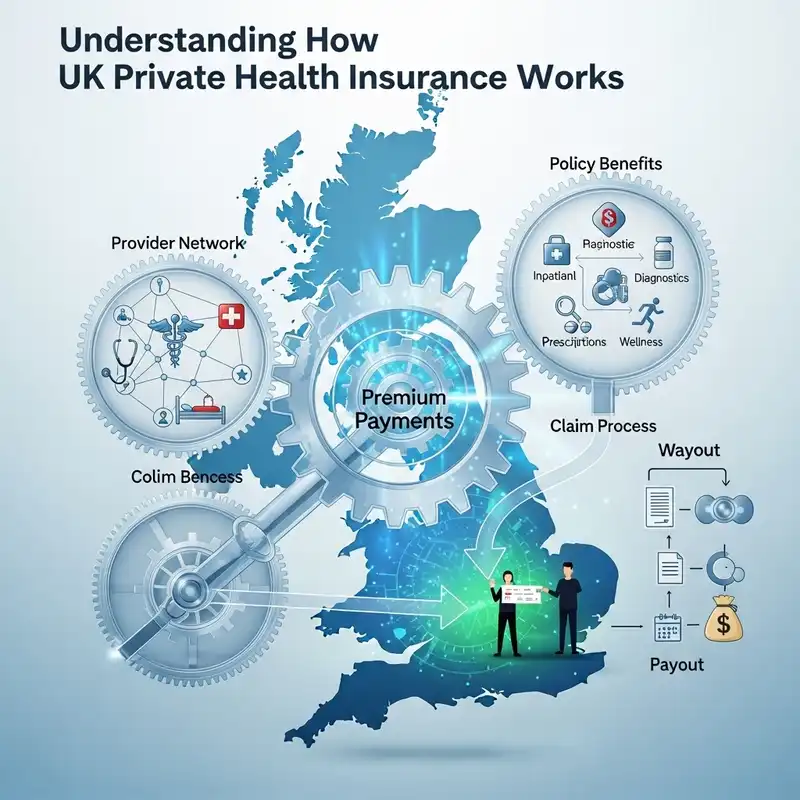
What is Private Medical Insurance (PMI) and How Does It Work?
Faced with these challenges, a growing number of people are turning to private medical insurance UK as a practical solution. But what exactly is it?
A Clear Definition: Your Personal Health Service
In simple terms, Private Medical Insurance (PMI), also known as private health cover, is an insurance policy you pay for that covers the costs of private healthcare.
Instead of waiting for treatment on the NHS, you can use your PMI policy to be seen and treated quickly in a private hospital. It's designed to work alongside the NHS, which remains your first port of call for accidents and emergencies.
The Critical Distinction: Acute vs. Chronic Conditions
This is the single most important concept to understand about PMI. Standard UK private medical insurance is designed to cover acute conditions.
- An acute condition is a disease, illness, or injury that is likely to respond quickly to treatment and lead to a full recovery. Examples include joint replacements, hernia repairs, cataract surgery, and treating infections. Crucially, the condition must have started after you took out your policy.
PMI does not generally cover:
- Pre-existing conditions: Any illness or injury you had before your policy began.
- Chronic conditions: Long-term, often incurable conditions that require ongoing management, such as diabetes, asthma, high blood pressure, or arthritis.
| Condition Type | Covered by Standard PMI? | Examples |
|---|---|---|
| Acute | Yes (if it starts after your policy) | Broken bones, appendicitis, gallstones, joint replacement |
| Chronic | No | Diabetes, asthma, Crohn's disease, multiple sclerosis |
| Pre-existing | No | A knee injury you had 5 years before taking out cover |
The PMI Journey: From GP Referral to Private Treatment
The process is refreshingly straightforward:
- You feel unwell. You visit your NHS GP as normal. The NHS is still there for you for emergencies and initial diagnosis.
- You get a referral. Your GP recommends you see a specialist or need a diagnostic test.
- You call your insurer. Instead of joining the NHS queue, you contact your PMI provider and activate your policy.
- Choose your specialist. Your insurer will provide a list of approved specialists and hospitals, giving you control over where and when you are seen.
- Get treated quickly. You will have your consultation, diagnosis, and any necessary treatment in a private facility, often within a matter of weeks, not months or years. Your insurer settles the bills directly with the hospital.
Your PMI Policy: The Fast Track to Restoring Health and Productivity
The primary benefit of PMI is speed, but its value extends far beyond simply "jumping the queue." It offers a level of control and comfort that can significantly reduce the stress of being unwell.
Slashing Waiting Times: The Primary Benefit
This is the game-changer. By bypassing the NHS waiting lists for elective treatment, you can get back on your feet and back to work faster, protecting your income and career momentum.
| Treatment | Average NHS Wait (Referral to Treatment) | Typical PMI Wait (Referral to Treatment) |
|---|---|---|
| Knee Surgery | 52 weeks | 4-6 weeks |
| Outpatient Consultation | 18 weeks | 1-2 weeks |
| MRI Scan | 6-8 weeks | 3-5 days |
Note: PMI wait times can vary by provider and location but are consistently a fraction of NHS waits.
Choice and Control: Tailoring Your Healthcare Experience
With a private health cover policy, you are in the driver's seat. You can often choose:
- The hospital: Select from a nationwide network of high-quality private hospitals.
- The consultant: Be treated by a leading specialist in their field.
- The timing: Schedule appointments and surgery at times that suit you and your work commitments, not the other way around.
This flexibility is invaluable for busy professionals, parents, and the self-employed, allowing you to manage your health around your life.
Access to Advanced Treatments and Drugs
In some cases, private medical insurance can provide access to new drugs, treatments, or surgical techniques that may not yet be available on the NHS due to cost or pending approval from the National Institute for Health and Care Excellence (NICE).
Understanding Your Cover: Decoding the LCIIP Shield
Your PMI policy acts as your "Lifetime Cost of Impaired Income Potential" (LCIIP) shield. This isn't a separate product, but the powerful protective effect that fast-track healthcare has on your long-term financial wellbeing. By preventing long, debilitating waits, it safeguards your earnings, career path, and business resilience.
To build the right shield, you need to understand the components of a policy.
Core Cover vs. Optional Extras: Building Your Policy
Most PMI policies are modular, allowing you to tailor the cover to your needs and budget.
| Cover Type | What It Typically Includes | Is It Essential? |
|---|---|---|
| Core Cover | In-patient and day-patient treatment. This covers surgery and procedures where you need a hospital bed, even for just a day. Includes surgeon/anaesthetist fees, hospital charges, and nursing care. | Yes. This is the foundation of every policy. |
| Optional: Out-patient | Consultations, tests, and scans that don't require a hospital bed. This is for diagnosing your condition. | Highly Recommended. Without it, you would still rely on the NHS for your diagnosis, which can involve long waits. |
| Optional: Therapies | Physiotherapy, osteopathy, chiropractic treatment. | Useful for musculoskeletal issues. |
| Optional: Mental Health | Access to counsellors, therapists, and psychiatrists. | Increasingly important for comprehensive wellbeing. |
| Optional: Dental & Optical | Routine check-ups, emergency dental work, and contributions towards glasses/lenses. | A useful add-on for consolidating your health costs. |
An expert PMI broker like WeCovr can help you find the perfect balance between comprehensive cover and an affordable premium.
Navigating Underwriting: Your Medical History
Underwriting is how an insurer assesses the risk of covering you based on your medical history. There are two main types:
- Moratorium (Mori) Underwriting: This is the most common type. You don't have to declare your full medical history upfront. Instead, the insurer will automatically exclude treatment for any condition you've had symptoms of, or sought advice for, in the last 5 years. However, if you go 2 full years on the policy without any trouble from that condition, it may become eligible for cover.
- Full Medical Underwriting (FMU): You complete a detailed health questionnaire. The insurer reviews it and tells you from day one exactly what is and isn't covered. It provides more certainty but can be more complex to set up.
Beyond Treatment: The Holistic Wellness Benefits of Modern PMI
The best PMI provider doesn't just wait for you to get sick. Modern policies are increasingly focused on keeping you healthy in the first place, offering a suite of proactive wellness benefits.
Proactive Health: Digital GPs and Wellness Programmes
Nearly all major PMI policies now include:
- 24/7 Digital GP: Speak to a GP via video call or phone, often within hours. Get advice, prescriptions, and referrals without leaving your home.
- Wellness Apps & Discounts: Many insurers partner with brands like Headspace, Fitbit, or Nuffield Health, offering free subscriptions or discounted gym memberships to encourage a healthy lifestyle.
- Health Helplines: Access to trained nurses and counsellors for advice on any health concern, big or small.
Your WeCovr Advantage: CalorieHero and Policy Discounts
At WeCovr, we believe in adding value. When you arrange your private medical insurance with us, you get more than just a policy.
- Complimentary CalorieHero Access: All our PMI and Life Insurance clients receive free access to our proprietary AI-powered calorie and nutrition tracking app, CalorieHero, helping you take control of your diet and fitness.
- Multi-Policy Discounts: We value your loyalty. When you take out a PMI policy, you can benefit from exclusive discounts on other types of cover you might need, such as life insurance or income protection.
A Focus on Mental Wellbeing
Recognising that mental health is as important as physical health, modern PMI plans offer robust support. This can range from a set number of therapy or counselling sessions to access to digital Cognitive Behavioural Therapy (CBT) platforms and mental health support lines, helping you manage stress, anxiety, and other conditions before they escalate.
Is Private Medical Insurance UK Right for You? A Cost-Benefit Analysis
Deciding whether to invest in PMI is a personal choice, but for many, the benefits far outweigh the costs.
Who Benefits Most from PMI?
While anyone can benefit from faster treatment, PMI is particularly valuable for:
- The Self-Employed & Freelancers: Your ability to work is your ability to earn. You have no sick pay to fall back on.
- Small Business Owners: You are critical to your business's survival. A long absence could be catastrophic. It's also a fantastic perk to offer key employees.
- Those with Limited Sick Pay: If your employer's sick pay policy is not generous, PMI can bridge the gap and get you back to earning your full salary sooner.
- Families: Ensure your children get prompt access to specialist paediatric care, and reduce the stress and worry for the whole family.
- Anyone who values their time and wants to minimise the disruption and uncertainty that ill health can cause.
The Cost of a Policy: What Influences Your Premium?
The price of your policy is not arbitrary. It's based on several key factors:
- Age: Premiums are lower for younger individuals.
- Location: Treatment costs are higher in certain areas, like Central London, so premiums can be higher too.
- Level of Cover: A comprehensive plan with all the extras will cost more than a basic, core policy.
- Excess (illustrative): This is the amount you agree to pay towards a claim (e.g., the first £250). A higher excess will lower your monthly premium.
- Hospital List: Choosing a plan with a more limited list of local hospitals is cheaper than one with nationwide access.
How an Expert PMI Broker Like WeCovr Adds Value
The UK private medical insurance market is complex, with dozens of providers and hundreds of policy combinations. Trying to navigate it alone can be overwhelming.
This is where an independent broker like WeCovr is invaluable. Our service is completely free to you. We are paid by the insurer, but our duty is to you, the client.
We will:
- Listen to your needs and budget.
- Scan the entire market to compare policies from all the leading insurers.
- Explain the pros and cons of each option in plain English.
- Help you find the most suitable cover at the most competitive price.
Our high customer satisfaction ratings reflect our commitment to providing clear, impartial, and expert advice.
What’s the difference between private medical insurance and a health cash plan?
Will my private health cover premium increase every year?
Does private medical insurance replace the NHS?
Can I get private medical insurance if I have a pre-existing condition?
Take Control of Your Health and Financial Future Today
The evidence is clear: lengthy healthcare delays pose a direct threat to your career, your business, and your long-term financial security. While you can't control the NHS waiting lists, you can take control of your own healthcare journey.
A Private Medical Insurance policy is your personal fast track to diagnosis and treatment, ensuring that a health issue remains a temporary inconvenience, not a long-term financial disaster.
Ready to build your shield against the productivity drain?
Sources
- NHS England: Waiting times and referral-to-treatment statistics.
- Office for National Statistics (ONS): Health, mortality, and workforce data.
- NICE: Clinical guidance and technology appraisals.
- Care Quality Commission (CQC): Provider quality and inspection reports.
- UK Health Security Agency (UKHSA): Public health surveillance reports.
- Association of British Insurers (ABI): Health and protection market publications.
Disclaimer: This is general guidance only and does not constitute formal tax or financial advice. Tax treatment depends on individual circumstances, policy terms, and HMRC interpretation, which cannot be guaranteed in advance. Whenever applicable, businesses and individuals should always consult a qualified accountant or tax adviser before arranging such policies.
Start with your Protection Score, then decide whether private health cover is the right fit
Check where health access sits in your overall protection picture before deciding whether to compare private health cover.
Spot whether NHS access risk is the real issue
See if PMI is the gap to fix first
Get health insurance help only if it makes sense for you
Get your score
Start with your protection score
Check your current position first, then get health insurance help if you need it.
Check your current resilience
Score your income, health access and family protection position in a few minutes.
See where private cover helps
Understand whether faster diagnosis and treatment is a priority gap.
Continue to tailored PMI help
If health access is the issue, continue to tailored PMI help.
What you get
A quick view of your current protection position
A clearer idea of where the biggest gaps may be
A direct route to tailored help if you want it