TL;DR
Time is our most finite and precious resource. Yet, for millions across the UK, a significant portion of it is being consumed not by work, family, or leisure, but by a silent thief: healthcare administration and waiting times. A startling new analysis for 2025 reveals a grim realitythe average Briton is now losing an estimated 17 days per year simply navigating the healthcare system and waiting for care.
Key takeaways
- Mental and Emotional Toll: Living with an undiagnosed or untreated condition is a significant source of stress and anxiety. The uncertainty can be debilitating, affecting sleep, relationships, and overall mental health. A study published in The Lancet Psychiatry found a direct correlation between longer healthcare waits and increased rates of anxiety and depression.
- Financial Consequences: The economic impact is twofold. Firstly, there's direct lost income from taking time off work for multiple appointments and recovery. Secondly, and more seriously, an untreated condition can reduce your capacity to work, forcing you onto reduced hours or statutory sick pay, or even out of the workforce altogether. A painful knee that prevents a builder from working is a direct threat to their livelihood.
- Physical Deterioration: Time is not a neutral factor in health. For many acute conditions, waiting allows the problem to worsen. Minor joint pain can develop into severe arthritis requiring a full replacement. A small hernia can become larger and more complex to repair. Prompt treatment is often less invasive, has a higher success rate, and leads to a quicker recovery.
- Impact on Family and Carers: The ripple effect on loved ones is profound. Spouses, partners, and children often bear the burden of care, taking time off their own work and experiencing their own stress and anxiety. The time drain affects the entire family unit.
- You develop symptoms: You notice a new health concern, for example, persistent joint pain or worrying digestive issues.
UK Healthcare Time Drain
Time is our most finite and precious resource. Yet, for millions across the UK, a significant portion of it is being consumed not by work, family, or leisure, but by a silent thief: healthcare administration and waiting times. A startling new analysis for 2025 reveals a grim reality—the average Briton is now losing an estimated 17 days per year simply navigating the healthcare system and waiting for care.
This isn't just about the inconvenience of a delayed appointment. It's a cumulative drain on our lives, productivity, and mental well-being. It's the anxiety of waiting for a diagnosis, the lost income from days off work, and the physical toll of conditions worsening while in the queue.
The NHS, a cherished national institution, is facing unprecedented pressure. While its staff work tirelessly, the system's capacity is struggling to keep up with demand. The result? Waiting lists are at historic highs, and access to routine and specialist care is becoming a battle of persistence and patience.
But what if there was a way to reclaim that lost time? What if you could bypass the queues, choose your specialist, and schedule treatment at your convenience? This is the promise of Private Medical Insurance (PMI). In this definitive guide, we will dissect the true cost of healthcare waiting in the UK and explore whether PMI could be your personal strategy for a healthier, more productive, and time-rich future in 2025 and beyond.
The Great British Time Sink: Deconstructing the 17-Day Healthcare Wait
The figure of 17 lost days can seem abstract, so let's break down how this time is actually spent. This calculation, based on recent 2025 data from sources like the Office for National Statistics (ONS) and NHS England performance reports, paints a vivid picture of a system under immense strain.
- The GP Gauntlet: Securing a GP appointment is often the first hurdle. A 2025 patient survey indicates that the average wait for a routine, non-urgent GP appointment has now stretched to over three weeks in many parts of the country. This doesn't include the time spent on the phone, often early in the morning, just to get into the booking system.
- Referral Limbo: Once you've seen a GP and need to see a specialist, the next wait begins. The official NHS Referral to Treatment (RTT) pathway has a target of 18 weeks. However, latest NHS England figures show this target is being missed for a significant percentage of patients, with the average actual wait climbing to a staggering 24 weeks for some specialties.
- Diagnostic Delays: Before treatment can begin, diagnostic tests like MRI scans, CT scans, ultrasounds, and endoscopies are often required. The waiting list for these crucial tests has surpassed 1.A "routine" MRI scan for back pain could mean a wait of 8-10 weeks, during which your condition could deteriorate.
- The Elective Treatment Backlog: This is the headline figure. The overall NHS waiting list in England, covering pre-planned procedures like hip replacements, cataract surgery, and hernia repairs, is projected to remain above 7.8 million throughout 2025. For many, this translates into a wait of over a year for life-changing, though not life-threatening, surgery.
- A&E Overload: Even for urgent care, the time cost is severe. The Royal College of Emergency Medicine reports that record numbers of patients are waiting over 12 hours in A&E to be seen, treated, and either admitted or discharged.
When you add up the hours spent booking, travelling, waiting in clinics, and the weeks and months spent on various lists, the total becomes alarmingly high.
| The Annual UK Healthcare Time Cost (An Estimation for 2025) | |
|---|---|
| Activity | Average Time Lost Per Person, Per Year |
| Booking/Chasing Appointments (GP, Hospital) | 16 hours (~2 workdays) |
| Travel & Waiting Room Time (for all appointments) | 24 hours (3 workdays) |
| Waiting for GP Appointment Slot (avg. 3-week wait) | Contributes to overall delay |
| Waiting for Specialist Referral (avg. 24-week wait) | Significant contributor to total time |
| Waiting for Diagnostic Scans (avg. 8-week wait) | Significant contributor to total time |
| Waiting for Elective Treatment (can be 12+ months) | Major contributor to total time |
| Total Estimated "Lost" Time Annually | ~17 Days |
This 17-day figure represents time where your health is uncertain, your life is on hold, and your ability to plan for the future is compromised.
Beyond the Clock: The Hidden Costs of Waiting
The impact of these delays extends far beyond the calendar. The true cost is measured in health, wealth, and well-being.
- Mental and Emotional Toll: Living with an undiagnosed or untreated condition is a significant source of stress and anxiety. The uncertainty can be debilitating, affecting sleep, relationships, and overall mental health. A study published in The Lancet Psychiatry found a direct correlation between longer healthcare waits and increased rates of anxiety and depression.
- Financial Consequences: The economic impact is twofold. Firstly, there's direct lost income from taking time off work for multiple appointments and recovery. Secondly, and more seriously, an untreated condition can reduce your capacity to work, forcing you onto reduced hours or statutory sick pay, or even out of the workforce altogether. A painful knee that prevents a builder from working is a direct threat to their livelihood.
- Physical Deterioration: Time is not a neutral factor in health. For many acute conditions, waiting allows the problem to worsen. Minor joint pain can develop into severe arthritis requiring a full replacement. A small hernia can become larger and more complex to repair. Prompt treatment is often less invasive, has a higher success rate, and leads to a quicker recovery.
- Impact on Family and Carers: The ripple effect on loved ones is profound. Spouses, partners, and children often bear the burden of care, taking time off their own work and experiencing their own stress and anxiety. The time drain affects the entire family unit.
Waiting isn't a passive activity; it's an active period of decline for many, where the potential for a swift, positive outcome diminishes with each passing week.
What is Private Medical Insurance (PMI) and How Does It Work?
Private Medical Insurance is a policy you pay for that covers the costs of private healthcare for specific conditions. Think of it as a way to create your own personal, parallel healthcare track that runs alongside the NHS, ready to be used when you need it most.
The primary function of PMI is to cover the cost of treating acute conditions—illnesses or injuries that are new, unexpected, and likely to respond quickly to treatment.
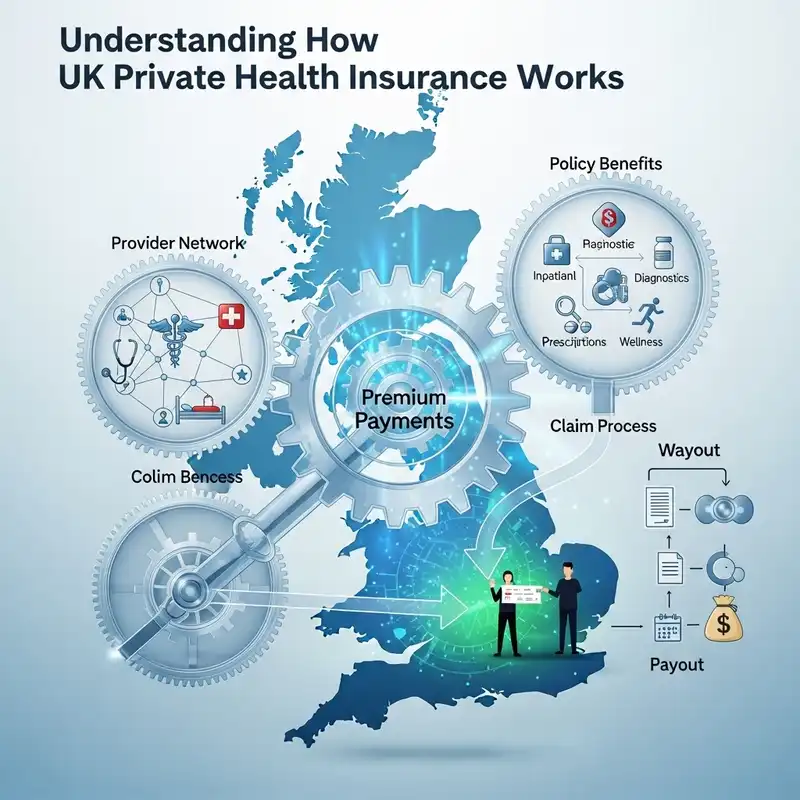
The user journey is typically straightforward and designed for speed:
- You develop symptoms: You notice a new health concern, for example, persistent joint pain or worrying digestive issues.
- You get a referral: You visit your NHS GP and explain your symptoms. They can provide you with an 'open referral', which means they recommend you see a specialist without naming a specific one. Some PMI policies now include a digital private GP service, allowing you to get this referral even faster.
- You contact your insurer: You call your PMI provider, explain the situation, and provide your referral details.
- Your claim is authorised: The insurer checks that your condition is covered by your policy. Once approved, they will typically provide you with a list of approved specialists and private hospitals from their network.
- You book your appointments: You now have the control. You can choose your consultant based on their reputation and book an appointment, often within a few days. Subsequent scans and tests are also arranged swiftly.
- You receive treatment: Your surgery or treatment is scheduled at a time and place that is convenient for you.
- The insurer settles the bill: The hospital and specialists bill your insurer directly. You only have to pay the 'excess' that you agreed to when you took out the policy.
To understand PMI fully, it's essential to get to grips with some of the key terms.
| PMI Terminology Explained | |
|---|---|
| Term | Definition |
| Premium | The monthly or annual fee you pay to keep your insurance active. |
| Excess | A fixed amount you agree to pay towards the cost of any claim you make. A higher excess typically means a lower premium. |
| Underwriting | The process the insurer uses to assess your medical history and decide what they will and won't cover. |
| Acute Condition | A disease, illness, or injury that is short-term and likely to be cured with treatment (e.g., a cataract, a hernia). |
| Chronic Condition | A long-term condition that requires ongoing management rather than a curative treatment (e.g., diabetes, asthma). |
| Hospital List | The specific network of private hospitals and clinics that your policy gives you access to. |
The Crucial Distinction: What PMI Does and Does Not Cover
This is the most important section of this guide. Understanding the limitations of Private Medical Insurance is essential to avoid disappointment and ensure it's the right choice for you.
PMI is designed to treat new, acute medical conditions that arise after your policy has started.
Let's be unequivocally clear on two points:
- PMI Does NOT Cover Chronic Conditions: Standard PMI policies are not designed to cover the day-to-day management of long-term, incurable conditions. This includes illnesses like diabetes, asthma, high blood pressure, arthritis, and most autoimmune disorders. The NHS remains the primary provider for chronic care management in the UK. The logic is simple: covering these lifelong conditions would make premiums prohibitively expensive for everyone.
- PMI Does NOT Cover Pre-Existing Conditions: A pre-existing condition is anything you have had symptoms, sought advice for, or received treatment for in the years before taking out your policy (typically the last 5 years). Insurers use a process called underwriting to handle this.
There are two main types of underwriting:
- Moratorium Underwriting: This is the most common type. The insurer doesn't ask for your full medical history upfront. Instead, they apply a blanket exclusion for any condition you've had in the last 5 years. However, if you then go for a set period (usually 2 years) after your policy starts without any symptoms, treatment, or advice for that condition, the insurer may agree to cover it in the future.
- Full Medical Underwriting (FMU): With FMU, you provide your full medical history on your application. The insurer's medical team reviews it and then offers you a policy with specific, named exclusions for any pre-existing conditions. This provides certainty from day one about what is and isn't covered.
| PMI Coverage Snapshot: In vs. Out | |
|---|---|
| Typically Covered (New Acute Conditions) | Typically Not Covered |
| Hip, knee, or other joint replacements | Management of diabetes or asthma |
| Cataract surgery | Pre-existing heart conditions |
| Hernia repair | Chronic conditions (e.g., arthritis, Crohn's) |
| Most cancer treatments (check policy level) | Routine GP services (unless specified) |
| Diagnostic scans (MRI, CT, PET) | Normal pregnancy and childbirth |
| Specialist consultations | Cosmetic surgery (unless reconstructive) |
| Mental health support (check policy level) | Emergency services (A&E) |
PMI is not a replacement for the NHS. It's a powerful tool to complement it, specifically for acute conditions where the NHS waiting time is the biggest issue.
Reclaiming Your Time: The Tangible Benefits of Going Private
If you develop a new, acute condition, the difference PMI can make is dramatic. It directly addresses the "time drain" by putting you back in control.
1. Unparalleled Speed of Access This is the number one benefit. While an NHS patient might wait months, a private patient's journey is measured in days or weeks.
- Specialist Consultation: See the right consultant in under a week, not 6 months.
- Diagnostics: Get that crucial MRI or CT scan within 2-3 days, not 8-10 weeks.
- Treatment: Have your operation within a few weeks of diagnosis, scheduled at your convenience.
This speed isn't just about convenience; it's about better medical outcomes. It means less time in pain, less time worrying, and a faster return to your normal life.
2. Choice and Control The NHS system, by necessity, assigns you to a hospital and a surgeon. PMI gives you a choice.
- Choice of Specialist: You can research consultants and choose the one with the best reputation or most experience in your specific condition.
- Choice of Hospital: You can select a hospital near your home or work, one known for its clinical excellence, or one that simply offers a more comfortable environment.
- Choice of Timing: You can schedule your surgery to fit around your work commitments, family holidays, or other life events. This control eliminates a huge amount of stress.
3. An Enhanced Healing Environment The environment in which you recover plays a significant role in your well-being. Private hospitals typically offer:
- A private room with an en-suite bathroom.
- More flexible visiting hours for family and friends.
- Better food choices from an à la carte menu.
- Quieter surroundings, which are more conducive to rest and recovery.
4. Access to Advanced Treatments In some cases, particularly with cancer care, comprehensive PMI policies can provide access to drugs, treatments, or therapies that are not yet approved by NICE or routinely available on the NHS. This can offer a vital lifeline and access to cutting-edge medicine.
5. Invaluable Peace of Mind Perhaps the most underrated benefit is the psychological comfort of knowing that if something goes wrong, you have a plan. You won't have to face the anxiety of a long wait for diagnosis or treatment. This background peace of mind is something many policyholders value immensely, even if they never have to make a claim.
Demystifying the Cost: Is Private Health Insurance Affordable?
Cost is, understandably, the primary consideration for most people. The price of a PMI premium can vary widely based on a range of factors. It's crucial to understand what drives the cost so you can tailor a policy to your budget.
Key Factors Influencing Your Premium:
- Age: This is the biggest factor. The older you are, the higher the statistical likelihood of needing treatment, so premiums increase with age.
- Level of Cover: A basic policy covering only in-patient treatment will be much cheaper than a comprehensive plan that includes out-patient consultations, diagnostics, therapies, and mental health support.
- Excess (illustrative): This is the amount you agree to pay towards a claim. Choosing a higher excess (e.g., £500 or £1,000) will significantly reduce your monthly premium.
- Location: Healthcare costs are higher in some areas, particularly Central London, so policies that include London hospitals are more expensive.
- Hospital List: Insurers offer different tiers of hospital networks. A policy with a limited list of local hospitals will be cheaper than one with a nationwide network including premier facilities.
- Lifestyle: Your smoker status will affect your premium.
To give you a clearer idea, here are some illustrative monthly premiums you might expect to see in 2025.
| Example Monthly Premiums (Illustrative - 2025) | |
|---|---|
| Profile | Basic Cover (e.g., £1,000 excess, core cover) |
| 30-year-old, non-smoker, outside London | ~£35 - £45 |
| 45-year-old, non-smoker, outside London | ~£55 - £70 |
| 60-year-old, non-smoker, outside London | ~£95 - £130 |
| Profile | Comprehensive Cover (e.g., £250 excess, full cover) |
| 30-year-old, non-smoker, outside London | ~£70 - £90 |
| 45-year-old, non-smoker, outside London | ~£110 - £150 |
| 60-year-old, non-smoker, outside London | ~£200 - £280+ |
How to Manage the Cost:
- The 6-Week Wait Option: This is a popular way to reduce costs. If the NHS wait for your treatment is less than six weeks, you use the NHS. If it's longer, your private cover kicks in. This provides a safety net against long delays while lowering your premium.
- Review Your Cover: Don't just auto-renew. As your needs change, you might be able to adjust your cover downwards.
- Compare the Market: This is the single most effective strategy. Prices and features vary significantly between insurers like Bupa, AXA Health, Aviva, and Vitality. Finding the right balance of cost and cover can be complex. That's where an expert broker like WeCovr comes in. We compare plans from all the UK's leading insurers, using our expertise to find a policy that fits both your budget and your healthcare needs.
Navigating the Market: How to Choose the Right PMI Policy
With so many options, choosing a strong fit for your needs can feel overwhelming. Following a structured approach can make the process much simpler.
Step 1: Assess Your Priorities Think about what worries you most. Is it the risk of cancer? The thought of waiting for a joint replacement? Do you want robust mental health support? Or is your main priority simply fast access to diagnostics to find out what's wrong quickly? Your answers will determine where you should focus your cover.
Step 2: Understand the Core Components Most policies are modular. You start with a core product and add extras.
- Core Cover (In-patient): This is the foundation, covering costs when you are admitted to a hospital bed for surgery or treatment.
- Out-patient Cover: This is arguably the most important add-on. It covers the costs of specialist consultations and diagnostic tests before you are admitted to hospital. Without it, you would have to pay for these yourself or use the NHS waiting list, defeating the primary purpose of PMI.
- Therapies Cover: This adds cover for services like physiotherapy, osteopathy, and chiropractic treatment.
- Mental Health Cover: This can range from access to counselling sessions to full psychiatric in-patient care. Its importance has grown significantly in recent years.
- Cancer Cover: This is often the most valued part of a policy. It can provide access to specialist centres, experienced oncologists, and advanced drugs not always available on the NHS.
Step 3: Compare Insurers and Use a Broker While you can go to insurers directly, using an independent broker has significant advantages. A good broker provides a vital service, saving you time and money. They understand the intricate differences between policies—the small print that can make a huge difference at the point of a claim.
At WeCovr, we pride ourselves on making this process simple and transparent. Our expert advisors take the time to understand your unique situation, priorities, and budget. We then search the entire market on your behalf, explaining your options in plain English. We believe in empowering our clients with the knowledge to make the best choice for their future health.
Furthermore, we believe in supporting our clients' overall well-being. That's why, in addition to finding you a strong fit for your needs, all WeCovr customers receive complimentary access to our exclusive AI-powered wellness app, CalorieHero. It's just one of the ways we go above and beyond, helping you stay proactive about your health long before you ever need to make a claim.
Is PMI Your Key to a Healthier, More Productive 2025?
We return to our starting point: the 17 days of your life lost each year to the healthcare queue. That's a family holiday, a crucial project at work, or simply half a month of your life that you'll never get back.
The NHS remains one of the UK's greatest assets, providing world-class emergency and chronic care to everyone, regardless of their ability to pay. Private Medical Insurance is not about abandoning this principle. It's about creating a pragmatic, hybrid approach for your own health. It's about taking responsibility for the aspects of healthcare you can control—access to elective, acute care—thereby protecting your time, your finances, and your well-being.
By taking yourself out of the queue for a hip replacement or a cataract operation, you not only get treated faster but also free up that NHS slot for someone who has no other option.
The decision to invest in PMI is a personal one. It requires weighing the monthly cost of a premium against the potential cost of waiting: the lost earnings, the physical decline, and the mental anguish.
For a growing number of people in 2025, the calculation is clear. Private Medical Insurance is no longer a luxury item but a vital tool for navigating the modern healthcare landscape. It's an investment in certainty, control, and—most importantly—your invaluable time. It's your path to reclaiming your future.
Sources
- NHS England: Waiting times and referral-to-treatment statistics.
- Office for National Statistics (ONS): Health, mortality, and workforce data.
- NICE: Clinical guidance and technology appraisals.
- Care Quality Commission (CQC): Provider quality and inspection reports.
- UK Health Security Agency (UKHSA): Public health surveillance reports.
- Association of British Insurers (ABI): Health and protection market publications.
Disclaimer: This is general guidance only and does not constitute formal tax or financial advice. Tax treatment depends on individual circumstances, policy terms, and HMRC interpretation, which cannot be guaranteed in advance. Whenever applicable, businesses and individuals should always consult a qualified accountant or tax adviser before arranging such policies.
Start with your Protection Score, then decide whether private health cover is the right fit
Check where health access sits in your overall protection picture before deciding whether to compare private health cover.
Spot whether NHS access risk is the real issue
See if PMI is the gap to fix first
Get health insurance help only if it makes sense for you
Get your score
Start with your protection score
Check your current position first, then get health insurance help if you need it.
Check your current resilience
Score your income, health access and family protection position in a few minutes.
See where private cover helps
Understand whether faster diagnosis and treatment is a priority gap.
Continue to tailored PMI help
If health access is the issue, continue to tailored PMI help.
What you get
A quick view of your current protection position
A clearer idea of where the biggest gaps may be
A direct route to tailored help if you want it