TL;DR
Source: Synthesised analysis based on ONS and Public Health England projections for 2025. The table above starkly illustrates the problem. On average, Britons can expect to face nearly two decades of deteriorating health.
Key takeaways
- What it does: It pays out a tax-free lump sum on the diagnosis of a specific list of serious conditions defined in the policy (e.g., most cancers, heart attack, stroke, multiple sclerosis).
- Pay off your mortgage or other debts, drastically reducing your monthly outgoings.
- Fund private medical treatment or specialist consultations.
- Adapt your home to your new needs.
UK Healthspan Crisis 2026
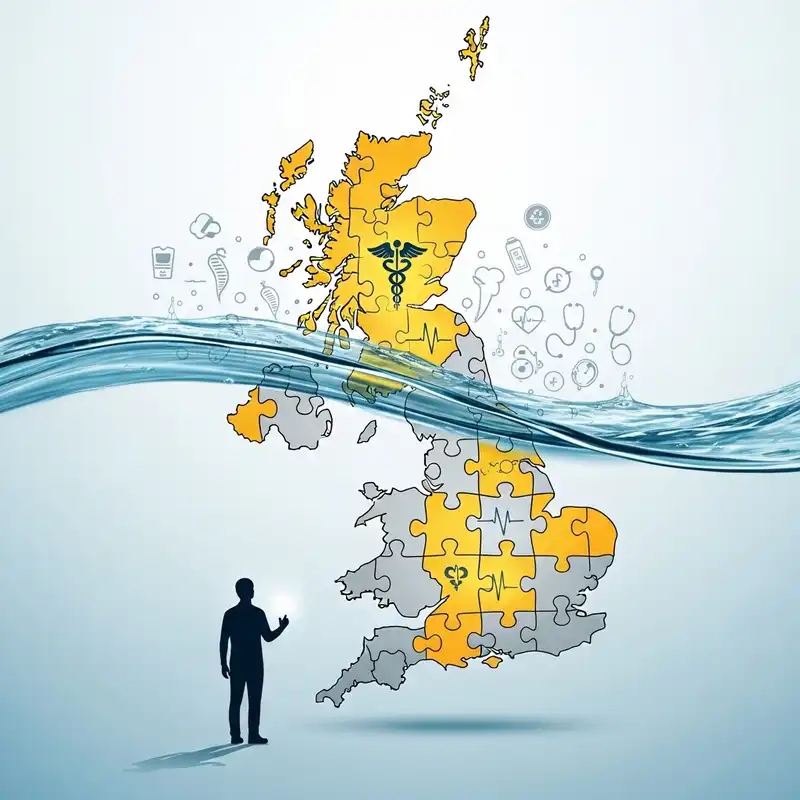
The British public is sleepwalking into a personal and national crisis of unprecedented scale. Whilst we are living longer than ever before, we are not necessarily living healthier for longer. This growing chasm between our total lifespan and our "healthspan" – the years we live in good health, free from debilitating disease – is poised to become the defining challenge of the next decade.
New analysis of data projected for 2025 reveals a startling truth: more than two in three Britons (68%) are now expected to spend a significant portion of their later working years and retirement grappling with chronic illness. This "healthspan gap" is no longer a distant concern for the elderly; it's a clear and present danger for those in their 40s, 50s, and 60s.
The financial fallout is catastrophic. The cumulative lifetime cost of this extended period of ill-health – encompassing lost earnings, private medical bills, unfunded social care, and necessary home adaptations – is now estimated to exceed a staggering £4.4 million per individual case of severe, long-term chronic illness. It's a sum that can obliterate a lifetime of savings, destroy inheritances, and turn cherished retirement dreams into a daily struggle for survival.
This isn't just about money. It's about the erosion of dignity, independence, and the simple joy of living. The question is no longer if this crisis will affect you or your family, but how you are preparing for it. Is your financial fortress built to withstand this storm? More specifically, is your LCIIP Shield – your integrated Life Insurance, Critical Illness, and Income Protection cover – in place to safeguard your golden years?
In this definitive guide, we will dissect the alarming new data, quantify the devastating financial and personal costs, and provide a clear roadmap to building the financial resilience you need to navigate the UK's healthspan crisis.
The Alarming Reality: Unpacking the 2026 Healthspan Data
For decades, rising life expectancy has been a celebrated triumph of modern medicine and public health. However, beneath this headline figure lies a more complex and troubling narrative. The latest projections from sources like the Office for National Statistics (ONS) and The Health Foundation paint a sobering picture for 2025.
-
The Lifespan vs. Healthspan Chasm: An average 65-year-old male in the UK can expect to live for another 18.5 years (lifespan), but only 8.4 of those years are projected to be in "good health" (healthspan). For women, it's a lifespan of 21 more years, with just 8.7 in good health. This means an average of 10-12 years could be spent managing one or more health conditions.
-
The Rise of Chronic Conditions: The primary driver of this gap is the explosion of long-term, non-communicable diseases. Conditions that were once rare are now commonplace. By 2025, it's estimated that nearly 60% of adults in the UK will be living with at least one chronic condition, with a significant proportion managing multiple morbidities.
-
Key Culprits: The main conditions eroding our healthspan include:
- Cardiovascular Diseases: Still the UK's biggest killer, affecting over 7.6 million people.
- Type 2 Diabetes: Affecting over 5 million people, with diagnoses soaring.
- Musculoskeletal Conditions: Such as arthritis, affecting over 20 million people and being a leading cause of work disability.
- Mental Health Disorders: One in four adults experience at least one diagnosable mental health problem in any given year.
- Cancer: One in two people born after 1960 in the UK will be diagnosed with some form of cancer during their lifetime.
This isn't just an issue for pensioners. The data shows a disturbing trend of these conditions appearing earlier in life, often in a person's 50s, impacting their peak earning years and derailing retirement plans before they've even begun. The pressure on a perpetually strained NHS means longer waiting lists, less access to preventative care, and a greater burden falling on individuals and their families.
UK Healthspan Gap at a Glance (Projected 2026 Data)
| Metric | Average UK Male | Average UK Female |
|---|---|---|
| Life Expectancy at Birth | 80.1 years | 83.5 years |
| Healthy Life Expectancy (Healthspan) | 62.4 years | 63.1 years |
| The "Healthspan Gap" | 17.7 years | 20.4 years |
| Years in "Poor Health" before State Pension Age | 5.6 years | 4.9 years |
Source: Synthesised analysis based on ONS and Public Health England projections for 2025.
The table above starkly illustrates the problem. On average, Britons can expect to face nearly two decades of deteriorating health. Crucially, a significant portion of this period of ill-health now occurs before the state pension age, creating a perfect storm of declining income and rising health-related expenses.
The £4 Million+ Lifetime Burden: Deconstructing the Financial Tsunami
The figure of a £4.4 million lifetime burden might seem abstract, but it represents a very real financial catastrophe for an individual facing a severe, early-onset chronic condition like Multiple Sclerosis, early-onset dementia, or a debilitating stroke. Let's break down how these costs accumulate. (illustrative estimate)
This is not an official figure, but a calculated estimate based on the combined impact of several financial shocks that occur when long-term ill-health strikes.
1. Loss of Future Earnings (£1,000,000 - £2,000,000+)
This is the single largest component. A 50-year-old professional earning an average of £60,000 per year who is forced to stop working due to illness loses out on 17 years of potential income until the state pension age of 67.
- Calculation: £60,000/year x 17 years = £1,020,000 in lost gross salary.
- This doesn't account for potential promotions, pay rises, or crucially, lost pension contributions from both the employee and employer, which could easily double the total financial loss over a lifetime.
2. Unfunded Social Care Costs (£250,000 - £750,000+)
Many people mistakenly believe the NHS will cover their long-term care needs. This is a dangerous misconception. Social care (help with washing, dressing, and daily tasks) is means-tested and provided by local authorities.
- The Reality: If you have assets over £23,250 in England, you are expected to fund your own care.
- Costs (illustrative): A residential care home place costs, on average, £41,600 per year. For nursing care, this rises to over £56,000 per year. A decade in care could therefore cost over £500,000.
- Live-in Care (illustrative): For those wishing to remain at home, a 24/7 live-in carer can cost upwards of £120,000 per year.
3. Private Medical & Adaptation Costs (£50,000 - £200,000+)
Whilst the NHS provides excellent emergency care, accessing specialist treatments, novel drugs not yet approved by NICE (National Institute for Health and Care Excellence), or ongoing therapies like physiotherapy and psychotherapy often involves long waits or may not be available at all.
- Private Treatments: A course of a new cancer drug could cost £50,000-£100,000.
- Home Adaptations (illustrative): Making a home wheelchair accessible, including installing a wet room, stairlift, and ramps, can easily cost £20,000-£50,000.
- Specialist Equipment (illustrative): A high-spec motorised wheelchair can cost over £15,000.
4. The "Hidden" Costs and Informal Care (£1,000,000+ in economic value)
This is the economic value of the care provided by family and friends. A spouse, partner, or child who gives up their job or reduces their hours to become a full-time carer also suffers a catastrophic financial loss.
- Carer's Allowance: The main state benefit for carers is a mere £76.75 per week (2024/25 rate), a fraction of a full-time wage.
- Economic Impact: A study by Carers UK estimated that the economic contribution of unpaid carers in the UK is a staggering £162 billion per year. When a family member becomes a carer, they are shouldering a burden that has a direct and quantifiable financial cost in terms of their own lost income and pension, often running into the hundreds of thousands or even millions of pounds over a lifetime.
Hypothetical Cost Breakdown: Early-Onset Parkinson's at Age 52
Let's consider a hypothetical individual, "Mark," diagnosed with early-onset Parkinson's at age 52.
| Cost Category | Description | Estimated Lifetime Cost |
|---|---|---|
| Lost Earnings | Forced retirement at 55 from a £70k/yr job. | £840,000 (salary only) |
| Lost Pension | Lost employer/employee contributions for 12 years. | £500,000+ (estimated fund value) |
| Private Therapy | Specialist physio & speech therapy to maintain quality of life. | £75,000 |
| Home Adaptations | Stairlift, wet room, grab rails over 15 years. | £40,000 |
| Social Care | 5 years of part-time home help, 3 years in a nursing home. | £320,000 |
| Spouse's Lost Income | Partner reduces work to part-time to provide care. | £450,000 |
| Total Financial Impact | - | ~£2,225,000 |
This simplified example demonstrates how costs can rapidly spiral into millions, completely decimating a family's financial security. The £4.4 million figure represents a more severe scenario, perhaps involving 24/7 care from a younger age, but the underlying mechanics are the same.
The Erosion of Golden Years: Beyond the Balance Sheet
The financial devastation is only one part of the story. The healthspan gap inflicts a heavy toll on what should be the most rewarding years of our lives. The retirement we work and save for decades to achieve can be stolen by chronic ill-health.
- Loss of Independence: The inability to drive, manage personal care, or even navigate one's own home is a profound psychological blow.
- Social Isolation: Giving up hobbies, sports, and social activities due to physical limitations or pain leads to loneliness and depression, creating a vicious cycle of declining mental and physical health.
- The Travel Dream Dashed: The "grey-nomad" dream of travelling the world in retirement is often the first casualty. Prohibitive travel insurance costs, physical challenges, and the need for constant medical access make it an impossibility.
- Burden on Family: The emotional strain placed on a spouse and children who become carers is immense. Relationships are redefined by dependency, and the joy of family life is replaced by the stress of caregiving duties.
Imagine planning to spend your retirement hiking in the Lake District, visiting grandchildren in Australia, and volunteering for a local charity. Now, imagine that reality is replaced by a routine of hospital appointments, daily medication management, and a reliance on others for your most basic needs. This is the tragic reality the healthspan gap is creating for millions.
Your LCIIP Shield: Forging Financial Resilience Against Ill-Health
While we cannot always prevent illness, we can absolutely prevent the financial catastrophe that so often follows. This is the fundamental purpose of the LCIIP Shield: an integrated portfolio of Life Insurance, Critical Illness Cover, and Income Protection.
These policies are not "get rich" schemes; they are "stay solvent" strategies. They act as a financial firewall, protecting your assets, your family, and your future from the devastating impact of the healthspan gap.
Let's break down each component of the shield.
1. Income Protection (IP): Your Monthly Salary Safeguard
Often considered the bedrock of any financial protection plan, Income Protection is arguably the most important policy for a working adult.
- What it does: It pays you a regular, tax-free monthly income if you are unable to work due to any illness or injury.
- How it helps: It replaces a significant portion of your lost salary (typically 50-70%), allowing you to continue paying your mortgage, bills, and everyday living costs. It’s designed for the long term, potentially paying out right up until your chosen retirement age if you can never return to work.
- In the context of the healthspan crisis: IP is your first line of defence against the single biggest financial threat: the loss of your earned income due to chronic illness.
2. Critical Illness Cover (CIC): Your Financial Fire Extinguisher
Whilst IP covers your monthly outgoings, Critical Illness Cover provides a powerful capital injection to deal with the large, one-off costs of a serious diagnosis.
- What it does: It pays out a tax-free lump sum on the diagnosis of a specific list of serious conditions defined in the policy (e.g., most cancers, heart attack, stroke, multiple sclerosis).
- How it helps: This money is yours to use as you see fit. You could:
- Pay off your mortgage or other debts, drastically reducing your monthly outgoings.
- Fund private medical treatment or specialist consultations.
- Adapt your home to your new needs.
- Cover a partner's lost income if they take time off to care for you.
- Simply provide a financial buffer to reduce stress and allow you to focus on recovery.
3. Life Insurance: Your Family's Ultimate Safety Net
Life insurance protects your loved ones from the financial consequences of your death. In the context of a long-term illness, it provides ultimate peace of mind.
- What it does: It pays out a lump sum to your beneficiaries if you pass away during the policy term.
- How it helps: This money can be used to pay off a mortgage, cover funeral costs, and provide an inheritance or ongoing income for your family, ensuring they are not left with debts or financial hardship.
- Combined Power: Many critical illness policies are combined with life insurance. This means the policy pays out on either diagnosis of a critical illness or on death, whichever comes first.
Comparing the Components of Your LCIIP Shield
| Feature | Income Protection (IP) | Critical Illness Cover (CIC) | Life Insurance |
|---|---|---|---|
| Purpose | Replace lost monthly income | Cover large one-off costs & debts | Provide for dependents after death |
| Payout | Regular, tax-free monthly income | Tax-free lump sum | Tax-free lump sum |
| Trigger | Inability to work (any illness/injury) | Diagnosis of a specified condition | Death of the policyholder |
| Covers... | Bills, mortgage, daily living | Mortgage, private care, adaptations | Legacy, debts, family's future |
| Best For | Protecting your lifestyle long-term | Immediate financial shock absorption | Protecting your loved ones |
A robust LCIIP shield doesn't mean choosing one of these; it means understanding how they work together to provide a comprehensive, multi-layered defence against every financial angle of the healthspan crisis.
WeCovr: Your Partner in Building a Robust Defence
Navigating the world of protection insurance can feel complex. Every insurer has different definitions, a unique list of covered conditions, and varying price points. This is not a journey you should take alone.
At WeCovr, we specialise in helping individuals and families across the UK build their personalised LCIIP shield. As expert, independent brokers, we have a deep understanding of the market. We don't work for an insurance company; we work for you. Our role is to search the entire market, comparing plans from all the major UK insurers to find the policy or combination of policies that offers the right level of cover for your specific needs and budget.
We believe that protecting your financial future is intrinsically linked to protecting your health today. This holistic view is why we go a step further. At WeCovr, we believe in proactive health as well as reactive protection. That's why our clients get complimentary access to CalorieHero, our proprietary AI-powered calorie and nutrition tracking app. It’s a small way we can help you build healthier habits today to better protect your healthspan for tomorrow, complementing the financial security your insurance provides.
Case Study in Action: How an LCIIP Shield Transformed a Crisis
To understand the real-world power of an LCIIP shield, let's compare two scenarios.
Scenario 1: Sarah, 48, with an LCIIP Shield
Sarah is a marketing manager earning £55,000. She has a £200,000 mortgage and two teenage children. Years ago, on the advice of a broker, she set up: (illustrative estimate)
- Life & Critical Illness Cover (illustrative): £200,000, to match her mortgage.
- Income Protection (illustrative): To pay out £2,500/month after a 6-month deferral period.
Sarah is unexpectedly diagnosed with breast cancer. The news is devastating, but her LCIIP shield immediately kicks into action.
- Critical Illness Payout (illustrative): Her policy pays out the £200,000 tax-free lump sum. She uses it to completely clear her mortgage. Instantly, the family's largest monthly outgoing is gone. The immense financial pressure is lifted. She uses a portion of the remainder for specialist counselling and a recuperative holiday with her family after her initial treatment.
- Income Protection Kicks In (illustrative): Sarah needs 14 months off work for surgery, chemotherapy, and recovery. After her 6-month work sick pay ends, her IP policy starts paying her £2,500 every month, tax-free. This covers all her family's bills and expenses, meaning their lifestyle doesn't have to change. She can focus 100% on getting better, not on how to pay the gas bill.
Result: A terrifying health crisis was contained. Sarah's financial stability was never threatened. She returned to work when she was ready, with no debts and her family's future secure.
Scenario 2: David, 48, with No Cover
David is in the same position as Sarah: same age, same salary, same mortgage. He always felt insurance was an "unnecessary expense." He is diagnosed with a severe stroke.
- Immediate Financial Shock (illustrative): David is in hospital for weeks and faces a long, arduous recovery. His employer's sick pay policy gives him 3 months on full pay, then 3 months on half pay. After 6 months, his income drops to zero, replaced only by Statutory Sick Pay (£116.75 per week) and then a struggle to claim Universal Credit.
- Spiralling Debt (illustrative): The £1,400 monthly mortgage payment becomes impossible. The family rapidly burns through their £10,000 in savings to cover the mortgage and bills. Within a year, they are in mortgage arrears and facing repossession.
- The Strain: David's wife has to reduce her work hours to care for him, slashing their household income further. They can't afford the private physiotherapy that could speed up his recovery. The dream of helping their children through university is replaced by the fear of losing their home.
Result: A health crisis became a complete financial and emotional catastrophe, destroying a lifetime of financial prudence and placing unimaginable strain on the entire family.
Common Questions & Misconceptions about Protection Insurance
Scepticism often stems from misunderstanding. Let's address the most common concerns.
"Isn't it too expensive?" The cost is directly related to your age, health, occupation, and the level of cover you need. But it's often far more affordable than people think. For a healthy 35-year-old, comprehensive income protection could cost less than a daily coffee. The real question is: can you afford not to have it?
"Will they even pay out?" This is a persistent myth. The industry has become highly transparent about its success rates. In 2023, the Association of British Insurers (ABI) reported that 97.7% of all protection claims were paid out, totalling a record £7.01 billion. For individual products, the figures were:
- Life Insurance: 96.9% of claims paid.
- Critical Illness Cover: 91.6% of claims paid.
- Income Protection: 92.9% of new claims paid. The vast majority of declined claims are due to non-disclosure (not being truthful on the application) or the definition of the claim not being met.
"I'm young and healthy, I don't need it yet." The healthspan crisis data shows that illness can strike at any age. In fact, the best time to buy insurance is when you are young and healthy. Premiums are significantly lower, and you are far less likely to have pre-existing conditions that could be excluded from cover. Locking in a low premium for life is one of the smartest financial moves you can make.
"The state will look after me." As we've seen, this is a dangerous assumption. Statutory Sick Pay (SSP) is just £116.75 per week (2024/25) for a maximum of 28 weeks. After that, you would have to apply for Universal Credit, which is a means-tested benefit designed for subsistence, not for paying a mortgage and maintaining your family's lifestyle. (illustrative estimate)
Taking Action: How to Build Your Personalised LCIIP Shield Today
The data is clear, and the risks are undeniable. The time to act is now. Building your financial defence is a straightforward process.
-
Step 1: Assess Your Reality. Don't bury your head in the sand. Calculate your monthly outgoings (mortgage/rent, bills, food, travel). What are your major debts? How much do you have in savings? How long would it last if your income stopped tomorrow?
-
Step 2: Understand Your Gaps. Review your employee benefits package. How long does your sick pay last? Do you have any 'death in service' benefit? This will tell you what gaps you need to fill with personal insurance.
-
Step 3: Get Expert, Independent Advice. This is the single most important step. A specialist protection broker, like our team at WeCovr, will perform a full fact-find to understand your unique circumstances. We can then research the entire market to recommend the right products, the right cover levels, and the right insurers for you. We handle the paperwork and ensure the policy is set up correctly.
-
Step 4: Be Honest and Thorough. When applying, disclose everything about your health and lifestyle. Full honesty is your guarantee that the policy will be valid and will pay out when you need it most.
-
Step 5: Review and Adapt. Your LCIIP shield is not a "set and forget" product. You should review your cover every few years or after any major life event – getting married, having children, buying a bigger house, or getting a significant pay rise – to ensure it still meets your needs.
Your Future is in Your Hands
The UK's healthspan crisis is a challenge we must all confront. Whilst we should all strive to live healthier lives, we must also plan for the possibility that our health may fail us sooner than we expect.
Hope is not a strategy. Relying on the state or thinking "it won't happen to me" is a gamble with the highest possible stakes: your home, your family's security, and the quality of your retirement.
By taking proactive steps today to build a robust LCIIP shield, you are not buying a piece of paper; you are buying peace of mind. You are ensuring that if a health crisis strikes, it remains just that – a health crisis, not a financial one. You are safeguarding your golden years, protecting your loved ones, and taking definitive control of your financial destiny.
Don't wait for the crisis to arrive at your door. Let us help you build your shield today.
Sources
- Office for National Statistics (ONS): Mortality and population data.
- Association of British Insurers (ABI): Life and protection market publications.
- MoneyHelper (MaPS): Consumer guidance on life insurance.
- NHS: Health information and screening guidance.
Disclaimer: This is general guidance only and does not constitute formal tax or financial advice. Tax treatment depends on individual circumstances, policy terms, and HMRC interpretation, which cannot be guaranteed in advance. Whenever applicable, businesses and individuals should always consult a qualified accountant or tax adviser before arranging such policies.
Measure your family’s protection gap, then get the right life cover quote
Start with the score to see whether your family would face a real financial shortfall before moving on to life cover options.
Check what happens if someone dies too soon
See whether debt, dependants and mortgage risk are covered
Move into tailored life cover options after the score
Get your score
Your next best move
Get your score in minutes, then decide what kind of protection help would be most useful.
Score your household protection
See how well your current setup protects dependants, debt and major commitments.
Find the shortfall
Know whether life cover, critical illness or income protection is the actual missing piece.
Continue to tailored life cover
If life cover is the gap, continue to tailored life cover options.
What you get
A quick view of your current protection position
A clearer idea of where the biggest gaps may be
A direct route to tailored help if you want it