TL;DR
The conversation around longevity in the United Kingdom has shifted. For decades, we celebrated a rising lifespan, a testament to medical advancements and public health initiatives. Yet, stark new data for 2025 paints a far more sobering picture.
Key takeaways
- What it is: A policy that pays out a one-off, tax-free lump sum on the diagnosis of a specific, serious condition listed in the policy (e.g., most cancers, heart attack, stroke, multiple sclerosis).
- How it works: The lump sum is yours to use as you see fit.
- Clear your mortgage or other debts, reducing your monthly outgoings.
- Pay for private medical treatments not covered by PMI.
UK Healthspan Crisis the £1.5m Cost of Living Sicker
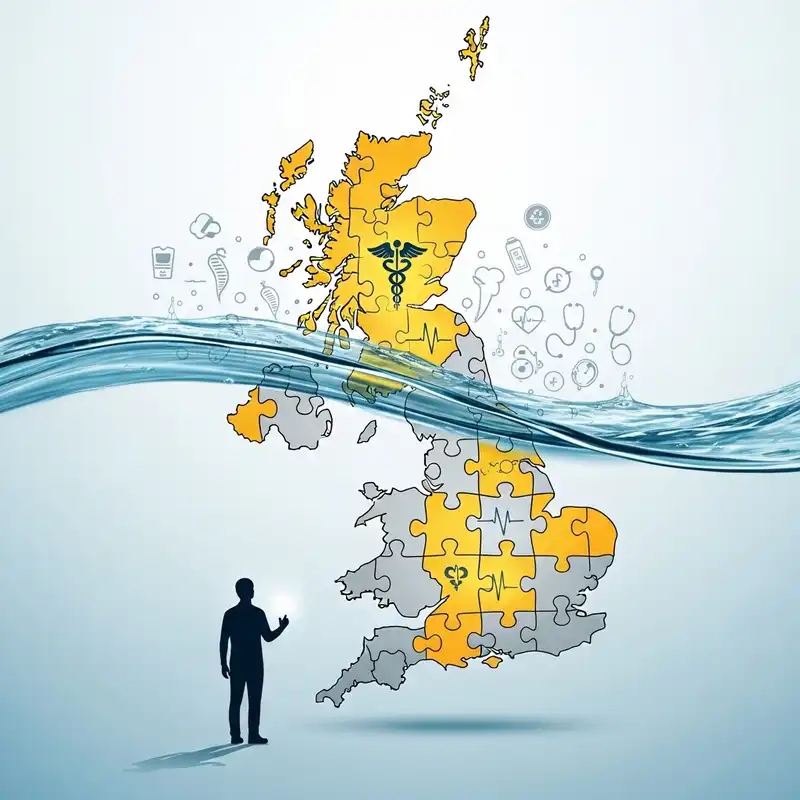
The conversation around longevity in the United Kingdom has shifted. For decades, we celebrated a rising lifespan, a testament to medical advancements and public health initiatives. Yet, stark new data for 2025 paints a far more sobering picture. We may be living longer, but we are not living well for longer. This chasm between our lifespan (how long we live) and our healthspan (how long we live in good health) has widened into a crisis.
Fresh analysis reveals the average Briton can now expect to spend nearly two decades of their life in poor health. This isn't merely a matter of aches and pains in our final years; it's a prolonged period of chronic illness, reduced mobility, and diminished quality of life that often begins in our late 50s or early 60s.
The personal cost of this "sickness gap" is staggering. Our research models a potential lifetime financial burden exceeding £1.5 million per individual. This figure isn't hyperbole; it's a calculated aggregation of lost earnings, private healthcare needs, unfunded social care, and the erosion of retirement savings and family inheritance. It represents a future where vitality is lost, financial security is shattered, and the legacy we hope to leave is consumed by the cost of living sicker.
In this definitive guide, we will dissect this emerging crisis. We'll explore the data, break down the astronomical costs, and, most importantly, map out a robust defensive strategy. We will demonstrate how a two-pronged approach—combining a Private Medical Insurance (PMI) Pathway for swift medical access with a Life, Critical Illness, and Income Protection (LCIIP) Shield for financial resilience—is no longer a luxury, but an indispensable defence against the UK's growing healthspan gap.
Decoding the Data: The Alarming Reality of the UK's Healthspan Divide
To grasp the scale of the challenge, we must first understand the difference between two critical metrics:
- Lifespan: The total number of years a person lives.
- Healthspan: The number of years a person lives in what is generally considered "good" health, free from disabling or chronic illness.
For years, the gap between these two figures has been growing. The latest 2025 statistics from sources like the Office for National Statistics (ONS) and Public Health England confirm this worrying trend has accelerated.
| Metric (UK Average - 2025 Data) | Male | Female |
|---|---|---|
| Average Lifespan | 80.1 years | 83.5 years |
| Average Healthspan (Healthy Life Expectancy) | 62.4 years | 62.9 years |
| Years in Poor Health (The Healthspan Gap) | 17.7 years | 20.6 years |
Source: Projections based on ONS and Public Health England trend data.
These figures are a national alarm bell. They mean that, on average, a man born today can expect to spend over 22% of his life in a state of ill-health. For a woman, that figure rises to nearly 25%. This isn't a comfortable retirement with manageable conditions; it's often a long, difficult journey marked by one or more chronic illnesses.
The primary drivers of this healthspan decline are now well-established:
- Cardiovascular Diseases: Including heart disease and stroke, remaining a leading cause of disability.
- Musculoskeletal Conditions: Such as arthritis and chronic back pain, severely impacting mobility and ability to work.
- Cancer: While survival rates have improved, living with and beyond cancer often involves long-term health complications.
- Mental Health Conditions: Depression and anxiety are major contributors to years lived with disability.
- Type 2 Diabetes and Obesity: These related conditions are fuelling a wave of secondary health problems across the country.
This problem is not uniform. A "postcode lottery" of health exists, with those in more deprived areas of the North East, for example, experiencing a healthspan several years shorter than those in the South East, further entrenching social and economic inequality.
The £1.5 Million+ Bill: Calculating the True Cost of Living Sicker
The physical and emotional toll of two decades in poor health is immense. But the financial cost is equally devastating, creating a perfect storm of rising expenses and falling income precisely when you are most vulnerable.
So, how do we arrive at a figure as high as £1.5 million? It’s a cumulative burden built from multiple direct and indirect costs over a lifetime. Let's consider a hypothetical but realistic case study: Sarah, a 48-year-old marketing director earning £80,000 per year. She develops a severe form of rheumatoid arthritis, a chronic autoimmune disease. (illustrative estimate)
Here is a plausible breakdown of the lifetime financial impact:
| Cost Category | Description | Estimated Lifetime Cost |
|---|---|---|
| Lost Earnings | Sarah has to reduce her hours, missing a promotion. She is eventually forced into early retirement at 58, 10 years before her planned retirement date. This is the single biggest financial hit. | £850,000+ |
| Lost Pension Contributions | Early retirement means a decade of lost employer and personal pension contributions, plus the loss of compound growth on that capital. Her final pension pot is significantly smaller. | £300,000+ |
| Private Medical Costs | To bypass long NHS waits for specialist rheumatology appointments and access newer biologic drugs not immediately available on the NHS, Sarah uses savings for private consultations and initial treatments. | £45,000 |
| Social & Domiciliary Care | In her late 60s and 70s, Sarah requires paid help at home for cleaning, shopping, and personal care as her mobility declines. This is not fully funded by the local authority. | £150,000+ |
| Home Adaptations | Over time, Sarah needs a stairlift, a walk-in shower, and other modifications to her home to maintain her independence. | £25,000 |
| Informal Carer Costs | Sarah's husband has to reduce his own work hours to support her, leading to a further loss of household income. This is an often-hidden cost. | £100,000+ |
| Miscellaneous Costs | This includes everything from mobility aids and prescription charges to increased travel costs for hospital appointments and therapies not covered by the state. | £30,000 |
| Total Lifetime Cost | A staggering potential lifetime financial burden. | £1,500,000+ |
Sarah's story is a stark illustration of how a chronic illness can systematically dismantle a lifetime of financial planning. Her retirement dreams of travel and leisure are replaced by a reality of financial worry and dependency. Her ability to pass on wealth to her children is severely compromised. This is the true face of the healthspan crisis.
The Strained Safety Net: Can the NHS Alone Protect You?
The National Health Service is one of Britain's greatest achievements, providing exceptional care to millions. However, to rely on it as your only line of defence in the face of the healthspan crisis is a perilous strategy. The system is operating under unprecedented and sustained pressure.
By 2025, the challenges are clear:
- Record Waiting Lists: Despite immense efforts, the total waiting list for elective care in England continues to hover near the 8 million mark. The wait for some "routine" procedures, like hip or knee replacements that are crucial for maintaining mobility and staying in work, can stretch for well over a year.
- Diagnostics Bottleneck: Getting a swift and accurate diagnosis is the first step to effective treatment. However, waits for key diagnostic tests like MRI and CT scans remain a significant bottleneck, delaying treatment and potentially leading to poorer outcomes.
- Access to Specialists: Seeing the right consultant for your condition can take many months, a period during which your health could deteriorate further.
- The "Postcode Lottery": Access to specific drugs, therapies, and treatments can vary significantly depending on where you live, dictated by the budget and priorities of your local Integrated Care Board.
The NHS is designed to treat acute, life-threatening conditions exceptionally well. But for the long-term management of the chronic illnesses that define the healthspan gap, it is a system stretched to its absolute limit. Relying solely on it means accepting potentially long waits, limited choice, and uncertainty—three things you can ill-afford when your health and financial future are on the line.
Your Personal Defence Strategy: The PMI Pathway & LCIIP Shield
Facing this reality does not mean surrendering to it. A proactive, two-part strategy can provide the security and control you need to navigate the healthspan gap and protect your financial life. Think of it as your personal health and wealth defence system.
Part 1: The PMI Pathway – Your Route to Swift Medical Care
Private Medical Insurance (PMI) is your pathway to bypassing the queues and accessing the best possible care, quickly. It’s not about replacing the NHS, but about working in parallel with it to give you choice and speed when you need them most.
How PMI Works: You pay a monthly premium. When you develop a medical condition, your GP can refer you to a private specialist. Your PMI policy then covers the costs of consultations, diagnostics, and treatment at a private hospital of your choice.
The Core Benefits of PMI:
- Speed of Access: This is the primary advantage. Instead of waiting months for a diagnosis or treatment, you can often be seen within days or weeks. For conditions that affect your ability to work or enjoy life, this is transformative.
- Choice and Control: You can choose your specialist and the hospital where you receive treatment, giving you control over your care journey.
- Access to Advanced Treatments: Some PMI policies provide access to new drugs or treatments that may not yet be approved for widespread NHS use due to cost.
- Comfort and Privacy: Treatment in a private hospital typically means a private room, more flexible visiting hours, and other amenities that can make a difficult time more comfortable.
Consider the difference: A self-employed tradesperson with chronic back pain could wait 12-18 months for an NHS consultation and surgery, potentially losing over a year's income. With PMI, they could be diagnosed and treated within a month, returning to work and protecting their livelihood.
Part 2: The LCIIP Shield – Your Financial Fortress
While PMI handles the medical side, a robust financial shield is needed to protect your income, your assets, and your family's future from the economic fallout of long-term illness. This shield is made of three interlinking components: Life Insurance, Critical Illness Cover, and Income Protection.
1. Income Protection (IP): The Bedrock of Your Financial Plan
If you could only choose one financial protection product, it should arguably be Income Protection. It is the single most effective tool for guarding against the biggest financial risk identified in our £1.5M model: lost earnings. (illustrative estimate)
- What it is: A policy that pays you a regular, tax-free monthly income if you are unable to work due to any illness or injury.
- How it works: It typically covers 50-70% of your gross salary and pays out after a pre-agreed waiting period (e.g., 3, 6, or 12 months). Crucially, the best policies will continue to pay out until you can return to work, or until your chosen retirement age.
- Why it's vital: It replaces your salary, allowing you to continue paying your mortgage, bills, and living expenses. It prevents you from having to dip into savings or your pension pot, preserving your long-term financial health. For the self-employed, who have no employer sick pay to fall back on, it is an absolute necessity.
Note: Some insurers offer "Personal Sick Pay" policies. These are often short-term income protection plans, paying out for a maximum of 1 or 2 years. They can be suitable for those in riskier jobs (like construction) wanting to cover shorter absences, but they do not provide the long-term security of a full Income Protection policy.
2. Critical Illness Cover (CIC): The Financial First Responder
A serious illness brings with it a wave of unexpected, large-scale costs. Critical Illness Cover is designed to provide a financial injection precisely when this happens.
- What it is: A policy that pays out a one-off, tax-free lump sum on the diagnosis of a specific, serious condition listed in the policy (e.g., most cancers, heart attack, stroke, multiple sclerosis).
- How it works: The lump sum is yours to use as you see fit.
- How the lump sum can be used:
- Clear your mortgage or other debts, reducing your monthly outgoings.
- Pay for private medical treatments not covered by PMI.
- Adapt your home for new mobility needs.
- Replace a partner's income if they need to take time off to care for you.
- Simply provide a financial cushion, allowing you to focus on recovery without money worries.
3. Life Insurance: The Ultimate Family Safeguard
Life Insurance addresses the ultimate "what if," ensuring that the people who depend on you are financially secure if you are no longer around.
- What it is: A policy that pays out a lump sum upon your death.
- Types of Cover:
- Level Term: Pays a fixed lump sum if you die within a set term. Ideal for covering an interest-only mortgage or providing a family legacy.
- Decreasing Term: The payout reduces over time, typically in line with a repayment mortgage. A cost-effective way to ensure your biggest debt is cleared.
- Family Income Benefit: A brilliant and often overlooked alternative. Instead of a single lump sum, it pays your family a regular, tax-free income for the remainder of the policy term. This can be easier to manage and more affordable than a large lump-sum policy.
This table summarises your LCIIP Shield and PMI Pathway:
| Product | What It Does | When It Pays Out | Key Purpose |
|---|---|---|---|
| Private Medical Insurance (PMI) | Pays for private diagnosis & treatment. | When you need medical care. | Health: Swift access, choice. |
| Income Protection (IP) | Provides a regular monthly income. | When you can't work due to illness/injury. | Wealth: Replaces lost salary. |
| Critical Illness Cover (CIC) | Pays a one-off, tax-free lump sum. | On diagnosis of a specified serious illness. | Wealth: Covers major one-off costs. |
| Life Insurance | Pays a lump sum or regular income. | On your death. | Wealth: Secures your family's future. |
At WeCovr, we specialise in helping you construct this comprehensive defence. Our expert advisers analyse your personal circumstances to find the perfect blend of cover, comparing policies from all the UK's leading insurers to ensure you get the right protection at the most competitive price.
Tailored Protection for Every Briton: No One-Size-Fits-All Solution
The beauty of modern insurance is that it can be tailored to your precise circumstances. Whether you're a company director, a freelancer, or part of a growing family, the right protection is available.
For Company Directors & Business Owners
You face a dual risk: protecting your personal finances and ensuring the continuity of your business.
- Executive Income Protection: A superior form of IP paid for by the business as an allowable expense. It can offer more generous terms and cover a higher percentage of your income (including dividends). It's a tax-efficient way to protect a company's most valuable asset: its leaders.
- Key Person Insurance: What would happen if your top salesperson or technical genius was off long-term with a critical illness? Key Person Insurance pays a lump sum to the business to cover lost profits, recruitment costs, or loan repayments, ensuring the business survives the loss of a vital team member.
- Relevant Life Cover: A tax-efficient, company-paid death-in-service benefit for directors and employees. Premiums are typically an allowable business expense, and benefits are paid tax-free to the employee's family, making it far more efficient than a personal policy.
- Gift Inter Vivos Insurance: For business owners planning their exit and succession, gifting shares can trigger a potential Inheritance Tax (IHT) liability if you die within seven years. This specialist policy pays out a lump sum to cover that tax bill, ensuring your legacy passes to your loved ones intact.
For the Self-Employed & Freelancers
You are the engine of the UK economy, but you are also the most financially exposed. No employer safety net means no sick pay, no death-in-service, and no company pension.
- Income Protection is non-negotiable. It is your personal sick pay scheme and the single most important policy you can own.
- Critical Illness Cover provides a vital capital injection to keep your business afloat and cover personal bills while you recover, preventing a health crisis from becoming a business-ending catastrophe.
- PMI can be the difference between a few weeks off for a minor operation and months of lost income waiting on the NHS.
For Families
Protecting your family is about more than just clearing the mortgage.
- Joint Life, Second Death Policies: These can be a cost-effective way to cover an Inheritance Tax liability, paying out after the second partner dies.
- Protecting the Non-Earner: A stay-at-home parent provides immense economic value (childcare, home management). A Life and Critical Illness policy on them is crucial to cover the costs of replacing their contribution should the worst happen.
- Family Income Benefit provides a predictable, manageable income stream that aligns perfectly with a young family's monthly budget needs.
Proactive Healthspan Extension: You Are in Control
While insurance provides the financial safety net, the first line of defence is taking proactive steps to extend your healthspan. The goal is to compress morbidity—to live healthily for as long as possible and shorten the period of ill-health at the end of life.
Simple, evidence-based lifestyle changes can have a profound impact:
- Nourish Your Body: Focus on a diet rich in whole foods, fibre, and plants, like the Mediterranean diet. Minimise ultra-processed foods, sugar, and excessive alcohol.
- Move Every Day: The UK Chief Medical Officers recommend at least 150 minutes of moderate-intensity activity (like a brisk walk) or 75 minutes of vigorous activity (like running) per week, plus strength-building activities on two days.
- Prioritise Sleep: Aim for 7-9 hours of quality sleep per night. It is fundamental to cognitive function, immune response, and metabolic health. Create a restful environment and a consistent sleep schedule.
- Manage Stress: Chronic stress is a key driver of inflammation and illness. Incorporate mindfulness, meditation, or simply time in nature into your routine.
- Stay Socially Connected: Strong social ties are a powerful predictor of a long and healthy life. Nurture your relationships with friends and family.
To support our clients on this journey, WeCovr provides complimentary access to our proprietary AI-powered app, CalorieHero. This tool makes it simple to track your nutrition and make healthier choices, demonstrating our commitment to your holistic wellbeing, not just your financial protection.
How WeCovr Helps You Bridge the Gap
The healthspan crisis is a complex, multi-faceted challenge. Navigating the world of PMI and LCIIP to build your defence can feel overwhelming. This is where we come in.
Choosing a strong fit for your needs is not like buying car insurance. The definitions of illnesses, the terms of an income protection payout, the exclusions—they all vary significantly between insurers. Getting it wrong can be a costly mistake.
As expert, independent brokers, our role is to be your trusted guide.
- We Listen: We take the time to understand your unique personal, professional, and financial situation.
- We Research: We use our deep market knowledge to scan policies from all the UK's major providers, from Aviva and Legal & General to Vitality and Bupa.
- We Recommend: We translate the jargon and present you with clear, tailored recommendations that match your needs and your budget. We explain the "why" behind our advice.
- We Support: We manage the application process for you and are there to provide support if you ever need to make a claim.
The threat posed by the UK's healthspan crisis is real, and the £1.5 million+ potential cost is a figure that should command everyone's attention. But it is not a fate you have to accept.
By understanding the risks and taking decisive action, you can seize control. You can build a strategy that gives you a pathway to rapid healthcare and a shield to protect your finances. You can ensure that a period of poor health does not have to mean a future of poverty or dependency.
The years you have are precious. The quality of those years is paramount. Don't let the healthspan gap dictate your future. Take the first step today to secure your health, your wealth, and your family's peace of mind.
Sources
- Office for National Statistics (ONS): Mortality and population data.
- Association of British Insurers (ABI): Life and protection market publications.
- MoneyHelper (MaPS): Consumer guidance on life insurance.
- NHS: Health information and screening guidance.
Disclaimer: This is general guidance only and does not constitute formal tax or financial advice. Tax treatment depends on individual circumstances, policy terms, and HMRC interpretation, which cannot be guaranteed in advance. Whenever applicable, businesses and individuals should always consult a qualified accountant or tax adviser before arranging such policies.
Measure your family’s protection gap, then get the right life cover quote
Start with the score to see whether your family would face a real financial shortfall before moving on to life cover options.
Check what happens if someone dies too soon
See whether debt, dependants and mortgage risk are covered
Move into tailored life cover options after the score
Get your score
Your next best move
Get your score in minutes, then decide what kind of protection help would be most useful.
Score your household protection
See how well your current setup protects dependants, debt and major commitments.
Find the shortfall
Know whether life cover, critical illness or income protection is the actual missing piece.
Continue to tailored life cover
If life cover is the gap, continue to tailored life cover options.
What you get
A quick view of your current protection position
A clearer idea of where the biggest gaps may be
A direct route to tailored help if you want it