TL;DR
The British dream of a long, healthy, and prosperous retirement is facing an unprecedented challenge. For decades, we have planned our finances around a simple assumption: we work until our late 60s, then enjoy two decades or more of well-deserved leisure. But a silent crisis, laid bare by startling new 2025 data, is threatening to shatter this vision for millions.
Key takeaways
- The Problem: You develop persistent, painful shoulder pain. It's affecting your sleep and your ability to concentrate at work.
- GP Visit: You visit your NHS GP. They examine you and suspect a rotator cuff tear, recommending you see an orthopaedic specialist and get an MRI scan. They add you to the NHS waiting list. The estimated wait to see a specialist is 9 months.
- The PMI Route: Instead of waiting, you call the dedicated helpline for your PMI provider.
- Claim Authorised: You provide your GP's referral letter. The insurer confirms the condition is covered and authorises you to see a private specialist.
- Fast-Tracked Care: Within a week, you have an appointment with a leading consultant at a local private hospital. They see you, and you have your MRI scan the very next day.
UK Healthy Retirement Shock
The British dream of a long, healthy, and prosperous retirement is facing an unprecedented challenge. For decades, we have planned our finances around a simple assumption: we work until our late 60s, then enjoy two decades or more of well-deserved leisure. But a silent crisis, laid bare by startling new 2025 data, is threatening to shatter this vision for millions.
The latest figures reveal a sobering truth: the average Briton is now expected to suffer from a debilitating, work-limiting health condition for over five years before they even reach the state pension age. This isn't just about a few aches and pains. This is a period of significant illness that strikes during our most crucial earning and saving years.
This growing gap between our lifespan and our "healthspan" is fueling a national crisis of lost productivity, eroding personal wealth, and fundamentally diminishing the quality of our golden years before they even begin. It begs a critical question for every working adult in the UK: how can you protect your health, your income, and your future prosperity when timely medical care is no longer a guarantee?
For an increasing number of people, the answer lies in a proactive strategy: a robust Private Medical Insurance (PMI) policy. This guide will dissect the alarming new reality, explore the devastating financial domino effect of ill-health, and reveal how PMI can serve as the essential shield to preserve your healthy working life and secure the retirement you've worked so hard for.
The Alarming Reality: Deconstructing the 2025 Healthy Life Expectancy Gap
To understand the scale of the challenge, we must first grasp two crucial concepts: Life Expectancy and Healthy Life Expectancy (HLE).
- Life Expectancy is the total number of years a person is expected to live.
- Healthy Life Expectancy is the number of years a person is expected to live in a state of good health, free from disabling illness.
For years, the gap between these two figures has been widening. | Metric | Average for UK (2025 Data) | Implication | | :--- | :--- | :--- | | Life Expectancy at Birth | 81.2 years | A long life is statistically likely. | | Healthy Life Expectancy (HLE) | 62.9 years | Good health ends, on average, in the early 60s. | | Current State Pension Age | 67 years | Rising to 68 between 2044-2046. | | The "Ill-Health Gap" | ~5 years | The period spent in poor health before retirement. |
This isn't just a statistic; it's the lived reality for millions. It means that, on average, a person can expect to develop a significant health condition around the age of 63, but will be expected to continue working for another four to five years to receive their state pension. This period is often characterised by chronic pain, reduced mobility, mental health struggles, and a reliance on a healthcare system under immense pressure.
What's Driving This Decline in Healthspan?
This health crisis is not happening in a vacuum. It's the result of several converging factors:
- Musculoskeletal (MSK) Conditions: Years of desk work, manual labour, and increasingly sedentary lifestyles are taking their toll. Conditions like chronic back pain, osteoarthritis, and repetitive strain injuries are now a leading cause of long-term sickness absence for those over 50.
- Mental Health Crisis: The pressures of modern work, financial uncertainty, and social change have led to record levels of anxiety, depression, and burnout. These conditions are not only debilitating in their own right but also exacerbate physical ailments.
- Lifestyle-Related Diseases: Rates of type 2 diabetes, obesity, and certain cardiovascular conditions continue to rise, often developing into serious, work-limiting problems in middle age.
- NHS Waiting Lists: The cornerstone of our nation's health, the NHS, is facing unprecedented strain. As of early 2025, diagnostic and elective treatment waiting lists in England continue to hover at near-record levels, with well over 7.5 million treatment pathways creating long, anxious, and painful waits for essential care. This is a critical factor we'll explore further.
The combination of these factors means that when a health issue strikes in your 50s or 60s, you face the prospect of a long and uncertain delay before you can get the diagnosis and treatment needed to get back on your feet.
The Domino Effect: How Ill-Health Derails Your Financial Future
A serious health issue in your pre-retirement years doesn't just affect your wellbeing; it triggers a devastating financial chain reaction that can dismantle decades of careful planning.
1. Lost Productivity and Income
For most people, their ability to earn is their single greatest asset. When debilitating illness strikes, this asset is immediately at risk.
- Statutory Sick Pay (SSP): This provides a minimal safety net, but at just over £115 per week (2025/26 rate), it's a fraction of the average salary and is insufficient to cover the household bills for most families.
- Reduced Hours and "Presenteeism": Many people who are unwell try to continue working. However, their productivity plummets. They may need to reduce their hours, turn down promotions, or step back from demanding roles, all of which lead to a direct hit on their income and career trajectory.
- For the Self-Employed: The impact is even more brutal. If you can't work, you don't get paid. There is no SSP safety net. A six-month wait for a hip replacement can mean six months of zero income, forcing many to burn through their life savings.
2. Eroding Wealth and Savings
When income falls, people are forced to turn to their savings to stay afloat. This creates a double blow to your retirement plans.
- Depleting Pension Pots: An increasing number of people are accessing their pension pots early (from age 55) not to fund an early retirement, but simply to cover living costs while they wait for medical treatment. This is catastrophic for future wealth, as it not only drains the capital but also sacrifices decades of potential compound growth.
- Raiding ISAs and Other Savings: Long-term savings earmarked for a comfortable retirement are being repurposed as an emergency fund to pay the mortgage or cover unexpected medical bills.
- Ad-Hoc Private Treatment: Faced with an 18-month NHS wait for a knee replacement, many feel they have no choice but to pay for it themselves. While this gets them back to work faster, the cost can be crippling, wiping out a significant chunk of their savings in one go.
| Common Private Procedure (2025) | Average UK Cost (Ad-Hoc) |
|---|---|
| MRI Scan | £400 - £800 |
| Cataract Surgery (per eye) | £2,500 - £4,000 |
| Hip Replacement | £13,000 - £16,000 |
| Knee Replacement | £14,000 - £17,000 |
| Hernia Repair | £3,000 - £5,000 |
Paying these costs out-of-pocket can be a life-altering financial event.
3. The Compounding Damage to Your Pension
The damage doesn't stop at draining your existing pots. Reduced income while you're sick means your future contributions also grind to a halt. You lose out on your own contributions, your employer's valuable contributions, and the tax relief that supercharges your pension growth. A year of long-term sick leave at age 58 doesn't just mean a year of lost savings; it means those lost funds miss out on a decade or more of potential investment growth before you retire.
The conclusion is inescapable: your health and your wealth are intrinsically linked. A failure to protect your health in your final working decade is a direct threat to your financial security for the rest of your life.
The NHS in 2025: A System Under Unprecedented Strain
Let us be unequivocal: the NHS and its staff are a national treasure, performing miracles every single day. However, it is crucial for every individual to understand the reality of the pressures it faces in 2025. Relying on it for timely treatment of elective (non-emergency) conditions has become a significant gamble.
- Record Waiting Lists: The sheer scale of the backlog is staggering. The "official" figure often quoted is the number of people waiting, but the more accurate metric is the number of "treatment pathways" on the waiting list, which stands at over 7.5 million in England alone. This means one person can be on the list for multiple treatments.
- The 18-Week Target is a Distant Memory: The NHS constitution target states that 92% of patients should wait no more than 18 weeks from GP referral to treatment. In 2025, this target has not been met nationally for almost a decade. The average wait is now significantly longer for many common procedures.
- Diagnostic Bottlenecks: The wait isn't just for surgery. It's often for the crucial diagnostic tests—MRI scans, CT scans, endoscopies—needed to find out what's wrong in the first place. These long waits create prolonged periods of pain, anxiety, and uncertainty.
- A "Postcode Lottery": Access to care is not uniform. The waiting time for a specific procedure can vary dramatically depending on where you live. Your ability to get timely treatment can depend entirely on the funding and capacity of your local NHS trust.
This isn't about assigning blame; it's about acknowledging a practical reality. If you develop a painful, work-limiting condition like a worn-out joint or a hernia, the NHS will eventually provide excellent care. The question is, can your career, your finances, and your mental health afford to wait?
Private Medical Insurance (PMI): Your Proactive Shield for a Healthy Working Life
This is where Private Medical Insurance (PMI) transitions from being seen as a "luxury" to an essential component of strategic financial planning. It is a tool designed specifically to mitigate the risks we've just outlined.
In essence, PMI is an insurance policy that pays for the costs of private medical treatment for acute conditions. An acute condition is a disease, illness, or injury that is likely to respond quickly to treatment and lead to a full recovery.
The core, undeniable benefit of PMI is speed of access. It provides a direct pathway to bypass the NHS queues for specialist consultations, diagnostic scans, and elective surgery. This doesn't just mean a faster recovery; it means preserving your income, protecting your savings, and maintaining your quality of life.
How Does PMI Work in Practice?
Let's walk through a typical real-world scenario:
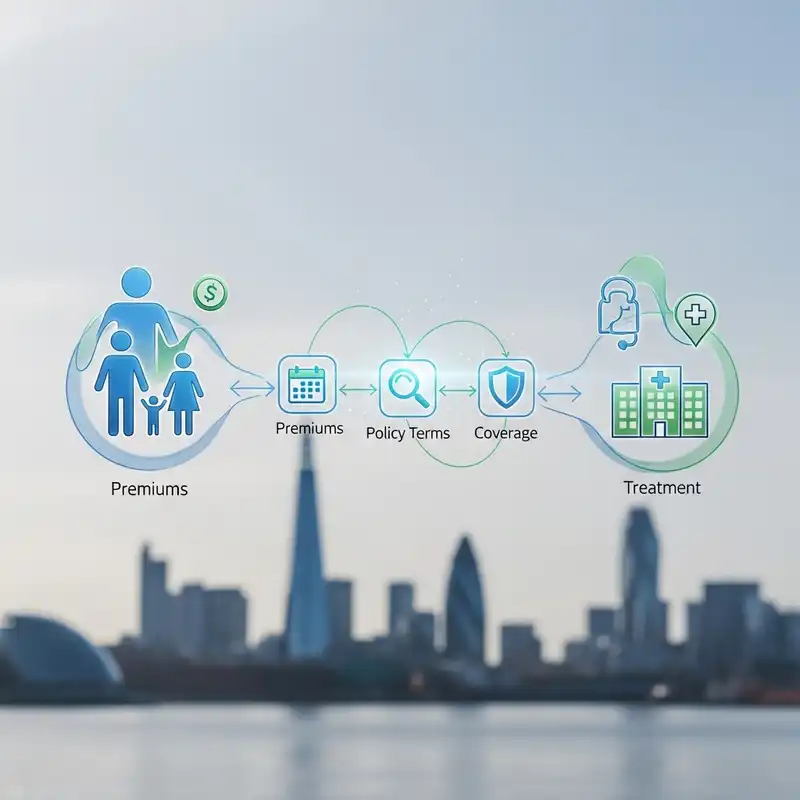
- The Problem: You develop persistent, painful shoulder pain. It's affecting your sleep and your ability to concentrate at work.
- GP Visit: You visit your NHS GP. They examine you and suspect a rotator cuff tear, recommending you see an orthopaedic specialist and get an MRI scan. They add you to the NHS waiting list. The estimated wait to see a specialist is 9 months.
- The PMI Route: Instead of waiting, you call the dedicated helpline for your PMI provider.
- Claim Authorised: You provide your GP's referral letter. The insurer confirms the condition is covered and authorises you to see a private specialist.
- Fast-Tracked Care: Within a week, you have an appointment with a leading consultant at a local private hospital. They see you, and you have your MRI scan the very next day.
- Treatment and Recovery: The scan confirms the tear. The insurer authorises the keyhole surgery required to fix it, which is scheduled for three weeks' time. You also get immediate access to post-operative physiotherapy to ensure a swift and full recovery.
The result? You are diagnosed, treated, and well on the road to recovery in under two months, instead of facing the better part of a year in pain and uncertainty. For someone who is self-employed or in a physically demanding job, this difference is life-changing.
The Golden Rule: PMI Does NOT Cover Chronic or Pre-existing Conditions
This is the most important point to understand about PMI in the UK. It is a non-negotiable principle of how this insurance works.
- No Pre-existing Conditions: Standard PMI policies will not cover you for medical conditions you already have, or have sought advice or treatment for, before the policy begins. If you have a history of back pain, your policy will not cover future treatment for that back pain.
- No Chronic Conditions: PMI is designed for acute conditions (like a cataract or a hernia) which can be cured. It is not designed to cover the ongoing management of long-term, incurable chronic conditions like diabetes, asthma, hypertension, or multiple sclerosis. The management of these conditions remains with the NHS.
Think of it this way: PMI is like car insurance. It's there to fix unexpected damage that happens after you've taken out the policy. It won't pay to fix a dent that was already there when you bought the car. Clarity on this point is essential to having the right expectations of what a policy can and cannot do for you.
Unpacking a Modern PMI Policy: What's Inside?
A modern PMI policy is far more than just a hospital bed. It's a customisable suite of benefits designed to support your health proactively. When considering a policy, you'll typically start with a core foundation and add optional extras.
Core Cover (Usually included as standard):
- In-patient and Day-patient Treatment: This covers all costs when you are admitted to a hospital for a bed, including surgery, anaesthetist fees, consultations, nursing care, and medication.
Powerful Optional Extras (To tailor your plan):
- Out-patient Cover: This is arguably the most valuable add-on. It covers the costs incurred before you're admitted to hospital. This includes initial specialist consultations and, most importantly, diagnostic tests and scans (MRI, CT, PET). Without this, you could still face a long wait for a diagnosis. Most insurers offer different levels of cover, from a set monetary limit (e.g., £1,000) to fully comprehensive cover.
- Mental Health Cover: In response to the growing crisis, this is a vital addition. It can provide access to psychiatrists, psychologists, and therapists far more quickly than through the NHS, helping you manage conditions like anxiety, depression, and stress before they escalate.
- Therapies Cover: This covers treatments like physiotherapy, osteopathy, and chiropractic care, which are essential for recovering from musculoskeletal injuries and surgery.
- Dental & Optical Cover: Some policies allow you to add cover for major dental work or high-value optical needs.
Beyond Insurance: The Rise of Value-Added Services
Leading insurers now compete to offer a host of benefits that help you stay healthy, not just treat you when you're ill:
- Digital GP Services: Get a GP appointment via your smartphone 24/7, often within hours. This is incredibly convenient for getting quick advice, prescriptions, or referrals.
- Wellbeing and Mental Health Apps: Access to mindfulness apps, guided meditation, and digital Cognitive Behavioural Therapy (CBT) courses.
- Health and Lifestyle Rewards: Discounts on gym memberships, fitness trackers, and healthy food to incentivise a healthier lifestyle.
At WeCovr, we champion this holistic approach to health. We believe that supporting our clients goes beyond just the policy. That's why, in addition to finding you the perfect insurance plan, we provide all our customers with complimentary access to CalorieHero, our proprietary AI-powered calorie and nutrition tracking app. We know that proactive health management is the first line of defence in securing your long-term wellbeing.
Finding the Right Fit: How to Choose a Policy and Control Costs
The PMI market can seem complex, but understanding a few key concepts allows you to tailor a policy perfectly to your needs and budget.
1. The Two Types of Underwriting
This determines how the insurer treats your previous medical history.
- Moratorium Underwriting: This is the most common and simplest method. You don't have to declare your medical history upfront. Instead, the policy automatically excludes any condition you've had symptoms of, or received treatment for, in the last 5 years. However, if you then go 2 continuous years on the policy without any symptoms, advice, or treatment for that condition, it can become eligible for cover.
- Full Medical Underwriting (FMU): You complete a detailed health questionnaire when you apply. The insurer assesses your history and tells you upfront exactly what is and isn't covered. It's more work at the start but provides absolute clarity from day one.
2. Levers to Adjust Your Premium
You have significant control over the cost of your policy. Here are the main ways to manage your premium:
- The Excess: This is the amount you agree to pay towards the cost of any claim. For example, if you have a £250 excess and your treatment costs £5,000, you pay the first £250 and the insurer pays the rest. Choosing a higher excess (£500 or £1,000) can significantly reduce your monthly premium.
- The Hospital List: Insurers have tiered lists of private hospitals. A comprehensive list including prime central London hospitals is the most expensive. Opting for a national list that excludes these high-cost facilities can offer substantial savings.
- The 6-Week Option: This is a very popular and effective cost-saving tool. With this option, if the NHS can provide the in-patient treatment you need within 6 weeks of it being recommended, you agree to use the NHS. If the wait is longer than 6 weeks, your private policy kicks in. This effectively protects you from long, debilitating waits while lowering your premium.
3. The Crucial Role of an Expert Broker
Navigating these options across multiple providers (like Aviva, Bupa, AXA Health, The Exeter, and Vitality) can be overwhelming. This is where an independent broker becomes invaluable.
An expert broker, like WeCovr, works for you, not the insurance company. Our role is to:
- Understand Your Needs: We take the time to understand your health concerns, your budget, and your priorities.
- Scan the Entire Market: We have access to policies and rates from all the UK's leading insurers.
- Explain the Nuances: We demystify the jargon and compare the key differences between policies, ensuring you understand exactly what you are buying.
- Find the Best Value: Our goal is to find the most comprehensive cover that fits your budget, saving you time, hassle, and money.
Case Studies: PMI in Action
Let's see how this works for real people.
Case Study 1: The Self-Employed Builder David, 56, is a self-employed builder. He develops a painful hernia. His GP confirms the diagnosis and tells him the NHS waiting list for surgery is currently 10-12 months. For David, this is a financial disaster. He can't do any heavy lifting, and his income dries up. Thankfully, he took out a PMI policy a few years ago. He calls his insurer, gets the claim approved, and has the surgery at a local private hospital just four weeks later. After a short recovery, he's back on the tools. His PMI policy cost him around £70 a month, but it saved him from nearly a year of lost income, which would have run into tens of thousands of pounds.
Case Study 2: The Office Manager Nearing Retirement Jane, 63, is an office manager planning to retire at 67. Her eyesight begins to deteriorate rapidly due to cataracts. Driving to work becomes hazardous and reading spreadsheets is nearly impossible. The NHS wait for surgery is 18 months. She fears she'll be forced to retire early, jeopardising her final pension contributions. Her PMI policy, which includes out-patient cover, gets her a consultation within two weeks and surgery for both eyes within two months. She can work comfortably and safely until her planned retirement date, securing her full pension. The policy preserved not just her sight, but her financial plan.
Looking Ahead: Securing Your Prosperity Beyond Health
The 2025 data is not a forecast; it is a warning. The landscape of health and retirement in the UK has fundamentally changed. The once-solid assumption of a healthy working life followed by a healthy retirement has been fractured by the reality of long-term illness and a strained healthcare system.
To ignore this reality is to gamble with your financial future. The link between your health and your wealth has never been more direct or more critical than in the decade before you retire.
Private Medical Insurance is not about queue-jumping or luxury. It is a pragmatic, strategic tool for risk management. It is an investment in continuity—the continuity of your income, the continuity of your financial plan, and the continuity of your quality of life. By securing swift access to medical care, you are protecting your single most important asset: your ability to earn, save, and build the future you deserve.
Don't let the silent crisis of ill-health dictate the terms of your retirement. Take control of your health, explore your options, and build a shield that will protect your wellbeing and your prosperity for years to come.
At WeCovr, we specialise in helping you build that shield. We provide expert, impartial advice, comparing plans from across the market to find the perfect fit for your life and your finances. Your journey to a secure and healthy retirement starts with a simple conversation.
Sources
- NHS England: Waiting times and referral-to-treatment statistics.
- Office for National Statistics (ONS): Health, mortality, and workforce data.
- NICE: Clinical guidance and technology appraisals.
- Care Quality Commission (CQC): Provider quality and inspection reports.
- UK Health Security Agency (UKHSA): Public health surveillance reports.
- Association of British Insurers (ABI): Health and protection market publications.
Disclaimer: This is general guidance only and does not constitute formal tax or financial advice. Tax treatment depends on individual circumstances, policy terms, and HMRC interpretation, which cannot be guaranteed in advance. Whenever applicable, businesses and individuals should always consult a qualified accountant or tax adviser before arranging such policies.
Start with your Protection Score, then decide whether private health cover is the right fit
Check where health access sits in your overall protection picture before deciding whether to compare private health cover.
Spot whether NHS access risk is the real issue
See if PMI is the gap to fix first
Get health insurance help only if it makes sense for you
Get your score
Start with your protection score
Check your current position first, then get health insurance help if you need it.
Check your current resilience
Score your income, health access and family protection position in a few minutes.
See where private cover helps
Understand whether faster diagnosis and treatment is a priority gap.
Continue to tailored PMI help
If health access is the issue, continue to tailored PMI help.
What you get
A quick view of your current protection position
A clearer idea of where the biggest gaps may be
A direct route to tailored help if you want it