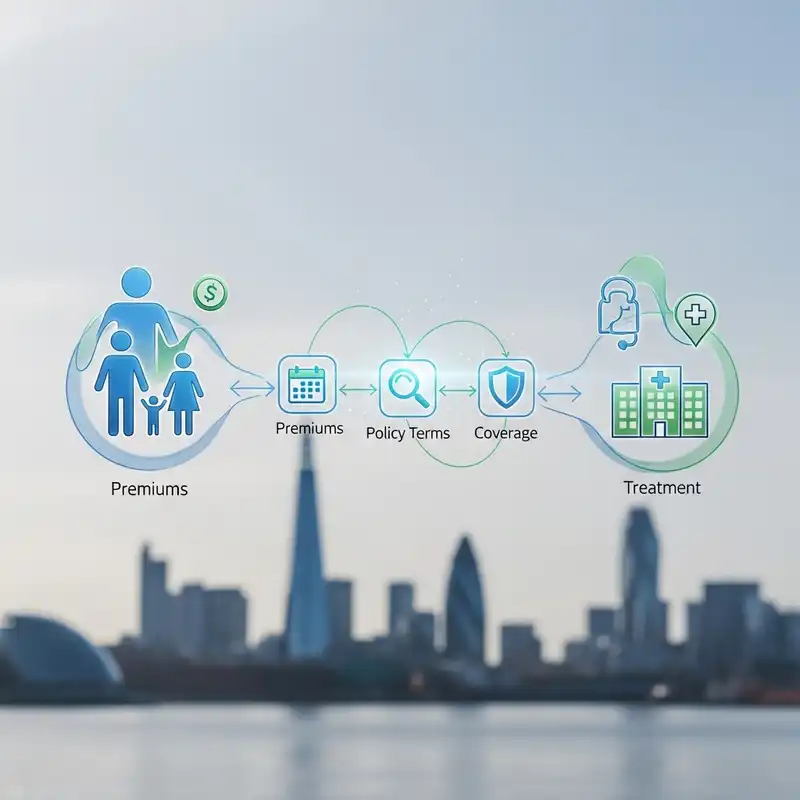
TL;DR
The landscape of UK life insurance, critical illness cover, and income protection (LCIIP) is far more intricate than many realise. For decades, insurers have used sophisticated actuarial models to assess risk. Historically, these models focused heavily on individual data: age, medical history, occupation, and personal habits.
Key takeaways
- Life Insurance: Your death within the policy term.
- Critical Illness: You contracting a specified serious illness.
- Income Protection: You becoming unable to work due to illness or injury.
- Automated Underwriting: For many standard applications, your postcode (and associated micro-climate data) is fed into an automated underwriting system. This system instantaneously combines your personal details (age, health questions, occupation) with the environmental risk score of your location.
- Tiered Pricing: Insurers often have multiple pricing tiers. An applicant in a perceived higher-risk micro-climate might be automatically placed in a higher premium tier, even if their individual health is excellent. Conversely, living in a statistically low-risk area could lead to a more favourable premium.
The Micro-Climate of Risk: How Your Local Environment Shapes UK Insurance Policies and Premiums
UK LCIIP The Micro-Climate of Risk – How Your Local Environment Shapes Policy & Premiums by Insurer
The landscape of UK life insurance, critical illness cover, and income protection (LCIIP) is far more intricate than many realise. Beyond personal health and lifestyle choices, a subtle yet powerful force shapes the policies and premiums offered by insurers: your local environment, or what we term the "micro-climate of risk." This isn't just about whether you live in a city or the countryside; it delves into the nuanced interplay of geographical, socio-economic, and environmental factors specific to your postcode, influencing everything from mortality rates to the prevalence of certain illnesses.
For decades, insurers have used sophisticated actuarial models to assess risk. Historically, these models focused heavily on individual data: age, medical history, occupation, and personal habits. While these remain paramount, the advent of big data analytics, geospatial mapping, and advanced machine learning has enabled insurers to incorporate location-specific data with unprecedented granularity. This article will explore how this "micro-climate" influences LCIIP products, how different insurers weigh these factors, and what it means for you, the consumer, seeking essential financial protection.
Understanding the Micro-Climate of Risk in LCIIP
The "micro-climate of risk" refers to the specific, localised factors within a particular geographical area that can influence an individual's health, longevity, and overall risk profile from an insurer's perspective. It's a holistic view, moving beyond just individual characteristics to encompass the broader environmental and societal context in which you live and work.
This concept acknowledges that risk isn't uniformly distributed across the UK. Living in a highly polluted urban centre presents different health challenges than residing in a pristine rural village. Similarly, areas with high rates of deprivation often correlate with poorer health outcomes, while access to quality healthcare can vary significantly between regions. Insurers, driven by the need to accurately price risk and maintain solvency, leverage these insights to refine their underwriting processes.
Why Does Your Local Environment Matter to Insurers?
Insurers are in the business of predicting future events – specifically, the likelihood of a claim. These predictions are based on vast statistical analyses. When it comes to LCIIP, they're assessing the probability of:
- Life Insurance: Your death within the policy term.
- Critical Illness: You contracting a specified serious illness.
- Income Protection: You becoming unable to work due to illness or injury.
Each of these events can be influenced by environmental factors. For example, higher air pollution is linked to increased rates of respiratory and cardiovascular diseases, directly impacting critical illness and mortality risk. Areas with higher crime rates might indicate elevated risks of accidental injury or even mental health strains from chronic stress, influencing income protection claims.
The aggregation of such localised data allows insurers to build a more precise risk picture for groups of people living in specific areas, complementing individual assessments and potentially leading to more accurate, albeit sometimes surprising, premium calculations.
Key Environmental Factors Influencing LCIIP Risk Assessments
The data points contributing to an area's micro-climate of risk are diverse and complex. Insurers analyse a combination of readily available public data, proprietary databases, and sophisticated geospatial tools to build this comprehensive picture.
1. Geographical and Environmental Hazards
These are direct physical risks associated with a location.
-
Air Quality:
- Impact: Poor air quality (particulate matter, nitrogen dioxide) is a significant contributor to respiratory illnesses (asthma, COPD), cardiovascular diseases (heart attacks, strokes), and certain cancers. Public Health England (now UK Health Security Agency) data consistently highlights areas with poor air quality, particularly around major transport hubs and industrial zones.
- Insurer Use: Postcode-level air quality data is cross-referenced with medical claims data. An applicant living in an area with consistently high pollution levels might be viewed as having a higher baseline risk for related conditions.
- Example: Living near London's ULEZ (Ultra Low Emission Zone) or in industrial towns in the North of England might expose individuals to higher average pollution levels than those in the Scottish Highlands.
-
Water Quality:
- Impact: While UK tap water is generally safe, localised contamination incidents (e.g., lead piping, specific industrial run-off) can pose health risks.
- Insurer Use: Less prominent than air quality, but severe, documented local water issues could flag a concern.
-
Flood Risk:
- Impact: Beyond property damage, flooding poses significant health risks (mental health, infectious diseases, injuries) and disrupts access to services. The Environment Agency provides detailed flood risk maps.
- Insurer Use: Primarily impacts property insurance, but for LCIIP, it's more about indirect health impacts and disruption. A history of repeated flooding in an area could be a subtle flag for increased stress-related health issues or difficulty accessing medical care.
-
Proximity to Hazardous Sites:
- Impact: Living near industrial plants, major chemical facilities, or sites with historical contamination (e.g., brownfield sites, former mining areas) can elevate risks of specific illnesses due to exposure to pollutants.
- Insurer Use: Geospatial analysis identifies proximity to such sites, potentially linking to higher rates of specific critical illnesses in the population data.
-
Noise Pollution:
- Impact: Chronic exposure to high noise levels (e.g., near busy roads, airports) is linked to sleep disturbances, stress, hypertension, and cardiovascular issues.
- Insurer Use: Emerging area, but some sophisticated models might factor in noise maps as an indicator of chronic stress and associated health risks.
2. Socio-Economic and Demographic Indicators
These factors highlight the social determinants of health, which are strongly correlated with health outcomes. The "Marmot Review" (Fair Society, Healthy Lives) extensively documented these links in the UK.
-
Deprivation Levels:
- Impact: Areas of higher socio-economic deprivation (measured by indices like the English Indices of Deprivation, Welsh Index of Multiple Deprivation, Scottish Index of Multiple Deprivation) consistently show poorer health outcomes, lower life expectancies, and higher rates of chronic diseases. This is due to a confluence of factors: poorer housing, less access to healthy food, higher stress, lower educational attainment, and reduced access to healthcare.
- Insurer Use: This is a crucial metric. Postcodes are often assigned deprivation scores. Living in a highly deprived area can statistically elevate an individual's background risk, even if they personally have good health habits. ONS data frequently illustrates the stark differences in healthy life expectancy across quintiles of deprivation. For instance, in 2017-2019, healthy life expectancy at birth for females in the least deprived areas was 70.3 years, compared to 52.1 years in the most deprived.
-
Income Levels and Employment Rates:
- Impact: Higher unemployment and lower average incomes in an area can indicate reduced access to private healthcare, poorer diet, higher stress, and a lack of resources for healthy living. This impacts general health and the likelihood of successful rehabilitation after illness, relevant for income protection.
- Insurer Use: Areas with consistently high unemployment rates or lower average earnings might be viewed as having a higher propensity for long-term health issues and a greater financial reliance on income protection benefits.
-
Educational Attainment:
- Impact: Higher education levels often correlate with better health literacy, healthier lifestyle choices, and access to better jobs and healthcare.
- Insurer Use: A subtle factor, but statistical models can link aggregate educational attainment in a postcode to general health outcomes.
-
Crime Rates:
- Impact: High rates of violent crime, burglaries, or anti-social behaviour can lead to chronic stress, mental health issues (anxiety, depression), and an increased risk of physical injury.
- Insurer Use: Postcode crime statistics (e.g., from police.uk) are used. For income protection, chronic stress from living in a high-crime area could contribute to mental health-related claims.
3. Healthcare Access and Public Health Infrastructure
The availability and quality of local healthcare services also form part of the micro-climate.
-
GP and Hospital Access:
- Impact: Easy access to quality primary care and specialist hospitals means earlier diagnosis, better management of chronic conditions, and improved outcomes. Rural areas or specific urban locales might have "NHS deserts" with limited access.
- Insurer Use: While not directly used for individual premiums, broad regional disparities in healthcare access might factor into macro risk models, particularly for critical illness and income protection where timely treatment is key.
-
Local Health Initiatives:
- Impact: Areas with strong public health programmes (e.g., smoking cessation, obesity reduction, mental health support) can foster healthier populations.
- Insurer Use: General awareness of such initiatives might inform an insurer's broader view of a region's health trajectory.
How Insurers Utilise Local Data in Underwriting
The process by which insurers integrate this "micro-climate of risk" data is sophisticated and continuously evolving. It involves a multi-layered approach:
1. Big Data and Geospatial Analytics
- Public Datasets: ONS, Environment Agency, NHS Digital, Met Office, Home Office crime statistics.
- Commercial Datasets: Third-party data providers specialising in demographic, socio-economic, and environmental data.
- Proprietary Data: Their own historical claims data, analysed by postcode and other attributes to identify patterns and correlations.
Geospatial analytics tools map this data to specific postcodes or even smaller geographical units, allowing insurers to layer different risk factors onto a single location. For example, they can identify areas that are simultaneously highly deprived, have poor air quality, and limited access to healthcare.
2. Advanced Risk Modelling and Actuarial Science
Actuaries and data scientists build complex predictive models that weigh the influence of these environmental factors alongside individual applicant data.
- Correlation Identification: They look for strong correlations between specific local environmental factors and claims frequencies/severities for LCIIP products. For example, if critical illness claims for respiratory conditions are statistically significantly higher in postcodes with poor air quality, this correlation is built into the model.
- Risk Scoring: Each postcode or area is assigned a "risk score" based on its unique combination of environmental and socio-economic factors. This score contributes to the overall risk assessment of an individual living in that area.
- Portfolio Management: Beyond individual policies, insurers use this data to manage their overall portfolio risk, ensuring they don't have an over-concentration of high-risk policies in specific geographic areas.
3. Underwriting Processes and Pricing Algorithms
When you apply for LCIIP, your postcode is one of the initial pieces of information requested.
- Automated Underwriting: For many standard applications, your postcode (and associated micro-climate data) is fed into an automated underwriting system. This system instantaneously combines your personal details (age, health questions, occupation) with the environmental risk score of your location.
- Tiered Pricing: Insurers often have multiple pricing tiers. An applicant in a perceived higher-risk micro-climate might be automatically placed in a higher premium tier, even if their individual health is excellent. Conversely, living in a statistically low-risk area could lead to a more favourable premium.
- Referrals: If the automated system flags a complex combination of local and personal risk factors, the application might be referred to a human underwriter for a more detailed review.
4. Product Development and Regional Focus
In some instances, insurers might use this data not just for pricing existing products, but for developing new ones or tailoring their offerings. For example:
- An insurer might identify a need for specific health initiatives or partnerships in areas with particular health challenges.
- They might adjust their marketing strategies based on regional risk profiles.
Impact on Specific Insurance Types
The micro-climate of risk plays out differently across life, critical illness, and income protection insurance.
Life Insurance
- Primary Focus: Mortality risk – the likelihood of death.
- Micro-Climate Impact:
- Life Expectancy Differentials: ONS data consistently shows significant variations in life expectancy across different UK regions and deprivation levels. For example, male life expectancy in Kensington and Chelsea (London) can be several years higher than in Glasgow City. These macro trends inform postcode-level mortality assumptions.
- Disease Prevalence: Areas with higher rates of conditions like heart disease, stroke, and certain cancers (often linked to pollution, diet, and lifestyle exacerbated by socio-economic factors) will statistically have higher mortality rates, influencing premiums.
- Accidental Death: Higher crime rates or prevalence of hazardous industries in an area could slightly increase the perceived risk of accidental death.
Critical Illness Insurance
- Primary Focus: Morbidity risk – the likelihood of contracting a specified serious illness.
- Micro-Climate Impact:
- Environmental Factors: Direct links between local pollution and respiratory/cardiovascular diseases are key. Areas with higher air pollution are likely to see higher incidence of lung cancer, asthma, COPD, heart attacks, and strokes, all of which are common critical illness claims.
- Socio-Economic Factors: Deprivation is strongly linked to higher incidence rates for many critical illnesses, including cancer, heart disease, and diabetes.
- Mental Health: While not typically a critical illness, the overall mental health burden of a community (linked to stress, deprivation, crime) can indirectly impact physical health and potentially critical illness outcomes.
Income Protection Insurance
- Primary Focus: Morbidity risk leading to inability to work – and the duration of that inability.
- Micro-Climate Impact:
- General Health of the Population: Areas with poorer overall health outcomes will likely see higher rates of short-term and long-term illness, impacting income protection claims.
- Mental Health Claims: If an area exhibits high levels of stress, anxiety, or depression (e.g., due to high unemployment, crime, or social isolation), this could lead to a higher likelihood of mental health-related income protection claims, which are a significant portion of all IP claims.
- Musculoskeletal Issues: Certain occupations prevalent in a specific area (e.g., heavy industry) or environmental factors (e.g., damp housing) could contribute to higher rates of musculoskeletal conditions, a leading cause of long-term absence from work.
- Return-to-Work Prospects: Local employment opportunities and access to rehabilitation services can influence the duration of claims. If a local job market is depressed or local health services are poor, it may take longer for someone to return to work, increasing the cost of an income protection claim.
The "Postcode Lottery" of Insurance
The detailed assessment of the micro-climate of risk inevitably leads to what some describe as a "postcode lottery." This means that two individuals with identical personal health profiles and lifestyles could receive different premiums or even different policy terms purely because of their geographical location.
Explaining the Disparity
- Statistical Justification: Insurers argue that this is a fair reflection of statistical reality. If their data shows that residents of Postcode A statistically make more claims for specific conditions than residents of Postcode B, then it's actuarially sound to charge Postcode A residents more to cover that higher anticipated claims cost.
- Risk Pooling: Insurance fundamentally works on the principle of risk pooling. Premiums from many policyholders cover the claims of a few. The more accurately an insurer can segment these pools, the more precise (and often varied) their pricing becomes.
- Commercial Imperative: In a competitive market, insurers must price risk accurately to remain profitable and solvent. Underpricing risk in a high-risk area could lead to unsustainable losses, while overpricing in a low-risk area would see them lose business to competitors.
Ethical Considerations and Regulatory Oversight
The concept of a "postcode lottery" raises ethical questions about fairness and accessibility, particularly for those living in deprived areas who already face numerous challenges.
- Financial Conduct Authority (FCA): The FCA regulates the UK insurance market and has principles of 'fair treatment of customers'. While insurers are allowed to differentiate pricing based on risk, this differentiation must be justifiable and not unfairly discriminatory. The FCA expects insurers to be transparent about how they assess risk and to ensure that their models do not lead to unjustifiable outcomes.
- Affordability: A key concern is that those who arguably need insurance the most (e.g., individuals in areas with poorer health outcomes) might find it less affordable due to these risk loadings. This can exacerbate existing inequalities.
Illustrative UK Regional Health Disparities
To underscore the real-world impact, consider some general trends across the UK:
| Metric | Lowest Performing Regions (Example) | Highest Performing Regions (Example) | Source (General) | Impact on LCIIP Underwriting |
|---|---|---|---|---|
| Life Expectancy (at birth) | Glasgow City, Blackpool, Manchester | Kensington & Chelsea, Westminster, Dorset | ONS | Higher mortality risk; higher life insurance premiums. |
| Healthy Life Expectancy | North East England, Wales Valleys | South East England, East of England | ONS | Higher morbidity risk; higher critical illness/income protection premiums due to longer periods of ill-health. |
| Air Pollution (PM2.5) | Central London, West Midlands urban areas | Scottish Highlands, rural South West | DEFRA, Public Health England | Increased risk of respiratory/cardiovascular CI claims; higher life insurance mortality risk. |
| Obesity Prevalence (Adults) | North East, West Midlands | South East, London | NHS Digital, PHE | Increased risk of diabetes, heart disease, certain cancers; higher CI and IP claims. |
| Smoking Rates (Adults) | North East, North West | South East, London | ONS, NHS Digital | Significantly higher risk for numerous critical illnesses (cancer, heart disease) and mortality. |
| Access to GPs/Hospitals | Certain rural areas, rapidly growing towns | Established urban centres with good infrastructure | NHS Digital | Potential delays in diagnosis/treatment could impact CI/IP claim duration and severity. |
Note: These are broad generalisations, and specific postcodes within these regions will vary significantly. Insurers use granular data, not just regional averages.
Navigating the Micro-Climate: Tips for Consumers
Given this complex interplay of factors, how can you, the consumer, navigate the LCIIP market effectively?
1. Understand Your Local Risk Factors
While you can't change your postcode easily, being aware of the general health and environmental profile of your area can help you understand why certain quotes might appear higher or lower. You can look up public data on air quality, crime rates, and deprivation levels for your postcode or local authority area.
2. Prioritise Your Personal Health and Lifestyle
Ultimately, your individual health and lifestyle choices remain the most significant factors in your LCIIP premium. Maintaining a healthy weight, being physically active, not smoking, and moderating alcohol intake are within your control and will generally lead to more favourable premiums regardless of your postcode.
3. Be Completely Transparent with Your Insurer
It's crucial to provide accurate and complete information about your medical history, lifestyle, and occupation. Non-disclosure can lead to policies being invalidated, leaving your family unprotected when they need it most. Insurers will uncover discrepancies through their own data checks.
4. Compare Multiple Insurers (Crucial!)
This is perhaps the most vital piece of advice. Different insurers use different risk models, weighting environmental and socio-economic factors in varying ways. An area that one insurer deems high-risk might be viewed as moderate by another, leading to significant premium differences.
| Insurer Type/Strategy | Approach to Micro-Climate Data | Potential Impact on Premiums |
|---|---|---|
| Large, Established Insurer | Often has vast proprietary historical data, sophisticated in-house actuarial teams. May have very granular postcode-level analysis, potentially resulting in very specific loadings for certain areas, but also discounts for genuinely low-risk locales. | Highly varied premiums based on precise postcode mapping; potentially very competitive in 'low-risk' zones, higher in 'high-risk'. |
| Newer/Agile Insurer (Insurtech) | May leverage cutting-edge AI/ML models and external data partnerships. Could identify novel correlations. Might be more flexible in weighting newer data trends. | Potentially more dynamic pricing; could offer unique advantages in areas where traditional models struggle or are less precise. |
| "Value" Insurer | Might use broader geographic bands rather than ultra-granular postcode data, or place less emphasis on certain environmental factors. Their models might be simpler to facilitate lower administrative costs. | Less variation by postcode; potentially more consistent pricing across broader regions, but may not be the lower-cost for truly low-risk postcodes. |
| Niche/Specialist Insurer | Focuses on specific risk profiles (e.g., people with pre-existing conditions). Their micro-climate models might be tailored to how environment impacts their specific target demographic. | Pricing heavily dependent on how the specific niche interacts with local environmental factors. |
This table illustrates why seeking quotes from a wide range of providers is essential. What's considered a 'deal' by one insurer might be an overcharge by another for the exact same level of cover in your specific area.
5. Leverage a Regulated Insurance Broker
This is where expert guidance becomes invaluable. A WeCovr specialist or one of our broker partners has access to quotes and underwriting philosophies from all major UK life, critical illness, and income protection insurers. We understand the nuances of how different providers assess risk, including their approach to local environmental factors.
When you work with us, WeCovr can:
- Save You Time: Instead of you manually getting quotes from dozens of insurers, we do the legwork.
- Find the Right Fit: We don't just find the lower-cost policy; we identify the one that offers the right level of coverage at the most competitive price, considering your individual circumstances and your local micro-climate of risk.
- Navigate Complexity: We can explain why certain insurers might be more favourable for you based on your postcode and other details, helping you make an informed decision.
- Advocate for You: If your application is complex or involves unusual factors, we can liaise with insurers on your behalf to present your case effectively.
We pride ourselves on helping individuals and families across the UK secure robust financial protection, ensuring they understand every aspect of their policy.
Future Trends and Innovations in LCIIP Risk Assessment
The landscape of risk assessment in LCIIP is continually evolving, driven by technological advancements and shifting societal norms.
- Hyper-localisation: Expect even greater granularity in risk assessment, potentially down to individual streets or properties, as data collection and analysis become more sophisticated.
- Real-time Data Integration: Wearable technology and smart home devices offer potential for real-time health and environmental data. While ethical and privacy concerns are paramount, the future might see voluntary data sharing impacting premiums (e.g., lower premiums for maintaining active lifestyles or living in areas with monitored good air quality).
- Preventative Health and Wellness Programmes: Insurers are increasingly moving beyond just risk assessment to risk mitigation. We might see more policies incorporating incentives for healthy living or partnerships with local wellness programmes, particularly in areas identified with higher health risks.
- Dynamic Pricing: While traditional LCIIP is typically fixed-premium, the future could see elements of dynamic pricing where premiums adjust based on ongoing risk factors, although this would require significant regulatory and public acceptance.
- Ethical AI and Regulation: As AI and big data play a larger role, regulatory bodies like the FCA will continue to scrutinise the fairness and transparency of algorithms, ensuring they do not lead to unfair discrimination or reinforce existing societal inequalities. The balance between actuarial accuracy and social fairness will remain a key debate.
Case Studies: Real-World Impact of the Micro-Climate
Let's illustrate with a few hypothetical scenarios based on typical UK environments:
Case Study 1: The Urban Professional vs. The Rural Dweller (Life Insurance)
-
Applicant A: 35-year-old non-smoker, healthy, professional. Lives in central London (e.g., Islington), a highly urbanised area with good healthcare access but known for higher air pollution and noise levels. Property prices are high, but the overall area shows pockets of deprivation alongside affluence.
-
Applicant B: 35-year-old non-smoker, healthy, professional. Lives in a rural village in the Cotswolds, known for clean air, low crime, and higher average income levels, but potentially less prompt access, where available, to specialist healthcare.
-
Outcome: Despite identical personal profiles, Applicant A might face slightly higher life insurance premiums due to the cumulative statistical impact of higher long-term exposure to pollution and potentially higher stress levels in an urban environment, which are correlated with slightly reduced life expectancy in aggregate data. Applicant B benefits from the "health halo" of their tranquil environment. Different insurers will weigh these postcode factors differently.
Case Study 2: The Factory Worker in an Industrial Town (Critical Illness)
-
Applicant C: 40-year-old smoker (trying to quit), working in a factory. Lives in an industrial town in the North West of England, historically known for heavy industry, higher rates of deprivation, and areas of poorer air quality and smoking prevalence.
-
Applicant D: 40-year-old smoker (trying to quit), working in a modern office. Lives in a suburban town in the South East, with better air quality, lower deprivation, and generally healthier lifestyle statistics.
-
Outcome: Applicant C's premiums for Critical Illness cover would likely be significantly higher, not just due to their smoking habit and occupation, but also the compounding effect of living in an area statistically linked to higher rates of cardiovascular disease, respiratory illnesses, and cancer. The insurer's models would factor in the elevated background risk associated with their postcode's "micro-climate."
Case Study 3: Mental Health and Income Protection in Different Social Climates
-
Applicant E: 28-year-old, self-employed graphic designer. Lives in an inner-city area with high population density, relatively high crime rates, and lower average income, leading to potential social stressors.
-
Applicant F: 28-year-old, self-employed graphic designer. Lives in a well-established commuter town with lower crime rates, green spaces, and a strong community feel.
-
Outcome: While both may face similar occupational risks, Applicant E might encounter slightly higher income protection premiums or more stringent mental health underwriting. Insurers' data models may correlate higher rates of stress, anxiety, and depression-related claims with areas exhibiting specific socio-economic stressors. The perceived stability and mental well-being indicators of Applicant F's postcode could lead to a more favourable outcome.
These examples highlight that while personal circumstances are paramount, the invisible hand of the "micro-climate of risk" plays a tangible role in shaping your insurance experience.
Conclusion
The micro-climate of risk is a fascinating and increasingly influential dimension of UK life insurance, critical illness cover, and income protection. It demonstrates that the assessment of risk in the modern insurance market extends far beyond individual questionnaires, delving into the very fabric of our local environments. From the air we breathe to the socio-economic conditions of our neighbours, these factors collectively paint a picture that informs how insurers price their products and what policies they offer.
For the consumer, understanding this complexity isn't about fostering anxiety, but about empowering informed decision-making. While you can't instantly change your postcode, you can control your personal health and, crucially, how you approach the insurance market. By comparing options from a wide range of providers, you ensure you're not inadvertently penalised by one insurer's particular risk model when another might offer a more competitive rate for your unique micro-climate.
This is precisely where expert, regulated advice becomes indispensable. WeCovr, sometimes working with broker partners, exists to demystify this intricate landscape. We work tirelessly to help you compare plans from all major UK insurers, taking into account all the factors – personal and environmental – that shape your policy and premiums. Our goal is to ensure you secure the most suitable and cost-effective LCIIP cover, providing peace of mind that you and your loved ones are truly protected, no matter your micro-climate of risk.
Sources
- Office for National Statistics (ONS): Mortality and population data.
- Association of British Insurers (ABI): Life and protection market publications.
- MoneyHelper (MaPS): Consumer guidance on life insurance.
- NHS: Health information and screening guidance.
Important Information and Risks
No advice: This article is for general information only. It is not financial, legal, insurance, or tax advice, and it is not a personal recommendation. WeCovr does not assess your individual circumstances or recommend a specific product through this article.
Policy exclusions and underwriting: Insurance policies, including life insurance, private medical insurance, critical illness cover, and income protection, are subject to insurer underwriting, eligibility, acceptance criteria, terms, conditions, limits, and exclusions. Pre-existing medical conditions may be excluded, restricted, or accepted on special terms unless an insurer confirms otherwise in writing.
Tax treatment: References to tax treatment, HMRC rules, or business reliefs are based on current UK legislation and guidance, which can change. Tax treatment depends on your personal or business circumstances and may differ from examples in this article.
Before you buy: Always read the Insurance Product Information Document (IPID), policy summary, and full policy terms before buying, renewing, changing, or keeping cover. If you are unsure whether a policy is suitable for you, speak to an insurance adviser.
Measure your family’s protection gap, then get the right life cover quote
Start with the score to see whether your family would face a real financial shortfall before moving on to life cover options.
Check what happens if someone dies too soon
See whether debt, dependants and mortgage risk are covered
Move into tailored life cover options after the score
Get your score
Your next best move
Get your score in minutes, then decide what kind of protection help would be most useful.
Score your household protection
See how well your current setup protects dependants, debt and major commitments.
Find the shortfall
Know whether life cover, critical illness or income protection is the actual missing piece.
Continue to tailored life cover
If life cover is the gap, continue to tailored life cover options.
What you get
A quick view of your current protection position
A clearer idea of where the biggest gaps may be
A direct route to tailored help if you want it