TL;DR
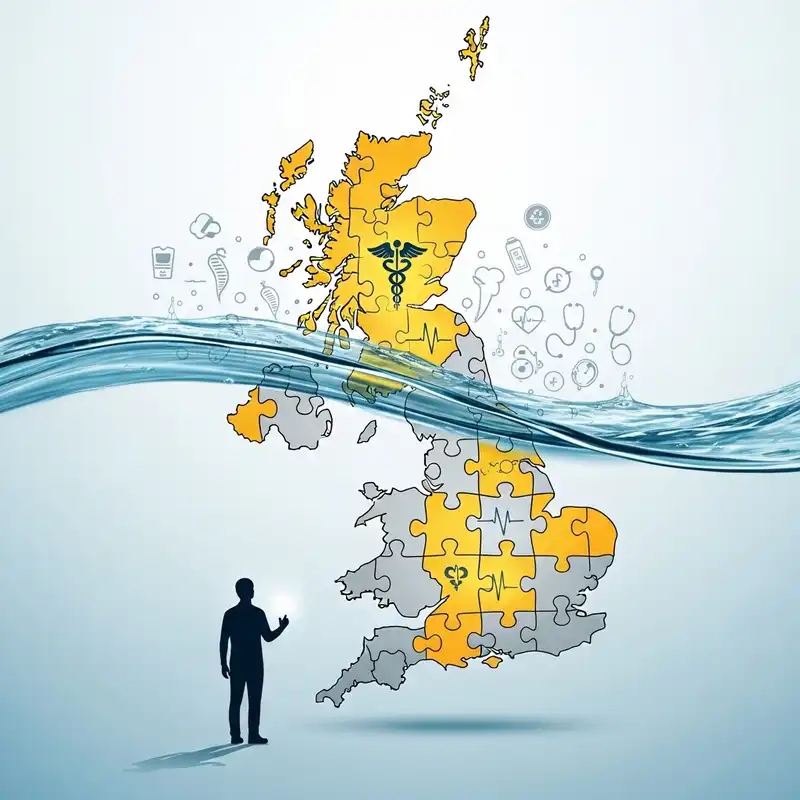
When contemplating life insurance, critical illness cover, or income protection (LCIIP) in the UK, many people focus on their age, health, and lifestyle. While these factors are undeniably paramount, there's a less obvious but equally significant element that silently influences your premiums and the terms of your policy: your postcode. It might seem counter-intuitive, but whether you reside in the bustling heart of London, a quiet village in the Cotswolds, or a remote Scottish isle, your address holds a wealth of information that insurers meticulously analyse.
Key takeaways
- Local Health Trends: Prevalence of certain diseases, mortality rates, and life expectancy within that specific area.
- Environmental Quality: Air pollution levels, access to green spaces, noise pollution.
- Socio-Economic Conditions: Income levels, employment types, deprivation indices.
- Accessibility to Services: Quality and proximity of healthcare facilities, emergency services.
- Lifestyle Indicators: General activity levels, dietary habits, crime rates.
UK Insurance Urban vs Rural Postcodes
UK LCIIP Urban vs. Rural - How Insurers Tailor Cover & Payouts for Every UK Postcode
When contemplating life insurance, critical illness cover, or income protection (LCIIP) in the UK, many people focus on their age, health, and lifestyle. While these factors are undeniably paramount, there's a less obvious but equally significant element that silently influences your premiums and the terms of your policy: your postcode.
It might seem counter-intuitive, but whether you reside in the bustling heart of London, a quiet village in the Cotswolds, or a remote Scottish isle, your address holds a wealth of information that insurers meticulously analyse. This isn't about discrimination; it's about sophisticated actuarial science and risk assessment. Insurers are in the business of calculating probabilities – the likelihood of a claim arising, and the potential cost of that claim. Your postcode acts as a powerful proxy, bundling together a complex array of demographic, environmental, and socio-economic data points that collectively paint a picture of the risks associated with your specific location.
This comprehensive guide will delve deep into the fascinating interplay between your UK postcode and your LCIIP policies. We'll explore why your address matters so much, the specific urban versus rural differences that influence insurers' decisions, how this data is used to tailor cover and premiums, and what this means for you as a policyholder. By understanding these nuances, you can make more informed choices to secure the best possible financial protection for yourself and your loved ones, no matter where in the UK you call home.
The Foundations: Understanding Life, Critical Illness, and Income Protection (LCIIP)
Before we dissect the impact of your postcode, it's crucial to have a clear understanding of the LCIIP products themselves. These are vital components of a robust financial planning strategy, designed to protect you and your family from life's unexpected turns.
Life Insurance
Life insurance is perhaps the most fundamental form of financial protection. It pays out a tax-free lump sum or regular income to your chosen beneficiaries if you pass away during the policy term. Its primary purpose is to provide a financial safety net, ensuring your dependents can maintain their lifestyle, cover outstanding debts (like a mortgage), or fund future expenses even in your absence.
- Term Life Insurance: Covers you for a specific period (e.g., 20 years). If you die within this term, a payout is made.
- Whole of Life Insurance: Covers you for your entire life, guaranteeing a payout whenever you pass away.
- Joint Life Insurance: Covers two people, typically paying out on the first death (or second, depending on the policy type).
Critical Illness Cover
Critical illness cover provides a tax-free lump sum if you are diagnosed with a specified serious illness covered by your policy during its term. These illnesses typically include cancer, heart attack, stroke, and multiple sclerosis, among others. The payout can be used for anything, from covering medical expenses and adapting your home, to replacing lost income or simply providing financial breathing room during a challenging time.
Income Protection
Often overlooked, income protection is arguably one of the most important forms of personal insurance. It pays out a regular, tax-free income if you're unable to work due to illness or injury. Unlike critical illness cover, which provides a lump sum for specific conditions, income protection covers a broader range of health issues that prevent you from doing your job. It typically pays out until you can return to work, reach retirement age, or the policy term ends. This regular income can be crucial for covering daily living expenses, mortgage payments, and bills, preventing financial hardship during periods of ill health.
These three forms of cover work synergistically to create a comprehensive financial safety net, mitigating the financial impact of death, severe illness, or inability to work. Understanding their core functions is the first step towards appreciating how external factors, like your postcode, can influence their availability and cost.
The Postcode Paradox: Why Your Address Matters More Than You Think
At first glance, it seems illogical. How can your address influence the cost of your life insurance or critical illness cover? The answer lies in the sophisticated statistical models and vast datasets employed by insurers, a practice known as 'geographic risk profiling'.
Insurers are not simply guessing. They operate on the principle of risk assessment, using large pools of data to predict the likelihood of future events. Your postcode, a seemingly innocuous detail, is in fact a highly effective identifier for a cluster of interconnected risk factors. It serves as a proxy for:
- Local Health Trends: Prevalence of certain diseases, mortality rates, and life expectancy within that specific area.
- Environmental Quality: Air pollution levels, access to green spaces, noise pollution.
- Socio-Economic Conditions: Income levels, employment types, deprivation indices.
- Accessibility to Services: Quality and proximity of healthcare facilities, emergency services.
- Lifestyle Indicators: General activity levels, dietary habits, crime rates.
By analysing aggregated data linked to specific postcodes, insurers can identify patterns and trends that indicate higher or lower risks of claims. For example, an area with historically higher rates of heart disease or lower life expectancy might present a higher risk for life or critical illness insurance. Similarly, regions with higher rates of occupational injuries or slower access to specialist medical care could influence income protection premiums.
It's crucial to reiterate that this isn't about judging individuals based on their postcode. Instead, it's about actuarial fairness. By segmenting risk based on these aggregated geographical insights, insurers can price policies more accurately, ensuring that premiums reflect the underlying risks. This prevents policyholders in lower-risk areas from subsidising those in higher-risk areas, and vice versa.
Consider this: if a neighbourhood consistently shows a higher incidence of respiratory illnesses due to prolonged exposure to poor air quality, and you live in that neighbourhood, your risk profile for certain critical illnesses or long-term health issues requiring income protection might be marginally elevated. Insurers use these statistical probabilities to fine-tune their offerings.
Key Risk Factors Influenced by Location (Urban vs. Rural)
The distinction between urban and rural living is profound, impacting various aspects of life that, in turn, influence LCIIP risk. Insurers meticulously evaluate these differences to tailor their offerings.
Health Demographics & Morbidity/Mortality Rates
One of the most significant factors influenced by location is health. Urban and rural environments present distinct health challenges and advantages.
-
Urban Health Profile:
- Higher Population Density: Can lead to faster transmission of infectious diseases. The COVID-19 pandemic starkly illustrated how densely populated areas experienced higher initial infection rates.
- Air Pollution: Major cities often contend with higher levels of particulate matter and nitrogen dioxide from vehicle emissions and industrial activity. According to the Department for Environment, Food & Rural Affairs (DEFRA), urban areas consistently report poorer air quality, contributing to respiratory illnesses (asthma, COPD) and cardiovascular diseases.
- Stress & Mental Health: The fast pace of city life, higher noise levels, longer commutes, and potential for social isolation despite proximity can contribute to elevated stress levels and poorer mental health outcomes. The Mental Health Foundation highlights increased anxiety and depression rates in urban settings.
- Lifestyle Diseases: While not exclusive to cities, sedentary lifestyles, reliance on fast food, and higher consumption of alcohol can be more prevalent in some urban segments, leading to increased risk of obesity, type 2 diabetes, and related conditions.
-
Rural Health Profile:
- Environmental Advantages: Generally cleaner air and greater access to green spaces (nature, parks, countryside) are associated with better physical and mental well-being.
- Occupational Hazards: Rural areas often have higher concentrations of agricultural workers, forestry workers, and those in manual trades. These occupations carry higher risks of accidents, injuries, and exposure to certain chemicals or machinery.
- Access to Healthcare Challenges: This is a critical point. While rural residents may enjoy a healthier environment, access to healthcare services can be significantly more challenging. Longer travel times to GPs, hospitals, and specialist clinics can delay diagnosis and treatment, potentially worsening prognoses for critical illnesses or prolonging recovery periods for income protection claims. NHS data consistently shows disparities in GP density and hospital bed availability between urban and rural regions.
- "Hidden" Deprivation: Some rural areas face significant socio-economic challenges, including lower income levels, poorer transport links, and limited access to healthy food options, which can negatively impact health.
Table 1: Illustrative Health Disparities: Urban vs. Rural UK
| Health Aspect | Urban Trend | Rural Trend | Insurance Implication |
|---|---|---|---|
| Air Quality | Poorer (higher pollutants) | Generally better (lower pollutants) | Higher risk of respiratory/cardiovascular claims in urban areas |
| Life Expectancy | Often lower in deprived urban areas | Can be higher in affluent rural areas, but varies by deprivation | Influences mortality risk for life insurance |
| Mental Health | Higher reported stress, anxiety, depression | Can be lower, but isolation can be a factor for some | Potential impact on income protection claims (stress-related absence) |
| Accidents/Injuries | Road traffic incidents, falls | Occupational (farming), isolated incidents, slower emergency response | Influences income protection & critical illness (trauma) claims |
| Infectious Diseases | Faster spread due to density | Slower spread, but can be exacerbated by isolation | Relevant for short-term income protection and general health outlook |
Lifestyle & Socio-Economic Factors
Your location also shapes your lifestyle and the socio-economic context you inhabit, both of which influence risk.
-
Urban Lifestyle:
- Sedentary Lifestyles: Many urban jobs are office-based, leading to more sedentary habits. While gyms are abundant, active commutes may be less common than perceived.
- Diet: Easier access to a wider variety of restaurants and fast food options, potentially leading to less healthy eating habits for some.
- Crime Rates: Generally higher rates of property crime and personal assault in urban areas. While this doesn't directly cause critical illness, it can contribute to stress, anxiety, and in rare cases, direct physical harm.
- Employment Diversity: Wider range of employment opportunities, potentially offering more options for returning to work after illness (relevant for income protection).
-
Rural Lifestyle:
- Active Lifestyles: Many rural occupations (farming, manual labour) are physically demanding. Leisure activities often involve walking, cycling, or outdoor pursuits.
- Diet: Potentially greater access to fresh, local produce.
- Crime Rates: Generally lower crime rates, contributing to a sense of security and potentially lower stress.
- Employment: More limited and specialised employment opportunities. Returning to work after a long illness might be harder if there are fewer suitable jobs available locally, impacting income protection claim duration.
Table 2: Urban vs. Rural Lifestyle Factors and Insurance Implications
| Factor | Urban Profile | Rural Profile | Insurance Consideration |
|---|---|---|---|
| Physical Activity | Varied, often sedentary occupations | Often more active (manual labour, outdoor pursuits) | Lower physical activity can increase certain health risks (obesity, heart disease) |
| Crime Exposure | Generally higher personal/property crime rates | Generally lower crime rates | Risk of injury, stress, and associated health impacts |
| Dietary Habits | Wide access to diverse food, inc. fast food | Greater reliance on local produce, home cooking | Impact on long-term health (e.g., obesity, diabetes) |
| Employment Type | Diverse, often professional/service-based | Concentrated in agriculture, manual trades | Occupational risks, ease of return to work (income protection) |
| Social Support | Large networks, but can be isolating | Stronger community ties, but can be isolated in remote areas | Mental health implications, recovery support |
Environmental Factors
Beyond air quality, other environmental aspects play a role.
- Noise Pollution: Constant noise from traffic, construction, and urban living can contribute to chronic stress, sleep disturbances, and related health issues. Rural areas generally offer more tranquillity.
- Access to Green Spaces: Urban planning increasingly incorporates green spaces, but rural areas naturally offer vast swathes of countryside. Proximity to nature is strongly linked to improved mental well-being and encourages physical activity.
- Hazardous Exposures: Specific industrial zones within urban areas, or agricultural practices in rural areas, might expose residents to particular environmental hazards.
Access to Healthcare Services
This is arguably one of the most direct and tangible ways location influences insurance risk.
-
Urban Healthcare Access:
- Abundance of Facilities: Cities typically boast a higher density of GP practices, hospitals, specialist clinics, and diagnostic centres.
- Shorter Waiting Times (potentially): While the NHS faces national challenges, urban areas often have more capacity for appointments and faster access to specialist consultations and elective procedures.
- Emergency Services: Faster response times from ambulances and emergency personnel due to shorter distances and higher concentrations of services.
-
Rural Healthcare Access:
- "Postcode Lottery": Rural residents often face a genuine 'postcode lottery' when it comes to healthcare. Distances to GPs, hospitals, and pharmacies can be significant.
- Fewer Specialists: Limited access to specialist services means longer travel and potentially delayed diagnosis or treatment for critical illnesses.
- Emergency Response: Slower ambulance response times in very remote areas, which can be critical in emergencies (e.g., heart attack, stroke), potentially worsening outcomes or increasing mortality risk.
- Impact on Recovery: For income protection, slower access to rehabilitation services, physiotherapists, or mental health support can prolong recovery and the duration of an income protection claim.
Table 3: Healthcare Access Comparison: Urban vs. Rural
| Healthcare Aspect | Urban Accessibility | Rural Accessibility | Insurance Impact |
|---|---|---|---|
| GP Practices | High density, more choice | Fewer, larger catchments, less choice | Timely diagnosis, early intervention |
| Hospital Access | Multiple hospitals, shorter travel times | Longer travel times, fewer options, potential for over-reliance | Emergency care outcomes, access to specialist treatments for critical illnesses |
| Specialist Services | Wide range of specialists, diagnostic centres | Limited, often requires long-distance travel | Speed of diagnosis for critical illnesses, effectiveness of treatment |
| Emergency Response | Generally faster ambulance response | Slower response in remote areas | Crucial for acute conditions (e.g., heart attack, stroke), mortality rates |
| Rehabilitation Services | More varied and accessible post-treatment support | Limited access, potentially slower recovery processes | Duration of income protection claims, likelihood of returning to work |
Occupational Risks
While part of lifestyle, occupational risks deserve a specific mention, particularly for income protection.
- Urban Occupations: Tend to be more service-based, professional, or administrative. While stress and sedentary lifestyles are risks, direct physical injury is less common.
- Rural Occupations: Often involve manual labour, agriculture, construction, or transport. These carry higher risks of accidents, musculoskeletal injuries, and exposure to specific hazards, directly impacting income protection claims.
How Insurers Use This Data: The Actuarial Science Behind Premiums
The seemingly disparate data points discussed above are seamlessly integrated into sophisticated actuarial models that underpin LCIIP underwriting and pricing.
Data Analytics & Geospatial Mapping
Insurers utilise advanced data analytics and geospatial mapping technologies. They overlay vast datasets – from ONS statistics on life expectancy by ward, to NHS data on health outcomes, DEFRA air quality reports, and even their own historical claims data – onto digital maps. Each postcode district (e.g., EC1A, BT1, M1) becomes a polygon on this map, associated with a unique risk profile based on aggregated data.
Risk Pooling and Segmentation
Insurance fundamentally works on the principle of risk pooling. Premiums from many policyholders contribute to a fund from which claims are paid. However, insurers don't treat everyone equally. They segment policyholders into different risk groups. Your postcode helps to place you into one of these segments.
While your individual health and lifestyle are primary determinants, your postcode acts as a powerful secondary filter. It allows insurers to refine their risk assessment, leading to:
- More Accurate Pricing: Premiums are set to reflect the average risk of individuals residing in a particular postcode area. If an area consistently shows higher claims for certain conditions, the base premium for residents there might be marginally higher to cover that elevated pooled risk.
- Fairer Premiums: Without this segmentation, individuals in lower-risk areas would effectively subsidise those in higher-risk areas. Geographic profiling aims to ensure that premiums are proportionate to the estimated risk.
Underwriting Questions and Combined Assessment
When you apply for LCIIP, you'll answer detailed questions about your health, medical history, lifestyle, and occupation. This personal information is the primary driver of your premium. However, once you provide your postcode, the insurer's underwriting system cross-references your individual data with its aggregated postcode data.
Example Scenario:
- Applicant A: Non-smoker, healthy, office worker, lives in a rural area with low pollution and good life expectancy.
- Applicant B: Non-smoker, healthy, office worker, lives in a densely populated urban area with higher air pollution and a slightly lower average life expectancy for the postcode.
Despite identical individual health profiles, Applicant B's postcode might trigger a slightly higher base premium or a more detailed inquiry due to the aggregated statistical risks associated with their location. This marginal difference is not due to their personal health, but the environmental and demographic factors linked to their address.
Conversely, if Applicant A, the rural dweller, works in a high-risk manual occupation (e.g., farming), their occupation might be a greater risk factor than their postcode. It's always a combination of factors.
Claims Trends and Continual Refinement
Insurers are constantly analysing their claims data. If they observe a significant increase in, for example, respiratory illness claims originating from a particular urban postcode, or a rise in certain types of accident claims from a rural region, these trends feed back into their risk models. This iterative process ensures that their pricing and underwriting remain accurate and responsive to real-world health and environmental changes.
Table 4: How Insurers Process Postcode Data for LCIIP
| Stage | Insurer Action | Postcode Role | Outcome for Policyholder |
|---|---|---|---|
| Data Aggregation | Collects ONS, NHS, environmental, crime data | Core identifier for geographical datasets | Forms the basis of regional risk profiles |
| Risk Modelling | Builds actuarial models, assigns risk scores | Determines the 'base risk' associated with a location | Influences the starting premium calculation before personal factors |
| Underwriting | Combines personal application with risk models | Refines personal risk profile based on local factors | Personalised premium, potentially specific terms or exclusions (rarely location-based) |
| Claims Analysis | Monitors claim frequency, severity by location | Identifies emerging health/risk trends in specific areas | Future adjustments to pricing and underwriting criteria |
The Nuances of Payouts: Are Urban/Rural Differences Reflected in Claims?
A common question arises: if my postcode affects my premium, will it also affect my payout? The direct answer is no. Once a policy is in force and a valid claim is submitted, the payout amount will be as stipulated in your policy documents, regardless of your postcode at the time of the claim. Insurers cannot reduce a payout simply because you live in a particular area.
However, it's vital to understand the indirect ways in which location can influence the journey of a claim, particularly for critical illness and income protection.
Indirect Influence on Claim Validity and Duration
-
Diagnosis and Prognosis (Critical Illness):
- Rural: If you live in a remote rural area with limited access to specialist medical facilities, a delay in receiving a diagnosis for a critical illness could occur. While this delay doesn't invalidate a claim once diagnosis is confirmed, it can impact your prognosis and the severity of your condition by the time a claim is made.
- Urban: Conversely, quick access to diagnostic tests and specialist opinions in urban centres might lead to earlier diagnosis, potentially influencing the stage of a critical illness when claimed.
-
Return to Work and Recovery (Income Protection):
- Rural: For income protection, returning to work after a long illness or injury can be more challenging in rural areas with a limited job market. If suitable employment is scarce, or if essential rehabilitation services are far away, the duration of your income protection claim might be prolonged.
- Urban: Urban areas typically offer a wider variety of jobs and more accessible rehabilitation services, potentially facilitating a faster return to work and therefore a shorter claim period for income protection.
-
Cause of Death (Life Insurance):
- While life insurance claims are straightforward upon death, the underlying cause of death can sometimes reflect regional health trends. For instance, if an area has a statistically higher incidence of heart disease due to lifestyle or environmental factors, and a life insurance claim arises from a heart attack, the postcode's risk profile would have been factored into the original premium. However, this doesn't change the payout.
What Truly Matters for Payouts:
- Honesty in Application: The most critical factor for any payout is the honesty and accuracy of your initial application. Any material non-disclosure (e.g., failing to mention a pre-existing condition, even if unrelated to your postcode) can lead to a claim being denied or reduced.
- Policy Terms and Conditions: Adherence to the specific terms and conditions of your policy. If your critical illness is not on the specified list, or if your income protection claim doesn't meet the definition of incapacity, it won't pay out, irrespective of your location.
In essence, while your postcode is a vital consideration at the underwriting stage, influencing premiums, it does not directly affect the payout amount once a valid claim is established. Its indirect impact is primarily on health outcomes and the practicalities of recovery and return to work.
Beyond Postcode: Other Factors Insurers Consider
It's important not to overstate the postcode's influence. While significant, it's one piece of a much larger puzzle. Insurers use a holistic approach, combining aggregated geographical data with your unique personal profile. Here are the other critical factors:
- Age: This is arguably the most fundamental factor. Risk of illness and death increases with age, leading to higher premiums.
- Health and Medical History: Your current health status, past medical conditions, and any ongoing treatments are rigorously assessed. This includes conditions like diabetes, heart disease, cancer, or mental health issues.
- Lifestyle:
- Smoking Status: Smokers pay significantly more for all LCIIP products due to dramatically increased health risks.
- Alcohol Consumption: Excessive alcohol intake is a major risk factor.
- Occupation: High-risk jobs (e.g., working at heights, with heavy machinery, in dangerous environments) can increase premiums, especially for income protection.
- Hazardous Hobbies: Activities like skydiving, mountaineering, or competitive motorsports can lead to exclusions or higher premiums.
- Family Medical History: A history of certain critical illnesses or early deaths in your immediate family can indicate a higher genetic predisposition to risk.
- Sum Assured and Policy Term: The amount of cover you choose and the length of the policy term directly influence the premium. Higher cover and longer terms mean higher premiums.
- Type of Cover: Whether you choose level term, decreasing term, or whole of life insurance, or comprehensive critical illness vs. basic cover, will affect the cost.
- Waiting Periods (Income Protection): For income protection, a longer 'waiting period' (the time you have to be out of work before payments start) usually means a lower premium.
All these factors are considered in conjunction with your postcode. The postcode data often provides a 'base' risk assessment for your general environment, which is then fine-tuned by your personal details. It helps insurers to understand population-level risks, which they then apply to individual applicants.
Navigating the LCIIP Landscape: Tips for Urban and Rural Dwellers
Understanding the urban vs. rural dynamic is empowering. Here’s how you can navigate the LCIIP market effectively, regardless of your address:
-
Be Completely Honest and Accurate: This cannot be stressed enough. Full disclosure of your medical history, lifestyle, and occupation is paramount. Non-disclosure, even unintentional, can invalidate a claim when you need it most. Insurers will uncover discrepancies during a claim investigation, and it’s simply not worth the risk.
-
Understand Your Specific Risks:
- Urban Dwellers: Consider the potential impact of air quality, higher stress levels, and perhaps more sedentary work. Focus on comprehensive critical illness cover that includes a wide range of conditions, and income protection that caters to mental health issues, which can be prevalent in urban settings.
- Rural Dwellers: Reflect on occupational hazards if you work in manual trades or agriculture. Consider the implications of slower emergency service response times and access to specialist healthcare. Robust income protection for physical injuries and critical illness cover that accounts for a potentially slower route to diagnosis could be particularly valuable.
-
Shop Around Extensively: Different insurers have varying risk appetites, underwriting guidelines, and most importantly, different data models for geographic risk. An insurer that might charge slightly more for a policy in one postcode could be highly competitive in another.
- Some insurers might place a greater emphasis on environmental factors, while others might focus more on socio-economic data.
- What one insurer perceives as a higher-risk rural area due to access to care, another might view as lower risk due to cleaner air and active lifestyles.
-
Seek Expert Advice from an Independent Broker: This is perhaps the most crucial tip. Navigating the complexities of LCIIP, especially with the added layer of postcode influence, can be daunting. An independent insurance broker like WeCovr has access to the entire market and understands the nuances of different insurers' underwriting criteria.
We understand that navigating these complexities can be daunting, which is why we at WeCovr specialise in helping you compare plans from all major UK insurers. We take the time to understand your individual circumstances, including your postcode's unique implications, to find the right coverage that truly fits your needs. We can identify which insurers might offer more favourable terms for your specific location and personal profile, saving you time and potentially a significant amount on premiums.
At WeCovr, we pride ourselves on being expert guides through the intricate world of LCIIP. Our in-depth knowledge of how insurers assess risk, including the urban-rural dynamic, allows us to provide tailored advice and present you with options that you might not discover on your own. We can explain in plain English how your specific postcode might be viewed by different providers and help you leverage this knowledge to your advantage.
Future Trends: What's Next for Location-Based Underwriting?
The landscape of LCIIP underwriting is constantly evolving, driven by technological advancements and the availability of ever more granular data. The influence of location is likely to become even more sophisticated.
- Hyper-Local Data and AI: Instead of broad postcode districts, insurers might move towards analysing data at a much finer resolution – perhaps even street-level or individual property level. Artificial intelligence (AI) and machine learning algorithms are becoming adept at identifying subtle correlations in vast datasets, leading to even more precise risk mapping. This could mean that two houses on the same street, if one is next to a busy road and the other backs onto a park, might eventually have slightly different risk profiles.
- Integration of Wearable Technology and Telematics: While currently more common in car insurance, the concept of wearable tech (fitness trackers, smartwatches) providing real-time health data could eventually influence LCIIP. If individuals consent to share this highly personalised data, it could potentially reduce the reliance on broad geographical proxies, as an insurer would have a direct measure of your personal activity levels, sleep patterns, and heart rate, regardless of your postcode. This would shift the focus from 'where you live' to 'how you live'.
- Preventative Healthcare Incentives: Some insurers are already offering incentives for healthy living. This trend could expand to include location-specific wellness programs. For instance, an insurer might partner with local gyms or offer discounts for healthy food retailers in specific urban or rural areas where they identify particular health challenges.
- Climate Change Impact: As climate change brings more extreme weather events (e.g., increased flooding, heatwaves), these environmental risks could increasingly influence LCIIP, especially in terms of public health outcomes. Flood risk areas, for example, might see secondary impacts on mental health or access to services, which could be factored into future LCIIP models.
- Dynamic Underwriting: Future models might not just be static at the point of application. With continuous data feeds (consented, of course), premiums could potentially adjust over time based on changes in an individual's health, lifestyle, or even their local environment.
These advancements aim to make risk assessment even more accurate and personalised, moving away from broad generalisations to a deeper understanding of individual circumstances and micro-environments.
Conclusion
The UK LCIIP market is a complex ecosystem, meticulously designed to assess and price risk. Your postcode, far from being a mere address, is a powerful data point that unlocks a wealth of information about your environment, your community's health profile, and the availability of vital services. It’s a key factor in how insurers tailor cover and calculate premiums for life insurance, critical illness, and income protection.
From the unique health challenges of dense urban centres to the occupational risks and healthcare access issues of remote rural areas, every UK postcode tells a story that actuarial models translate into probabilities. This process is not about judging individuals but about ensuring fairness and sustainability in the insurance market, allowing premiums to accurately reflect the aggregated risks of a given location.
While your postcode plays a significant role in the initial assessment, influencing your premium, it does not directly affect a payout once a valid claim is made. Instead, its impact is felt more subtly through the nuances of diagnosis, treatment access, and recovery journeys.
Ultimately, securing the right LCIIP cover is about achieving peace of mind – knowing that you and your loved ones are financially protected, come what may. By understanding the intricate role your postcode plays, alongside your personal health and lifestyle, you are better equipped to make informed decisions.
Don't let the complexity deter you. The optimal strategy is always to be transparent with insurers and, critically, to seek expert, independent advice. An experienced broker, like WeCovr, can decode the intricacies of location-based underwriting, comparing offers from across the market to ensure you secure the most comprehensive and competitively priced LCIIP cover tailored precisely to your unique circumstances, no matter where you call home in the diverse landscape of the United Kingdom. Ensuring your financial security is our priority. Let WeCovr simplify the process, ensuring you get comprehensive cover at a competitive price, no matter where you call home.
Sources
- Office for National Statistics (ONS): Mortality and population data.
- Association of British Insurers (ABI): Life and protection market publications.
- MoneyHelper (MaPS): Consumer guidance on life insurance.
- NHS: Health information and screening guidance.