TL;DR
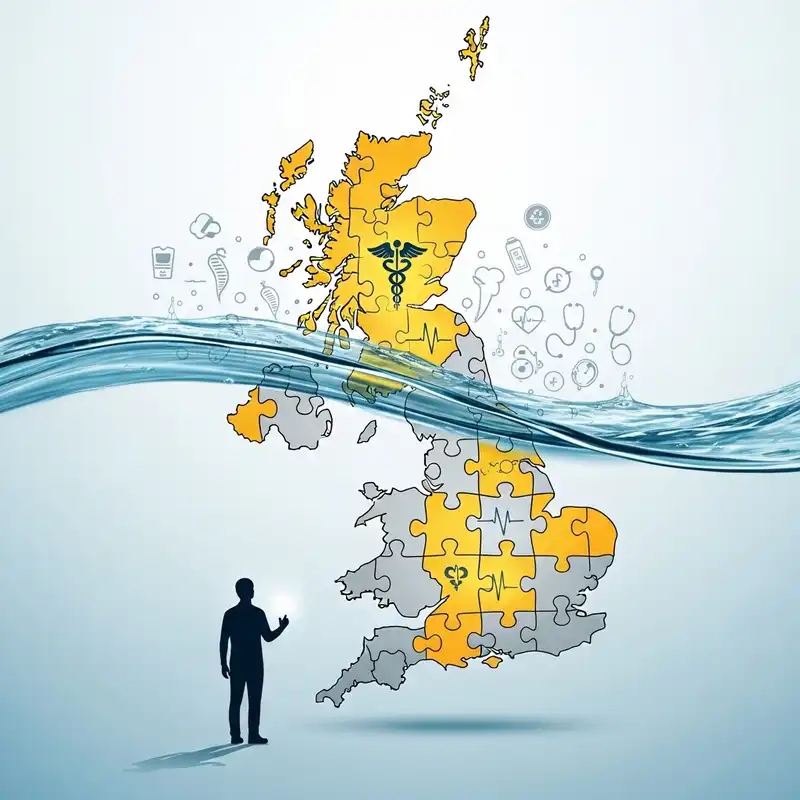
A silent health crisis is sweeping across the United Kingdom, and its set to impact the lives and livelihoods of millions. By 2025, staggering new projections indicate that more than one in three working-age Britons will be living with multimorbidity the presence of two or more long-term health conditions. It's an imminent reality that carries a devastating financial and personal cost.
Key takeaways
- An Ageing Population: While we are living longer, we are not necessarily living healthier for longer. The likelihood of developing chronic conditions increases with age.
- Lifestyle Factors: Modern lifestyles contribute significantly. High rates of obesity, poor dietary habits, lack of physical activity, and smoking are major drivers of conditions like Type 2 diabetes, cardiovascular disease, and certain cancers.
- Socioeconomic Disparities: Multimorbidity is not evenly distributed. It is more common and occurs up to 10-15 years earlier in people from the most deprived areas of the UK compared to the most affluent.
- Improved Diagnosis: Medical science is better at identifying and managing individual conditions, meaning people are living longer with illnesses that might have been fatal in the past, leading to the accumulation of multiple diagnoses.
UK Multimorbidity Crisis 1 in 3 Working Britons Affected By
A silent health crisis is sweeping across the United Kingdom, and it’s set to impact the lives and livelihoods of millions. By 2025, staggering new projections indicate that more than one in three working-age Britons will be living with multimorbidity – the presence of two or more long-term health conditions.
This isn't a distant threat. It's an imminent reality that carries a devastating financial and personal cost. The cumulative lifetime burden for an individual diagnosed with multiple chronic conditions in their mid-40s can easily exceed a shocking £4.2 million. This figure isn't just a headline; it's a calculated combination of lost earnings, spiralling private healthcare needs, ongoing treatment costs, and a profound reduction in quality of life.
The NHS, our cherished national service, is under unprecedented strain. Waiting lists are at record highs, and access to specialised care is becoming increasingly difficult. For the millions facing multimorbidity, this reality paints a grim picture: a future defined by chronic pain, financial anxiety, and reliance on a system stretched to its breaking point.
In this new landscape, traditional financial planning—relying on savings and a salary—is no longer sufficient. The question you must ask yourself is not if your health could change, but how you will cope when it does.
This is where your LCIIP shield comes in. A robust combination of Life Insurance, Critical Illness Cover, and Income Protection is no longer a 'nice-to-have'. It is the essential defence mechanism against the UK's silent health epidemic and the profound financial instability it creates. This comprehensive guide will unpack the crisis, deconstruct the costs, and show you how to build a financial fortress to protect yourself and your family.
The Ticking Time Bomb: Unpacking the UK's Multimorbidity Crisis
The term 'multimorbidity' might sound like medical jargon, but its meaning is simple and its implications are profound. It means living with two or more chronic health conditions simultaneously. These can range from physical ailments like diabetes and heart disease to mental health conditions like depression and anxiety.
The scale of the problem is alarming. Research, including landmark studies from The Health Foundation and the University of Cambridge, projects a dramatic rise in long-term conditions.
Key Statistics Unveiling the Crisis:
- Working-Age Impact: By 2025, it's projected that over 17 million people in England will have a major illness, with a significant proportion being of working age. This translates to more than one in three workers grappling with multiple health issues.
- Economic Inactivity: The Office for National Statistics (ONS) reported in early 2025 that over 2.8 million people are economically inactive due to long-term sickness, a record high that continues to climb. This is a direct consequence of the multimorbidity trend.
- Earlier Onset: Worryingly, people are developing multiple conditions at a younger age. A person born in 2015 is projected to have, on average, two more long-term conditions by the age of 70 than someone born in 1935.
Why is This Happening Now?
Several factors are converging to create this perfect storm:
- An Ageing Population: While we are living longer, we are not necessarily living healthier for longer. The likelihood of developing chronic conditions increases with age.
- Lifestyle Factors: Modern lifestyles contribute significantly. High rates of obesity, poor dietary habits, lack of physical activity, and smoking are major drivers of conditions like Type 2 diabetes, cardiovascular disease, and certain cancers.
- Socioeconomic Disparities: Multimorbidity is not evenly distributed. It is more common and occurs up to 10-15 years earlier in people from the most deprived areas of the UK compared to the most affluent.
- Improved Diagnosis: Medical science is better at identifying and managing individual conditions, meaning people are living longer with illnesses that might have been fatal in the past, leading to the accumulation of multiple diagnoses.
Common Condition Clusters
Multimorbidity isn't just a random collection of illnesses. Conditions are often interconnected, creating complex health challenges.
| Common Condition Cluster | Associated Illnesses | Impact on Daily Life |
|---|---|---|
| Cardiometabolic | Type 2 Diabetes, High Blood Pressure, Heart Disease, Stroke | Fatigue, dietary restrictions, medication management, increased risk of major cardiac event. |
| Musculoskeletal & Mental Health | Arthritis, Chronic Back Pain, Depression, Anxiety | Chronic pain, reduced mobility, difficulty working, social isolation, sleep disruption. |
| Respiratory & Allergy | Asthma, COPD, Eczema, Hay Fever | Breathing difficulties, reduced physical capacity, reliance on inhalers, flare-ups impacting work. |
Understanding these clusters is vital, as the presence of one condition significantly increases the risk of developing another, compounding the impact on your health and finances.
The £4.2 Million Lifetime Burden: Deconstructing the True Cost of Chronic Illness
The figure of a £4.2 million lifetime burden may seem abstract, but when broken down, it becomes a terrifyingly tangible reality for someone facing a multimorbidity diagnosis in their prime working years. Let's dissect where this staggering number comes from. (illustrative estimate)
Consider a 45-year-old earning £50,000 a year, diagnosed with conditions that force them to stop working. (illustrative estimate)
-
Lost Earning Capacity (The Largest Component):
- Gross Salary Loss (illustrative): From age 45 to a state pension age of 67, that's 22 years of lost income. 22 years x £50,000 = £1,100,000.
- Lost Pension Contributions (illustrative): Factoring in a typical 8% employer/employee contribution, that's another £4,000 per year lost. Over 22 years, this equates to £88,000 in lost pension savings.
- Loss of Future Promotions: This calculation doesn't even include potential pay rises and promotions, which could easily add hundreds of thousands more to the total.
-
Escalating Private Care & Treatment Costs:
- With NHS waiting lists for some procedures exceeding 18 months, many are forced to go private to manage pain and improve their quality of life. The costs are substantial and ongoing.
| Private Healthcare Service | Estimated Annual Cost | Lifetime Cost (20+ years) |
|---|---|---|
| Specialist Consultations | £1,000 (4 x £250) | £20,000+ |
| Private Physiotherapy/Osteopathy | £2,080 (Weekly at £40) | £41,600+ |
| Mental Health Support (Therapy) | £2,400 (Weekly at £50) | £48,000+ |
| Advanced Scans (MRI/CT) | £1,500 (As needed) | £15,000+ |
| Prescription & Medication Costs | £500+ | £10,000+ |
| One-off Private Surgery | £15,000 (e.g., hip replacement) | £15,000 |
The cumulative cost of private care can easily surpass **£150,000** over a lifetime. (illustrative estimate)
3. Indirect & Hidden Costs: * Home Modifications (illustrative): Ramps, stairlifts, walk-in showers. (£10,000 - £30,000) * Specialist Equipment (illustrative): Mobility scooters, adjustable beds. (£5,000 - £15,000) * Increased Household Bills (illustrative): Higher heating costs from being home all day. (£500+ per year) * Cost of Unpaid Care (illustrative): The economic value of a family member giving up work to become a full-time carer is immense, often exceeding £50,000 per year in lost earnings and pension contributions. Over 20 years, this can represent another £1,000,000+ hit to the family's finances.
- The Unquantifiable Cost: Quality of Life:
- Illustrative estimate: While we've focused on pounds and pence, the true burden is also measured in chronic pain, loss of independence, mental anguish, and social isolation. Economists use a measure called a QALY (Quality-Adjusted Life Year) to value health. The loss of quality of life due to multimorbidity can be assigned a monetary value running into the millions, representing the "cost" of a life lived with pain and limitation versus one lived in good health. This is where the total burden can escalate towards and beyond the £4.2 million mark.
This breakdown shows how a health crisis rapidly becomes a catastrophic financial crisis, dismantling a family's financial security piece by piece.
Why Your Salary and Savings Aren't Enough: The Flaws in a Traditional Financial Plan
Many hardworking Britons believe their salary, a small savings pot, and the state safety net will be enough to see them through a period of ill health. This is a dangerous misconception in the face of the multimorbidity crisis.
The Illusion of State and Employer Support
- Statutory Sick Pay (SSP) (illustrative): The legal minimum an employer must pay. In 2025, this stands at a meagre £118.50 per week. It's paid for a maximum of 28 weeks. Can your mortgage, bills, and food be covered by less than £500 a month? For almost everyone, the answer is a resounding no.
- Company Sick Pay: This is more generous but strictly time-limited. A typical scheme might offer 3-6 months on full pay, followed by 3-6 months on half pay. After that, you are on your own. It’s a cliff edge, not a safety net.
- State Benefits: While systems like Universal Credit and Employment and Support Allowance (ESA) exist, they are designed to prevent destitution, not to maintain your standard of living. The application process can be long and arduous, and the payments are often insufficient to cover essential outgoings like mortgage payments.
The Savings Trap
Let's assume you've been a diligent saver and have a nest egg of £25,000. It seems like a healthy buffer. But let's see how quickly it evaporates when faced with a long-term illness. (illustrative estimate)
Scenario: A 6-Month Countdown to Financial Crisis
- Monthly Income (illustrative): £3,500 (take-home)
- Monthly Outgoings (illustrative): £3,000 (Mortgage, bills, food, car)
- Savings (illustrative): £25,000
| Month | Income Source | Income | Outgoings | Monthly Shortfall | Savings Remaining |
|---|---|---|---|---|---|
| 1-3 | Full Company Sick Pay | £3,500 | £3,000 | +£500 | £26,500 |
| 4-6 | Half Company Sick Pay | £1,750 | £3,000 | -£1,250 | £22,750 |
| 7 | Statutory Sick Pay (SSP) | £474 | £3,000 | -£2,526 | £20,224 |
| 8 | Statutory Sick Pay (SSP) | £474 | £3,000 | -£2,526 | £17,698 |
| ... | ... | ... | ... | ... | ... |
| 12 | SSP ends; State Benefits? | ~£400? | £3,000 | ~£2,600 | <£7,500 |
Within a year, over two-thirds of your savings are gone. You're now facing impossible choices: sell your home, rack up huge debts, or rely on family. Your meticulously built financial life is dismantled.
The LCIIP Shield: Your Three-Pronged Defence Against Financial Instability
Relying on luck is not a strategy. A proactive, multi-layered financial defence is the only logical response to the threat of multimorbidity. This is the LCIIP Shield: a powerful combination of Life Insurance, Critical Illness Cover, and Income Protection. Each component plays a unique and vital role.
Part 1: Income Protection (IP) – Your Monthly Salary Lifeline
Income Protection is arguably the most crucial defence against the financial impact of long-term illness. It is designed to do one thing: replace your salary when you can't work.
- How it Works: If you are unable to work due to any illness or injury (subject to policy terms), after a pre-agreed waiting period (the 'deferment period'), the policy starts paying you a regular, tax-free monthly income.
- Key Features:
- Benefit Amount: You can typically insure up to 50-70% of your gross annual salary. This is designed to cover your essential outgoings without disincentivising a return to work.
- Deferment Period: This is the time between when you stop working and when the payments begin. It can be tailored to match your company sick pay scheme (e.g., 1, 3, 6, or 12 months). A longer deferment period means a lower premium.
- Payment Term: You can choose a short-term plan (e.g., 1, 2, or 5 years of payment per claim) or, more robustly, a long-term plan that pays out until you can return to work, or reach retirement age (e.g., 67). In the context of multimorbidity, a long-term plan is essential.
Income Protection in Action: Imagine you're the individual from our savings trap scenario. With an Income Protection policy paying out £2,500 a month after a 6-month deferment, the picture changes completely. From month 7 onwards, your income is stable. Your savings remain intact, your mortgage is paid, and the immense financial pressure is lifted, allowing you to focus purely on your health and recovery.
Part 2: Critical Illness Cover (CIC) – The Lump Sum for Immediate Needs
While Income Protection replaces your ongoing salary, Critical Illness Cover provides a large, tax-free cash injection at a time of immense crisis.
- How it Works: On the diagnosis of a specific, serious medical condition listed in your policy, the insurer pays out a one-off lump sum. The number and definition of conditions covered are key differentiators between policies.
- Common Conditions Covered: Most policies cover major illnesses like heart attack, stroke, cancer, multiple sclerosis, and kidney failure – many of which are components of multimorbidity. More comprehensive plans cover 50, 100, or even more conditions.
- How the Lump Sum Can Be Used: The money is yours to use as you see fit. It provides a vital financial cushion for:
- Paying for Private Treatment: Jump the NHS queue for surgery or therapy.
- Adapting Your Home: Install a stairlift or wet room.
- Clearing Debts: Pay off a mortgage, loans, or credit cards to reduce monthly outgoings.
- Replacing a Partner's Lost Income: Allow your spouse to take time off work to care for you.
- Funding a Lifestyle Change: Give you the freedom to recover without financial worry.
Part 3: Life Insurance – The Ultimate Family Protection
The final layer of the shield protects your loved ones in the worst-case scenario. Multimorbidity can, unfortunately, shorten life expectancy, making Life Insurance a non-negotiable part of responsible financial planning.
- How it Works: It pays out a lump sum (or a regular income) to your beneficiaries upon your death.
- The Purpose: It ensures that your financial responsibilities are met even when you are no longer there. The payout can:
- Pay off the remaining mortgage, so your family keeps their home.
- Provide an income for your spouse to raise children.
- Cover funeral costs.
- Leave a legacy for your children's future education.
It provides the ultimate peace of mind, knowing your family's financial future is secure, no matter what.
Navigating the Complexities: How to Secure the Right Cover in a Multimorbidity Landscape
Securing the right protection isn't as simple as clicking a button on a comparison site. The insurance market is complex, especially when considering potential health issues. Getting it right is crucial.
The Golden Rule: Apply While You're Young and Healthy
The best time to buy life, critical illness, and income protection insurance is before you need it. Premiums are based on risk, which is determined by your age and health at the time of application. A healthy 30-year-old will pay significantly less than a 45-year-old with a pre-existing condition. Waiting until you have a diagnosis could make cover prohibitively expensive, or even impossible to obtain.
Full Disclosure is Non-Negotiable
When you apply for cover, the insurer will ask detailed questions about your health, lifestyle (smoking, drinking), and family medical history. This process is called underwriting. It is absolutely vital that you are completely honest. Hiding a past medical issue might seem tempting, but it constitutes 'non-disclosure' and could lead to your policy being voided at the point of a claim – the very moment you need it most.
The Role of an Expert Broker: Your Navigator in a Complex Market
This is where working with an expert, independent broker like WeCovr becomes invaluable. The differences between insurers are vast – one may decline an application that another would accept, or one may offer better terms for a specific condition.
| Task | DIY Application | Using an Expert Broker (like WeCovr) |
|---|---|---|
| Market Research | You must research dozens of policies and insurers yourself. | We know the entire market and which insurers are best for your specific circumstances. |
| Understanding Jargon | You have to decipher complex policy documents, definitions, and exclusions alone. | We explain everything in plain English, ensuring you understand exactly what you're buying. |
| Application Process | You complete the forms yourself, risking errors or omissions. | We guide you through the application, ensuring it's completed accurately to avoid future issues. |
| Underwriting Issues | If an insurer asks for a GP report or has questions, you must handle it alone. | We liaise with the insurer on your behalf, helping to resolve queries and fight your corner. |
| Claim Support | You and your family are on your own at the most stressful time. | We can provide guidance and support to your family during the claims process. |
At WeCovr, we don't just find you a policy; we find you the right policy. We compare plans from all the UK's leading insurers to secure the most comprehensive cover at the most competitive price, tailored precisely to your needs.
Beyond the Policy: How WeCovr Supports Your Long-Term Health and Wellbeing
We believe that protection is about more than just a policy document. In today's world, the best insurance solutions come with built-in support services that add tangible value to your life from day one. We help our clients access and understand these valuable extras, which often include:
- Virtual GP Services: 24/7 access to a GP via phone or video call.
- Second Medical Opinion Services: Get a world-leading expert to review your diagnosis and treatment plan.
- Mental Health Support: Access to counselling and therapy sessions.
- Physiotherapy and Rehabilitation Support: Help to get you back on your feet after an illness or injury.
But at WeCovr, we want to go a step further. We believe in empowering our clients not just to protect their finances, but to actively manage their health. Many of the conditions driving the multimorbidity crisis are linked to lifestyle.
That’s why we provide all our valued clients with complimentary access to CalorieHero, our exclusive AI-powered calorie and nutrition tracking app. It’s a simple, intuitive tool to help you make healthier choices every day. This is our commitment to your holistic wellbeing – helping you build a healthier future, as well as a financially secure one.
Case Study: The Tale of Two Colleagues – Protected vs. Unprotected
To see the devastating difference protection can make, let's look at the stories of David and Mark. They are both 48, work as project managers for the same company, earn similar salaries, and have young families.
David (Unprotected)
David always thought insurance was an unnecessary expense. He was diagnosed with Type 2 Diabetes at 46. Two years later, he suffers a major heart attack, requiring bypass surgery.
- The Aftermath (illustrative): His 6-month company sick pay runs out. He's left on SSP, then state benefits, bringing in less than £1,000 a month.
- Financial Impact (illustrative): His savings are gone within 8 months. He can't keep up with his £1,500 mortgage payment. The family is forced to sell their home and downsize, causing huge disruption for his children.
- Health Impact: The financial stress severely impacts his mental health and slows his physical recovery. He can't afford the private cardiac rehabilitation his consultant recommended.
- The Outcome: A life of constant financial worry, reduced quality of life, and a future of uncertainty for his family.
Mark (Protected with an LCIIP Shield from WeCovr)
Mark took out a comprehensive protection plan a decade ago. He is also diagnosed with Type 2 Diabetes. When he suffers a similar heart attack, his story is vastly different.
- The Immediate Payout (illustrative): His Critical Illness Cover pays out a £125,000 tax-free lump sum. He immediately uses £25,000 to clear high-interest credit cards and a car loan, slashing his monthly outgoings. He allocates £10,000 for an intensive private cardiac rehab programme. The rest provides a huge financial buffer.
- The Salary Lifeline (illustrative): After his 6-month deferment period, his Income Protection policy kicks in, paying him £2,800 tax-free every month. This covers the mortgage and all household bills.
- The Peace of Mind (illustrative): His Life Insurance policy remains active, meaning he knows that if the worst should happen, his family will receive a £350,000 payout to clear the mortgage and secure their future.
- The Outcome: Mark can focus 100% on his recovery. There is no financial stress. His family stays in their home. He has access to the best care. He has control over his future.
| Outcome | David (Unprotected) | Mark (Protected) |
|---|---|---|
| Immediate Funds | None. Relies on savings. | £125,000 tax-free lump sum. |
| Ongoing Income | SSP, then benefits (~£1k/mo). | £2,800/mo from Income Protection. |
| Home | Forced to sell and downsize. | Stays in the family home. |
| Recovery | Slowed by stress and lack of funds for private care. | Aided by private rehab and zero financial anxiety. |
| Family Future | Uncertain and financially compromised. | Secure and protected. |
Your Health is Your Wealth: Taking the First Step to Secure Your Future
The evidence is undeniable. The UK's multimorbidity crisis is not a future problem; it is here now, and it is reshaping the landscape of work, health, and financial security for millions.
Relying on an overstretched NHS, limited employer sick pay, and your own savings is a gamble you cannot afford to take. The potential lifetime cost of chronic illness is a figure that can dismantle the financial foundations of even the most diligent savers.
A comprehensive LCIIP shield – Life Insurance, Critical Illness Cover, and Income Protection – is the only rational response. It is the modern-day suit of armour against the financial devastation that so often follows a serious health diagnosis. It transforms a potential catastrophe into a manageable life event.
Don't wait for a health scare to become a financial crisis. The most powerful step you can take is the one you take today.
Take control of your financial destiny. Talk to one of our expert advisers at WeCovr for a free, no-obligation review of your protection needs. Let us help you build your shield.
Sources
- Office for National Statistics (ONS): Mortality and population data.
- Association of British Insurers (ABI): Life and protection market publications.
- MoneyHelper (MaPS): Consumer guidance on life insurance.
- NHS: Health information and screening guidance.
Disclaimer: This is general guidance only and does not constitute formal tax or financial advice. Tax treatment depends on individual circumstances, policy terms, and HMRC interpretation, which cannot be guaranteed in advance. Whenever applicable, businesses and individuals should always consult a qualified accountant or tax adviser before arranging such policies.
Measure your family’s protection gap, then get the right life cover quote
Start with the score to see whether your family would face a real financial shortfall before moving on to life cover options.
Check what happens if someone dies too soon
See whether debt, dependants and mortgage risk are covered
Move into tailored life cover options after the score
Get your score
Your next best move
Get your score in minutes, then decide what kind of protection help would be most useful.
Score your household protection
See how well your current setup protects dependants, debt and major commitments.
Find the shortfall
Know whether life cover, critical illness or income protection is the actual missing piece.
Continue to tailored life cover
If life cover is the gap, continue to tailored life cover options.
What you get
A quick view of your current protection position
A clearer idea of where the biggest gaps may be
A direct route to tailored help if you want it