TL;DR
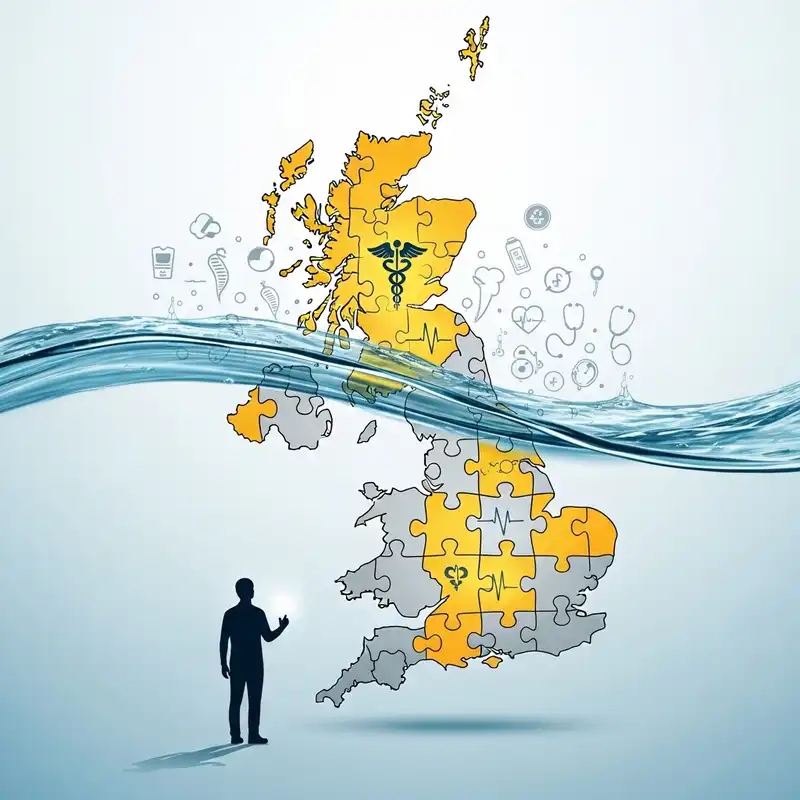
A silent epidemic is sweeping across the United Kingdom, threatening to cripple not just our bodies, but our financial futures. Projections for 2025, based on startling new data analysis, reveal a public health and economic crisis of unprecedented scale. The physical pain is only the beginning.
Key takeaways
- How it works: CIC pays out a one-off, tax-free lump sum on the diagnosis of a specific, serious illness defined in the policy.
- Relevance to MSK: While common conditions like back pain aren't typically covered, many policies include Total Permanent Disability (TPD). This clause would pay out if your MSK condition leaves you permanently unable to ever work in your own, or any, occupation again. Furthermore, some of the most comprehensive policies now offer cover for specific severe outcomes, such as needing major joint replacement surgery or loss of limb.
- How the Lump Sum Helps: A CIC payout could be used to clear your mortgage overnight, adapt your home for disability, fund private surgery to bypass NHS waiting lists, or invest to create a future income stream.
- Acknowledge the Risk (illustrative): The first step is to discard the "it won't happen to me" mindset. The data is clear: over 1 in 3 working Britons will be impacted. The risk is significant.
- Assess Your Vulnerability: Ask yourself the hard questions. How long would my savings last? How would we pay the mortgage? What would happen to my pension? Be honest about your financial exposure.
UK Musculoskeletal Crisis the £4m Lifetime Burden
A silent epidemic is sweeping across the United Kingdom, threatening to cripple not just our bodies, but our financial futures. Projections for 2025, based on startling new data analysis, reveal a public health and economic crisis of unprecedented scale. Over one in three working Britons are now on a trajectory to face a debilitating musculoskeletal (MSK) condition during their careers—conditions like chronic back pain, severe arthritis, or spinal disorders that can lead to long-term disability or force an unexpectedly early retirement.
The physical pain is only the beginning. The financial aftershock is a slow-motion catastrophe, a lifetime burden projected to exceed a staggering £4.2 million for many families. This figure represents a devastating combination of lost earnings, depleted savings, vanished pension pots, and cripplingly high costs for private treatment and long-term care. (illustrative estimate)
For millions, the life they have meticulously planned—the career progression, the comfortable retirement, the financial security for their loved ones—is balanced on the knife-edge of their physical health. When the body's framework gives way, the financial framework often collapses with it.
This is not a distant, abstract threat. It's a clear and present danger to the financial stability of households up and down the country. The question you must ask yourself is not if you will feel life's strain, but when—and whether you have a financial spine strong enough to withstand the pressure. This guide will dissect the crisis, quantify the catastrophic costs, and reveal how a robust shield of Life, Critical Illness, and Income Protection (LCIIP) insurance is the essential, unseen support system for your financial resilience.
The Silent Epidemic: Unpacking the UK's 2025 Musculoskeletal Crisis
Musculoskeletal (MSK) conditions are not rare or unusual. They are disorders affecting the body's movement system: the muscles, joints, bones, ligaments, and tendons. They range from the nagging lower back pain that plagues office workers and manual labourers alike, to the progressive, debilitating impact of conditions like osteoarthritis and rheumatoid arthritis.
What has changed is the sheer scale and severity of the problem. A perfect storm of an ageing population, increasingly sedentary lifestyles, and the physical demands of modern work has created a public health emergency.
Based on trends from the Office for National Statistics (ONS) and health bodies like Versus Arthritis, the 2025 forecast is grim:
- A Nation in Pain: By 2025, it's projected that over 20 million people in the UK, a significant portion of them of working age, will be living with an MSK condition.
- The Leading Cause of Lost Work: MSK issues are already the number one reason for long-term work absence. 8 million people are economically inactive due to long-term sickness, with "back or neck pain" being a primary driver. This trend is accelerating.
- NHS Under Strain: MSK conditions account for up to 30% of all GP consultations in England. england.nhs.uk/statistics/statistical-work-areas/rtt-waiting-times/). This pushes many towards unaffordable private care out of desperation.
These aren't just statistics; they are colleagues, friends, and family members. They are the bricklayer forced to give up his trade at 50 due to a worn-out knee, the IT consultant suffering from chronic Repetitive Strain Injury (RSI), and the retail manager whose sciatica makes standing for a full shift impossible.
| Common MSK Condition | Projected UK Working-Age Population Impact (2025) | Common Symptoms & Impact on Work |
|---|---|---|
| Lower Back Pain | Affects up to 80% of adults at some point | Reduced mobility, inability to sit or stand for long periods, chronic pain. |
| Osteoarthritis | Over 9 million people (all ages) | Joint stiffness, pain, and swelling, making physical tasks difficult. |
| Rheumatoid Arthritis | Over 450,000 people | Autoimmune disease causing severe joint inflammation, fatigue, and pain. |
| Repetitive Strain Injury (RSI) | Widespread among office/manual workers | Pain in arms, wrists, and hands, limiting use of keyboards or tools. |
| Spinal Stenosis | Increasing with ageing population | Narrowing of spinal canal causing severe leg/back pain, numbness, and weakness. |
The crisis is indiscriminate, affecting both those in physically demanding jobs and those in sedentary office roles. The human cost is immense, but the financial fallout is what can truly shatter a family's future.
The £4.2 Million Catastrophe: Deconstructing the Lifetime Financial Burden
The figure of £4.2 million may seem shocking, but for a higher-earning household where a primary earner is forced into early retirement by a severe MSK condition, it is a terrifyingly realistic projection of the total lifetime financial loss. (illustrative estimate)
Let's break down how this financial catastrophe unfolds. Imagine a 45-year-old professional earning £90,000 a year, diagnosed with a severe spinal condition that makes continuing their career impossible. Their planned retirement age was 67. (illustrative estimate)
Here is a detailed, conservative breakdown of the potential financial devastation:
| Component of Financial Loss | Calculation Details | Projected Lifetime Cost |
|---|---|---|
| Lost Gross Income | £90,000/year salary x 22 years (age 45 to 67). | £1,980,000 |
| Lost Employer Pension | 8% employer contribution on £90k salary x 22 years. | £158,400 |
| Lost Personal Pension Growth | Lost personal contributions & compound growth on entire pot. | £750,000+ |
| Spouse's Lost Income | Spouse reduces hours or stops work to become a carer (£45k salary for 10 years). | £450,000 |
| Long-Term Care Costs | At-home care at a modest £500/week for 15 years. | £390,000 |
| Home Modifications | Stairlift, wet room, ramps, accessible kitchen. | £75,000 |
| Private Medical & Therapy | Consultations, surgery, physiotherapy, pain management. | £150,000 |
| Eroding Savings | Depleting cash savings and ISAs to cover initial income gap. | £100,000 |
| Total Potential Financial Loss | A combination of direct costs and lost future wealth. | £4,103,400 |
This calculation doesn't even include the loss of promotions, bonuses, the emotional toll, or the cost of treating the associated mental health challenges like depression and anxiety. It demonstrates how quickly a medical diagnosis can trigger a complete financial collapse, wiping out decades of hard work and careful planning.
The dream of paying off the mortgage, funding children through university, and enjoying a golden retirement is replaced by a nightmare of mounting bills, dwindling savings, and profound uncertainty.
The State Safety Net: A Patchwork with Gaping Holes
"The state will look after me." It's a common belief, but the reality is a harsh awakening for those who suddenly find themselves unable to work. The UK's state safety net is not designed to replace a middle-class income; it is designed for basic subsistence, and even that is a struggle to obtain.
Let's examine the support you can realistically expect:
- Statutory Sick Pay (SSP) (illustrative): This is the first line of defence, but it's paper-thin. For 2025, it's projected to be around £120 per week. It's paid by your employer for a maximum of 28 weeks. For most families, this amount wouldn't even cover the weekly food shop, let alone the mortgage.
- Employment and Support Allowance (ESA) / Universal Credit (UC) (illustrative): Once SSP runs out, you may be able to claim ESA or the sickness element of Universal Credit. The assessment process is notoriously rigorous and stressful. If you qualify, the payment for those unable to work is currently around £130-£140 a week. It is a lifeline for some, but it is not an income replacement.
- Personal Independence Payment (PIP): This is a separate benefit designed to help with the extra costs of being disabled. It is not means-tested, but it is also not a replacement for income. Qualifying for PIP is extremely difficult and depends on how your condition affects your ability to perform daily tasks, not your ability to do your specific job.
The stark reality is that state benefits will not protect your home, your lifestyle, or your family's future aspirations.
| Your Monthly Bills vs. State Support | Typical Monthly Cost | Monthly State Support (Post-SSP) | The Shortfall |
|---|---|---|---|
| Mortgage / Rent | £1,500 | £0 (Benefits aren't for this) | -£1,500 |
| Council Tax | £200 | £0 | -£200 |
| Utilities & Bills | £350 | £0 | -£350 |
| Food & Essentials | £600 | £0 | -£600 |
| Total Outgoings | £2,650 | ||
| Max. State Support (UC/ESA) | ~£580 | ||
| MONTHLY FINANCIAL GAP | -£2,070 |
This table illustrates the brutal truth. Relying on the state means facing a monthly deficit of thousands of pounds. This is the gap that devours savings, forces the sale of the family home, and plunges people into debt.
Your Financial Spine: How LCIIP Insurance Forms Your Shield
If the state cannot protect you, you must protect yourself. This is where a robust, personal insurance strategy—your LCIIP shield—becomes the most critical financial decision you can make. It acts as your financial spine, holding everything together when your physical health gives way.
Let's look at the three key components of this shield.
1. Income Protection (IP) Insurance: The Bedrock
This is arguably the most important financial protection product for any working adult. It is the direct solution to the problem of lost earnings.
- How it works: If you are unable to work due to any illness or injury (including all MSK conditions) that prevents you from doing your job, an Income Protection policy pays you a regular, tax-free monthly income. This is typically 50-70% of your gross salary.
- Key Features:
- Deferment Period: This is the waiting period before the payments start, chosen by you. It can range from 4 weeks to 12 months. Aligning this with your employer's sick pay period or your savings is a smart way to manage premiums.
- Payment Period: The best policies are "long-term" and will pay out right up until your chosen retirement age (e.g., 67) if you can never return to work. This provides true long-term security.
Example: Meet David, a 48-year-old surveyor earning £60,000. He develops severe osteoarthritis in his hips, making site visits impossible. His company sick pay lasts 6 months. David has an IP policy with a 6-month deferment period. After 6 months, his policy starts paying him £3,000 a month, tax-free. This income allows him to pay his mortgage, cover bills, and focus on his health without financial panic. The payments will continue until he is 67 if he remains unable to work.
2. Critical Illness Cover (CIC)
While IP replaces your monthly income, Critical Illness Cover provides a different kind of support.
- How it works: CIC pays out a one-off, tax-free lump sum on the diagnosis of a specific, serious illness defined in the policy.
- Relevance to MSK: While common conditions like back pain aren't typically covered, many policies include Total Permanent Disability (TPD). This clause would pay out if your MSK condition leaves you permanently unable to ever work in your own, or any, occupation again. Furthermore, some of the most comprehensive policies now offer cover for specific severe outcomes, such as needing major joint replacement surgery or loss of limb.
- How the Lump Sum Helps: A CIC payout could be used to clear your mortgage overnight, adapt your home for disability, fund private surgery to bypass NHS waiting lists, or invest to create a future income stream.
3. Life Insurance
Life Insurance is the final piece of the shield, providing for your loved ones in the worst-case scenario.
- How it works: It pays a lump sum to your beneficiaries if you pass away during the policy term.
- Relevance to MSK: While most MSK conditions are not terminal, they can lead to complications, reduced mobility, and other health issues that could shorten a lifespan. Having life insurance in place ensures that even if the worst happens, your family is not left with a mortgage and other debts to pay.
| Insurance Type | What It Does | How It Helps with MSK |
|---|---|---|
| Income Protection | Replaces monthly income | Covers bills & mortgage if you can't work due to back pain, arthritis, etc. |
| Critical Illness Cover | Pays a tax-free lump sum | Can pay out on Total Permanent Disability; funds home adaptations or private care. |
| Life Insurance | Pays a lump sum on death | Clears debts and provides for family if your condition is life-limiting. |
Building this shield doesn't have to be prohibitively expensive. The key is to get advice and put cover in place while you are young and healthy.
WeCovr: Your Partner in Building Financial Resilience
Navigating the world of protection insurance can be complex. Insurers have different definitions, exclusions, and pricing structures. This is where seeking independent, expert advice is not just helpful—it's essential.
At WeCovr, we specialise in helping people like you understand the risks and build a tailored LCIIP shield. We are not tied to any single insurer. Our role is to work for you, searching the entire market, including major providers like Aviva, Legal & General, and Vitality, to find the policy that offers the best possible cover for your specific occupation, health, and budget. We translate the jargon and ensure there are no surprises, giving you the confidence that your financial spine is truly secure.
Beyond Insurance: Proactive Steps and Added Value
True resilience is about more than just a financial backstop; it's also about proactive health management. There are steps you can take to reduce your risk of developing a severe MSK condition:
- Workplace Ergonomics: Ensure your desk, chair, and screen are set up correctly.
- Regular Movement: Avoid staying in one position for too long. Take regular breaks to stretch and walk around.
- Maintain a Healthy Weight: Excess weight puts significant extra strain on weight-bearing joints like the hips, knees, and spine.
- Strength & Flexibility: Incorporate exercises that strengthen your core muscles and improve flexibility.
At WeCovr, we believe in a holistic approach to wellbeing. That's why, in addition to securing your financial future, we provide all our clients with complimentary access to our AI-powered calorie tracking app, CalorieHero. Managing weight is one of the most effective ways to reduce the long-term strain on your joints and spine. We see CalorieHero as another vital tool in your arsenal for living a longer, healthier, and more financially secure life.
Furthermore, modern insurance policies often come with a suite of incredibly valuable "added-extra" benefits, available from day one at no extra cost:
- 24/7 Virtual GP Appointments
- Mental Health Support & Counselling
- Second Medical Opinion Services
- Discounted Physiotherapy Sessions
These services can help you manage health issues early, potentially preventing them from becoming career-ending problems.
Case Study: The Two Paths of an MSK Diagnosis
To see the profound difference a protection plan makes, consider the parallel stories of two 42-year-old architects, Alex and Ben. Both are married with two children, have a £350,000 mortgage, and earn £75,000. Both are tragically diagnosed with degenerative disc disease, causing debilitating chronic pain that makes work impossible. (illustrative estimate)
Alex's Story: The Unprotected Path
Alex had always thought insurance was an unnecessary expense. When he has to stop working, his family's income is slashed.
- Months 1-6: Alex receives company sick pay, which helps, but the financial anxiety is immense.
- Months 7-12: SSP runs out. The family now relies solely on his wife's income and their savings. They apply for Universal Credit but the process is slow and stressful.
- Year 2: Their savings are gone. They are struggling to pay the mortgage and have started missing payments. The stress is putting a huge strain on Alex's marriage and his mental health.
- Year 3: Faced with the threat of repossession, they are forced to sell the family home and downsize, moving their children to a new school. Their dreams of university for the kids and a comfortable retirement are shattered.
Ben's Story: The Protected Path
Years earlier, Ben had spoken to a broker and put in place an Income Protection policy.
- Months 1-6: Ben receives company sick pay. He informs his insurer of his situation. His deferment period is 6 months.
- Month 7 (illustrative): His Income Protection policy kicks in. He starts receiving £3,750 a month, tax-free. This payment continues every month.
- Year 2: The mortgage is being paid. The bills are covered. While his health is a daily challenge, the crippling financial stress is gone. He's able to use the virtual GP service included with his policy to get quick advice and referrals.
- Year 3: Ben's family remains in their home. His financial stability allows him to focus on pain management and exploring part-time work he can do from home. His family's financial future, while different from what they planned, remains secure and stable.
Ben’s story is not about luck. It’s about foresight. He recognised the risk and built a financial spine to withstand the impact.
Taking Action: How to Secure Your LCIIP Shield Today
The musculoskeletal crisis is not a future problem; it is here now. The risk to your financial wellbeing is real, and the state safety net is inadequate. Protecting yourself and your family is your responsibility. Here's how to start.
- Acknowledge the Risk (illustrative): The first step is to discard the "it won't happen to me" mindset. The data is clear: over 1 in 3 working Britons will be impacted. The risk is significant.
- Assess Your Vulnerability: Ask yourself the hard questions. How long would my savings last? How would we pay the mortgage? What would happen to my pension? Be honest about your financial exposure.
- Understand Your Needs: Calculate your essential monthly outgoings. This is the minimum amount of income you would need to replace.
- Seek Expert Advice: Don't go it alone. The insurance market is vast and complex. An independent expert broker is your most valuable ally. They can assess your personal circumstances, explain your options clearly, and search the entire market to find the most suitable and cost-effective cover. A specialist firm like WeCovr can provide this impartial, expert guidance, ensuring your LCIIP shield is built on a rock-solid foundation.
The cost of protection is almost always far less than people imagine, especially when taken out at a younger age. It is a tiny fraction of the potential £4.2 million catastrophe it is designed to prevent.
In conclusion, your ability to earn an income is your most valuable asset. The growing MSK crisis represents the single biggest threat to that asset for millions in the UK. The pain of a debilitating physical condition is burden enough; do not let it be compounded by a financial collapse.
By understanding the risk and taking proactive steps to build your LCIIP shield, you are forging your own financial spine—a powerful, unseen resilience that protects your home, your family, and your future from life's inevitable strain. Don't wait for the fracture to happen. Build your shield today.
Sources
- Office for National Statistics (ONS): Mortality and population data.
- Association of British Insurers (ABI): Life and protection market publications.
- MoneyHelper (MaPS): Consumer guidance on life insurance.
- NHS: Health information and screening guidance.
Disclaimer: This is general guidance only and does not constitute formal tax or financial advice. Tax treatment depends on individual circumstances, policy terms, and HMRC interpretation, which cannot be guaranteed in advance. Whenever applicable, businesses and individuals should always consult a qualified accountant or tax adviser before arranging such policies.
Measure your family’s protection gap, then get the right life cover quote
Start with the score to see whether your family would face a real financial shortfall before moving on to life cover options.
Check what happens if someone dies too soon
See whether debt, dependants and mortgage risk are covered
Move into tailored life cover options after the score
Get your score
Your next best move
Get your score in minutes, then decide what kind of protection help would be most useful.
Score your household protection
See how well your current setup protects dependants, debt and major commitments.
Find the shortfall
Know whether life cover, critical illness or income protection is the actual missing piece.
Continue to tailored life cover
If life cover is the gap, continue to tailored life cover options.
What you get
A quick view of your current protection position
A clearer idea of where the biggest gaps may be
A direct route to tailored help if you want it