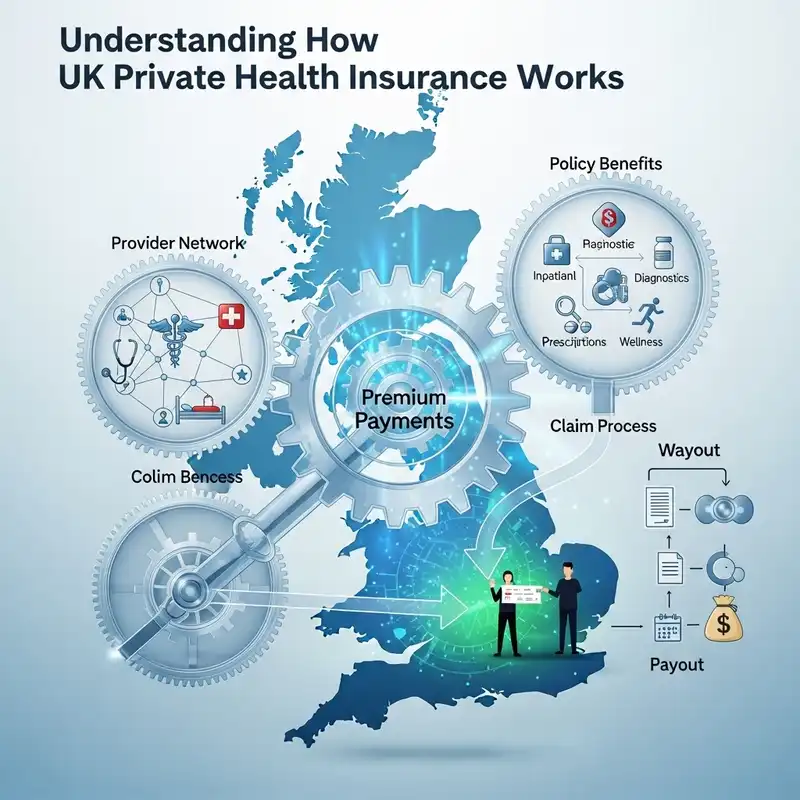
TL;DR
The United Kingdom is standing on the precipice of a profound public health crisis. That's more than two in every three people. This isn't merely a statistic about waistlines; it's the signature of a ticking time bomb threatening to detonate a cascade of chronic, life-altering, and often life-threatening conditions.
Key takeaways
- An Acute Condition: A disease, illness, or injury that is likely to respond quickly to treatment and lead to a recovery. Examples include a hernia, cataracts, joint pain requiring replacement, or gallstones. PMI is designed to cover the diagnosis and treatment of these conditions.
- A Chronic Condition: A disease, illness, or injury that has one or more of the following characteristics: it is long-term, has no known cure, requires ongoing management, or is likely to recur. Examples include Type 2 diabetes, hypertension (high blood pressure), asthma, and Crohn's disease.
- Moratorium Underwriting: The most common type. It automatically excludes any condition you've had in the 5 years before taking out the policy. However, if you go for a set period (usually 2 years) without any symptoms, treatment, or advice for that condition, it may become eligible for cover.
- Full Medical Underwriting (FMU): You provide a full medical history upfront. The insurer then states precisely what is and isn't excluded from day one. It's more complex initially but provides greater clarity.
- Excess (illustrative): The amount you agree to pay towards any claim. A higher excess (500 or 1,000) will significantly lower your monthly premium.
UK Obesity Crisis
The United Kingdom is standing on the precipice of a profound public health crisis. The latest 2025 projections, based on trends from the Health Survey for England(digital.nhs.uk) and the Office for National Statistics, paint a sobering picture: an estimated 67% of adults in the UK are now classified as either overweight or obese. That's more than two in every three people.
This isn't merely a statistic about waistlines; it's the signature of a ticking time bomb threatening to detonate a cascade of chronic, life-altering, and often life-threatening conditions. The surge in weight is directly fuelling an epidemic of Type 2 diabetes, cardiovascular disease, numerous forms of cancer, and debilitating musculoskeletal problems.
The strain on our beloved National Health Service (NHS) is already immense, with waiting lists for diagnostics and treatments reaching unprecedented lengths. As this crisis deepens, individuals are increasingly asking a vital question: "How can I take control of my health and help support my family gets the appropriate care when they need it most?"
The answer, for a growing number of people, lies in a proactive approach to healthcare. This comprehensive guide will unpack the stark reality of the UK's obesity challenge and explore how Private Health Insurance (PMI) has evolved beyond a simple "queue-jumping" service. Today, modern PMI offers a powerful suite of tools for rapid diagnostics, prompt treatment, and integrated wellness support, empowering you to manage your health for a better, longer life.
The Stark Reality: Unpacking the 2025 UK Obesity Statistics
To grasp the scale of the challenge, we must first look at the data. The numbers for 2025 are not just figures on a page; they represent millions of individual lives at increased risk of serious illness.
The primary measure used by healthcare professionals is the Body Mass Index (BMI), which calculates a score based on your weight and height.
- Healthy Weight: BMI 18.5 to 24.9
- Overweight: BMI 25 to 29.9
- Obese (Class I): BMI 30 to 34.9
- Obese (Class II): BMI 35 to 39.9
- Obese (Class III) / Morbidly Obese: BMI 40 or over
Projections for 2025 indicate that the UK's adult population is tipping further into the higher BMI categories, with significant regional and demographic disparities.
UK Adult Population BMI Estimates (2025 Projections)
| Category | Percentage of Adult Population | Estimated Number of Adults |
|---|---|---|
| Underweight | 2% | ~1.1 million |
| Healthy Weight | 31% | ~16.5 million |
| Overweight | 38% | ~20.2 million |
| Obese (All Classes) | 29% | ~15.4 million |
| Total Overweight or Obese | 67% | ~35.6 million |
Source: Projections based on NHS Digital and ONS trend data.
These figures are staggering. They suggest that over 35 million adults are carrying excess weight, placing them at a statistically higher risk of developing long-term health problems. The economic fallout is equally alarming. The cost of obesity to the wider economy, factoring in NHS expenses and lost productivity, is projected to exceed £60 billion annually by 2025, a figure that places an unsustainable burden on public services and businesses alike.
The causes are complex and multifaceted, stemming from a perfect storm of:
- Modern Diets: Widespread availability of cheap, ultra-processed, high-calorie foods.
- Sedentary Lifestyles: Desk-based jobs, car-dependent commutes, and screen-based leisure have drastically reduced daily physical activity.
- Socio-economic Factors: Deprived areas often have limited access to affordable fresh food and safe spaces for exercise, creating a clear link between income and health outcomes.
The Domino Effect: How Obesity Triggers a Cascade of Chronic Illnesses
Excess body fat is not an inert substance. It is metabolically active, releasing inflammatory signals and hormones that disrupt the body's normal functions. This disruption is the root cause of the "domino effect," where obesity triggers a chain reaction of serious health conditions.
1. Type 2 Diabetes
This is perhaps the most well-known complication. Excess fat, particularly around the abdomen, leads to insulin resistance. This means the body's cells don't respond properly to the hormone insulin, which is responsible for regulating blood sugar. The pancreas works overtime to produce more insulin until it can no longer keep up, leading to dangerously high blood sugar levels. Projections suggest over 5.5 million people in the UK will be living with diabetes by 2025, with around 90% of cases being Type 2.
2. Cardiovascular Disease
Obesity places enormous strain on the heart and circulatory system. It is a major driver of:
- High Blood Pressure (Hypertension): The heart has to pump harder to supply blood to a larger body mass.
- High Cholesterol: Obesity is linked to higher levels of "bad" LDL cholesterol and lower levels of "good" HDL cholesterol, leading to plaque buildup in the arteries (atherosclerosis).
- Heart Attack & Stroke: Atherosclerosis narrows the arteries, increasing the risk of blood clots that can cause a heart attack or stroke.
3. Cancer
The link between obesity and cancer is now firmly established. cancerresearchuk.org/), obesity is the second biggest preventable cause of cancer after smoking. It is known to increase the risk of at least 13 different types of cancer, including:
- Bowel
- Pancreatic
- Kidney
- Liver
- Womb (endometrial)
- Breast (post-menopause)
4. Musculoskeletal Problems
Carrying excess weight puts immense pressure on your bones, joints, and muscles. This commonly leads to:
- Osteoarthritis: The protective cartilage in joints, particularly the knees, hips, and lower back, wears down faster, causing pain, stiffness, and reduced mobility.
- Gout: A painful type of arthritis linked to high levels of uric acid in the blood, which is more common in overweight individuals.
- Back Pain: Increased strain on the spine and poor posture contribute to chronic lower back pain.
Health Risks Associated with Obesity: A Summary
| Health Condition | How Obesity Increases Risk |
|---|---|
| Type 2 Diabetes | Causes insulin resistance, leading to high blood sugar. |
| Heart Disease | Increases blood pressure, cholesterol, and arterial plaque. |
| Stroke | Raises risk factors like hypertension and atherosclerosis. |
| Certain Cancers | Promotes inflammation and hormone imbalances that fuel tumours. |
| Osteoarthritis | Places excessive mechanical stress on joints, wearing them down. |
| Sleep Apnoea | Fat deposits in the neck can obstruct airways during sleep. |
| Liver & Kidney Disease | Linked to fatty liver disease and reduced kidney function. |
| Mental Health Issues | Associated with depression, anxiety, and low self-esteem. |
The NHS Under Pressure: Navigating Healthcare in the Face of a National Crisis
The National Health Service is the jewel in the UK's crown, but it is operating under almost unimaginable pressure. The obesity crisis acts as a significant "demand multiplier," increasing the number of people needing care for a wide range of conditions.
This translates directly into longer waiting times for almost every type of elective (non-emergency) care. In 2025, patients are routinely facing:
- GP Appointments: Difficulty securing a timely appointment for initial diagnosis.
- Specialist Consultations: Months-long waits to see a consultant in fields like cardiology, endocrinology, or orthopaedics.
- Diagnostic Scans: An average wait of several weeks, and sometimes months, for crucial MRI, CT, and ultrasound scans needed to diagnose a problem accurately.
- Surgical Procedures: The elective waiting list, which includes procedures like hip and knee replacements, hernia repairs, and cataract surgery, continues to hover at record levels, with many waiting over a year for treatment.
This isn't a failure of the NHS staff, who work tirelessly. It is a simple equation of finite resources meeting infinite and rapidly growing demand. For individuals experiencing pain, worry, and uncertainty about a health concern, these delays can be agonising.
A Proactive Solution: How Private Health Insurance Empowers Your Health Journey
This is where private health insurance (PMI) comes in. It's not about replacing the NHS, but about providing a complementary route to care that gives you control, choice, and, most importantly, speed. Modern PMI policies have evolved to become comprehensive health and wellbeing partners.
Core Benefit 1: Rapid Diagnostics – The End of "Waiting and Worrying"
When you have a health concern, the first step is getting a clear diagnosis. This is where PMI excels. Instead of joining the back of a long NHS queue, a private policy can grant you:
- Swift Specialist Access: See a leading consultant in their field within days or weeks, not months.
- seek faster access to eligible Scans: Get an appointment for an MRI, CT, or PET scan, often within a week. This speed is crucial for peace of mind and for developing an effective treatment plan as quickly as possible.
Real-Life Example: Sarah, a 45-year-old teacher, develops persistent, severe abdominal pain. Her GP suspects gallstones but warns the NHS wait for an ultrasound scan could be 12-16 weeks. Using her PMI, Sarah sees a private consultant the following week and has an ultrasound two days later, confirming the diagnosis. She is scheduled for surgery within a month, avoiding months of pain and uncertainty.
Core Benefit 2: Prompt Treatment – Choice and Comfort
Once diagnosed, PMI provides access to prompt treatment for eligible acute conditions at a time and place of your choosing.
- use a private pathway, subject to availability: Access surgery or treatment in a matter of weeks.
- Choice of Hospital: Select from a nationwide list of high-quality private hospitals.
- Private Room: Recover in the comfort and privacy of your own room, often with an en-suite bathroom.
- Choice of Surgeon: In many cases, you can choose the specialist who will perform your procedure.
NHS vs. Typical Private Healthcare Timelines
| Stage of Care | Typical NHS Wait Time (2025) | Typical Private Healthcare Timeline |
|---|---|---|
| GP Referral to Specialist | 4-8+ months | 1-2 weeks |
| Specialist to Diagnostic Scan | 6-12+ weeks | 3-7 days |
| Diagnosis to Treatment | 18-52+ weeks | 2-6 weeks |
Note: These are illustrative timelines and can vary significantly by condition and region.
Core Benefit 3: Integrated Wellness and Prevention – Beyond Just Treatment
This is the game-changer in modern health insurance. well-known insurers now understand that it's better to help you stay healthy than to just pay for treatment when you're ill. They have built-in wellness programmes designed to support and reward a healthier lifestyle.
These benefits can include:
- Digital GP Services: 24/7 access to a GP via phone or video call, perfect for quick advice and prescriptions without leaving your home.
- Mental Health Support: Access to helplines, therapy sessions (CBT), and psychiatric support, acknowledging the crucial link between mental and physical wellbeing.
- Health Screenings: Subsidised or included health checks to catch potential issues like high cholesterol or blood pressure early.
- Nutritional Support: Consultations with dietitians to help you build a sustainable, healthy eating plan.
- Lifestyle Rewards: Discounts on gym memberships, fitness trackers (like Apple Watch or Fitbit), and even healthy food purchases, actively rewarding you for making positive choices.
A specialist at WeCovr or one of our broker partners can help our clients find policies that excel in this area. We understand that true health management is about prevention as much as cure. As part of our commitment to our clients' long-term health, WeCovr provides complimentary access to our proprietary AI-powered calorie and nutrition tracking app, CalorieHero. This tool goes beyond the standard insurance benefits, providing a practical, day-to-day resource to help you manage your diet and achieve your wellness goals, demonstrating our dedication to your entire health journey.
Understanding the Small Print: What Private Health Insurance Does and Doesn't Cover
This is the most important section of this guide. Understanding the limitations of PMI is crucial to avoid disappointment and help support you have the right expectations.
The Golden Rule: PMI is for Acute Conditions, Not Chronic Ones.
you should consider whether you may need to understand this distinction with absolute clarity.
- An Acute Condition: A disease, illness, or injury that is likely to respond quickly to treatment and lead to a recovery. Examples include a hernia, cataracts, joint pain requiring replacement, or gallstones. PMI is designed to cover the diagnosis and treatment of these conditions.
- A Chronic Condition: A disease, illness, or injury that has one or more of the following characteristics: it is long-term, has no known cure, requires ongoing management, or is likely to recur. Examples include Type 2 diabetes, hypertension (high blood pressure), asthma, and Crohn's disease.
Crucially, standard UK Private Health Insurance does NOT cover the routine management of chronic conditions. It will not pay for your ongoing diabetes check-ups, insulin, blood pressure medication, or regular asthma inhalers. These remain under the care of the NHS.
Furthermore, PMI does not cover pre-existing conditions—any ailment you had symptoms of or received treatment for before your policy began.
- Moratorium Underwriting: The most common type. It automatically excludes any condition you've had in the 5 years before taking out the policy. However, if you go for a set period (usually 2 years) without any symptoms, treatment, or advice for that condition, it may become eligible for cover.
- Full Medical Underwriting (FMU): You provide a full medical history upfront. The insurer then states precisely what is and isn't excluded from day one. It's more complex initially but provides greater clarity.
PMI Coverage: A Clear Guide
| Typically Covered (New, Acute Conditions) | Typically Not Covered |
|---|---|
| Consultations with a private specialist | Pre-existing conditions |
| Diagnostic tests (MRI, CT scans) for new symptoms | Management of chronic conditions (e.g., diabetes) |
| Inpatient and day-patient surgery (e.g., hip replacement) | Emergency services (A&E) |
| Cancer treatment (often a core or optional benefit) | Normal pregnancy and childbirth |
| Mental health support (therapy sessions) | Cosmetic surgery, unless medically necessary |
| Physiotherapy and other therapies | Self-inflicted injuries |
The Nuance: While PMI won't cover your pre-existing Type 2 diabetes, if you were to develop a new, acute condition after starting your policy—like a hernia or a detached retina—the policy would cover the diagnosis and treatment for that new issue, subject to your policy terms.
Choosing a strong fit for your needs: A Step-by-Step Guide
The private health insurance market is vast and complex. Finding the right plan requires careful consideration.
Step 1: Assess Your Needs and Budget What is most important to you? Is it comprehensive cancer cover? Access to mental health support? A wide choice of hospitals? Be clear on your priorities and what you can comfortably afford each month.
Step 2: Understand the Key Levers of Cost You can tailor your policy to fit your budget by adjusting these key components:
- Excess (illustrative): The amount you agree to pay towards any claim. A higher excess (£500 or £1,000) will significantly lower your monthly premium.
- Hospital List: Insurers have tiered lists. Choosing a list that excludes the most expensive central London hospitals can reduce costs.
- Outpatient Cover: You can choose a limited level of outpatient cover (e.g., £500 or £1,000 per year) or a comprehensive plan. Limiting this can manage costs.
- The 6-Week Wait Option: A popular cost-saving feature. If the NHS can provide the inpatient treatment you may need within six weeks, you use the NHS. If the wait is longer, your private policy kicks in.
Step 3: Compare the well-known insurers Providers like Bupa, AXA Health, Aviva, and Vitality all have different strengths. Vitality is renowned for its wellness programme, while AXA is praised for its mental health support, and Bupa for its extensive hospital network. Their offerings and prices vary wildly.
Step 4: Use a regulated, Expert Broker This is the single most effective way to navigate the market. Trying to compare every policy yourself is time-consuming and confusing. A specialist at WeCovr or one of our broker partners does this work for you.
As a regulated broker, our loyalty is to you, our client, not to any single insurer. We use our expertise to:
- Listen to your specific needs and health goals.
- Compare plans from across the entire UK market.
- Explain the complex jargon and policy details in plain English.
- Find you the most suitable cover at the most competitive price, saving you time and money.
Taking Control Today: Practical Steps Beyond Insurance
While insurance is a powerful tool, the foundation of lifelong health is built on daily habits. Taking proactive steps to manage your weight is the most impactful investment you can make in your future.
- Focus on Whole Foods: Prioritise a diet rich in vegetables, fruits, lean proteins, and whole grains. Drastically reduce your intake of ultra-processed foods, sugary drinks, and refined carbohydrates.
- Embrace Movement: Find an activity you enjoy. Aim for at least 150 minutes of moderate-intensity exercise (like brisk walking, cycling) or 75 minutes of vigorous exercise (like running or HIIT) per week, plus strength training twice a week.
- Prioritise Sleep: Poor sleep disrupts appetite-regulating hormones, making you crave high-calorie foods. Aim for 7-9 hours of quality sleep per night.
- Manage Stress: Chronic stress can lead to weight gain through cortisol production and emotional eating. Practice mindfulness, meditation, or yoga.
- Start Small: Don't try to overhaul your entire life overnight. Make small, sustainable changes—swap a sugary snack for a piece of fruit, take the stairs instead of the lift, go for a 10-minute walk at lunchtime. These small wins build momentum.
Your Health is Your Greatest Asset: Invest in it Wisely
The 2025 obesity statistics are a national wake-up call. The escalating rates of overweight and obesity represent a clear and present danger to the nation's health and the sustainability of the NHS.
Waiting for a health crisis to strike is a strategy fraught with risk. In an era of record waiting lists, taking proactive control has generally not been more vital. Private Health Insurance offers a robust and effective solution, providing faster access, where available, to diagnostics and treatment for acute conditions that may arise.
Crucially, modern policies have evolved into holistic wellness partners, offering tools and incentives that support you on your journey to a healthier weight and lifestyle. Remember, PMI is designed for new, acute conditions and does not cover the management of chronic or pre-existing illnesses.
Investing in your health is the single best investment you will ever make. By combining positive lifestyle changes with the security of a well-chosen private health insurance policy, you can build a resilient foundation for a long, healthy, and fulfilling life.
If you are ready to explore your options and find a plan that protects you and your family, our team of experts at WeCovr is here to help guide you every step of the way.
Sources
- NHS England: Waiting times and referral-to-treatment statistics.
- Office for National Statistics (ONS): Health, mortality, and workforce data.
- NICE: Clinical guidance and technology appraisals.
- Care Quality Commission (CQC): Provider quality and inspection reports.
- UK Health Security Agency (UKHSA): Public health surveillance reports.
- Association of British Insurers (ABI): Health and protection market publications.
Important Information and Risks
No advice: This article is for general information only. It is not financial, legal, insurance, or tax advice, and it is not a personal recommendation. WeCovr does not assess your individual circumstances or recommend a specific product through this article.
Policy exclusions and underwriting: Insurance policies, including life insurance, private medical insurance, critical illness cover, and income protection, are subject to insurer underwriting, eligibility, acceptance criteria, terms, conditions, limits, and exclusions. Pre-existing medical conditions may be excluded, restricted, or accepted on special terms unless an insurer confirms otherwise in writing.
Tax treatment: References to tax treatment, HMRC rules, or business reliefs are based on current UK legislation and guidance, which can change. Tax treatment depends on your personal or business circumstances and may differ from examples in this article.
Before you buy: Always read the Insurance Product Information Document (IPID), policy summary, and full policy terms before buying, renewing, changing, or keeping cover. If you are unsure whether a policy is suitable for you, speak to an insurance adviser.
Start with your Protection Score, then decide whether private health cover is the right fit
Check where health access sits in your overall protection picture before deciding whether to compare private health cover.
Spot whether NHS access risk is the real issue
See if PMI is the gap to fix first
Get health insurance help only if it makes sense for you
Get your score
Start with your protection score
Check your current position first, then get health insurance help if you need it.
Check your current resilience
Score your income, health access and family protection position in a few minutes.
See where private cover helps
Understand whether faster diagnosis and treatment is a priority gap.
Continue to tailored PMI help
If health access is the issue, continue to tailored PMI help.
What you get
A quick view of your current protection position
A clearer idea of where the biggest gaps may be
A direct route to tailored help if you want it