TL;DR
By 2025, Over 1 in 5 Britons Will Pay for Urgent Private Healthcare Out-of-Pocket Due to NHS Waits, Creating a Staggering £5 Billion+ Annual Financial Burden on Families – Discover How Private Medical Insurance Provides Your Essential Shield The backbone of British society, our National Health Service (NHS), is facing its most significant challenge to date. Unprecedented demand, a persistent backlog from the pandemic, and systemic pressures have stretched its resources to the limit. The result is a stark reality for millions: agonisingly long waiting lists for essential diagnostics, consultations, and treatments.
Key takeaways
- Living with chronic pain and discomfort.
- Increased anxiety and deteriorating mental health.
- The inability to work, leading to loss of income.
- The risk of a condition worsening, potentially making treatment more complex and recovery longer.
- Unexpected Complications: The initial quote is for a standard procedure. If complications occur, requiring a longer hospital stay, further surgery, or intensive care, the bill can skyrocket without warning.
By 2025, Over 1 in 5 Britons Will Pay for Urgent Private Healthcare Out-of-Pocket Due to NHS Waits, Creating a Staggering £5 Billion+ Annual Financial Burden on Families – Discover How Private Medical Insurance Provides Your Essential Shield
The backbone of British society, our National Health Service (NHS), is facing its most significant challenge to date. Unprecedented demand, a persistent backlog from the pandemic, and systemic pressures have stretched its resources to the limit. The result is a stark reality for millions: agonisingly long waiting lists for essential diagnostics, consultations, and treatments.
Faced with the prospect of waiting months, or even years, in pain and uncertainty, a growing number of Britons are making a difficult choice. They are turning to the private healthcare sector, not as a luxury, but as a necessity. Projections for 2025 paint a sobering picture: more than one in five of us will likely be forced to pay for urgent medical care directly from our own pockets.
This surge in "self-funding" is creating a new national crisis—a silent financial drain on UK families. The collective out-of-pocket spend on private healthcare is on track to exceed a staggering £5 billion per year. This is money diverted from savings, pensions, and family budgets, often leading to significant debt and financial hardship at a time when individuals are at their most vulnerable. (illustrative estimate)
But what if there was a way to bypass the queues and avoid the crippling costs? What if you could secure fast access to leading specialists and state-of-the-art hospitals for a manageable monthly fee?
This is the promise of Private Medical Insurance (PMI). It is not a replacement for the NHS, but an essential shield that works alongside it, protecting both your health and your finances. This definitive guide will explore the seismic shift in UK healthcare, demystify the world of PMI, and show you how to build a robust defence for you and your family.
The Perfect Storm: Understanding the Unprecedented Strain on the NHS
The image of clapping for our carers remains a poignant memory, but the applause has faded to reveal a system under immense and sustained pressure. The current NHS waiting list crisis is not the result of a single issue, but a "perfect storm" of converging factors that have been brewing for years.
1. The Pandemic Backlog: The COVID-19 pandemic forced the NHS to postpone millions of non-urgent appointments and elective surgeries to prioritise critical care. While the service performed heroically, this created a colossal backlog that it is still struggling to clear. england.nhs.uk/statistics/statistical-work-areas/rtt-waiting-times/), the waiting list for consultant-led elective care stands at over 7.5 million, with projections suggesting this number will remain stubbornly high throughout 2025.
2. An Ageing Population: We are living longer, which is a triumph of modern medicine. However, an older population naturally has more complex health needs, requiring more frequent and intensive medical interventions. This demographic shift places a continuous and growing demand on NHS resources, from diagnostics to surgical procedures like hip and knee replacements.
3. Workforce Shortages: The NHS is grappling with significant staffing shortages across the board, from GPs to specialist consultants and nurses. The British Medical Association (BMA) has repeatedly warned of burnout and doctors leaving the profession, exacerbating the delays in treatment and care delivery. A shortage of specialists directly translates to longer waits for appointments and procedures.
4. The Human Cost of Waiting: A statistic on a page does little to convey the daily reality for those on the list. Waiting for treatment means:
- Living with chronic pain and discomfort.
- Increased anxiety and deteriorating mental health.
- The inability to work, leading to loss of income.
- The risk of a condition worsening, potentially making treatment more complex and recovery longer.
UK NHS Waiting List Snapshot (Projected 2025)
The numbers below illustrate the scale of the challenge. These are not just figures; they represent millions of individual stories of pain, worry, and lives put on hold.
| Metric | Projected 2025 Figure | Implication for Patients |
|---|---|---|
| Total Waiting List (England) | ~7.7 Million | Increased competition for appointment slots. |
| Patients Waiting > 52 Weeks | ~350,000+ | Over a year of uncertainty and potential pain. |
| Median Wait for Treatment | ~15 weeks | Nearly four months from referral to treatment. |
| Cancer 62-Day Target | Often Missed | Critical delays for urgent cancer diagnosis/treatment. |
| Common Procedures (e.g., Hip) | 12-18+ Month Waits | Prolonged loss of mobility and quality of life. |
Sources: Projections based on trends from NHS England, Office for National Statistics (ONS), and The Health Foundation.
This environment has fundamentally changed the public's relationship with healthcare. The choice is no longer simply between the NHS and private care; for many, it's between waiting in the NHS system or finding a way—any way—to pay for faster treatment.
The Rise of the 'Self-Pay' Patient: A £5 Billion National Gamble
When faced with a 14-month wait for a knee replacement that would allow you to walk without pain, what would you do? For a growing number of people, the answer is to become a 'self-pay' or 'self-funding' patient. This means paying for a medical procedure, consultation, or scan directly out of your own pocket.
While this offers a route to faster treatment, it comes at a tremendous cost. The collective spend is creating a £5 billion+ annual financial burden on the nation's households. This isn't money from the super-rich; it's the life savings, inheritance, and even remortgaged homes of ordinary people—teachers, engineers, retirees, and small business owners. (illustrative estimate)
The Shocking Cost of Going It Alone
Paying for private treatment is rarely a small expense. A single procedure can wipe out years of savings. The costs are not always transparent and can escalate quickly if complications arise.
Here is a realistic look at the average costs for common self-funded procedures in the UK.
| Procedure / Service | Average Out-of-Pocket Cost | Potential Financial Impact |
|---|---|---|
| Initial Private Consultation | £200 - £400 | The first of many potential costs. |
| MRI Scan | £400 - £1,500 | A single diagnostic test can cost a month's rent. |
| Cataract Surgery (per eye) | £2,500 - £4,000 | A common procedure that can deplete savings. |
| Hernia Repair | £3,000 - £5,000 | A significant, often unexpected, expense. |
| Knee Replacement | £12,000 - £16,000 | Equivalent to a new car or a house deposit. |
| Hip Replacement | £13,000 - £17,000 | A life-changing sum for most families. |
| Prostate Cancer Treatment | £15,000 - £30,000+ | Costs can spiral rapidly depending on the treatment. |
Note: These are guide prices and can vary significantly based on the hospital, consultant, and specific needs of the patient. They often do not include initial consultations or follow-up care.
The Hidden Risks of Self-Funding
The price tag is only part of the story. Opting to self-pay is a gamble with several hidden risks:
- Unexpected Complications: The initial quote is for a standard procedure. If complications occur, requiring a longer hospital stay, further surgery, or intensive care, the bill can skyrocket without warning.
- The Full Pathway Cost: A quote for surgery may not include the initial consultant appointment, diagnostic scans (MRI, CT), blood tests, anaesthetist fees, post-operative physiotherapy, and follow-up consultations. The final bill can be thousands of pounds higher than expected.
- Financial Stress During Recovery: The last thing you need when recovering from surgery is the immense stress of managing a huge bill, chasing invoices, and worrying about debt.
Real-Life Example: Consider Sarah, a 48-year-old graphic designer suffering from debilitating hip pain. The NHS waiting list was 18 months. She used £14,000 of her savings to pay for a private hip replacement. Unfortunately, she developed a post-operative infection requiring another week in hospital and specialist antibiotics. The final bill came to over £19,000, forcing her to take out a high-interest loan.
Sarah's story is becoming increasingly common. But there is a smarter way to prepare for the unexpected.
What is Private Medical Insurance (PMI) and How Does It Work?
Private Medical Insurance (PMI), also known as private health insurance, is a policy you take out to cover the costs of private healthcare for eligible conditions. Instead of facing an unpredictable and potentially ruinous bill, you pay a regular monthly or annual premium.
In essence, PMI is a tool for budgeting for your health. It transforms a potentially catastrophic, unknown cost into a predictable, manageable expense.
The core function of PMI is to provide you with prompt access to private medical treatment for acute conditions that arise after you've taken out your policy.
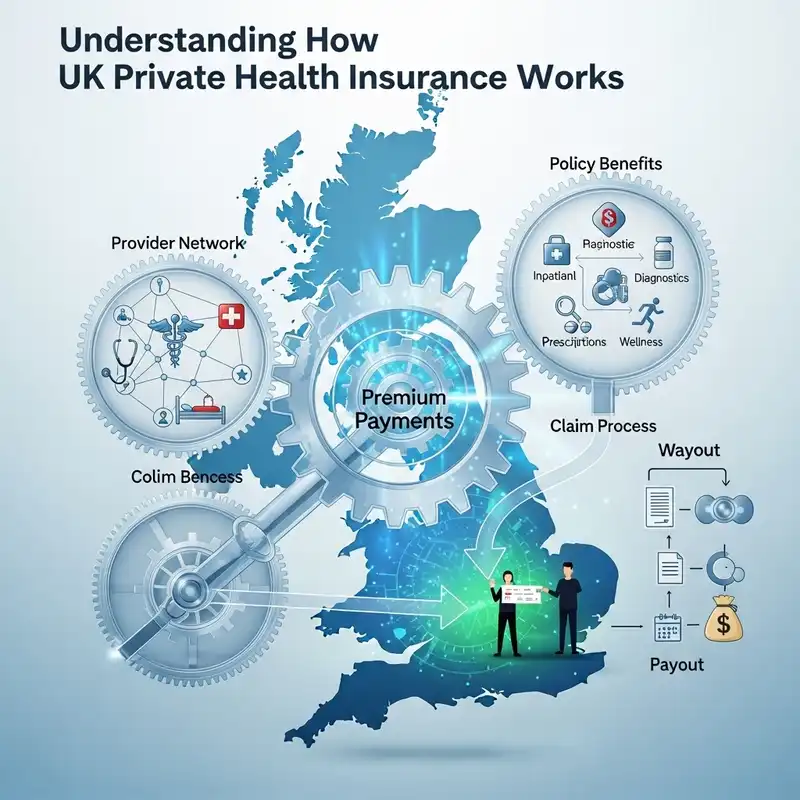
The PMI Journey: From GP to Treatment
The process is designed to be straightforward and supportive, getting you the care you need quickly.
- See Your GP: Your journey typically starts with your NHS GP. If you have a symptom, you consult them as usual. The NHS remains your first port of call.
- Get a Referral: If your GP believes you need to see a specialist, they will provide you with an open referral letter.
- Contact Your Insurer: You call your PMI provider's dedicated claims line. You'll explain the situation and provide your referral details.
- Authorisation is Granted: The insurer will check your policy coverage and authorise the claim. They will provide you with a pre-authorisation number and help you choose a specialist and hospital from their approved network.
- Book Your Appointment: You now have the choice and flexibility to book a consultation and any subsequent treatment at a time and place that suits you, often within days or weeks.
- Focus on Recovery: The insurer settles the bills directly with the hospital and specialists. You simply focus on getting better. The only cost you may have to pay is any pre-agreed excess on your policy.
This seamless process removes both the long wait and the financial anxiety, allowing you to take control of your healthcare journey.
The Crucial Distinction: Acute vs. Chronic Conditions
This is the single most important concept to understand about Private Medical Insurance in the UK. Failing to grasp this distinction is the source of most misconceptions.
UK Private Medical Insurance is designed exclusively to cover ACUTE conditions.
An acute condition is a disease, illness, or injury that is new, unexpected, likely to respond quickly to treatment, and lead to a full recovery. It has a distinct start and, with the right treatment, a foreseeable end.
Examples of acute conditions covered by PMI:
- Joint replacements (hips, knees)
- Hernia repair
- Cataract surgery
- Gallstone removal
- Diagnosing and treating new cancers
- Appendicitis
- Broken bones that require surgery
PMI explicitly DOES NOT cover CHRONIC conditions.
A chronic condition is an illness that is long-lasting, often for life. It cannot be 'cured' in the traditional sense and requires ongoing management rather than a one-off treatment.
Examples of chronic conditions NOT covered by PMI:
- Diabetes
- Asthma
- High blood pressure (Hypertension)
- Crohn's disease
- Eczema
- Multiple Sclerosis
The NHS is, and will remain, the expert provider for the long-term management of chronic conditions. PMI is not designed to replace this vital role; it is designed to complement it by stepping in to fix acute problems quickly.
What About Pre-existing Conditions?
Similarly, PMI policies generally exclude pre-existing conditions. This refers to any illness, disease, or injury for which you have had symptoms, medication, or advice in a set period (usually 2-5 years) before your policy began.
This is a fundamental principle of insurance. Insuring a pre-existing condition would be like buying car insurance after you've had an accident.
There are two main ways insurers handle this, known as underwriting:
| Underwriting Type | How It Works | Best For |
|---|---|---|
| Moratorium (Mori) | Simpler application with no initial medical questionnaire. The policy automatically excludes conditions you've had in the last 5 years. However, if you remain symptom-free and treatment-free for that condition for a continuous 2-year period after your policy starts, it may become eligible for cover. | People with no recent medical issues who want a quick and simple application process. |
| Full Medical Underwriting (FMU) | You complete a detailed health questionnaire at the start. The insurer reviews your medical history and explicitly lists any conditions that will be permanently excluded from your policy. You know exactly what is and isn't covered from day one. | People with a more complex medical history who want absolute clarity on their cover from the outset. |
Understanding these rules is key. PMI is your shield for the future, protecting you against new, curable health problems that could otherwise force you onto a long waiting list or into financial hardship.
The Tangible Benefits of PMI: Your Shield Against the Unexpected
Investing in a PMI policy unlocks a range of powerful benefits that go far beyond just "skipping the queue." It provides a comprehensive shield that protects your health, your time, your finances, and your peace of mind.
-
Rapid Access to Diagnosis and Treatment: This is the primary driver for most people. Instead of waiting months for a scan or over a year for surgery, PMI policyholders can often be seen by a specialist in days and receive treatment within weeks. This speed can reduce anxiety, prevent a condition from worsening, and lead to a quicker recovery.
-
Choice and Control: PMI puts you back in the driver's seat. You have a choice of leading specialists and consultants, allowing you to select a doctor based on their reputation and expertise. You can also choose from a nationwide network of high-quality private hospitals and schedule appointments at times that fit around your work and family life.
-
Superior Comfort and Privacy: Recovery is a vital part of treatment. Private hospitals typically offer a more comfortable environment, with private en-suite rooms, better food, and more flexible visiting hours. This privacy and comfort can significantly aid the healing process.
-
Access to Specialist Drugs and Therapies: The NHS operates under strict budgetary controls set by the National Institute for Health and Care Excellence (NICE). This can sometimes mean that the very latest drugs, treatments, or surgical techniques are not yet available. Many comprehensive PMI policies provide cover for treatments that are proven but not yet funded on the NHS, giving you access to cutting-edge medical care.
-
Enhanced Mental Health Support: Many modern PMI policies recognise the deep link between physical and mental well-being. They offer extensive mental health cover, providing fast access to therapists, psychologists, and psychiatrists, bypassing long NHS waiting lists for services like CBT (Cognitive Behavioural Therapy).
-
Peace of Mind: Perhaps the most undervalued benefit is the profound sense of security. Knowing that if you or a family member falls ill, you have a plan in place to get fast, high-quality care without devastating your finances is priceless. It removes a major source of potential life stress.
The Waiting Game: NHS vs. PMI
The difference in waiting times can be stark, directly impacting your quality of life and ability to work.
| Procedure/Service | Typical NHS Wait (from GP referral) | Typical PMI Wait (from GP referral) |
|---|---|---|
| MRI/CT Scan | 4 - 10 weeks | 3 - 7 days |
| Specialist Consultation | 3 - 6 months | 1 - 2 weeks |
| Cataract Surgery | 6 - 9 months | 3 - 6 weeks |
| Hip/Knee Replacement | 12 - 18+ months | 4 - 8 weeks |
| Mental Health Therapy (IAPT) | 3 - 12+ months | 1 - 3 weeks |
Note: NHS waits are highly variable by region and trust. PMI waits depend on the specific claim and consultant availability but are consistently faster.
Tailoring Your Policy: Understanding Your Options and Costs
A common myth is that Private Medical Insurance is prohibitively expensive. In reality, modern policies are highly flexible and can be tailored to suit a wide range of budgets. You are in control of the key levers that determine your premium.
The cost of your policy is influenced by several factors:
- Your Age and Health: Premiums are lower for younger individuals and will increase with age. Being a smoker will also significantly increase the cost.
- Your Location: Healthcare costs are higher in major cities, so a policy with access to central London hospitals will be more expensive than one covering hospitals elsewhere.
- Level of Cover: This is the biggest factor you can control. You can choose from basic cover to a fully comprehensive plan.
- Your Excess (illustrative): This is the amount you agree to pay towards the cost of any claim. Choosing a higher excess (e.g., £250 or £500) will lower your monthly premium.
- Hospital List: Insurers offer different tiers of hospitals. A policy covering a limited local network of hospitals will be cheaper than one with a full nationwide list.
- No-Claims Discount: Similar to car insurance, you build up a discount for every year you don't make a claim, making your policy more affordable over time.
Levels of PMI Cover Explained
You can typically choose between three main tiers of cover to balance protection with your budget.
| Level of Cover | What It Typically Includes | Ideal For |
|---|---|---|
| Basic / In-patient Only | Covers the major costs associated with a hospital stay: surgery, accommodation, nursing care, anaesthetist fees. Does not cover out-patient diagnostics or consultations. | Those on a tight budget who want protection against the high cost of surgery and major treatments. |
| Mid-Range / Core Cover | Includes all in-patient cover plus a set limit for out-patient services. This covers the initial specialist consultations and diagnostic tests needed to determine if surgery is required. | A good balance of comprehensive cover and affordability. The most popular choice for individuals and families. |
| Comprehensive | Covers in-patient and extensive out-patient care with high or unlimited financial limits. Often includes add-ons like therapies (physio, osteopathy), mental health support, and alternative medicines. | Those who want the highest level of protection and peace of mind, with cover for the full patient journey from diagnosis to recovery. |
You can also enhance your policy with optional add-ons, such as dental and optical cover, travel insurance, and wider mental health pathways.
How to Find the Right Policy: The Value of an Expert Broker
The UK PMI market is vast and complex. With dozens of insurers, each offering multiple policy variations, complex jargon, and different hospital lists, trying to find the right cover on your own can be overwhelming and risky.
This is where an independent, specialist health insurance broker becomes an invaluable partner.
A good broker doesn't just 'sell' you a policy. They act as your expert guide, helping you understand your needs and matching them to the most suitable product on the market.
At WeCovr, we navigate this complexity for you. Our experts compare plans from all the major UK insurers, including Bupa, AXA Health, Aviva, and Vitality, as well as specialist providers. We do the hard work of analysing the small print so you don't have to.
The benefits of using an expert broker like us include:
- Whole-of-Market Advice: We are not tied to any single insurer, meaning our advice is completely impartial and focused on your best interests.
- Tailored Recommendations: We take the time to understand your personal circumstances, health needs, and budget to recommend a policy that truly fits.
- Clarity and Simplicity: We explain the options in plain English, cutting through the jargon to ensure you know exactly what you are buying.
- No Extra Cost: Our service is free to you. We are paid a commission by the insurer you choose, which is already built into the premium. You pay the same price, or often less, than going direct.
- Ongoing Support: Our relationship doesn't end once you buy a policy. We are here to help with claims, renewals, and any questions you have throughout the life of your policy.
We believe in proactive health, not just reactive care. That’s why, in addition to finding you the perfect policy, all our customers receive complimentary access to CalorieHero, our proprietary AI-powered nutrition app, helping you stay on top of your wellness goals. It's part of the comprehensive support we offer at WeCovr.
Real-Life Scenarios: How PMI Protects Families
The true value of PMI becomes clear when you see how it works in real-world situations.
Scenario 1: The Self-Employed Plumber Mark, 45, is a self-employed plumber. He injures his shoulder, and his GP suspects a torn rotator cuff. The NHS wait for an MRI is 8 weeks, and the potential wait for surgery is over a year. For Mark, not being able to lift his arm means no work and no income.
- With PMI: Mark calls his insurer. He gets an MRI scan within 4 days, confirming the tear. A private surgical consultation is booked for the following week. Surgery is scheduled for two weeks later. After a course of private physiotherapy (also covered), he is back to work within three months. His PMI policy cost him £65 a month. The total cost of his treatment, paid by the insurer, was over £8,000. His business and income were protected.
Scenario 2: The Worried Parents The parents of 7-year-old Chloe are concerned about her recurring tonsillitis. Their GP refers them to an Ear, Nose, and Throat (ENT) specialist, but the NHS waiting list is 9 months long. Chloe is missing school and is frequently unwell.
- With PMI (Family Policy): Her parents call their insurer. They see a private ENT specialist in a week. The specialist recommends a tonsillectomy. The procedure is carried out three weeks later in a private hospital with a dedicated children's ward. Chloe recovers quickly, and her parents' anxiety is relieved.
Scenario 3: The Active Retiree Brenda, 68, loves walking and gardening, but severe arthritis in her hip is making her immobile. Her quality of life is plummeting. She is told the NHS wait for a hip replacement is 16 months. She has savings but is worried about using them for surgery in case she needs them for future care costs.
- With PMI: Brenda has had PMI for several years. Her policy covers the full cost of the £15,000 operation. She chooses a top-rated local surgeon and has the operation within six weeks. She recovers in a comfortable private room and is back in her garden in a few months, her savings untouched and her active retirement preserved.
Frequently Asked Questions (FAQ)
Q1: Is Private Medical Insurance worth the cost? For a growing number of people, yes. When you compare a manageable monthly premium (e.g., £50-£100) against a potential one-off, out-of-pocket cost of £15,000 for a major operation, PMI acts as a vital financial buffer. It's an investment in prompt treatment, which can protect your income, quality of life, and mental well-being.
Q2: If I have PMI, do I still need the NHS? Absolutely. PMI is not a replacement for the NHS. You will still rely on the NHS for A&E services, GP appointments, management of chronic conditions, and maternity care. PMI and the NHS work in partnership to provide you with comprehensive health coverage.
Q3: Can I get cover for my whole family? Yes. Insurers offer family policies that can cover you, your partner, and your children, often at a discounted rate compared to individual policies. This ensures your loved ones have the same level of protection.
Q4: What is a '6-week option'? This is a popular way to reduce your premium. A 6-week option means that if the NHS can provide the in-patient treatment you need within six weeks of when it is required, you will use the NHS. If the NHS wait is longer than six weeks, your private medical insurance policy will kick in and cover the treatment privately.
Q5: What happens if I need treatment for a condition that's excluded from my policy? If you need care for an excluded pre-existing or chronic condition, you would simply receive that care through the NHS as normal. Your PMI policy remains in place to protect you against new, eligible acute conditions.
Your Health, Your Choice, Your Shield
The landscape of UK healthcare is changing. While the NHS remains a cherished institution, the reality of long waiting lists means that relying on it solely for elective care comes with significant risks—to your health, your well-being, and your financial stability.
The rise of the self-pay patient is a testament to this pressure, pushing families into a £5 billion gamble they cannot afford to lose.
Private Medical Insurance offers a proactive, affordable, and intelligent alternative. It is the essential shield that empowers you to bypass the queues, access the best possible care quickly, and protect your family's finances from the shock of an unexpected medical bill. It's about taking control, ensuring continuity for your life and work, and securing priceless peace of mind.
Don't wait for a health scare to become a financial crisis. Take control today. Contact the expert team at WeCovr for a free, no-obligation quote and discover how affordable your peace of mind can be.
Sources
- Department for Transport (DfT): Road safety and transport statistics.
- DVLA / DVSA: UK vehicle and driving regulatory guidance.
- Association of British Insurers (ABI): Motor insurance market and claims publications.
- Financial Conduct Authority (FCA): Insurance conduct and consumer information guidance.