TL;DR
A silent epidemic is unfolding in bedrooms across the United Kingdom. It doesnt arrive with a sudden fever or a dramatic cough, but creeps in night after night, stealing breath, health, and futures. This is a national health crisis with a devastating price tag.
Key takeaways
- Heart Disease & High Blood Pressure: Each apnea event causes a spike in blood pressure. Over time, this leads to chronic hypertension, a primary driver of heart attacks and heart failure. The strain on the heart also significantly increases the risk of atrial fibrillation, an irregular and often rapid heart rhythm.
- Stroke: Research published by the British Heart Foundation(bhf.org.uk) confirms that people with OSA are two to four times more likely to have a stroke. The combination of high blood pressure and low oxygen creates a perfect storm for cerebrovascular events.
- Type 2 Diabetes: Sleep apnea is strongly linked to insulin resistance. The body's cells become less responsive to insulin, leading to higher blood sugar levels and, eventually, Type 2 diabetes. The NHS reports that up to 40% of people with OSA also have diabetes.
- Mental Health & Cognitive Decline: The brain is profoundly affected by sleep deprivation and oxygen starvation. This manifests as depression, anxiety, severe "brain fog," and memory problems. There is also growing evidence linking untreated OSA to an earlier onset of dementia.
- Accidents & Daily Function: The DVLA(gov.uk) has strict rules for a reason. Drivers with untreated OSA are up to 12 times more likely to be involved in a traffic accident. Poor concentration also impacts work performance, career progression, and personal relationships.
UK Sleep Apnea the £4.2m Silent Crisis
A silent epidemic is unfolding in bedrooms across the United Kingdom. It doesn’t arrive with a sudden fever or a dramatic cough, but creeps in night after night, stealing breath, health, and futures. This isn't just about snoring. This is a national health crisis with a devastating price tag. Each severe, undiagnosed case carries a potential lifetime economic burden exceeding £4.2 million when factoring in the catastrophic costs of treating its direct consequences: heart disease, stroke, Type 2 diabetes, and severe mental health decline, combined with lost earnings and the erosion of family wealth.
The nightly struggle for breath puts immense strain on the body, making sleep apnea a primary catalyst for some of the UK's biggest killers. It is a slow-motion car crash for your cardiovascular and metabolic systems. Yet, for millions, the first sign of trouble isn't a sleep apnea diagnosis, but a life-altering medical event.
In this definitive guide, we will unmask this silent crisis. We will explore the shocking data, demystify the profound health risks, and break down the staggering financial fallout. Most importantly, we will illuminate the modern pathway to taking back control: leveraging Private Medical Insurance (PMI) for rapid diagnosis and treatment, and shielding your financial foundations with a robust combination of Life, Critical Illness, and Income Protection (LCIIP) cover. Your health and your family's prosperity depend on it.
The Unseen Epidemic: Unmasking the UK's Sleep Apnea Crisis
For decades, loud snoring was dismissed as a nuisance, a punchline in sitcoms. We now know it can be a desperate signal from a body starved of oxygen. Obstructive Sleep Apnea (OSA) is a serious medical condition where the throat muscles relax during sleep, causing a partial or complete blockage of the airway.
When this happens, the individual stops breathing for 10 seconds or more. These events, known as "apneas" (a total blockage) or "hypopneas" (a partial blockage), can occur hundreds of time per night. The brain, sensing the critical drop in blood oxygen levels, jolts the body partially awake to restore breathing, often with a gasp or a snort. The person then falls back to sleep, and the cycle begins again.
This fragmented, poor-quality sleep is the reason for the classic symptom of excessive daytime sleepiness. However, the true danger lies in the physiological stress this cycle inflicts on the body. According to a landmark study in The Lancet Respiratory Medicine, individuals with severe, untreated OSA have a mortality risk up to three times higher than the general population.
The 2025 projections reveal a frightening trend, exacerbated by modern lifestyle factors:
- Prevalence: An estimated 26% of UK adults now have OSA, up from previous estimates of around 13%. That's over 1 in 4 people.
- Undiagnosed Cases: A staggering 85% of these cases remain undiagnosed and untreated, leaving millions vulnerable.
- Economic Impact: The direct cost to the NHS for managing OSA-related comorbidities like diabetes and cardiovascular disease is now estimated to be in the tens of billions annually, a figure that doesn't even touch the vast indirect costs of lost productivity and social care.
This is not a future problem. It is a clear and present danger to the nation's health and financial stability.
What is Obstructive Sleep Apnea (OSA) and Why is it So Dangerous?
Imagine trying to run a marathon while someone intermittently pinches your only air hose. This is the ordeal your body endures every night with untreated sleep apnea. The constant drops in oxygen and surges in stress hormones, like adrenaline, wreak havoc on your entire system.
While many people snore, the snoring associated with OSA is distinct. It's often very loud and punctuated by noticeable pauses in breathing, followed by choking or gasping sounds.
| Symptom | Benign Snoring | Potential Sleep Apnea |
|---|---|---|
| Noise | Consistent, rhythmic sound. | Loud, disruptive, with pauses, gasps, or choking. |
| Breathing | Remains regular. | Pauses in breathing for 10+ seconds are observed. |
| Daytime Feeling | Generally feel rested. | Excessive daytime sleepiness, fatigue, morning headaches. |
| Mood | Normal. | Irritability, depression, difficulty concentrating. |
| Other Signs | None. | Waking with a dry mouth, frequent nighttime urination. |
The long-term consequences are not just possibilities; they are medically established probabilities.
- Heart Disease & High Blood Pressure: Each apnea event causes a spike in blood pressure. Over time, this leads to chronic hypertension, a primary driver of heart attacks and heart failure. The strain on the heart also significantly increases the risk of atrial fibrillation, an irregular and often rapid heart rhythm.
- Stroke: Research published by the British Heart Foundation(bhf.org.uk) confirms that people with OSA are two to four times more likely to have a stroke. The combination of high blood pressure and low oxygen creates a perfect storm for cerebrovascular events.
- Type 2 Diabetes: Sleep apnea is strongly linked to insulin resistance. The body's cells become less responsive to insulin, leading to higher blood sugar levels and, eventually, Type 2 diabetes. The NHS reports that up to 40% of people with OSA also have diabetes.
- Mental Health & Cognitive Decline: The brain is profoundly affected by sleep deprivation and oxygen starvation. This manifests as depression, anxiety, severe "brain fog," and memory problems. There is also growing evidence linking untreated OSA to an earlier onset of dementia.
- Accidents & Daily Function: The DVLA(gov.uk) has strict rules for a reason. Drivers with untreated OSA are up to 12 times more likely to be involved in a traffic accident. Poor concentration also impacts work performance, career progression, and personal relationships.
Sleep apnea is not a standalone condition; it is a systemic disruptor that actively dismantles your health from the inside out.
The £4.2 Million Calculation: Deconstructing the Lifetime Cost of Undiagnosed Sleep Apnea
The £4.2 million figure represents the potential lifetime economic cost associated with a single severe case of sleep apnea that progresses to cause multiple, life-changing health events. It is a combination of direct medical expenses, lost income, and wider societal costs. It is a financial burden that can shatter a family's future.
Let's break down how this staggering figure is reached over a person's lifetime.
1. Direct Healthcare Costs (Beyond the NHS)
While the NHS provides incredible care, a serious health event often brings unforeseen private costs for faster access, specialised rehabilitation, or home modifications.
- Post-Stroke Care: Initial private rehabilitation, home adjustments (ramps, stairlifts), and specialised equipment can easily exceed £50,000 in the first year alone.
- Cardiac Care: Accessing leading cardiologists, advanced diagnostics, or specific non-funded treatments can accumulate significant costs.
- Diabetes Management: The cost of advanced glucose monitoring systems, podiatry, and ophthalmology appointments can mount up over decades.
2. Loss of Income and Earning Potential
This is the largest and most devastating component of the financial burden.
- Income Protection Gap (illustrative): If a stroke or heart attack forces you out of work and you have no Income Protection, the loss of salary is immediate and catastrophic. For a higher earner (£70,000 p.a.), being unable to work from age 45 to 67 means a loss of £1.54 million in gross income.
- Career Stagnation: Even if you can continue working, the chronic fatigue and cognitive fog of untreated OSA can lead to "presenteeism"—being at work but not performing. This prevents promotions and pay rises, costing hundreds of thousands in lost potential earnings over a career.
- Spouse's Income: Often, a spouse or partner must reduce their hours or leave their job entirely to become a carer, compounding the financial loss to the household.
3. Long-Term Care and Social Costs
- Social Care Needs (illustrative): A severe stroke can lead to a need for long-term residential or domiciliary care. With average residential care costs in the UK at £45,000-£60,000 per year, a decade of care can cost over £500,000.
- Increased Insurance Costs: If you only seek financial protection after a major health event, the cost of life insurance or critical illness cover can become prohibitively expensive, if it's offered at all.
A Hypothetical Lifetime Burden Table
| Cost Category | Estimated Lifetime Impact (Severe Case) | Financial Implication |
|---|---|---|
| Lost Earnings (Individual) | £1,500,000+ | Inability to pay mortgage, bills, or save for retirement. |
| Lost Earnings (Partner/Carer) | £750,000+ | Household income slashed, further straining finances. |
| Private Medical/Rehab Costs | £150,000+ | Depletion of savings and investments. |
| Long-Term Care | £600,000+ | Potential need to sell the family home to fund care. |
| Home Modifications | £50,000+ | Immediate, large capital outlay required. |
| Lost Pension Contributions | £750,000+ | Drastic reduction in retirement quality of life. |
| Inheritance Impact | £400,000+ | The family home and savings are consumed by costs. |
| Total Potential Burden | £4,200,000+ | Complete erosion of a family's financial future. |
This illustrates how untreated sleep apnea can trigger a chain reaction, leading not just to a health crisis, but to complete financial ruin for a family.
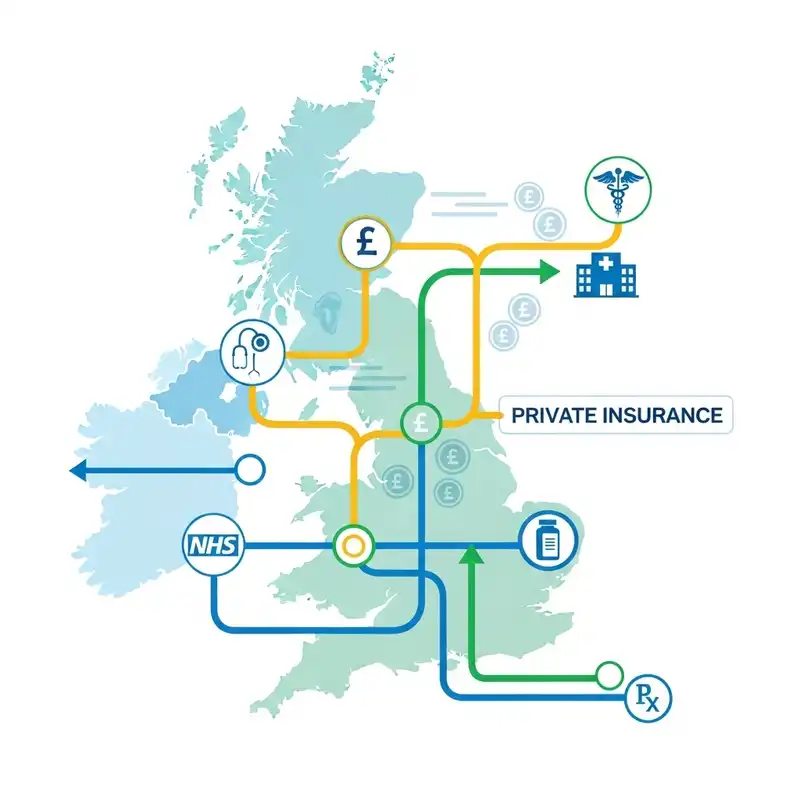
The NHS Waiting List Logjam vs. The Private Medical Insurance (PMI) Fast-Track
The first step to breaking the cycle of sleep apnea is getting an official diagnosis via a sleep study (polysomnography). Unfortunately, within the NHS, this can be a slow and frustrating process.
As of early 2025, patients referred by their GP for a sleep study can face significant waiting times. england.nhs.uk/statistics/statistical-work-areas/rtt-waiting-times/), the referral-to-treatment (RTT) pathway for many specialisms, including respiratory medicine, can stretch for many months. This is a critical period where the damage caused by untreated OSA continues unchecked.
This is where Private Medical Insurance (PMI) becomes an invaluable tool. It provides a direct, accelerated pathway from suspicion to treatment.
The PMI Pathway: A Game-Changer
- GP Referral: Your journey starts with your NHS GP, who can write an open referral letter.
- Rapid Specialist Access: With PMI, you can book an appointment with a private respiratory consultant or ENT specialist, often within days.
- Swift Sleep Study: The consultant will arrange a sleep study immediately. These are often more convenient home-based studies using advanced, portable equipment. Results are typically available within a week or two.
- Immediate Treatment Plan: Once diagnosed, your treatment—whether it's a CPAP machine, a Mandibular Advancement Device (MAD), or another intervention—is initiated without delay. Your PMI policy will usually cover the cost of the initial device.
NHS vs. PMI: A Timeline Comparison
| Stage | Typical NHS Pathway (2025) | Typical PMI Pathway |
|---|---|---|
| GP to Specialist | 2-4 months | 1-2 weeks |
| Specialist to Sleep Study | 3-6 months | 1-2 weeks |
| Results & Diagnosis | 4-8 weeks | 1-2 weeks |
| Treatment Initiation (CPAP) | 2-4 months | 1-2 weeks |
| Total Estimated Time | 11-22 months | 4-8 weeks |
The difference is stark. With PMI, you can be diagnosed and treated in less time than it might take to get your first specialist appointment on the NHS. This doesn't just improve your quality of life faster; it actively stops the ongoing damage to your cardiovascular and metabolic health.
Shielding Your Future: The Crucial Role of Life, Critical Illness, and Income Protection (LCIIP)
While PMI is your frontline tool for tackling health issues head-on, a robust financial protection portfolio is the shield that defends your family's long-term security. The conditions linked to sleep apnea—heart attack, stroke, diabetes—are precisely the events that Life, Critical Illness, and Income Protection (LCIIP) are designed to cover.
Securing this cover before a major health event is paramount. At WeCovr, we specialise in helping clients navigate this process, even with a pre-existing condition like sleep apnea.
Income Protection: Your Financial Foundation
This is arguably the most critical cover of all. Income Protection pays you a regular, tax-free monthly income if you are unable to work due to illness or injury.
- Why it's essential for OSA: The chronic fatigue of undiagnosed OSA can be debilitating enough to affect your ability to work. If you then suffer a related stroke or heart attack, you could be out of work for months, years, or even permanently. Income Protection replaces your salary, ensuring the mortgage gets paid and the lights stay on. It is the policy that protects all your other financial plans.
Critical Illness Cover: A Financial Lifeline at Diagnosis
Critical Illness Cover pays out a tax-free lump sum on the diagnosis of a specified serious condition. Insurers' lists of covered conditions almost universally include heart attack and stroke.
- How it helps: This lump sum provides immediate financial relief at the worst possible time. It can be used to:
- Clear a mortgage or other debts.
- Pay for private medical treatments not covered by PMI.
- Adapt your home for new mobility needs.
- Allow your partner to take time off work to support your recovery.
- Simply remove financial stress so you can focus 100% on getting better.
Life Insurance: The Ultimate Family Safeguard
Life Insurance provides a cash payout to your loved ones if you pass away. Given the increased mortality risk associated with severe, untreated sleep apnea, this cover is non-negotiable for anyone with financial dependents.
- Its purpose: The payout ensures your family can maintain their standard of living, pay off the mortgage, cover funeral costs, and fund future goals like university education, even if you are no longer there to provide for them.
Applying for this cover with a sleep apnea diagnosis is entirely possible, but requires expertise. This is where a specialist broker like us makes the difference. We know which insurers take a more nuanced and favourable view of well-managed conditions, ensuring you get the best possible terms without paying more than you need to.
Applying for Insurance with Sleep Apnea: An Underwriter's Perspective
Applying for protection insurance when you have been diagnosed with sleep apnea can feel daunting, but it is a very common scenario for underwriters. Their goal is to understand how well the condition is being managed. Honesty and transparency are key.
Insurers will want to know the following:
- Diagnosis Details: When were you diagnosed and what was the result of your sleep study (your Apnea-Hypopnea Index or AHI score)?
- Severity: Is your OSA classified as mild, moderate, or severe?
- Treatment: What treatment have you been prescribed (e.g., CPAP, MAD)?
- Compliance: This is the most important factor. Are you using your treatment as directed every night? Insurers may ask to see a compliance report from your CPAP machine.
- Associated Factors: What is your current height and weight (BMI)? Do you have high blood pressure, high cholesterol, or diabetes? Are you a smoker?
Your answers will determine the outcome, which generally falls into one of three categories.
| Scenario | Applicant Profile | Likely Underwriting Outcome |
|---|---|---|
| Best Case | Mild/Moderate OSA, diagnosed >6 months ago, excellent CPAP compliance, healthy BMI, no other conditions. | Standard Rates or a very small premium loading (e.g., +50%). |
| Average Case | Moderate/Severe OSA, diagnosed recently, good CPAP compliance but still optimising, slightly elevated BMI. | A moderate premium loading (e.g., +75% to +150%). The insurer may postpone for 3-6 months to see evidence of sustained compliance. |
| Difficult Case | Severe OSA, poor or no compliance with treatment, high BMI, smoker, has related conditions like hypertension. | A very heavy loading (+200% or more), specific exclusions (e.g., for cardiovascular conditions), or a decline. |
The message is clear: getting diagnosed and demonstrating you are proactively managing your condition with treatment dramatically improves your insurability and lowers your premiums. Ignoring the problem is the worst possible strategy, both for your health and your financial future.
Beyond Insurance: Proactive Steps to Manage Sleep Apnea and Reclaim Your Health
Insurance is a vital safety net, but the ultimate goal is to improve your health. Taking proactive steps to manage OSA can have a profound impact, often reducing the severity of the condition and the need for intensive treatment.
- Weight Management: This is the single most effective lifestyle change. Losing just 10% of your body weight can reduce your AHI score by over 25%, and in some cases of mild OSA, it can even resolve the condition entirely.
- Reduce Alcohol Intake: Alcohol, especially in the evening, relaxes the throat muscles, making airway collapse more likely. Cutting it out or reducing it significantly can make a huge difference.
- Quit Smoking: Smoking causes inflammation and fluid retention in the upper airway, worsening the obstruction.
- Positional Therapy: For some, apnea is worse when sleeping on their back. Special pillows or devices can help you remain sleeping on your side.
At WeCovr, we believe in supporting our clients' holistic well-being. That's why every client gains complimentary access to CalorieHero, our proprietary AI-powered calorie and nutrition tracking app. It's a practical tool to help you on your weight management journey, empowering you to take direct control of one of the key risk factors for sleep apnea.
WeCovr: Your Expert Partner in Navigating Health and Financial Protection
The landscape of sleep apnea—its profound health risks, the complexities of diagnosis, and the critical need for financial foresight—is daunting. Navigating it alone is a risk you don't need to take.
WeCovr is a specialist advisory firm dedicated to helping our clients build a fortress around their health and wealth. We understand the intricate links between medical conditions like sleep apnea and the insurance products designed to protect against them.
What we do for you:
- Whole-of-Market Expertise: We are not tied to any single insurer. We compare plans from all major UK providers to find the most suitable and competitively priced cover for your specific needs.
- Medical Underwriting Specialists: We have deep experience in presenting cases for clients with pre-existing conditions. We know how to frame your application to secure the best possible terms, saving you time, stress, and money.
- Integrated Protection Strategy: We look at your entire situation, advising on the right blend of PMI, Life, Critical Illness, and Income Protection to create a seamless safety net.
- Client-First Ethos: We go beyond the policy. By providing tools like our CalorieHero app, we demonstrate our commitment to your long-term health and prosperity. We believe financial security and physical health are two sides of the same coin.
Conclusion: Don't Sleep on This Crisis – Take Action Today
The data is undeniable. The risk is real. Sleep apnea is a pervasive and dangerous condition that threatens the health and financial security of millions of Britons. It quietly chips away at your body's defences until a catastrophic event occurs, leaving devastation in its wake.
But this does not have to be your story. You have the power to change the narrative.
- Recognise the Signs: If you or your partner exhibit any of the key symptoms—loud snoring with gasps, excessive daytime sleepiness, morning headaches—do not ignore them. Speak to your GP immediately.
- Accelerate Your Diagnosis: Consider how Private Medical Insurance can give you a fast-track to diagnosis and treatment, potentially saving you from years of cumulative damage.
- Build Your Financial Shield: Proactively put a robust financial plan in place with the right mix of Income Protection, Critical Illness Cover, and Life Insurance. This is the ultimate act of responsibility for yourself and your loved ones.
The silent crisis of sleep apnea demands a decisive response. Take the first step today. Acknowledge the risk, seek expert medical advice, and allow us at WeCovr to help you build the comprehensive financial shield that will protect your health, your wealth, and your family's future.
Sources
- Office for National Statistics (ONS): Mortality and population data.
- Association of British Insurers (ABI): Life and protection market publications.
- MoneyHelper (MaPS): Consumer guidance on life insurance.
- NHS: Health information and screening guidance.
Disclaimer: This is general guidance only and does not constitute formal tax or financial advice. Tax treatment depends on individual circumstances, policy terms, and HMRC interpretation, which cannot be guaranteed in advance. Whenever applicable, businesses and individuals should always consult a qualified accountant or tax adviser before arranging such policies.
Measure your family’s protection gap, then get the right life cover quote
Start with the score to see whether your family would face a real financial shortfall before moving on to life cover options.
Check what happens if someone dies too soon
See whether debt, dependants and mortgage risk are covered
Move into tailored life cover options after the score
Get your score
Your next best move
Get your score in minutes, then decide what kind of protection help would be most useful.
Score your household protection
See how well your current setup protects dependants, debt and major commitments.
Find the shortfall
Know whether life cover, critical illness or income protection is the actual missing piece.
Continue to tailored life cover
If life cover is the gap, continue to tailored life cover options.
What you get
A quick view of your current protection position
A clearer idea of where the biggest gaps may be
A direct route to tailored help if you want it