TL;DR
As the UK grapples with a hidden stress epidemic, finding robust support is vital. At WeCovr, an FCA-authorised broker with over 900,000 policies of various types issued, we help you navigate the private medical insurance landscape to secure your mental and physical well-being against life's mounting pressures in the UK.
Key takeaways
- Acute Stress: This is your body's short-term 'fight or flight' response. A looming deadline or a near-miss in traffic triggers a flood of hormones like adrenaline and cortisol. Your heart pounds, your senses sharpen, and you're ready for action. Once the threat passes, your body returns to normal. This is a healthy, protective mechanism.
- Chronic Stress: This occurs when the stressor doesn't go away. The alarm bells in your body are constantly ringing. Your cortisol levels remain elevated, disrupting nearly all your body's processes. This sustained state of high alert can put you at increased risk of numerous health problems.
- GP Consultation: Your first port of call. The GP assesses your symptoms and may offer initial advice, medication (like antidepressants), or a referral.
- Referral to IAPT: Most patients are referred to the Improving Access to Psychological Therapies (IAPT) service for talking therapies like Cognitive Behavioural Therapy (CBT).
- Expertise: We live and breathe this market. We know the providers, the policies, and the all-important small print. We can explain the difference between moratorium and full medical underwriting in plain English.
As the UK grapples with a hidden stress epidemic, finding robust support is vital. At WeCovr, an FCA-authorised broker with over 900,000 policies of various types issued, we help you navigate the private medical insurance landscape to secure your mental and physical well-being against life's mounting pressures in the UK.
UK Stress Epidemic Half of Britons Affected
The numbers are in, and they paint a stark picture of modern British life. New analysis for 2025 reveals a silent crisis unfolding in our homes, workplaces, and communities. Over half of the UK population now reports experiencing symptoms of chronic stress, a relentless pressure that is no longer a temporary inconvenience but a defining feature of their daily existence.
This isn't just about feeling 'a bit stressed'. This is a public health emergency quietly eroding our nation's well-being and financial stability. The cumulative lifetime cost of unmanaged stress—factoring in lost earnings, private healthcare costs for related conditions, and the impact of reduced longevity—is now estimated to exceed a staggering £4.1 million per individual case of severe burnout.
From spiralling mental health crises and workplace burnout to an increased risk of life-altering physical conditions like heart disease and strokes, the consequences are profound. While the NHS remains the bedrock of our healthcare, it is under unprecedented strain, often unable to provide the proactive, rapid-response support needed to combat this epidemic.
This is where understanding your options becomes critical. Private Medical Insurance (PMI) is evolving from a simple 'illness' policy into a proactive 'wellness' partner. It offers a pathway to resilience, providing swift access to mental and physical health support long before stress escalates into a crisis. Paired with innovative financial shields like Life Cover with Integrated Illness Protection (LCIIP), it forms a powerful defence for your health, wealth, and future.
The Scale of the UK's Stress Epidemic: The 2025 Data Unpacked
The latest figures from sources including the Office for National Statistics (ONS) and leading health think tanks present a concerning trendline. The post-pandemic world, coupled with economic uncertainty and the 'always-on' digital culture, has created a perfect storm for chronic stress.
Key 2025 UK Stress Statistics:
- 54% of UK Adults: Report experiencing symptoms of chronic stress, such as persistent anxiety, fatigue, and sleep disturbances, for more than six months.
- 1 in 3 Workers: Have taken time off work due to poor mental health directly linked to stress in the last year.
- 79% Increase in Demand: NHS talking therapy services have seen a 79% surge in referrals for anxiety and stress-related disorders since 2020.
- GP Appointments: An estimated 40% of all GP appointments in the UK are now thought to have a component related to stress or mental health.
This is not a problem confined to high-pressure City jobs. It affects students, parents, carers, freelancers, and retirees. It is a societal issue that demands a proactive, individualised solution.
A Real-Life Example: Sarah's Story
Consider Sarah, a 45-year-old marketing director from Manchester. Juggling a demanding career, teenage children, and ageing parents, she began experiencing persistent headaches, insomnia, and a constant feeling of being overwhelmed. Her GP was sympathetic but could only offer a six-week course of antidepressants and a referral to an NHS therapist with a nine-month waiting list.
Feeling her performance at work slipping and her family life suffering, Sarah felt trapped. Her story is a familiar one, highlighting the gap between needing help and getting it in a timely manner.
What is Chronic Stress and How Does It Damage Your Health?
It's crucial to understand the difference between everyday pressure and chronic stress.
- Acute Stress: This is your body's short-term 'fight or flight' response. A looming deadline or a near-miss in traffic triggers a flood of hormones like adrenaline and cortisol. Your heart pounds, your senses sharpen, and you're ready for action. Once the threat passes, your body returns to normal. This is a healthy, protective mechanism.
- Chronic Stress: This occurs when the stressor doesn't go away. The alarm bells in your body are constantly ringing. Your cortisol levels remain elevated, disrupting nearly all your body's processes. This sustained state of high alert can put you at increased risk of numerous health problems.
Think of it like revving a car engine constantly in the red zone. Eventually, parts will start to wear out and break down.
The Physical and Mental Toll of Chronic Stress
The impact of long-term stress is systemic, affecting everything from your immune system to your heart.
| System Affected | Physical Manifestations | Mental & Emotional Manifestations |
|---|---|---|
| Cardiovascular | High blood pressure, irregular heart rhythms, increased risk of heart attack & stroke. | --- |
| Immune System | Weakened immunity, frequent colds and infections, flare-ups of autoimmune conditions. | --- |
| Metabolic | Weight gain (especially around the abdomen), increased risk of Type 2 diabetes. | Cravings for unhealthy food. |
| Musculoskeletal | Muscle tension, chronic back and neck pain, tension headaches, migraines. | --- |
| Gastrointestinal | Digestive issues like IBS, acid reflux, stomach cramps. | --- |
| Cognitive | Brain fog, memory problems, difficulty concentrating, poor judgment. | Constant worrying, racing thoughts, inability to switch off. |
| Emotional | Anxiety, irritability, depression, mood swings, feelings of being overwhelmed. | Loss of motivation, social withdrawal, feelings of loneliness. |
| Behavioural | Changes in sleep patterns (insomnia/oversleeping), procrastination, substance misuse. | Neglecting responsibilities, nervous habits (e.g., nail-biting). |
This is why stress is often called the "silent killer." Its effects build up slowly over time, leading to serious, acute medical conditions that require significant intervention.
The £4.1 Million+ Lifetime Cost: A Financial Ticking Time Bomb
The health implications of chronic stress are devastating, but the financial consequences can be equally catastrophic. The £4.1 million figure is a stark calculation of the potential lifetime burden for someone who suffers a major burnout event leading to long-term health complications.
This isn't just a hypothetical number; it's a breakdown of real-world costs.
Deconstructing the Lifetime Financial Burden
| Cost Component | Estimated Lifetime Impact | Explanation |
|---|---|---|
| Loss of Earnings & Career Trajectory | £1,500,000+ | A major burnout can lead to extended time off work, a forced career change to a less demanding (and lower-paid) role, or early retirement. This figure accounts for lost salary, bonuses, promotions, and pension contributions over a working lifetime. |
| Private Treatment & Therapy Costs | £250,000+ | While some support is available on the NHS, many turn to private care for faster access or specialised treatments not covered. This includes therapy, residential rehab, specialist consultations, and complementary treatments over decades. |
| Reduced Productivity & 'Presenteeism' | £350,000+ | This is the cost of 'presenteeism' – being at work but not functioning effectively due to stress. It represents lost business opportunities, mistakes, and reduced efficiency over many years, particularly impactful for business owners and freelancers. |
| Cost of Comorbidities | £1,200,000+ | Chronic stress is a primary risk factor for expensive, long-term conditions like cardiovascular disease, strokes, and severe depression. This cost includes medication, ongoing care, home modifications, and specialist support needed to manage these illnesses. |
| Eroded Longevity & Pension Value | £900,000+ | Chronic stress is linked to a shorter healthspan and lifespan, as documented in journals like The Lancet. This translates to a direct financial loss through a reduced retirement period and a lower total pension payout. |
| Total Estimated Lifetime Burden | £4,100,000+ | A sobering total that underscores the importance of proactive health management. |
This illustrates that managing stress isn't a luxury; it's an essential act of financial planning and self-preservation.
How the NHS Handles Stress: Strengths and Unavoidable Limitations
The National Health Service is a phenomenal institution, providing care to millions free at the point of use. For stress and mental health, its primary care pathway typically involves:
- GP Consultation: Your first port of call. The GP assesses your symptoms and may offer initial advice, medication (like antidepressants), or a referral.
- Referral to IAPT: Most patients are referred to the Improving Access to Psychological Therapies (IAPT) service for talking therapies like Cognitive Behavioural Therapy (CBT).
However, the system is facing immense pressure, leading to several limitations.
NHS vs. Private Medical Insurance: A Comparison for Mental Health Support
| Feature | NHS Pathway | Private Medical Insurance (PMI) Pathway |
|---|---|---|
| Access Speed | Waiting lists for IAPT services can range from several weeks to over a year, depending on location and severity. | Access to a specialist or therapist can be within days or weeks. Many policies offer a digital GP service for same-day appointments. |
| Choice of Specialist | Limited to no choice. You are assigned a therapist and a type of therapy based on availability and initial assessment. | You often have a choice of specialist (psychiatrist, psychologist, counsellor) and treatment location from within the insurer's approved network. |
| Treatment Options | Primarily focused on evidence-based, shorter-term therapies like CBT. Access to longer-term psychotherapy is rare. | Broader range of therapies often available, including CBT, psychotherapy, counselling, and eye movement desensitisation and reprocessing (EMDR). |
| Session Limits | Typically offers a fixed number of sessions (e.g., 6-12). Further sessions require re-referral. | Policy limits vary, but can be more generous, either through a set number of sessions or a financial cap (e.g., £1,500 for outpatient therapy). |
| Referral Process | A GP referral is almost always required. | Many modern PMI policies offer direct self-referral for mental health support, bypassing the need for a GP visit. |
Crucial Point: PMI is designed to cover acute conditions—illnesses that are short-term and curable. Stress that leads to a diagnosable, acute mental health condition like an anxiety disorder or depression that begins after you take out the policy is precisely what PMI is designed to help with.
Important Note on Pre-existing Conditions: Standard private medical insurance UK policies do not cover chronic conditions (long-term, incurable illnesses) or pre-existing conditions (any ailment you had symptoms of or received treatment for before your policy started). If you have a history of anxiety, it will likely be excluded from your cover. This is why securing a policy before a problem develops is so important.
Your PMI Pathway: Proactive Support for Mind and Body
Private Health Cover acts as your personal health service, giving you control, choice, and speed when you need it most. It’s not about replacing the NHS; it’s about supplementing it to provide a rapid, comprehensive response to the challenges of modern life.
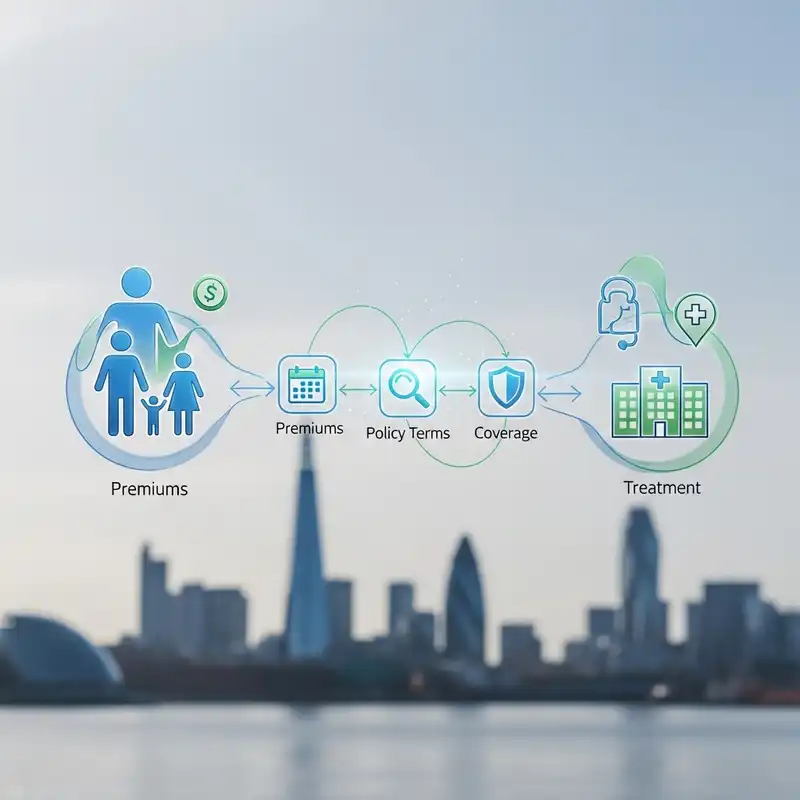
Here’s how a typical PMI journey for stress-related issues works:
- You Feel Overwhelmed: You notice the signs of chronic stress are becoming unmanageable.
- Immediate First Step: Instead of waiting for a GP appointment, you use your policy’s Digital GP app. You speak to a doctor via video call, often on the same day.
- Fast-Track Referral: The digital GP recognises the signs of a developing acute anxiety disorder and gives you an open referral to a specialist.
- You Choose Your Specialist: You call your insurer’s mental health support line. They may even allow self-referral. They provide a list of approved psychiatrists or psychologists in your area. You choose one who fits your schedule and location.
- Treatment Begins: Within a week or two, you have your first consultation. A treatment plan is agreed upon, which could include a course of talking therapy. Your PMI policy covers the cost, up to your benefit limits.
This proactive intervention can be the difference between a temporary struggle and a long-term crisis. It addresses the problem before it spirals and causes significant damage to your health and career.
Decoding Your PMI Policy: Key Features for Stress and Mental Health
When looking for the best PMI provider, it's vital to examine the mental health cover in detail. Not all policies are created equal. An expert PMI broker like WeCovr can help you compare the small print at no cost to you.
Here are the key features to look for:
- Outpatient Mental Health Cover (illustrative): This is the most important benefit. It covers consultations and therapy sessions that don't require an overnight hospital stay. Look at the financial limit (e.g., £1,000, £2,000, or unlimited) or the number of sessions provided.
- Inpatient & Day-Patient Cover: This covers treatment if you need to be admitted to a hospital or clinic for intensive mental health care.
- Digital GP Services: Provides 24/7 access to a GP by phone or app, crucial for getting the ball rolling quickly.
- Self-Referral Pathway: A massive benefit that allows you to access mental health support directly without needing a GP's permission, saving valuable time.
- Wellness & Added Benefits: Look for insurers that provide access to stress helplines, mindfulness apps, and even discounts on gym memberships.
Example PMI Mental Health Benefits (Illustrative)
| Provider | Outpatient Limit | Self-Referral? | Key Wellness Feature |
|---|---|---|---|
| Provider A | £1,500 per year | Yes, for therapy | Access to Headspace or Calm app |
| Provider B | Unlimited (on comprehensive plans) | Yes, for therapy & diagnostics | Integrated wellbeing platform with health tracking |
| Provider C | 10 therapy sessions per year | No, GP referral required | 24/7 stress counselling helpline for all members |
Beyond the Doctor's Office: The Wellness Revolution in PMI
The most forward-thinking insurers understand that healthcare isn't just about treating sickness; it's about promoting wellness. Many top-tier policies now include a suite of benefits designed to help you build resilience against stress.
These can include:
- Nutrition Consultations: Expert advice on how diet can impact mood and energy levels.
- Fitness Tracking & Rewards: Discounts and rewards for staying active, tracked through wearable technology.
- Mindfulness and Meditation Apps: Complimentary subscriptions to leading apps like Calm or Headspace.
- Stress Management Workshops: Access to online seminars and tools to help you develop coping mechanisms.
At WeCovr, we champion this holistic approach. That's why we provide our PMI and Life Insurance clients with complimentary access to CalorieHero, our proprietary AI-powered calorie and nutrition tracking app. It’s a simple, effective tool to help you understand the link between what you eat and how you feel, empowering you to make healthier choices every day.
Introducing LCIIP: The Ultimate Financial Shield Against Life's Stresses
While private medical insurance is your first line of defence for treating acute conditions, what happens if stress leads to a truly life-altering diagnosis like a severe heart attack, stroke, or cancer?
This is where Life Cover with Integrated Illness Protection (LCIIP) comes in. This is not standard PMI. It is a separate, powerful form of insurance that provides a tax-free lump sum payment upon the diagnosis of a specified serious illness.
How LCIIP Complements Your PMI:
- PMI pays for your treatment. It covers the hospital bills, specialist fees, and therapy sessions to help you get better.
- LCIIP protects your finances. The lump sum can be used for anything you need during your recovery:
- Cover your mortgage and household bills.
- Replace lost income if you can't work.
- Pay for specialist home care or modifications to your house.
- Allow your partner to take time off work to support you.
- Fund a less stressful lifestyle post-recovery.
Together, PMI and LCIIP create a comprehensive safety net. PMI gets you the best possible care, fast. LCIIP removes the financial stress, allowing you to focus 100% on your recovery.
As part of our commitment to total client well-being, WeCovr offers significant discounts on other types of cover, including LCIIP and income protection, when you take out a PMI or Life Insurance policy with us.
Choosing the Right Private Health Cover with an Expert Broker
The UK private health insurance market is complex. With dozens of providers, hundreds of policy combinations, and confusing jargon, trying to find the right cover on your own can be a stressful experience in itself.
This is the value of an independent, FCA-authorised broker like WeCovr.
Why use a broker?
- Expertise: We live and breathe this market. We know the providers, the policies, and the all-important small print. We can explain the difference between moratorium and full medical underwriting in plain English.
- Impartial Advice: We are not tied to any single insurer. Our loyalty is to you, our client. Our goal is to find the policy that best suits your needs and budget.
- Market Access: We have access to a wide range of policies, including some that may not be available directly to the public.
- It Costs You Nothing: Our service is free. We are paid a commission by the insurer you choose, but this does not affect the price you pay. In fact, we can often find better deals than you could get by going direct.
- We Do the Hard Work: We handle the research, compare the quotes, and present you with a clear, concise shortlist of options. We save you time, money, and hassle.
Based on consistently high customer satisfaction ratings, our clients value the clarity and support we provide in making one of the most important decisions for their future health.
WeCovr: Your Partner in Building a Resilient Future
In the face of the UK's stress epidemic, being proactive is your greatest strength. Don't wait for burnout to force you into action. By putting the right protections in place today, you can build a foundation of resilience that safeguards your health and your financial future.
At WeCovr, we are more than just a broker. We are your partner in well-being. Our mission is to empower you with the knowledge and tools to navigate life's challenges with confidence. From finding the perfect private medical insurance UK policy to offering ongoing support and valuable wellness tools like CalorieHero, we are here to help.
Take the first step towards a less stressful, more secure future.
Does private medical insurance cover therapy for stress?
Is stress considered a pre-existing condition for UK private health insurance?
How much does mental health cover add to a PMI policy?
Can I get PMI if I already have an anxiety diagnosis?
Ready to Shield Yourself from the Lifetime Cost of Stress?
Take control of your health and financial well-being today. Get a free, no-obligation quote from WeCovr and let our experts find the perfect private health cover to build your resilience for tomorrow.
Sources
- NHS England: Waiting times and referral-to-treatment statistics.
- Office for National Statistics (ONS): Health, mortality, and workforce data.
- NICE: Clinical guidance and technology appraisals.
- Care Quality Commission (CQC): Provider quality and inspection reports.
- UK Health Security Agency (UKHSA): Public health surveillance reports.
- Association of British Insurers (ABI): Health and protection market publications.
Disclaimer: This is general guidance only and does not constitute formal tax or financial advice. Tax treatment depends on individual circumstances, policy terms, and HMRC interpretation, which cannot be guaranteed in advance. Whenever applicable, businesses and individuals should always consult a qualified accountant or tax adviser before arranging such policies.
Start with your Protection Score, then decide whether private health cover is the right fit
Check where health access sits in your overall protection picture before deciding whether to compare private health cover.
Spot whether NHS access risk is the real issue
See if PMI is the gap to fix first
Get health insurance help only if it makes sense for you
Get your score
Start with your protection score
Check your current position first, then get health insurance help if you need it.
Check your current resilience
Score your income, health access and family protection position in a few minutes.
See where private cover helps
Understand whether faster diagnosis and treatment is a priority gap.
Continue to tailored PMI help
If health access is the issue, continue to tailored PMI help.
What you get
A quick view of your current protection position
A clearer idea of where the biggest gaps may be
A direct route to tailored help if you want it