TL;DR
Whether it's advancing in our careers, nurturing deeper connections with loved ones, pursuing a passion project, or simply finding more joy in each day, the desire to become a better version of ourselves is a fundamental human drive. Yet, for so many of us, there's an unseen anchor dragging behind us, slowing our progress and tethering us to a state of quiet anxiety. It's the nagging "what if?" that whispers in the back of our minds.
Key takeaways
- Sleep Deprivation: Financial stress is a leading cause of insomnia, leading to fatigue, irritability, and poor decision-making.
- Strained Relationships: Arguments about money are a common source of conflict for couples. The stress can make you less patient and present with your children and friends.
- Career Stagnation: Fear of financial instability can make you risk-averse. You might stay in a job you dislike rather than starting your own business or pursuing a more fulfilling but initially less secure career path. You're less likely to ask for that promotion or invest in new skills when your primary focus is just staying afloat.
- Poor Physical Health: Chronic stress is linked to a host of physical ailments, including high blood pressure, weakened immune function, and digestive issues.
- Pay off their mortgage or other significant debts.
Unburdened Growth the Financial Anchor
We all strive for growth. Whether it's advancing in our careers, nurturing deeper connections with loved ones, pursuing a passion project, or simply finding more joy in each day, the desire to become a better version of ourselves is a fundamental human drive. Yet, for so many of us, there's an unseen anchor dragging behind us, slowing our progress and tethering us to a state of quiet anxiety.
This anchor is financial uncertainty. It's the nagging "what if?" that whispers in the back of our minds. What if I get too ill to work? What if my family couldn't cope financially without me? What if a serious diagnosis shatters our plans? This constant, low-level stress drains our mental energy, sabotages our focus, and prevents us from truly living with freedom and purpose.
But what if you could release that anchor? What if you could build a financial fortress so strong that it gives you the confidence to take calculated risks, to be fully present in your relationships, and to pursue your goals, unburdened?
This is the power of proactive financial wellbeing. It's not about complex investments or chasing wealth; it's about creating a robust safety net. It’s about understanding the powerful tools at your disposal, from Income Protection tailored for the realities of a tradesperson's or nurse's life, to Critical Illness Cover that provides a lifeline during a health crisis. It extends to thoughtful Life Cover, the steady support of Family Income Benefit, and even sophisticated legacy planning with Gift Inter Vivos insurance.
In 2025, this is more critical than ever. With stark health realities, such as Cancer Research UK’s projection that 1 in 2 people will get cancer in their lifetime, the need for a financial buffer is undeniable. The conversation must also include Private Health Insurance, a vital component in navigating waiting lists and securing your future health. This is your definitive guide to cutting the anchor loose and unlocking a life of unburdened growth. (illustrative estimate)
The Silent Stressor: How Financial Anxiety Sabotages Your Wellbeing and Growth
Financial anxiety isn't just about worrying over bills. It's a pervasive psychological state that impacts every corner of your life, acting as a significant barrier to personal development and happiness.
Think of your brain's capacity as a finite resource. When a large portion of it is constantly occupied by financial "what ifs," it leaves less room for creativity, problem-solving, learning, and emotional regulation. This is known as 'cognitive load'.
According to the Money and Pensions Service, millions of adults in the UK feel that money worries have a detrimental effect on their mental health. This manifests in tangible ways:
- Sleep Deprivation: Financial stress is a leading cause of insomnia, leading to fatigue, irritability, and poor decision-making.
- Strained Relationships: Arguments about money are a common source of conflict for couples. The stress can make you less patient and present with your children and friends.
- Career Stagnation: Fear of financial instability can make you risk-averse. You might stay in a job you dislike rather than starting your own business or pursuing a more fulfilling but initially less secure career path. You're less likely to ask for that promotion or invest in new skills when your primary focus is just staying afloat.
- Poor Physical Health: Chronic stress is linked to a host of physical ailments, including high blood pressure, weakened immune function, and digestive issues.
Imagine trying to build a magnificent skyscraper on a foundation of sand. No matter how brilliant the architecture, it’s destined to be unstable. Your personal growth is that skyscraper; your financial security is the bedrock foundation. Without a solid base, everything you try to build above it is at risk.
Protection insurance is the concrete and steel that reinforces that foundation, giving you the unshakeable stability needed to build as high as you dare.
Your Financial Safety Net: A Comprehensive Guide to UK Protection Insurance in 2025
Understanding protection insurance can feel overwhelming, with its jargon and array of products. But at its core, each policy is a simple promise: to provide a specific financial solution at a time of crisis. Let's break down the essential components of your financial fortress.
Income Protection (IP): The Cornerstone of Your Financial Plan
If you could only choose one policy, a strong argument could be made for Income Protection. Why? Because your ability to earn an income is your most valuable asset. It underpins everything—your mortgage, your bills, your lifestyle, your future.
What is it? Income Protection pays out a regular, tax-free monthly income if you are unable to work due to any illness or injury. It continues to pay out until you either return to work, the policy term ends (typically at your chosen retirement age), or you pass away.
Who is it for? Everyone who earns an income. It is especially vital for:
- The Self-Employed & Freelancers: You have no sick pay from an employer to fall back on. If you don't work, you don't get paid. IP is your personal sick pay scheme.
- Tradespeople (Electricians, Plumbers, Builders): Your job is physically demanding. An injury that might be a minor inconvenience for an office worker could leave you unable to work for months. A policy known as Personal Sick Pay is often a form of short-term IP designed specifically for these higher-risk roles.
- Nurses and Healthcare Professionals: While the NHS offers some sick pay, it is often tiered and reduces over time. The physical and emotional demands of the job also carry a high risk of burnout or injury.
- Company Directors: You might think the business can support you, but drawing a salary without contributing could put the company under strain.
The state provision, Statutory Sick Pay (SSP), is simply not enough to live on. Let's compare.
| Feature | Statutory Sick Pay (SSP) | Typical Income Protection |
|---|---|---|
| Weekly Amount | £116.75 (2024/25 rate) | 50-70% of your gross salary |
| Duration | Up to 28 weeks | Until you return to work or retire |
| Who Qualifies | Employees earning above a threshold | Anyone with an income who takes out a policy |
| Covers... | Only if employed | Employment and self-employment |
A key detail to look for is the "definition of incapacity." The gold standard is 'Own Occupation'. This means the policy will pay out if you are unable to perform your specific job. Other definitions, like 'Suited Occupation' or 'Any Occupation', are less comprehensive and may not pay out if the insurer believes you could do a different job.
Critical Illness Cover (CIC): Financial Support When You Need It Most
While Income Protection shields your monthly income, Critical Illness Cover is designed to deal with the immediate and significant financial impact of a life-altering diagnosis.
What is it? CIC pays out a one-off, tax-free lump sum if you are diagnosed with one of a list of specified serious conditions defined in the policy.
With health statistics from organisations like Cancer Research UK predicting a 1 in 2 lifetime risk of cancer, the relevance of CIC is stark. It's a financial shock absorber for a health shock. (illustrative estimate)
How can the lump sum be used? The choice is yours. It provides breathing space and options. People often use it to:
- Pay off their mortgage or other significant debts.
- Cover the costs of private treatment or specialist consultations.
- Make adaptations to their home (e.g., a wheelchair ramp).
- Replace lost income for a partner who takes time off to care for them.
- Simply reduce financial stress, allowing them to focus entirely on recovery.
A comprehensive policy will cover a wide range of conditions, but the "big three" that account for the majority of claims are cancer, heart attack, and stroke.
| Common Conditions Covered by CIC | ||
|---|---|---|
| Cancer (of specified severity) | Heart Attack | Stroke |
| Multiple Sclerosis | Kidney Failure | Major Organ Transplant |
| Parkinson's Disease | Motor Neurone Disease | Coronary Artery Bypass |
| Third-degree Burns | Dementia / Alzheimer's | Traumatic Head Injury |
Modern policies are increasingly sophisticated, often including partial payments for less severe conditions, giving you a financial boost even if your diagnosis doesn't meet the full payment criteria.
Life Insurance: The Ultimate Act of Care for Your Loved Ones
Life Insurance is perhaps the most well-known form of protection, but it's often misunderstood. It's not for you; it's for the people you leave behind. It is a profound act of care, ensuring your loved ones are not left with a financial crisis on top of their grief.
There are two primary types:
-
Level Term Insurance: You choose a lump sum amount (the 'sum assured') and a term (e.g., 25 years). If you pass away during the term, the policy pays out the fixed lump sum. This is ideal for covering an interest-only mortgage or, more commonly, providing a financial cushion for your family to cover living costs, school fees, and future plans.
-
Decreasing Term Insurance: The sum assured decreases over the policy term, usually in line with the outstanding balance of a repayment mortgage. It's a cost-effective way to ensure your single biggest debt is cleared if the worst should happen.
A Crucial Tip: Writing Your Policy 'In Trust' This is one of the most important yet overlooked aspects of life insurance. By placing your policy in a trust, the payout goes directly to your chosen beneficiaries. This simple piece of paperwork, which a good adviser can help with, achieves two vital things:
- It avoids the lengthy probate process, meaning your family gets the money in weeks, not months or even years.
- The payout is not considered part of your estate, so it isn't liable for Inheritance Tax.
Family Income Benefit (FIB): A Kinder, Gentler Approach to Life Cover
A large lump sum from a traditional life insurance policy can be daunting for a grieving family to manage. Family Income Benefit offers a more manageable alternative.
What is it? Instead of a single lump sum, FIB pays out a regular, tax-free income from the point of a claim until the end of the policy's term.
Scenario: Mark and Sarah have two young children, aged 5 and 7. They take out a 20-year FIB policy. If Mark were to pass away 5 years into the policy, Sarah would receive a monthly or annual income for the remaining 15 years, helping her manage the family budget and daily bills without the pressure of investing a large lump sum. It feels more like a replacement salary, making financial planning simpler during a difficult time.
Securing Your Business and Your Legacy: Advanced Protection Strategies
For company directors, business owners, and those with significant assets, the need for protection extends beyond personal finances. It's about ensuring the continuity of your business and the smooth transfer of your wealth.
For the Entrepreneurial Spirit: Protecting Your Business
A successful business is often reliant on a few key individuals. What happens if one of them is no longer there?
-
Key Person Insurance: This is a life and/or critical illness policy taken out by the business on a crucial employee (like a founder, top salesperson, or technical expert). If that person passes away or becomes critically ill, the policy pays out to the business. The funds can be used to cover lost profits, recruit a replacement, or reassure lenders and investors.
-
Executive Income Protection: This is a highly tax-efficient way for a limited company to provide income protection for its directors and employees. The company pays the premiums, which are typically an allowable business expense. The benefit is paid to the company, which then distributes it to the employee through PAYE. It’s a valuable employee benefit that protects both the individual and the business.
-
Shareholder/Partnership Protection: If a business owner dies or becomes critically ill, what happens to their share of the business? Often, their family inherits it. They may have no interest or skill in running the business and may want to sell. The remaining owners may not have the capital to buy the shares. This is where Shareholder Protection comes in. It provides the lump sum for the surviving owners to purchase the shares from the deceased's estate, ensuring a smooth transition and maintaining control.
Planning for Posterity: The Role of Gift Inter Vivos Insurance
As you build wealth, you may want to pass it on to your children or grandchildren during your lifetime. However, UK Inheritance Tax (IHT) rules can create an unexpected liability.
Any large gift you make is considered a 'Potentially Exempt Transfer' (PET). If you survive for 7 years after making the gift, it falls outside of your estate for IHT purposes. However, if you die within those 7 years, the gift becomes taxable on a sliding scale.
| Years Between Gift and Death | IHT Rate on Gift |
|---|---|
| 0–3 years | 40% |
| 3–4 years | 32% |
| 4–5 years | 24% |
| 5–6 years | 16% |
| 6–7 years | 8% |
| 7+ years | 0% |
What is Gift Inter Vivos (GIV) Insurance? Also known as 'IHT Insurance on a Gift', this is a specialised life insurance policy designed to cover this tapering tax liability. It's a term insurance policy where the sum assured decreases over 7 years, mirroring the reducing IHT bill.
Scenario: David, aged 65, gifts his daughter £100,000 for a house deposit. This creates a potential IHT liability of £40,000 if he dies within 3 years. He takes out a 7-year GIV policy with a starting sum assured of £40,000. This ensures that if he passes away within the 7-year window, the insurance payout covers the tax bill, and his daughter receives the full benefit of his gift without it being eroded by tax.
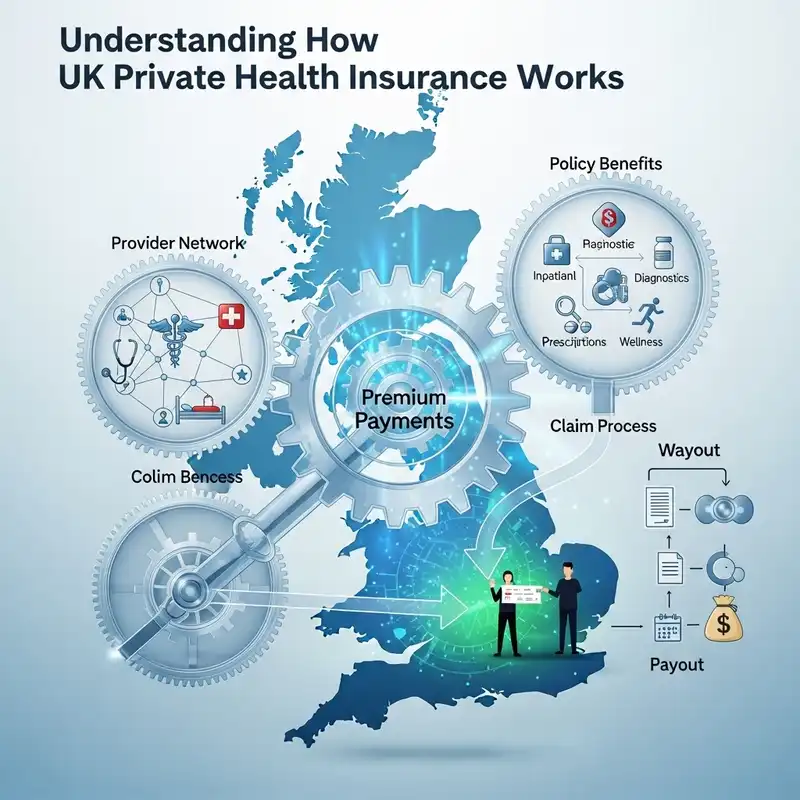
Navigating the New Health Reality: The Indispensable Role of Private Medical Insurance (PMI)
The conversation about financial wellbeing in 2025 is incomplete without addressing healthcare directly. The NHS is a national treasure, but it is under unprecedented strain. Data from NHS England regularly shows waiting lists in the millions, with long delays for diagnostics, consultations, and routine procedures.
This is where Private Medical Insurance (PMI) transitions from a 'nice-to-have' luxury to an essential component of a robust life plan.
PMI is not about replacing the NHS. Accidents and emergencies will, and should, still be handled by NHS A&E departments. Instead, PMI works alongside the NHS, offering you choice, speed, and comfort.
- Speed: PMI allows you to bypass lengthy waiting lists for specialist consultations, diagnostic scans (like MRI and CT), and planned surgeries. Getting a diagnosis quickly not only provides peace of mind but can be critical for a better treatment outcome, especially with conditions like cancer.
- Choice: You can often choose your specialist and the hospital where you are treated.
- Comfort: You benefit from private rooms, more flexible visiting hours, and other amenities that can make a stressful time more comfortable.
When you connect this back to our theme of unburdened growth, the value is clear. A health issue can derail your life for months, or even years, while you wait for treatment. This means time off work, lost income, and immense stress. PMI can shrink that disruption from months to weeks, reducing the financial and emotional fallout and allowing you to get back to your life, your work, and your family faster.
Beyond the Policy: A Holistic Approach to Your Wellbeing
Securing the right insurance policies is a monumental step towards financial security. But choosing the right ones from a sea of providers, each with different terms, conditions, and pricing, is a daunting task. This is where expert guidance is invaluable.
At WeCovr, we act as your personal guide through this complex landscape. We are expert, independent brokers, meaning we aren't tied to any single insurer. Our loyalty is to you. We take the time to understand your unique circumstances—your family, your career, your business, your goals—and then we search the entire market, comparing policies from all the major UK providers to find the cover that is not just the cheapest, but the best for you.
We believe that true wellbeing is a combination of protection and prevention. It's about securing your future financially while also taking proactive steps to look after your health today. This philosophy is why we go a step further for our clients.
Alongside the peace of mind that comes with a robust insurance portfolio, every WeCovr client receives complimentary access to CalorieHero, our exclusive AI-powered calorie and nutrition tracking app. This isn't just a gimmick; it's a reflection of our commitment to your holistic health. By helping you make healthier choices every day, we're empowering you to reduce your health risks while we handle the financial "what ifs." It's a complete circle of care.
Your Blueprint for Unburdened Living: Practical Steps to Secure Your Future
Feeling empowered? Here’s how to translate that into action and build your own financial fortress, step by step.
-
Conduct a Financial Health Check: Sit down and get a clear picture of your finances. What is your monthly income and expenditure? What debts do you have (mortgage, loans)? Who is financially dependent on you? What savings or existing cover do you have? You can't protect what you don't understand.
-
Assess Your Personal Risk Factors: Think honestly about your situation. Is your job physically demanding? Do you have a family history of certain medical conditions? Are you the primary breadwinner? This will help you prioritise which types of cover are most critical for you.
-
Prioritise Your Protection Needs: You may not be able to afford every type of cover at once. A typical hierarchy of importance is:
- Foundation: Income Protection (to protect your income stream).
- Pillars: Life Insurance and/or Critical Illness Cover (to protect your family and assets from debt).
- Enhancements: Private Medical Insurance (to protect your health and minimise disruption).
- Specialist: GIV, Key Person Insurance etc. (for specific legacy or business needs).
-
Speak to an Independent Expert: This is the single most effective step you can take. Instead of trying to decipher complex policy documents yourself, let an expert do the heavy lifting. A broker like WeCovr can perform a thorough needs analysis, explain your options in plain English, and find the most suitable and cost-effective solutions from across the market.
-
Embrace Proactive Wellness: Don't wait for a health scare to start looking after yourself. Small, consistent changes to your diet, exercise routine, and sleep habits can have a profound long-term impact. Use tools like nutrition trackers, go for a daily walk, prioritise sleep, and find healthy ways to manage stress. This is you taking control.
The Freedom to Grow: Your Future, Unburdened
Financial protection isn’t a morbid exercise in planning for disaster. It is the exact opposite. It is an optimistic act of self-care and love for your family. It's the process of systematically identifying the biggest potential obstacles to your life's plans and neutralising them.
It's about transforming the anxious question of "What if?" into the confident statement, "Even if..."
- "Even if I get sick, my income is protected."
- "Even if I'm diagnosed with a serious illness, my mortgage will be paid."
- "Even if the worst happens, my family will be financially secure."
This is the freedom that allows you to chase that promotion, start that business, be fully present during bedtime stories, and sleep soundly at night. By lifting the unseen anchor of financial uncertainty, you are free to navigate the waters of life with confidence, purpose, and the unburdened spirit required for true growth. Your future is waiting.
Is protection insurance expensive?
Do I need a medical to get protection insurance?
What if I have a pre-existing medical condition?
How much cover do I need?
Why use a broker like WeCovr instead of going direct to an insurer?
Sources
- Office for National Statistics (ONS): Mortality and population data.
- Association of British Insurers (ABI): Life and protection market publications.
- MoneyHelper (MaPS): Consumer guidance on life insurance.
- NHS: Health information and screening guidance.