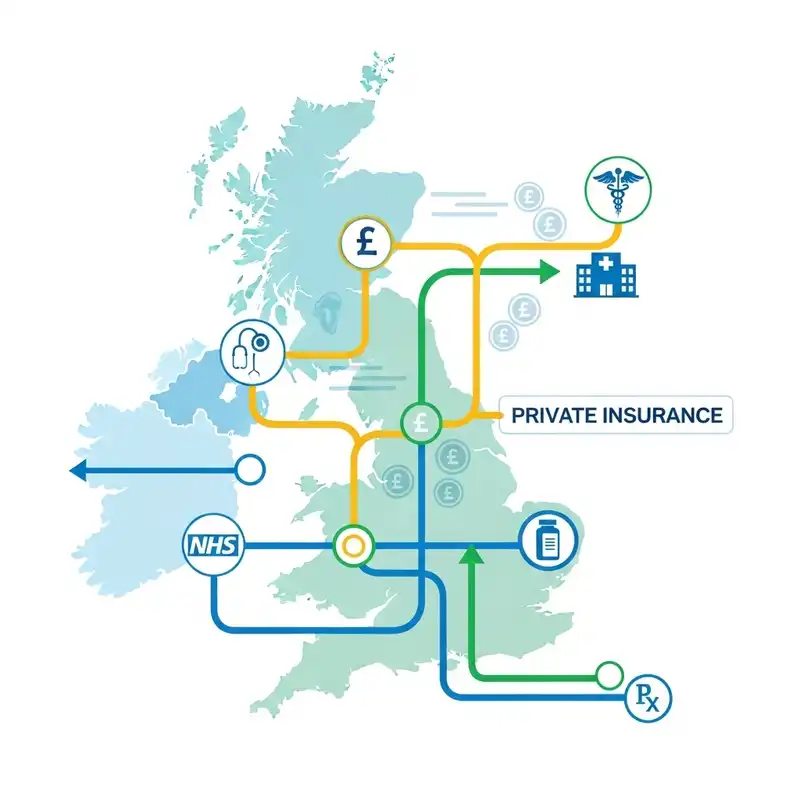
TL;DR
In our relentless pursuit of personal and professional growth, we champion hustle culture, devour self-help books, and download the latest mindfulness apps. We meticulously plan our careers, our fitness regimes, and our holidays. Yet, a fundamental piece of the growth puzzle is often overlooked, relegated to the 'someday' folder of life admin: proactive financial and health protection.
Key takeaways
- Dependents: Who relies on you financially? How long will they need support?
- Debts: What is your outstanding mortgage? Do you have car loans or credit card debt?
- Income: What is your monthly income, and what are your essential outgoings?
- Existing Cover: What protection do you already have through your employer? Is it enough? Read the small print.
- Clearing your mortgage or other debts.
Unlocking Growths Hidden Pillars
In our relentless pursuit of personal and professional growth, we champion hustle culture, devour self-help books, and download the latest mindfulness apps. We meticulously plan our careers, our fitness regimes, and our holidays. Yet, a fundamental piece of the growth puzzle is often overlooked, relegated to the 'someday' folder of life admin: proactive financial and health protection.
This isn't about morbidly dwelling on the worst-case scenario. It's the complete opposite. It's about intelligently and strategically removing the very anxieties that hold you back. It's about building a foundation so solid that you have the psychological freedom to take risks, chase ambitious goals, and live a life driven by purpose, not by fear.
The statistics are sobering. Projections from leading health organisations like Cancer Research UK indicate that 1 in 2 of us born after 1960 will be diagnosed with some form of cancer in our lifetime. The Financial Conduct Authority’s latest Financial Lives survey revealed that a quarter of UK adults have low financial resilience, meaning they could not withstand a financial shock. These aren't abstract numbers; they represent the real-world challenges that can derail even the most carefully laid plans.
By understanding and implementing robust protection strategies, you shift from a reactive state of worry to a proactive position of strength. This guide will demystify the key pillars of protection and show you how they act as a catalyst for unlocking your true potential.
The Psychological Weight of 'What If?'
Before we explore the solutions, it's crucial to understand the problem. Financial and health anxiety is a significant cognitive burden. It's a low-level, persistent hum of worry that occupies precious mental bandwidth.
- What if I get sick and can't work?
- How would my family cope financially if I weren't here?
- What if I need treatment and face a long NHS waiting list?
- How will I pay the mortgage if my income stops?
This constant loop of "what ifs" acts as a silent brake on your ambition. It makes you more risk-averse, less creative, and less likely to seize opportunities. In psychological terms, it relates directly to Maslow's Hierarchy of Needs. If your fundamental need for safety and security isn't met, it's incredibly difficult to focus on higher-level needs like esteem, self-actualisation, and personal growth.
Securing your financial and health foundation isn't just a defensive move; it's an offensive strategy for a richer, more fulfilling life. It frees your mind to focus on what truly matters: your family, your career, your passions, and your growth.
The Seven Pillars of Personal Protection: Building Your Fortress
Think of financial protection as the structural pillars of your life's ambitions. Each pillar supports a different aspect of your financial wellbeing, and together they create a fortress of resilience. Let's break down the essential components.
1. Life Insurance (Life Protection)
At its core, Life Insurance is an act of profound care for those you leave behind. It pays out a tax-free lump sum upon your death, providing a crucial financial lifeline for your dependents.
Who is it for?
- Anyone with a partner, children, or other relatives who depend on their income.
- Individuals with a mortgage or other significant debts that would pass to their estate or partner.
- Business owners, to help with succession planning or clearing business debts.
How it fuels growth: The peace of mind that comes from knowing your loved ones are protected is immeasurable. It allows you to pursue your goals without the guilt or worry that your ambition could leave them financially vulnerable. You can focus on building a legacy, knowing the foundations are secure.
There are two main types:
- Term Life Insurance: Covers you for a fixed period (e.g., the length of your mortgage). It's typically more affordable and ideal for covering specific liabilities.
- Whole of Life Insurance: Covers you for your entire life, guaranteeing a payout whenever you die. It's often used for inheritance tax planning or leaving a definite legacy.
2. Critical Illness Cover (CIC)
While Life Insurance covers death, Critical Illness Cover is designed for living. It pays a tax-free lump sum if you are diagnosed with one of a specific list of serious medical conditions, such as cancer, heart attack, or stroke.
Why is this so vital? Surviving a serious illness is only half the battle. The financial impact can be devastating. A CIC payout gives you choices and removes financial stress at a time when your only focus should be on recovery.
The funds can be used for anything:
- Clearing your mortgage or other debts.
- Paying for private medical treatment or specialist care.
- Adapting your home.
- Replacing lost income if you or a partner needs to stop working.
- Simply providing a buffer to allow you to recover without financial pressure.
Given the stark reality that 1 in 2 of us may face a cancer diagnosis, CIC is no longer a 'nice-to-have'; it's a fundamental part of a modern financial plan. (illustrative estimate)
3. Income Protection (IP)
Often described by financial experts as the one policy every working adult should consider, Income Protection is your financial safety net against illness or injury. If you're unable to work, it pays out a regular, tax-free monthly income until you can return to work, retire, or the policy term ends.
Don't confuse IP with Critical Illness Cover:
| Feature | Income Protection (IP) | Critical Illness Cover (CIC) |
|---|---|---|
| Payout Type | Regular monthly income | One-off lump sum |
| Trigger | Inability to do your job | Diagnosis of a specified illness |
| Coverage | Can cover any illness/injury | Only covers listed conditions |
| Duration | Can pay out for years | Single payout per claim |
Statutory Sick Pay (SSP) in the UK is just £116.75 per week (2024/25 rate) and only lasts for 28 weeks. For most people, this is a dramatic and unsustainable drop in income. Income Protection bridges this gap, protecting your lifestyle and financial commitments. (illustrative estimate)
By securing your income, you secure your ability to plan for the future. You can continue to save, invest, and live your life, even if your health temporarily puts your career on hold.
4. Family Income Benefit (FIB)
Family Income Benefit is a clever and often more affordable variation of traditional life insurance. Instead of paying out a large single lump sum on death, it provides a regular, tax-free monthly or annual income to your family.
How does it work? You choose the level of income and the term (e.g., until your youngest child turns 21). If you were to pass away during the term, the policy would pay that income for the remainder of the term.
Example: You take out a 20-year policy for £2,500 a month. If you die 5 years into the policy, your family will receive £2,500 a month for the remaining 15 years.
Why it's great for growth: It's a highly logical and budget-friendly way to cover core family living expenses. This 'income--based' approach makes it easier to quantify exactly what your family needs, ensuring your protection is efficient and cost-effective, freeing up capital for other goals.
5. Personal Sick Pay Insurance
This is a crucial product, particularly for those without a generous employer benefits package. It's essentially a short-term form of income protection.
Who needs it most?
- The Self-Employed & Freelancers: With no employer sick pay, your income stops the moment you do.
- Tradespeople (Electricians, Plumbers, Builders): Your work is physically demanding and often carries a higher risk of injury.
- Nurses & Healthcare Workers: While employed by the NHS, long-term sickness benefits can be complex and may not cover your full income indefinitely.
- Gig Economy Workers: Your income is directly tied to your ability to be present and working.
Personal Sick Pay policies typically have shorter deferment periods (the time before the policy starts paying out) than long-term Income Protection, often from day one or after just one week. They provide a vital immediate cushion, preventing a short-term illness from becoming a long-term financial crisis.
6. Private Health Insurance (PHI)
While we are all incredibly fortunate to have the NHS, the system is under immense strain. As of early 2025, NHS waiting lists in England remain a significant concern, with millions of people waiting for routine consultant-led treatment.
Private Health Insurance is not about replacing the NHS; it's about giving you and your family more options and faster access to care.
The Key Benefits:
- Speed: Prompt access to specialist consultations, diagnostic scans (like MRI and CT), and treatment.
- Choice: Greater choice over the specialist who treats you and the hospital you are treated in.
- Comfort: Access to private rooms, more flexible visiting hours, and other enhanced facilities.
- Access to New Treatments: Some policies provide cover for new drugs or treatments not yet available on the NHS.
By minimising waiting times and accelerating your diagnosis and treatment, PHI allows you to get back to health, back to work, and back to your life with minimal disruption. For an entrepreneur or key professional, this speed can be the difference between a business thriving or failing.
7. Gift Inter Vivos Insurance
This is a more specialised but powerful tool for estate planning. "Gift Inter Vivos" is a Latin term for a gift made during one's lifetime. Under UK Inheritance Tax (IHT) rules, if you gift a significant asset (like money or property) and then die within seven years, that gift may still be subject to IHT.
Gift Inter Vivos insurance is a specific type of life insurance policy designed to pay out a lump sum to cover this potential tax liability. It ensures that your intended beneficiaries receive the full value of your gift, without an unexpected tax bill. This is the ultimate form of forward-planning, securing your legacy and ensuring your generosity has the full intended effect.
The Entrepreneur's Shield: Protection for Business Owners
If you're a company director, self-employed professional, or freelancer, the stakes are even higher. Your personal and business finances are often intertwined, and you don't have the safety net of an employer. Specialised business protection is not a luxury; it's a cornerstone of a sustainable business.
As an expert broker, at WeCovr we frequently guide business owners through these essential, yet often overlooked, solutions.
Key Person Insurance
Question: Who is the most important asset in your business? Is it a star salesperson, a technical genius, or you?
Key Person Insurance protects the business itself from the financial fallout of losing such a vital individual to death or critical illness. The policy is owned and paid for by the business, and the payout goes to the business.
This money can be used to:
- Recruit and train a replacement.
- Cover lost profits during the disruption.
- Reassure lenders and investors.
- Clear business loans that the key person may have guaranteed.
Executive Income Protection
This is an Income Protection policy that is paid for by your limited company, for you as an employee/director. It works just like a personal policy, but the premiums are typically classed as an allowable business expense, making it highly tax-efficient. It's a way for your business to provide you with a premier-level benefit, protecting both you and, by extension, the business that relies on your leadership.
Relevant Life Cover
For small businesses that are not large enough to set up a full 'death-in-service' group scheme, Relevant Life Cover is a game-changer. It's a company-paid, individual life insurance policy for an employee or director.
The Benefits:
- The payout goes directly to the individual's family, free of IHT.
- Premiums are generally an allowable business expense for the company.
- It's not treated as a 'benefit-in-kind', so there's no extra income tax for the employee.
It's one of the most tax-efficient ways for a director to arrange life insurance for their family.
| Protection Type | Who is Protected? | Who Pays? | Who Receives the Payout? | Key Tax Benefit |
|---|---|---|---|---|
| Key Person | The business | The business | The business | Premiums may be tax-deductible |
| Executive IP | The director/employee | The business | The director/employee | Premiums are a business expense |
| Relevant Life | The director's/employee's family | The business | The family/dependents | Not a benefit-in-kind; tax-efficient |
From Safety Net to Springboard: How Protection Fuels Growth
Now, let's tie it all together. How does having a robust protection portfolio translate directly into personal growth?
1. It Creates the Freedom to Take Calculated Risks: Want to leave your stable job to start a business? With your income protected and your family's future secure, that leap of faith becomes a calculated business decision, not a terrifying gamble. The psychological barrier to entry is lowered dramatically.
2. It Boosts Your Financial Confidence: Knowing your downside is protected gives you the confidence to be more ambitious with your upside. You might feel more comfortable making long-term investments, taking on a promotion with more responsibility, or investing in your own education and skills, knowing that a health setback won't wipe out your progress.
3. It Preserves Your Mental Energy: As we've discussed, anxiety is draining. By outsourcing your financial worries to a structured insurance plan, you reclaim that mental energy. You can channel it into creativity, problem-solving, being present with your family, and focusing on your goals.
4. It Builds Unshakeable Resilience: True resilience isn't about never falling; it's about having the systems in place to get back up quickly. If illness strikes, your protection plan is your recovery system. It handles the financial stress, gives you access to the best care, and allows you to focus 100% on getting well. This is resilience in action.
A Holistic Approach: Beyond the Financial Policy
The best protection strategies in 2025 and beyond are about more than just a cheque. Modern insurance providers increasingly include a suite of wellness benefits designed to keep you healthy.
These can include:
- 24/7 Virtual GP services: Get medical advice from the comfort of your home.
- Mental health support: Access to counselling and therapy sessions.
- Fitness and nutrition programmes: Discounts on gym memberships and access to health apps.
- Second medical opinion services: Get a world-leading expert to review your diagnosis and treatment plan.
At WeCovr, we champion this holistic view. We believe that protecting your health and wealth are two sides of the same coin. It's why, in addition to helping our clients compare plans from every major UK insurer to find the perfect fit, we go a step further. We provide our clients with complimentary access to our proprietary AI-powered calorie tracking app, CalorieHero. It’s our way of investing in your proactive wellbeing, helping you build healthy habits that are the first line of defence against illness.
A balanced diet, regular exercise, and sufficient sleep are the foundations of good health. Small, consistent efforts in these areas can significantly reduce your risk of developing many of the conditions that protection policies cover.
Your Action Plan: Moving from Anxiety to Empowerment
Feeling motivated? Here’s a simple, four-step plan to build your own fortress of protection.
Step 1: Assess Your Current Position Take a clear-eyed look at your life.
- Dependents: Who relies on you financially? How long will they need support?
- Debts: What is your outstanding mortgage? Do you have car loans or credit card debt?
- Income: What is your monthly income, and what are your essential outgoings?
- Existing Cover: What protection do you already have through your employer? Is it enough? Read the small print.
Step 2: Identify Your Gaps and Priorities Based on your assessment, where are you most vulnerable?
| If your main concern is... | The priority product might be... |
|---|---|
| Your family's welfare after you're gone | Life Insurance or Family Income Benefit |
| The financial impact of a major illness | Critical Illness Cover |
| Losing your salary due to any sickness/injury | Income Protection |
| NHS waiting lists and access to care | Private Health Insurance |
| You are a freelancer or tradesperson | Personal Sick Pay Insurance |
| Your business surviving without you | Key Person Insurance |
Step 3: Understand the Costs The cost of protection varies based on your age, health, lifestyle (e.g., whether you smoke), the amount of cover, and the policy type. However, it is often far more affordable than people think. Getting cover when you are young and healthy is the most cost-effective strategy.
Step 4: Seek Independent, Expert Advice The UK protection market is vast and complex. Policies, definitions, and pricing vary significantly between insurers. Trying to navigate this alone can be overwhelming and lead to costly mistakes.
This is where an independent broker like WeCovr becomes your most valuable asset. Our role is to understand your unique situation, scan the entire market on your behalf, and translate the jargon. We can help you layer different types of cover to create a comprehensive and cost-effective plan that is perfectly tailored to your life and your ambitions.
Building your pillars of protection is one of the most empowering financial decisions you will ever make. It transforms anxiety into action, fear into freedom, and provides the hidden foundation upon which true, unshakeable personal growth is built.
Is this type of insurance not incredibly expensive?
Do I need to have a full medical examination to get cover?
Can I get cover if I have a pre-existing medical condition?
Can I trust insurance companies to actually pay out?
What is the main difference between Income Protection and Critical Illness Cover?
Sources
- Office for National Statistics (ONS): Mortality and population data.
- Association of British Insurers (ABI): Life and protection market publications.
- MoneyHelper (MaPS): Consumer guidance on life insurance.
- NHS: Health information and screening guidance.
Disclaimer: This is general guidance only and does not constitute formal tax or financial advice. Tax treatment depends on individual circumstances, policy terms, and HMRC interpretation, which cannot be guaranteed in advance. Whenever applicable, businesses and individuals should always consult a qualified accountant or tax adviser before arranging such policies.
Measure your family’s protection gap, then get the right life cover quote
Start with the score to see whether your family would face a real financial shortfall before moving on to life cover options.
Check what happens if someone dies too soon
See whether debt, dependants and mortgage risk are covered
Move into tailored life cover options after the score
Get your score
Your next best move
Get your score in minutes, then decide what kind of protection help would be most useful.
Score your household protection
See how well your current setup protects dependants, debt and major commitments.
Find the shortfall
Know whether life cover, critical illness or income protection is the actual missing piece.
Continue to tailored life cover
If life cover is the gap, continue to tailored life cover options.
What you get
A quick view of your current protection position
A clearer idea of where the biggest gaps may be
A direct route to tailored help if you want it