TL;DR
The world feels more uncertain than ever. We strive for personal and professional growth, building careers, nurturing families, and chasing our dreams. Yet, beneath the surface of our ambitions lies a fragile truth: our health and our ability to earn an income are the bedrock of everything we build.
Key takeaways
- Clear your mortgage or other significant debts.
- Adapt your home for new mobility needs.
- Pay for private medical treatments not available on the NHS.
- Replace lost income for you or a partner who takes time off to care for you.
- Have shorter payment periods (usually 12 or 24 months per claim).
Unlocking Resilience Your Growth Shield
The world feels more uncertain than ever. We strive for personal and professional growth, building careers, nurturing families, and chasing our dreams. Yet, beneath the surface of our ambitions lies a fragile truth: our health and our ability to earn an income are the bedrock of everything we build. When that foundation is shaken, the entire structure is at risk.
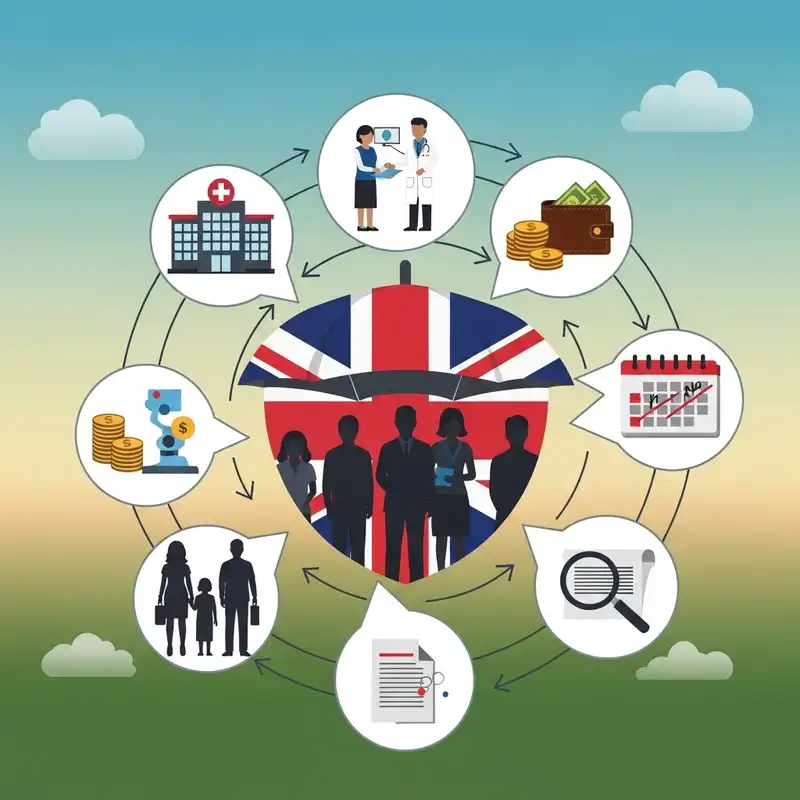
This isn't about dwelling on the worst-case scenario. It's about acknowledging a new reality with courage and foresight. It's about building a 'Growth Shield'—a robust financial and personal safety net that doesn't just protect you from falling, but empowers you to climb higher, safe in the knowledge that you are secure. True resilience isn't just about surviving setbacks; it's about creating the conditions to flourish, no matter what life throws your way. This guide is your blueprint to do exactly that.
The New Reality: Understanding the Risks in Modern Britain
To build an effective shield, you must first understand what you're shielding against. The landscape of personal risk in the UK has shifted, and awareness is the first step towards proactive protection.
The Uncomfortable Truth: The Rising Tide of Serious Illness
The statistic is stark, and it deserves our full attention. Research from Cancer Research UK projects that 1 in 2 people in the UK will be diagnosed with cancer in their lifetime. This isn't a distant, abstract number; it's a reality that will touch almost every family, friendship circle, and workplace. (illustrative estimate)
While medical advancements mean survival rates are better than ever, a diagnosis is just the beginning of a long journey. The financial implications can be devastating:
- Income Shock: Extended time off work can mean a significant drop in earnings, especially for the self-employed or those on zero-hours contracts.
- Hidden Costs (illustrative): The financial burden extends far beyond lost wages. Travel to specialist hospitals, increased utility bills from being at home more, prescription costs, and dietary changes all add up. Macmillan Cancer Support estimates that for 83% of people with cancer, the diagnosis comes with a financial cost, which on average is £891 a month.
- Career Interruption: A serious illness can pause or even derail a career trajectory, impacting future earning potential and pension contributions.
The Everyday Risks: A Spotlight on High-Stakes Professions
While a critical illness can affect anyone, some professions carry a higher daily risk of life-altering injury. Our skilled tradespeople, dedicated nurses, and essential electricians are the backbone of our economy, but their work often exposes them to greater physical danger.
According to the Health and Safety Executive (HSE) for 2023/2024, an estimated 561,000 workers sustained a non-fatal injury at work. Furthermore, an estimated 1.8 million workers were suffering from work-related ill health.
Consider the reality for:
- Tradespeople (Builders, Plumbers, Roofers): A fall from a ladder or an injury from machinery doesn't just mean a trip to A&E; it can mean weeks or months with no income. Without a safety net, mortgage payments, tool financing, and family bills become an immediate source of immense stress.
- Nurses and Healthcare Workers: The physical demands of lifting patients and long hours on their feet lead to a high incidence of musculoskeletal disorders. The emotional toll can also lead to burnout and mental health challenges, forcing time away from a career they love.
- Electricians: The risk of electric shock, burns, or falls is ever-present. A single accident can result in injuries that prevent them from ever returning to the trade, necessitating a complete career change and reskilling.
For these professionals, standard Statutory Sick Pay (SSP)—currently just £116.75 per week—is simply not enough to sustain a household. This is where personal responsibility and foresight become paramount. (illustrative estimate)
Building Your Foundation: Core Protection for Every Individual
Your Growth Shield starts with a solid foundation. These core insurance products are the non-negotiable building blocks for financial security, tailored to protect against life's most significant challenges.
Life Insurance: The Cornerstone of Your Legacy
Life Insurance is the simplest and most fundamental form of protection. It may pay out a lump sum (subject to claim acceptance) if you pass away during the policy's term. This money provides an instant financial buffer for your loved ones, ensuring they aren't left with debts and financial worries at the most difficult time.
There are two primary types:
- Level Term Assurance: The claim payment amount remains the same throughout the policy term. This is ideal for covering an interest-only mortgage or providing a set lump sum for your family's future.
- Decreasing Term Assurance: The claim payment amount reduces over time, typically in line with a repayment mortgage. As you pay off your mortgage, the amount of cover needed decreases, making this a more affordable option.
| Feature | Level Term Assurance | Decreasing Term Assurance |
|---|---|---|
| Claim payment Amount | Stays the same | Decreases over time |
| Primary Use | Family protection, interest-only mortgages | Repayment mortgages |
| Cost | More expensive | More affordable |
Who needs it? Anyone with financial dependents: partners, children, or even ageing parents who rely on your income. If you have a mortgage, it's considered essential.
Critical Illness Cover (CIC): A Lifeline When You Need It Most
What if you don't pass away, but a serious illness prevents you from working? This is where Critical Illness Cover steps in. It may pay out a potentially tax-efficient lump sum on the diagnosis of a specific, pre-defined serious condition.
The 'big three' conditions typically covered are cancer, heart attack, and stroke, but modern policies may cover over 50 specified conditions, including multiple sclerosis, major organ transplant, and Parkinson's disease.
This lump sum is yours to use as you see fit, providing crucial breathing space:
- Clear your mortgage or other significant debts.
- Adapt your home for new mobility needs.
- Pay for private medical treatments not available on the NHS.
- Replace lost income for you or a partner who takes time off to care for you.
The key is in the policy's definitions. This is where regulated guidance from a specialist at WeCovr or one of our broker partners is invaluable. We can help you navigate the small print to find a policy with comprehensive definitions that offer the robust protection you need.
Shielding Your Greatest Asset: The Power of Income Protection
For most of us, our ability to earn a monthly income is our single greatest financial asset. It pays the mortgage, puts food on the table, and funds our future. So, what happens when that income stops due to illness or injury?
Income Protection (IP): Your Personal Salary
Income Protection is arguably the most important insurance you can own. Unlike the lump sum from CIC, IP provides a regular, potentially tax-efficient monthly income if you're unable to work. It's designed to replace a significant portion of your lost earnings, allowing you to maintain your lifestyle and meet your financial commitments while you focus on recovery.
Key features to understand:
- The Deferred Period: This is the waiting period before the policy starts paying out, chosen by you. It can range from 4 weeks to 12 months. The longer the deferred period you choose (e.g., to match your employer's sick pay period), the lower your premiums.
- The Payment Period: This is how long the policy may pay out for. It can be a fixed term (e.g., 2 or 5 years per claim) or, ideally, until you return to work, retire, or the policy ends.
- Definition of Incapacity: This is the most critical part of an IP policy. It determines the criteria you must meet to make a successful claim.
| Definition | Explanation | Who It's Best For |
|---|---|---|
| Own Occupation | May pay out if you are unable to do your specific job. | Everyone, especially skilled professionals (surgeons, electricians). This is the gold standard. |
| Suited Occupation | May pay out if you can't do your own job or a similar one based on your skills/experience. | A less robust option. |
| Any Occupation | May pay out only if you are unable to do any kind of work at all. | The weakest definition; generally best avoided if possible. |
Personal Sick Pay: Short-Term Cover for Hands-On Workers
For those in riskier jobs like tradespeople or workers in the gig economy, a traditional long-term IP policy might seem complex. Personal Sick Pay (also known as Accident, Sickness & Unemployment cover) offers a simpler, more accessible alternative.
These policies typically:
- Have shorter payment periods (usually 12 or 24 months per claim).
- Offer simpler underwriting and quicker setup.
- Provide a vital safety net to cover immediate bills and living costs during a recovery period.
It's an excellent entry-level product that provides crucial peace of mind for those whose income is directly tied to their physical ability to work each day.
Tailored Solutions for Families and Legacies
Beyond the core products, specialised insurance can address specific family needs and help you plan your financial legacy with confidence.
Family Income Benefit (FIB): A Smarter Way to Protect Your Family
While a large lump sum from a traditional life insurance policy is valuable, managing it can be a challenge for a grieving family. Family Income Benefit offers an intelligent alternative.
Instead of a single claim payment on death, FIB provides a regular, potentially tax-efficient monthly or annual income to your family. This income is paid from the time of the claim until the end of the policy term.
Why is this so powerful for young families?
- Mirrors a Salary: It directly replaces the lost monthly income, making budgeting for ongoing costs like mortgage payments, school fees, and household bills simple and stress-free.
- Highly Affordable: Because the potential total claim payment decreases as the policy term progresses, FIB is often significantly cheaper than a level term policy for the same level of initial protection.
- Peace of Mind: It ensures your family's lifestyle can continue without the pressure of managing a large investment.
Gift Inter Vivos: Securing Your Legacy from the Tax Man
Prudent estate planning often involves gifting assets—property or cash—to your children or grandchildren during your lifetime. However, under UK Inheritance Tax (IHT) rules, these gifts may still be liable for tax if you pass away within seven years of making them. This is known as the '7-year rule'.
Gift Inter Vivos Insurance is a specialised life insurance policy designed to solve this problem.
- It's a form of decreasing term assurance where the potential claim payment reduces over the seven years, mirroring the decreasing IHT liability on the gift.
- If you die within the seven-year window, the policy may pay out a lump sum to cover the unexpected tax bill.
- This ensures your beneficiaries receive the full value of your gift, protecting your generosity and securing your legacy exactly as you intended.
For the Business Visionaries: Protecting Your Enterprise
For company directors, business owners, and the self-employed, the line between personal and professional finance is often blurred. An illness or accident doesn't just affect your family; it can threaten the very survival of the business you've worked so hard to build.
Key Person Insurance: Protecting Your Most Valuable Asset
Who is indispensable to your business? A top salesperson? A technical genius with unique knowledge? Perhaps it's you. Key Person Insurance protects your business from the financial fallout of losing a vital team member to death or critical illness.
The policy is owned and paid for by the business, and the business is the beneficiary. The claim payment provides a crucial cash injection to:
- Cover the costs of recruiting and training a replacement.
- Repay business loans or reassure lenders and investors.
- Compensate for a loss of profits or a cancelled project during the disruption.
- Enable a smooth winding-down of the business if necessary.
Executive Income Protection: A Tax-Efficient Director's Benefit
As a company director, you can arrange an Executive Income Protection policy. This works just like a personal IP policy, providing a replacement income if you're unable to work.
The crucial difference is that the company pays the premiums. This has significant advantages:
- For the Business: The premiums are typically treated as an allowable business expense, reducing the company's corporation tax bill.
- For the Director: It's not usually treated as a P11D benefit-in-kind, meaning no extra income tax to pay. The claim payment is made to the company, which then distributes it to you via PAYE, ensuring National Insurance contributions continue.
It's a highly tax-efficient way to secure your personal income while providing a legitimate business benefit.
Bypassing the Queue: The Role of Private Medical Insurance (PMI)
The NHS is a national treasure, but it's under unprecedented strain. According to the latest NHS England data, the waiting list for routine consultant-led elective care stood at around 7.54 million in early 2025. This figure represents treatments, not individuals, but underscores the long waits many face for diagnosis and procedures.
Long waits don't just cause physical discomfort; they create immense anxiety and can prolong your time off work. Private Medical Insurance (PMI) offers a powerful solution.
How PMI Provides Peace of Mind
PMI is a health insurance policy that covers the cost of private healthcare, from diagnosis to treatment. Its primary benefit is speed of access.
- Prompt Diagnosis: Get quick referrals to see a specialist consultant, often within days.
- Advanced Diagnostics: Fast access to MRI, CT, and PET scans to get a clear picture of your health.
- Choice and Comfort: Choose your surgeon and hospital, and recover in the comfort of a private room.
- Access to Specialist Treatments: Some policies provide access to new drugs or treatments not yet available on the NHS.
A PMI policy acts as a partner to your protection insurance. While Income Protection secures your finances, PMI aims to get you diagnosed and treated faster, helping you return to health and work sooner. A specialist at WeCovr or one of our broker partners can help clients create a holistic plan, often combining robust protection with a tailored PMI policy to cover all angles.
Beyond Insurance: Cultivating Everyday Resilience
A true Growth Shield isn't just about financial firewalls; it's also about building personal resilience through proactive health and wellness. Empowering your life means taking control of the factors you can influence every day.
The Power of Proactive Health
Small, consistent habits have a profound impact on your long-term health, reducing your risk of many of the conditions that protection insurance covers.
- Nourish Your Body: A balanced diet rich in fruits, vegetables, and whole grains is linked to a lower risk of heart disease, type 2 diabetes, and certain cancers.
- Move Every Day: The NHS recommends at least 150 minutes of moderate-intensity activity a week. This could be a brisk walk, a bike ride, or a swim. Regular exercise boosts both physical and mental health.
- Prioritise Sleep: Quality sleep is vital for cellular repair, cognitive function, and emotional regulation. Aim for 7-9 hours per night.
- Manage Stress: Chronic stress weakens the immune system. Incorporate mindfulness, meditation, or simple hobbies into your routine to decompress.
WeCovr believes in supporting our clients' complete journey to wellbeing. That's why, in addition to expert insurance advice, we provide our clients with complimentary access to CalorieHero, our exclusive AI-powered calorie and nutrition tracking app. It’s a simple tool to help you make informed, healthy choices every day, demonstrating our commitment to your proactive wellness.
Taking Control: Your Blueprint for a Resilient Future
You are now armed with the knowledge to build your own Growth Shield. The final step is to take action. Here is a simple blueprint to guide you.
Step 1: Conduct a Personal Audit Sit down and honestly assess your situation.
- Finances: What are your monthly outgoings? What debts do you have (mortgage, loans)? What savings?
- Dependents: Who relies on your income? Your partner, children, parents?
- Existing Cover: Do you have any cover through work (sick pay, death-in-service)? Is it enough? Read the small print.
Step 2: Identify Your Gaps Based on your audit, where are you most vulnerable?
- If you have a young family and a mortgage, Life Insurance and/or Family Income Benefit are critical.
- If you are self-employed, Income Protection is non-negotiable.
- If you worry about the impact of a serious illness, Critical Illness Cover provides a vital lump sum.
- If you are a company director, explore the tax-efficient benefits of Executive IP and Key Person cover.
Step 3: Seek Expert, Regulated Advice The world of insurance is complex, with dozens of providers and policies. Going direct to an insurer means you only see one set of products. Using a panel-based broker is the smarter choice.
An expert adviser at a brokerage like WeCovr acts as your personal guide. We will:
- Take the time to understand your unique circumstances and budget.
- Scan the entire UK market to find the most suitable and competitive policies.
- Explain the jargon and policy definitions in plain English.
- Help you complete the application forms correctly, ensuring your policy is valid when you need it most.
Step 4: Review and Adapt Your Growth Shield is not a "set it and forget it" tool. Your life will change, and your protection needs will evolve. It's crucial to review your cover every few years, or after any major life event:
- Getting married or divorced.
- Having a child.
- Buying a new home or taking on a larger mortgage.
- Changing jobs or starting a business.
Building resilience is the ultimate act of self-investment. It's the conscious decision to protect your potential, your family, and your future. It's the freedom to pursue growth, knowing you have a shield that allows you to thrive, come what may.
Is life insurance expensive?
Do I need Income Protection if I have sick pay from work?
What's the difference between Critical Illness Cover and Income Protection?
Can I get cover if I have a pre-existing medical condition?
Why should I use a WeCovr specialist or one of our broker partners instead of going direct to an insurer?
Sources
- Office for National Statistics (ONS): Mortality and population data.
- Association of British Insurers (ABI): Life and protection market publications.
- MoneyHelper (MaPS): Consumer guidance on life insurance.
- NHS: Health information and screening guidance.
Important Information and Risks
No advice: This article is for general information only. It is not financial, legal, insurance, or tax advice, and it is not a personal recommendation. WeCovr does not assess your individual circumstances or recommend a specific product through this article.
Policy exclusions and underwriting: Insurance policies, including life insurance, private medical insurance, critical illness cover, and income protection, are subject to insurer underwriting, eligibility, acceptance criteria, terms, conditions, limits, and exclusions. Pre-existing medical conditions may be excluded, restricted, or accepted on special terms unless an insurer confirms otherwise in writing.
Tax treatment: References to tax treatment, HMRC rules, or business reliefs are based on current UK legislation and guidance, which can change. Tax treatment depends on your personal or business circumstances and may differ from examples in this article.
Before you buy: Always read the Insurance Product Information Document (IPID), policy summary, and full policy terms before buying, renewing, changing, or keeping cover. If you are unsure whether a policy is suitable for you, speak to an insurance adviser.
Measure your family’s protection gap, then get the right life cover quote
Start with the score to see whether your family would face a real financial shortfall before moving on to life cover options.
Check what happens if someone dies too soon
See whether debt, dependants and mortgage risk are covered
Move into tailored life cover options after the score
Get your score
Your next best move
Get your score in minutes, then decide what kind of protection help would be most useful.
Score your household protection
See how well your current setup protects dependants, debt and major commitments.
Find the shortfall
Know whether life cover, critical illness or income protection is the actual missing piece.
Continue to tailored life cover
If life cover is the gap, continue to tailored life cover options.
What you get
A quick view of your current protection position
A clearer idea of where the biggest gaps may be
A direct route to tailored help if you want it