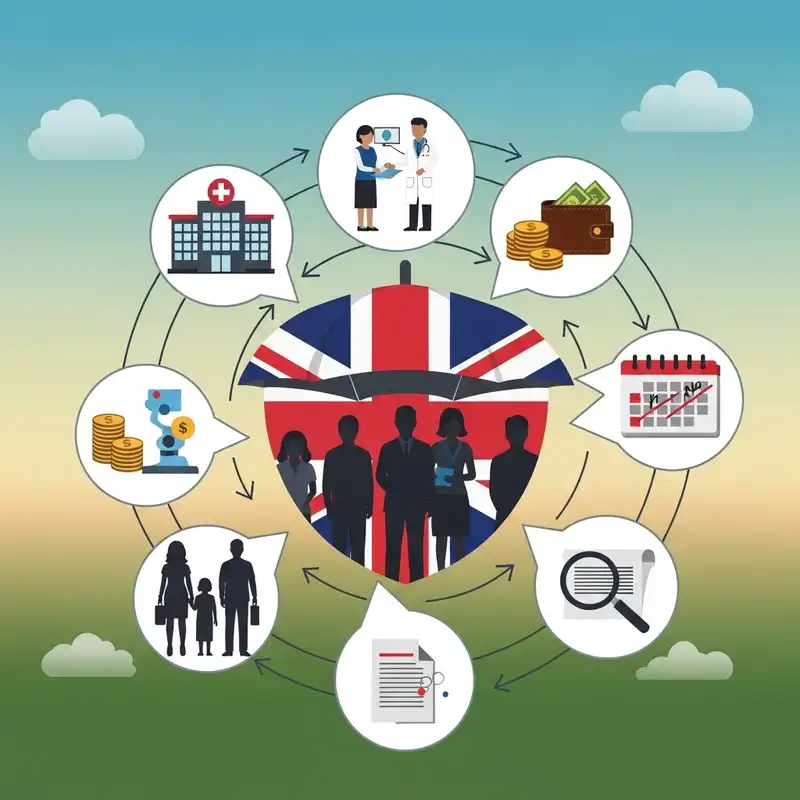
TL;DR
In our relentless pursuit of personal growth, we're bombarded with advice. We're told to cultivate a growth mindset, practise daily meditation, journal our intentions, and optimise our morning routines. While these are all valuable tools, they form only part of the equation.
Key takeaways
- Assess Your Reality: Don't bury your head in the sand. What are your monthly outgoings? How much do you have in savings? What sick pay would you get from your employer, if any, and for how long? Face the numbers head-on.
- Identify Your Vulnerabilities: What is your biggest risk? Is it a short-term injury, a long-term illness, or the financial impact on your family if you were gone? Be honest about where your current plan is weakest.
- Seek Expert Guidance: The world of protection insurance can be complex. An expert broker can be your guide. A service like WeCovr doesn't just sell you a policy; we take the time to understand your unique circumstances, work, and family life. We then search the entire market to find the right solutions at the right price, explaining the options in plain English.
- Review and Adapt: Your life isn't static, and your protection shouldn't be either. Review your cover every few years, or after a major life event like getting married, buying a home, having a child, or starting a business.
- Knowing your mortgage or rent will be paid if you're too ill to work.
Unlocking Your Lifes Potential the New Growth Equation
In our relentless pursuit of personal growth, we're bombarded with advice. We're told to cultivate a growth mindset, practise daily meditation, journal our intentions, and optimise our morning routines. While these are all valuable tools, they form only part of the equation. There is a silent, foundational element that, when absent, can cause the entire structure of our personal development to crumble: financial resilience.
Imagine trying to meditate peacefully when a symphony of anxiety about unpaid bills is playing in your mind. Or attempting to foster a growth mindset when the fear of losing your income due to illness keeps you trapped in a state of survival. The truth is, you cannot self-actualise from a position of chronic financial stress.
This is the new growth equation. It acknowledges that true, sustainable personal and relational development isn't just an internal game. It's built upon a bedrock of security. This guide explores how strategically protecting your financial wellbeing through modern insurance solutions is not just a defensive move; it's a profoundly proactive step towards unlocking your full potential, nurturing your relationships, and thriving in an unpredictable world.
The Modern Maslow's Hierarchy: Why Financial Safety is Your Launchpad
You may remember Maslow's Hierarchy of Needs from school. It's a pyramid structure illustrating human motivations. At the base are our physiological needs (air, water, food), followed by safety needs (personal security, employment, health, property). Only when these are met can we move up to seek love and belonging, esteem, and finally, self-actualisation—the realisation of our full potential.
In the 21st century, the 'Safety Needs' tier has a distinctly financial flavour. It means:
- Knowing your mortgage or rent will be paid if you're too ill to work.
- Having the resources to access the best medical care without devastating waiting lists or costs.
- Ensuring your family won't face financial hardship if you are no longer there.
- Having the stability to keep your business afloat during a personal health crisis.
Financial resilience is the modern interpretation of this safety need. Without it, we remain stuck at the bottom of the pyramid, operating from a place of fear and scarcity. Financial stress doesn't just affect our bank balance; it hijacks our cognitive resources, sabotaging our ability to think clearly, plan for the future, and be present in our relationships.
According to a recent study by the Money and Pensions Service, nearly 18 million UK adults report feeling anxious or stressed due to their financial situation. This isn't a peripheral issue; it's a central barrier to wellbeing and growth.
The High Cost of Uncertainty: How Financial Stress Sabotages Your Life
Financial anxiety is more than just a passing worry. It's a chronic stressor that permeates every aspect of our lives, acting as a powerful antagonist to personal development.
1. Mental and Physical Health Corrosion: The link between money worries and mental health is undeniable. The constant pressure can lead to anxiety, depression, and sleep deprivation. The ONS reported in late 2024 that adults experiencing financial vulnerability were significantly more likely to report symptoms of depression. This mental toll has a physical manifestation. Chronic stress elevates cortisol levels, which is linked to a weakened immune system, high blood pressure, and an increased risk of heart disease. You can't build a better you if your foundational health is being eroded from within.
2. Relationship Strain: Money is a leading cause of conflict in relationships. Financial stress can lead to arguments, blame, and a breakdown in communication. When one partner is worried about income, or if a health crisis strikes without a financial plan, the strain can become immense. Building financial resilience together, through open conversations and shared protection plans, transforms a point of conflict into a source of unity and strength.
3. Decision-Making Paralysis: When you're in survival mode, your brain's prefrontal cortex—responsible for long-term planning and rational decision-making—takes a backseat. You're more likely to make short-sighted choices out of desperation rather than strategic moves for your future. This applies to career choices ("I can't leave this toxic job, I need the security"), business investments ("I can't risk expanding, what if I get sick?"), and personal goals. Financial security frees up the mental bandwidth required for creative thinking and bold, life-enhancing decisions.
4. Stifled Career and Business Growth: For the self-employed, freelancers, and company directors, the fear of "what if?" can be a powerful handbrake on ambition.
- Will you take on that bigger project if it means relying on your health to see it through?
- Will you hire that key employee if you fear the business couldn't survive your own prolonged absence?
- As a freelancer, can you truly turn down draining clients to focus on passion projects if you have no safety net?
Financial protection removes these "what ifs," transforming them from terrifying possibilities into manageable risks. It provides the confidence to take the calculated leaps necessary for growth.
Building Your Financial Fortress: The Four Pillars of Personal Protection
Creating financial resilience isn't about hoping for the best; it's about planning for the worst so you can live your best. Modern insurance products are the materials you use to build this fortress. They are not simply expenses; they are investments in your peace of mind, your potential, and your family's future.
Pillar 1: Income Protection – Your Monthly Paycheque When You Can't Work
For most of us, our ability to earn an income is our single greatest asset. It underpins everything. Income Protection (IP) is designed to protect it.
What is it? Income Protection insurance pays you a regular, tax-free monthly income if you are unable to work due to any illness or injury. It's designed to replace a significant portion of your lost earnings, allowing you to cover essential outgoings like your mortgage, rent, bills, and food.
Who is it for? Everyone who works. But it is especially critical for:
- The Self-Employed and Freelancers: You have no sick pay from an employer to fall back on. Your income stops the day you do.
- Company Directors: While you may have more control, your business and personal finances are often intertwined. An IP policy ensures your personal bills are covered, relieving pressure on the business.
- 'Everyday Heroes' in Physical Jobs: Tradespeople, nurses, construction workers, and electricians often face higher physical risks. An injury that might be an inconvenience for an office worker could be career-pausing for you.
- Anyone relying on Statutory Sick Pay (SSP) (illustrative): SSP is currently just £116.75 per week (2024/25 rate). For most people, this is a dramatic and unsustainable drop in income.
Key Features of Income Protection:
| Feature | Description | Why It Matters for Growth |
|---|---|---|
| Monthly Benefit | A percentage of your gross salary (typically 50-70%) paid tax-free. | Maintains your lifestyle and removes the primary source of financial stress during illness. |
| Deferment Period | The waiting period before payments start (e.g., 4, 13, 26, 52 weeks). | You can align this with your employer's sick pay or savings to manage premium costs. |
| Payment Term | Can pay out for a limited period (e.g., 1, 2, 5 years) or until you return to work, retire, or the policy ends. | Long-term cover provides the ultimate peace of mind for serious, long-lasting conditions. |
| 'Own Occupation' Cover | The gold standard. It pays out if you cannot do your specific job, not just any job. | Crucial for specialists. A surgeon with a hand tremor can't do their job, even if they could work in an office. |
Relying on state benefits is not a viable strategy. Income Protection is the difference between surviving and thriving during a health setback. It gives you the time and space to recover properly without the crushing weight of financial ruin, allowing you to focus on getting back to your life and work.
Pillar 2: Critical Illness Cover – A Financial Lifeline in a Crisis
While Income Protection replaces your monthly salary, Critical Illness Cover (CIC) provides a one-off, tax-free lump sum if you are diagnosed with a specific, serious illness defined in the policy.
What is it for? The financial impact of a serious illness like cancer, a heart attack, or a stroke goes far beyond a loss of income. A CIC payout can be used for anything you need, providing total flexibility at a time of immense stress. Common uses include:
- Paying off the mortgage: Removing your largest monthly outgoing provides incredible breathing room.
- Covering private medical treatment: Accessing treatments or specialists not available on the NHS.
- Adapting your home: Installing a ramp or a stairlift after a stroke, for example.
- Replacing lost income for a partner who takes time off to care for you.
- Funding a recuperative trip or simply taking time to recover without financial pressure.
The Association of British Insurers (ABI) regularly reports that well over 90% of critical illness claims are paid out, with cancer, heart attack, and stroke being the most common reasons for a claim. This demonstrates the real-world value of this cover.
Example Critical Illness Conditions (Varies by Insurer):
| Condition Category | Examples |
|---|---|
| Cancer | Most types of invasive cancer are covered. |
| Heart Conditions | Heart Attack, Coronary Artery Bypass Surgery. |
| Neurological | Stroke, Multiple Sclerosis, Motor Neurone Disease. |
| Organ-related | Major Organ Transplant, Kidney Failure. |
| Permanent Disability | Total Permanent Disability (TPD). |
A critical illness diagnosis is a life-changing event. CIC provides the financial resources to navigate that change on your own terms, giving you choices and control when you feel you have none. This is empowerment in its purest form.
Pillar 3: Life Insurance – The Ultimate Act of Love and Legacy
Life Insurance is perhaps the most well-known form of protection, but its role in personal and relational wellbeing is often underestimated. It provides a lump sum or regular income to your loved ones if you pass away during the policy term.
The peace of mind that comes from knowing your family is protected is a powerful catalyst for living more fully in the present. It removes a deep-seated, often unspoken, fear.
Types of Life Insurance:
- Term Life Insurance: The most common and affordable type. It covers you for a fixed period (the 'term'), such as the length of your mortgage. If you die within the term, it pays out.
- Family Income Benefit: Instead of a single lump sum, this pays out a regular, tax-free income to your family until the policy term ends. This can be easier to manage and replaces the lost monthly income you provided.
- Whole of Life Insurance: This cover is guaranteed to pay out whenever you die, as long as you keep up with payments. It's often used for Inheritance Tax (IHT) planning.
- Gift Inter Vivos: A specialised policy for those making large financial gifts. If you die within 7 years of making the gift, it could be subject to IHT. This policy provides a lump sum to cover that potential tax bill, ensuring your beneficiaries receive the full value of your gift.
For business owners and company directors, Life Insurance is also a key component of business succession planning, often set up through the business to ensure a smooth transition and protect the company's future.
Pillar 4: Private Medical Insurance (PMI) – Your Health on Your Terms
In the UK, we are incredibly fortunate to have the NHS. However, with waiting lists for certain procedures reaching record highs, having an alternative can be transformative for your health, wellbeing, and productivity.
What does it do? PMI (also known as private health insurance) covers the cost of private medical treatment for acute conditions. Its primary benefits are:
- Speed: Bypassing long NHS waiting lists for consultations, diagnostic scans (like MRIs), and surgery.
- Choice: Choosing your surgeon, specialist, and hospital.
- Comfort: Access to private rooms, more flexible visiting hours, and other amenities.
For personal growth, the benefit is clear. A nagging joint problem that could mean an 18-month wait for NHS surgery might be resolved in a matter of weeks with PMI. That's 18 months of pain, limited mobility, and potential time off work avoided. It's 18 months of your life reclaimed to focus on your goals, your family, and your passions.
Many modern PMI policies also come with valuable wellness benefits, such as discounted gym memberships, digital GP appointments, and mental health support, actively encouraging you to maintain your health.
Tailored Protection for Business Owners and the Self-Employed
The need for a robust financial safety net is magnified for those who run their own show. You are the engine of your enterprise, and if that engine fails, everything can grind to a halt.
Executive Income Protection: This is a policy taken out and paid for by your limited company. It covers your income if you're unable to work. The premiums are typically an allowable business expense, making it a tax-efficient way to protect your personal finances. The benefit is paid to the company, which then pays it to you as an income, processed through PAYE.
Key Person Insurance: What would happen to your business if a vital team member—a top salesperson, a technical genius, or your business partner—were to die or become critically ill? Key Person Insurance is designed to protect the business itself from the financial fallout. It provides a lump sum to the business to cover lost profits, recruit a replacement, or clear debts, ensuring business continuity during a crisis.
The Freelancer's Dilemma: The 4.2 million self-employed individuals in the UK (ONS, 2024) represent a huge and vital part of our economy. Yet, they are the most exposed. With no employer sick pay, no death-in-service benefit, and no company health plan, personal protection isn't a luxury; it's an essential business tool. Income Protection, Critical Illness Cover, and a good pension are the cornerstones of a successful and sustainable freelance career.
At WeCovr, we specialise in helping entrepreneurs, freelancers, and company directors navigate these options. We understand the unique pressures you face and can help you compare policies from across the market to build a protection portfolio that safeguards both your business and your family.
The Ripple Effect: How Financial Security Strengthens Relationships
When you are financially resilient, you show up differently in your relationships.
- You are more present. Instead of being distracted by financial worries, you can engage fully with your partner, children, and friends.
- You can plan with confidence. You can have optimistic conversations about the future—holidays, home improvements, retirement—knowing that a health setback won't derail everything.
- You reduce their burden. Protecting yourself is an act of love for your family. It ensures that in a crisis, their primary focus can be on your recovery, not on how to pay the bills.
This security creates a virtuous cycle. Stronger relationships contribute to better mental health, which in turn supports your capacity for personal and professional growth.
Beyond the Policy: Wellness, Support, and Added Value
Modern insurance is about more than just a cheque. The best providers now include a suite of value-added services designed to support your wellbeing proactively. These can include:
- 24/7 Virtual GP services: Speak to a doctor anytime, anywhere.
- Mental health support: Access to counselling and therapy sessions.
- Second medical opinion services: Get an expert review of your diagnosis and treatment plan.
- Physiotherapy and rehabilitation support: Helping you get back on your feet faster.
These benefits turn your policy from a passive safety net into an active health and wellness partner.
Here at WeCovr, we believe in this holistic approach. It’s why, in addition to helping our clients find the perfect protection plan by comparing all major UK insurers, we also provide them with complimentary access to our proprietary AI-powered calorie and nutrition tracking app, CalorieHero. We know that small, daily habits contribute to long-term health, and supporting our clients in this way is part of our commitment to their overall wellbeing. It's about empowering you today, not just protecting you tomorrow.
The New Growth Equation in Practice: Real-World Scenarios
Let's see how this works in real life.
Scenario 1: Chloe, the Freelance Marketing Consultant Chloe, 35, loves the freedom of freelancing. But a fall while hiking leaves her with a badly broken wrist, requiring surgery and 12 weeks off work.
- Without Protection: Panic sets in. Her emergency fund dwindles fast. She pressures her doctor to sign her off to work early, risking a poor recovery. The stress strains her relationship with her partner, and she loses a major client due to her unreliability.
- With Income Protection (illustrative): After her 4-week deferment period, her policy starts paying her £2,500 a month. The financial pressure is gone. She focuses on physiotherapy, recovers fully, and uses the downtime to plan a new business service. She returns to work stronger and more focused than before. Her policy cost her less than her weekly takeaway budget.
Scenario 2: Mark and Ben, Directors of a Small Tech Firm Mark, 45, is the technical genius behind their software. He suffers an unexpected stroke.
- Without Protection: The business is in crisis. Ben is overwhelmed trying to manage clients and firefight technical issues he doesn't fully understand. They risk losing their biggest contract. The company's future hangs in the balance.
- With Key Person & Executive Income Protection (illustrative): The Key Person policy pays the business £200,000. Ben uses this to hire a highly-skilled contractor to keep projects on track. Mark's Executive IP policy pays him an income via the company, so his family's finances are secure. The business survives, and Mark can focus entirely on his rehabilitation.
Your Action Plan: 4 Steps to Building Financial Resilience
Ready to move from theory to action? Here’s how to start building your own foundation for growth.
- Assess Your Reality: Don't bury your head in the sand. What are your monthly outgoings? How much do you have in savings? What sick pay would you get from your employer, if any, and for how long? Face the numbers head-on.
- Identify Your Vulnerabilities: What is your biggest risk? Is it a short-term injury, a long-term illness, or the financial impact on your family if you were gone? Be honest about where your current plan is weakest.
- Seek Expert Guidance: The world of protection insurance can be complex. An expert broker can be your guide. A service like WeCovr doesn't just sell you a policy; we take the time to understand your unique circumstances, work, and family life. We then search the entire market to find the right solutions at the right price, explaining the options in plain English.
- Review and Adapt: Your life isn't static, and your protection shouldn't be either. Review your cover every few years, or after a major life event like getting married, buying a home, having a child, or starting a business.
Conclusion: Your Potential is Waiting
The pursuit of a richer, more meaningful life is a noble one. But the path to self-actualisation is paved with more than just good intentions and positive affirmations. It requires a solid, stable foundation.
Financial resilience, built through thoughtful protection like income protection, critical illness cover, and life insurance, is that foundation. It is the unsung catalyst that quiets the noise of financial anxiety, freeing up your mental, emotional, and physical resources to focus on what truly matters: growing as an individual, nurturing your relationships, and bravely pursuing your ambitions.
Stop seeing protection as a grudge purchase. Start seeing it as the ultimate investment in yourself—the key that unlocks the door to your life's full potential.
Isn't protection insurance like Income Protection really expensive?
What is the difference between Critical Illness Cover and Income Protection?
- Income Protection (IP) pays a regular monthly income if you can't work due to any illness or injury (once your chosen waiting period is over). It's designed to replace your salary.
- Critical Illness Cover (CIC) pays a one-off, tax-free lump sum if you are diagnosed with one of the specific serious illnesses listed in the policy. It's designed to help with the major financial impacts of a life-changing diagnosis.
I'm young and healthy. Do I really need cover now?
I'm self-employed. What cover is most important for me?
Do insurers actually pay out claims?
Sources
- Office for National Statistics (ONS): Mortality and population data.
- Association of British Insurers (ABI): Life and protection market publications.
- MoneyHelper (MaPS): Consumer guidance on life insurance.
- NHS: Health information and screening guidance.
Disclaimer: This is general guidance only and does not constitute formal tax or financial advice. Tax treatment depends on individual circumstances, policy terms, and HMRC interpretation, which cannot be guaranteed in advance. Whenever applicable, businesses and individuals should always consult a qualified accountant or tax adviser before arranging such policies.
Measure your family’s protection gap, then get the right life cover quote
Start with the score to see whether your family would face a real financial shortfall before moving on to life cover options.
Check what happens if someone dies too soon
See whether debt, dependants and mortgage risk are covered
Move into tailored life cover options after the score
Get your score
Your next best move
Get your score in minutes, then decide what kind of protection help would be most useful.
Score your household protection
See how well your current setup protects dependants, debt and major commitments.
Find the shortfall
Know whether life cover, critical illness or income protection is the actual missing piece.
Continue to tailored life cover
If life cover is the gap, continue to tailored life cover options.
What you get
A quick view of your current protection position
A clearer idea of where the biggest gaps may be
A direct route to tailored help if you want it