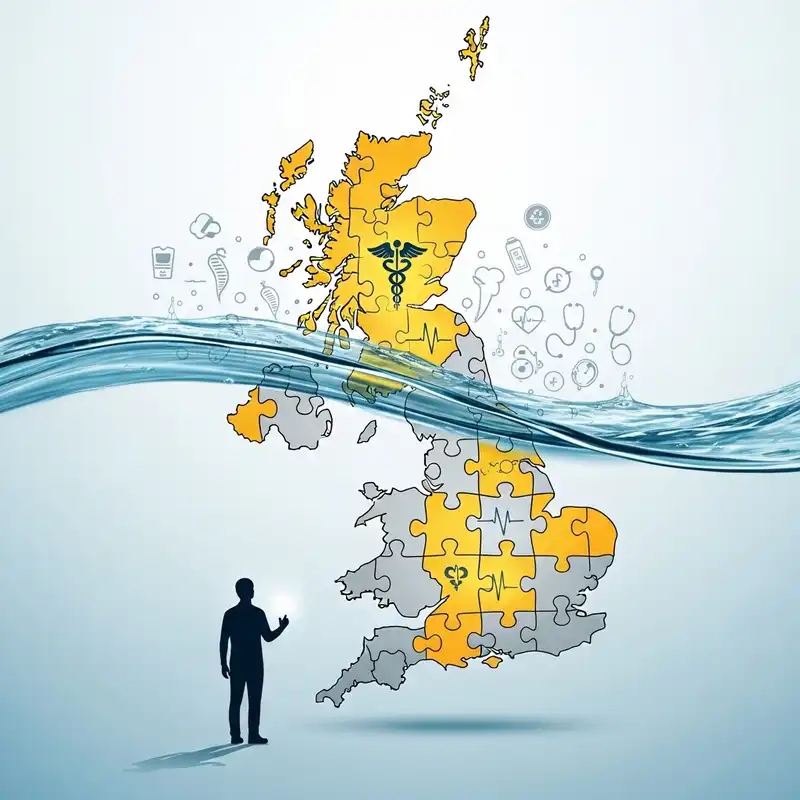
TL;DR
A path of self-improvement, career advancement, and personal fulfilment. You're building a business, climbing the corporate ladder, mastering a new skill, or raising a family. You invest time, energy, and money into becoming a better version of yourself.
Key takeaways
- Assess Your Needs: Don't just pluck a figure out of the air. Think logically about your finances.
- Debts: How much is your mortgage? Do you have car loans or credit card debt?
- Dependents: How much money would your family need to maintain their lifestyle if you weren't around or couldn't work? Consider childcare, education, and daily living costs.
- Income: How much do you need to cover your monthly bills?
- Sick Pay: What is your employer's policy? How long would it support you?
Unstoppable Growth Protect Your Future
You're on a journey. A path of self-improvement, career advancement, and personal fulfilment. You're building a business, climbing the corporate ladder, mastering a new skill, or raising a family. You invest time, energy, and money into becoming a better version of yourself. You have goals, ambitions, and dreams. This is the essence of personal growth.
But what if the very foundation upon which you're building this incredible life is more fragile than you think? We plan for success, but we rarely plan for interruption. We build upwards, assuming the ground beneath us will always be solid.
The stark reality is that our health and our ability to earn an income are the bedrock of everything we do. Without them, the entire structure of our lives – our homes, our lifestyles, our ability to provide for our loved ones, and our pursuit of personal growth – can become dangerously unstable.
Consider this sobering statistic from Cancer Research UK: 1 in 2 people in the UK will be diagnosed with some form of cancer during their lifetime. This isn't a scare tactic; it's a statistical reality that underscores the unpredictable nature of health. And cancer is just one of many challenges we can face. A sudden accident, a debilitating illness, or a serious mental health issue can strike anyone at any time, regardless of age or current fitness level. (illustrative estimate)
When a health crisis hits, the focus immediately shifts from growth to survival. Ambitions are put on hold. Financial pressure mounts. The journey to a better life is derailed. This is the vulnerability that most of us choose to ignore.
But it doesn't have to be this way. Just as a wise builder reinforces the foundations of a skyscraper, you can reinforce your life against the unexpected. Strategic financial protection – in the form of life insurance, critical illness cover, and income protection – is the unseen foundation that allows your personal growth to be truly unstoppable. It’s the safety net that catches you if you fall, ensuring that a health crisis doesn't become a lifelong financial catastrophe. This is not about planning for failure; it's about planning for resilience, so you can continue to pursue your dreams with confidence, no matter what life throws your way.
The Cracks in the Foundation: Britain's Health and Financial Reality
We often operate under a veil of invincibility, especially when we are young, healthy, and focused on our goals. The reality, however, paints a different picture. The foundations of our lives – our health and income – are constantly exposed to risks we seldom consider.
According to the Office for National Statistics (ONS), long-term sickness is a growing concern in the UK. In early 2025, an estimated 2.8 million people were economically inactive due to long-term health conditions, a significant increase over recent years. This isn't a problem confined to the elderly; it affects people in their prime working years.
Let's break down the risks with some hard numbers:
- Cancer (illustrative): As we've mentioned, the "1 in 2" lifetime risk is a headline figure, but the immediate impact is just as stark. Every two minutes, someone in the UK is diagnosed with cancer.
- Heart and Circulatory Diseases: The British Heart Foundation reports that there are around 7.6 million people living with these conditions in the UK. Every five minutes, someone is admitted to a UK hospital due to a heart attack.
- Strokes: The Stroke Association highlights that there are over 100,000 strokes in the UK each year. That's one every five minutes. Crucially, a quarter of these strokes happen to people of working age.
- Mental Health (illustrative): Mind, the mental health charity, estimates that approximately 1 in 4 people in the UK will experience a mental health problem each year. For many, this can be severe enough to prevent them from working for a period.
These aren't just statistics; they are potential life-altering events. When they happen, they trigger a devastating domino effect.
The Domino Effect: When a Health Crisis Becomes a Financial Crisis
Imagine you're a 38-year-old marketing manager, a freelancer, or a self-employed electrician. You're diagnosed with a serious illness that requires six months of intensive treatment, followed by a period of recovery.
What happens next?
- Income Stops (illustrative): If you're employed, you might receive some company sick pay, but this is often limited. Once it runs out, you're left with Statutory Sick Pay (SSP). As of 2025, SSP is just over £116 per week. Can your mortgage, bills, and family expenses be covered by less than £500 a month? For the self-employed, the situation is even more dire – income often stops the very day you stop working.
- Expenses Increase: A health crisis doesn't just halt your income; it actively increases your outgoings. Think about the costs of travelling to and from hospital appointments, parking fees, potential modifications to your home, or even paying for private treatments or therapies to speed up recovery. Macmillan Cancer Support found that four in five people with cancer are, on average, £891 a month worse off as a result of their diagnosis.
- Savings Are Decimated: You dip into your savings, the pot you'd set aside for a house deposit, your children's education, or your retirement. The financial buffer you've worked so hard to build is eroded in a matter of months.
- Dreams Are Deferred: The business launch is cancelled. The promotion is missed. The personal growth course is abandoned. The focus narrows to simply getting by, day by day. The momentum you've built is lost.
This financial strain adds a heavy layer of stress at a time when all your energy should be focused on getting better. It affects not just you, but your entire family. This is the harsh reality of facing a health crisis without a safety net.
Building Your Financial Fortress: An Introduction to Protection Insurance
Thankfully, you can construct a powerful financial fortress to shield yourself and your family from this domino effect. This isn't about a single product, but a suite of tools designed to protect you against different risks. Let's demystify the three core pillars of personal protection.
- Life Insurance: This is designed to provide for your loved ones if you pass away. It pays out a lump sum (or a regular income) to clear debts like a mortgage, cover funeral costs, and provide a financial cushion for your family's future.
- Critical Illness Cover (CIC): This pays out a tax-free lump sum if you are diagnosed with one of a specific list of serious conditions, such as some types of cancer, a heart attack, or a stroke. It's designed to help you financially while you are alive, covering costs while you recover.
- Income Protection (IP): This is your personal sick pay policy. If you're unable to work due to any illness or injury (after a pre-agreed waiting period), it pays you a regular, tax-free monthly income to replace a portion of your lost earnings. It continues to pay out until you can return to work, or until the end of the policy term.
These products are not mutually exclusive; they work together to provide comprehensive cover.
| Product | What It Does | Who It's For |
|---|---|---|
| Life Insurance | Pays a lump sum on death to protect your family's financial future. | Anyone with dependents, a mortgage, or other significant debts. |
| Critical Illness Cover | Pays a lump sum on diagnosis of a serious illness to cover costs during recovery. | Anyone who would face financial hardship if hit by a major illness. |
| Income Protection | Provides a regular monthly income if you can't work due to illness or injury. | Every working adult, especially the self-employed and those with limited sick pay. |
Deep Dive: Critical Illness Cover – Your Financial First Aid Kit
While Income Protection replaces your monthly salary, Critical Illness Cover is like a financial first aid kit. It provides a substantial, tax-free cash injection at the moment you need it most.
When you're diagnosed with a life-changing condition, the last thing you want to worry about is money. A CIC payout gives you choices and breathing space. It's not about what the money must be used for; it's about what it can be used for.
How could a £100,000 Critical Illness Payout be used? (illustrative estimate)
| Expense Category | Potential Uses | Impact |
|---|---|---|
| Housing | Pay off a chunk of your mortgage, or cover rent/mortgage payments for a year or two. | Reduces your biggest monthly outgoing, alleviating major financial pressure. |
| Treatment & Care | Access specialist private treatment, therapies, or care not immediately available on the NHS. | Potentially speeds up recovery and improves your quality of life. |
| Lifestyle Adaptation | Make necessary modifications to your home (e.g., a wheelchair ramp) or car. | Allows you to maintain independence and adapt to new physical needs. |
| Income Replacement | Bridge the gap before Income Protection kicks in, or supplement a partner's reduced hours. | Provides immediate cash flow to keep the household running. |
| Recovery & Wellbeing | Take an extended period off work without financial stress, or fund a recuperative holiday. | Allows you to focus 100% on getting better, mentally and physically. |
The key is freedom. The freedom to make decisions based on your health, not your bank balance. Without this cover, a serious diagnosis can mean a future of debt and compromise. With it, it means a future where you can focus on what truly matters: your recovery.
Deep Dive: Income Protection – Your Monthly Salary Safeguard
If Critical Illness Cover is your lump-sum financial first aid, Income Protection (IP) is the long-term cure for financial worry. It is arguably the most fundamental protection policy any working person can own. Why? Because your ability to earn an income is your single greatest financial asset.
Think about it. Over a 40-year career, even a modest salary of £35,000 per year equates to £1.4 million in lifetime earnings. An IP policy is designed to protect that asset. (illustrative estimate)
How does it work?
- You get sick or injured: The policy covers almost any legitimate medical reason that prevents you from doing your job.
- You wait a bit: This is called the "deferment period." You choose this when you take out the policy. It can be anything from 1 day to 12 months. The longer the period, the cheaper the premium. You typically align it with any sick pay you get from your employer.
- You receive a monthly income: The policy starts paying out a pre-agreed percentage of your gross salary (usually 50-70%), tax-free.
- It keeps paying: Payments continue until you are well enough to return to work, you retire, or the policy term ends – whichever comes first. Some policies can pay out for decades if needed.
Income Protection vs. Statutory Sick Pay (SSP)
Many people believe they'll be fine with their employer's sick pay or state benefits. This is a dangerous misconception.
| Feature | Statutory Sick Pay (SSP) | Typical Income Protection Policy |
|---|---|---|
| Amount (2025 figures) | £116.75 per week | 50-70% of your gross salary (e.g., £2,000+ per month) |
| Duration | Maximum of 28 weeks | Can pay out until you return to work or retire |
| Coverage | Only for employees. Not available to most self-employed people. | Available to both employees and the self-employed. |
| Purpose | A minimal safety net to prevent destitution. | Designed to maintain your standard of living. |
As you can see, relying on SSP is not a viable strategy. It's the difference between barely surviving and being able to live your life, pay your bills, and protect your family's lifestyle while you recover.
At WeCovr, we often find that clients are surprised by how affordable comprehensive Income Protection can be, especially when tailored with the right deferment period. It is the cornerstone of a secure financial plan.
Tailored Protection for the Modern UK Workforce
The "one-size-fits-all" approach to work is a thing of the past, and your protection plan should reflect that. Whether you're a freelancer, a company director, or a tradesperson, your risks and needs are unique.
For the Self-Employed and Freelancers
You are the engine of your business. If you stop, the income stops. You have no employer sick pay, no death-in-service benefit, and no one else to pick up the slack. This makes you uniquely vulnerable. For you, Income Protection is not a luxury; it is an essential business overhead.
A tailored IP policy provides the monthly revenue you need to cover both your personal bills and your business running costs (like software subscriptions, insurance, and accountancy fees) if you're unable to work. It's the ultimate freelance freedom: the ability to get sick without your business collapsing.
For Company Directors and Business Owners
As a director, you have two key concerns: your own family's security and the health of your business. Specialist insurance products can address both.
- Executive Income Protection: This is an IP policy paid for by your limited company as a business expense. It's highly tax-efficient and provides you with a replacement income if you're unable to work. The benefit is paid to the company, which then pays you via PAYE.
- Key Person Insurance: What would happen to your business if a vital team member – perhaps a top salesperson, a technical genius, or even yourself – were unable to work for a long period due to critical illness or death? Key Person Insurance provides the business with a lump sum to cover lost profits, recruit a replacement, or steady the ship during a turbulent time.
- Relevant Life Cover: This is a tax-efficient life insurance policy for directors and employees, paid for by the company. It functions like a 'death-in-service' benefit for small businesses, providing a lump sum to the employee's family upon their death. The premiums are generally an allowable business expense, and it doesn't count towards the employee's annual pension allowance.
For Tradespeople and Those in Riskier Jobs
If you're a plumber, electrician, nurse, or construction worker, your body is your livelihood. A broken leg or a bad back isn't just an inconvenience; it's a financial disaster. While full Income Protection is ideal, some may find Personal Sick Pay policies a good fit. These are often shorter-term plans (paying out for 1 or 2 years) and can be easier to claim on for common musculoskeletal injuries. They provide a crucial cash buffer to see you through a period of recovery and get you back on the tools.
Beyond the Payout: The Hidden Value in Modern Protection
Today's insurance policies offer far more than just a cheque in a crisis. Insurers now compete on the added value they provide, understanding that proactive health support is as important as reactive financial aid.
When you take out a policy, you often gain access to a suite of incredibly useful services, usually at no extra cost:
- Virtual GP Services: Access a GP via your phone or video call 24/7. This means no more waiting weeks for an appointment. You can get advice, prescriptions, and referrals quickly.
- Mental Health Support: Many policies include access to a set number of counselling or therapy sessions, providing crucial support for stress, anxiety, and depression.
- Second Medical Opinion Services: If you're diagnosed with a serious condition, this service allows you to have your diagnosis and treatment plan reviewed by a world-leading expert, giving you peace of mind and confidence in your care.
- Physiotherapy and Rehabilitation Support: Get help with recovery from injuries, often with a dedicated case manager to guide you back to health and work.
At WeCovr, we believe in going even further. We know that protecting your future starts with looking after your health today. That's why, in addition to finding you a strong fit for your needs from across the market, we provide our customers with complimentary access to CalorieHero, our proprietary AI-powered calorie and nutrition tracking app. It’s a small way we can help you build healthier habits, reinforcing our commitment to your long-term wellbeing, not just your financial security.
Proactive Protection: The Other Half of the Equation
Insurance is the reactive shield that protects you when things go wrong. But true, unstoppable growth comes from combining that shield with a proactive sword: a commitment to your own health and wellness.
The same discipline you apply to your career or personal development can be channelled into building a healthier, more resilient you. This not only reduces your risk of illness but also boosts your energy, focus, and overall quality of life.
- Fuel Your Engine (Diet): Your body is a high-performance machine. You wouldn't put cheap fuel in a sports car. Prioritise whole foods, lean proteins, fruit, and vegetables. Reduce your intake of ultra-processed foods, sugar, and excessive alcohol. Staying well-hydrated is crucial for cognitive function and energy levels.
- Recharge and Repair (Sleep): Sleep is not a luxury; it is a biological necessity. Aim for 7-9 hours of quality sleep per night. It's during sleep that your body repairs cells, consolidates memories, and regulates hormones. Poor sleep is linked to a host of health problems, from obesity to heart disease.
- Strengthen Your Chassis (Activity): The NHS recommends at least 150 minutes of moderate-intensity activity a week. This doesn't have to mean gruelling gym sessions. A brisk walk, a cycle ride, a dance class, or gardening all count. Regular activity strengthens your heart, manages your weight, and is a powerful antidepressant.
- Maintain Your Mind (Mental Wellbeing): Your mental health is just as important as your physical health. Practice mindfulness or meditation to manage stress. Make time for hobbies and social connections. Don't be afraid to talk about your feelings and seek professional help if you are struggling.
By taking care of your health, you're not just improving your life today; you're making a long-term investment that makes you less likely to ever need to claim on your insurance policies.
How to Build Your Financial Safety Net: A Simple Guide
Getting protected might seem daunting, but it's a straightforward process.
-
Assess Your Needs: Don't just pluck a figure out of the air. Think logically about your finances.
- Debts: How much is your mortgage? Do you have car loans or credit card debt?
- Dependents: How much money would your family need to maintain their lifestyle if you weren't around or couldn't work? Consider childcare, education, and daily living costs.
- Income: How much do you need to cover your monthly bills?
- Sick Pay: What is your employer's policy? How long would it support you?
-
Review Your Budget: Be realistic about what you can afford. Protection is a priority, but it needs to be sustainable. A good adviser can help you structure cover to fit your budget. For example, a combination of long-term income protection and a shorter-term, cheaper critical illness policy can provide excellent cover without breaking the bank.
-
Speak to an Independent Expert: This is the most crucial step. The UK insurance market is vast and complex. An independent broker like WeCovr doesn't work for an insurance company; we work for you. Our job is to understand your unique situation and search the entire market – including major providers like Aviva, Legal & General, Zurich, and Royal London – to find the policy or combination of policies that offers an appropriate level of cover for you at the most competitive price.
-
Be Honest: When you apply for insurance, you'll be asked a series of questions about your health, lifestyle, and family history. It is absolutely vital that you answer these with complete honesty. Withholding information, even accidentally, could give the insurer grounds to void your policy and refuse a claim just when you need it most.
Debunking the Myths That Leave You Exposed
Misconceptions about insurance prevent too many people from getting the cover they desperately need. Let's bust some of the most common myths.
-
Myth 1: "It's too expensive."
- Reality: The cost of protection is often far less than people imagine. For a healthy 30-year-old, comprehensive income protection can cost less than a daily cup of coffee. The real question is, can you afford not to have it? The cost of a policy is tiny compared to the financial devastation of losing your income for a year.
-
Myth 2: "I'm young and healthy, I don't need it yet."
- Reality: As the stroke and cancer statistics show, illness and accidents can happen at any age. In fact, the best time to get cover is when you are young and healthy, as this is when premiums are at their lowest. Locking in a low premium for life is one of the smartest financial moves you can make.
-
Myth 3: "The government will look after me."
- Reality: As we've shown, Statutory Sick Pay is minimal. Longer-term disability benefits like Universal Credit or Employment and Support Allowance (ESA) are also modest and often difficult to qualify for. They are designed to prevent poverty, not to protect your lifestyle, your home, or your future plans.
-
Myth 4: "Insurers never pay out."
- Reality: This is perhaps the most damaging myth of all, and it's demonstrably false. The Association of British Insurers (ABI) consistently reports that the vast majority of claims are paid. In 2023, the protection industry paid out over £6.85 billion. Payout rates are incredibly high: around 97% for life insurance claims, 91% for critical illness claims, and 92% for income protection claims. The main reason claims are declined is for 'non-disclosure' – the applicant not being truthful on their application form.
Your Future is Worth Protecting
Your journey of personal growth is a testament to your ambition and drive. You are building something valuable: a better career, a stronger family, a more fulfilled you. But all of this rests on the foundations of your health and your income.
Leaving those foundations unprotected in an unpredictable world is a gamble you don't need to take. A health crisis can happen to anyone. The difference between it being a bump in the road and a complete derailment of your life's ambitions is having the right protection in place.
Life insurance, critical illness cover, and income protection are not expenses. They are investments. They are the tools that make your financial foundations solid, your ambitions secure, and your personal growth truly unstoppable. They provide peace of mind, allowing you to pursue your goals with the confidence that you and your loved ones are protected, come what may. Take the first step today. Your future self will thank you for it.
What is the difference between Income Protection and Critical Illness Cover?
Do I need to have a medical examination to get insurance?
Can I get cover if I have a pre-existing medical condition?
How much cover do I need?
What is Family Income Benefit?
What is Gift Inter Vivos insurance?
Sources
- Office for National Statistics (ONS): Mortality and population data.
- Association of British Insurers (ABI): Life and protection market publications.
- MoneyHelper (MaPS): Consumer guidance on life insurance.
- NHS: Health information and screening guidance.
Disclaimer: This is general guidance only and does not constitute formal tax or financial advice. Tax treatment depends on individual circumstances, policy terms, and HMRC interpretation, which cannot be guaranteed in advance. Whenever applicable, businesses and individuals should always consult a qualified accountant or tax adviser before arranging such policies.
Measure your family’s protection gap, then get the right life cover quote
Start with the score to see whether your family would face a real financial shortfall before moving on to life cover options.
Check what happens if someone dies too soon
See whether debt, dependants and mortgage risk are covered
Move into tailored life cover options after the score
Get your score
Your next best move
Get your score in minutes, then decide what kind of protection help would be most useful.
Score your household protection
See how well your current setup protects dependants, debt and major commitments.
Find the shortfall
Know whether life cover, critical illness or income protection is the actual missing piece.
Continue to tailored life cover
If life cover is the gap, continue to tailored life cover options.
What you get
A quick view of your current protection position
A clearer idea of where the biggest gaps may be
A direct route to tailored help if you want it