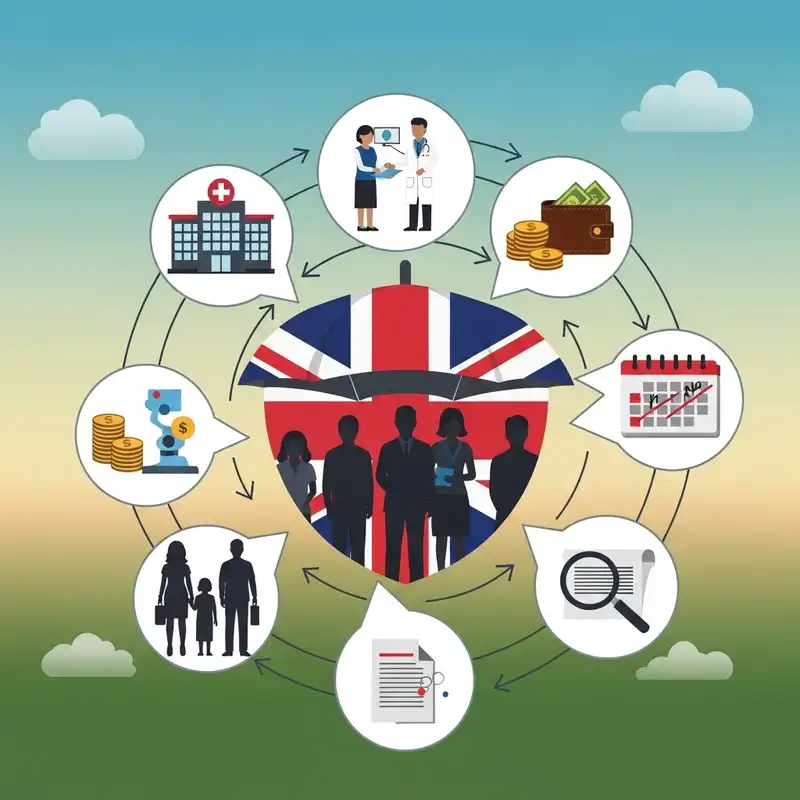
TL;DR
In a world that celebrates hustle, ambition, and relentless growth, we often focus on the visible pillars of success: the business plan, the investment portfolio, the career ladder. Yet, beneath these structures lies an unseen foundation. This foundation, when strong, makes all growth sustainable.
Key takeaways
- What it is: A policy that pays out a tax-free lump sum if you are diagnosed with one of a list of specified serious medical conditions.
- Clearing your mortgage or other debts.
- Paying for private treatment or specialist care.
- Adapting your home (e.g., installing a ramp or stairlift).
Unstoppable You Growth Health Financial Freedom
In a world that celebrates hustle, ambition, and relentless growth, we often focus on the visible pillars of success: the business plan, the investment portfolio, the career ladder. Yet, beneath these structures lies an unseen foundation. This foundation, when strong, makes all growth sustainable. When it's weak, the entire edifice is at risk. This is the foundation of your health and financial resilience.
True, unstoppable growth isn't just about pushing forward; it's about having the security to know that a sudden gust of wind—an unexpected illness, an accident, a family crisis—won't bring everything tumbling down. It's about having the freedom to take calculated risks, to pursue your passions, and to build a meaningful legacy, secure in the knowledge that you and your loved ones are protected.
This guide is for the ambitious, the driven, the builders of futures—the company director, the freelancer, the parent planning for their family's security. We will explore how a strategic blend of financial protection, proactive health management, and specialised insurance isn't a cost, but an investment in your potential. It’s the key to unlocking true freedom and becoming genuinely unstoppable in 2025 and beyond.
The Modern British Landscape of Risk: Why 2025 Demands a New Mindset
The old certainties are fading. The promise of a job for life and a state that can instantly catch you when you fall is being tested like never before. To build a resilient future, we must first understand the landscape of risk we navigate today.
The NHS Under Pressure
The National Health Service is a national treasure, but it is facing unprecedented strain. While the dedication of its staff is unwavering, the system's capacity is stretched. As of early 2025, the reality for many is long waits for diagnosis and treatment.
According to the latest NHS England data, the referral-to-treatment (RTT) waiting list remains stubbornly high, with millions of treatment pathways waiting to be completed. A significant number of patients are waiting over 18 weeks, and many thousands are waiting over a year for routine procedures. This isn't just an inconvenience; for someone in pain or unable to work, these delays can have devastating personal and financial consequences. Waiting for a hip replacement or a knee operation can mean months of lost income for a self-employed tradesperson or a diminished quality of life for an active individual.
The Evolving World of Work
The UK's labour market has transformed. The ranks of the self-employed, freelancers, and contractors have swelled, now representing a significant portion of the workforce. While this brings incredible freedom and flexibility, it also means the safety net of statutory sick pay, death-in-service benefits, and employer-funded health schemes has been removed for millions.
An ONS report from late 2024 highlighted that sickness absence rates due to long-term health conditions are at a record high. For a salaried employee, this might mean a period of company sick pay. For a freelance consultant or a small business owner, it means an immediate and total loss of income.
Economic Headwinds and Financial Fragility
With inflation and the rising cost of living, household budgets are tighter than ever. Many families have less financial cushion than they did a few years ago. A 2024 Financial Conduct Authority (FCA) survey revealed that a substantial number of UK adults have low financial resilience, meaning they would struggle to cope with an unexpected financial shock, such as the primary earner being unable to work for a few months.
This combination of health system delays, a lack of employer safety nets, and economic fragility creates a perfect storm. The "it won't happen to me" mindset is no longer a viable strategy; it's a gamble against ever-shortening odds.
Building Your Fortress: The Core Pillars of Personal Protection
Your ability to earn an income and provide for your family is your single greatest asset. Protecting it is the first and most critical step in building your foundation. Let's break down the core products that form this protective shield.
1. Income Protection: Your Personal Sick Pay
If your income suddenly stopped due to illness or injury, how long could you pay your mortgage, bills, and food costs? For most, the answer is "not long." Income Protection is designed to prevent this catastrophe.
- What it is: A policy that pays you a regular, tax-free monthly income if you're unable to work due to illness or injury. It typically covers up to 60-70% of your gross salary.
- How it works: You choose a "deferred period" – the length of time you wait before the payments start (e.g., 4, 13, 26, or 52 weeks). The longer the deferred period, the lower the premium. The policy can pay out until you return to work, retire, or the policy term ends, whichever comes first.
- Who it's for: Absolutely everyone who earns an income. It is especially vital for the self-employed and those with limited or no company sick pay.
Example: A 38-year-old marketing manager develops a serious back condition and is signed off work for 18 months. Her company sick pay runs out after 6 months. Her Income Protection policy, with a 26-week deferred period, kicks in and pays her £2,500 a month, allowing her to focus on physiotherapy and recovery without the stress of mounting bills.
2. Critical Illness Cover: A Financial Lifeline in a Crisis
A serious illness like cancer, a heart attack, or a stroke is emotionally devastating. The last thing you or your family need is the added burden of financial turmoil.
- What it is: A policy that pays out a tax-free lump sum if you are diagnosed with one of a list of specified serious medical conditions.
- How it works: The lump sum can be used for anything you need. This could include:
- Clearing your mortgage or other debts.
- Paying for private treatment or specialist care.
- Adapting your home (e.g., installing a ramp or stairlift).
- Replacing lost income for you or a partner who takes time off to care for you.
- Key Fact: Statistics from the Association of British Insurers (ABI) consistently show that insurers pay out on the vast majority of claims, with cancer, heart attack, and stroke being the most common reasons for a claim.
3. Life Insurance: Securing Your Family's Future
Life insurance is perhaps the most well-known form of protection, but its importance cannot be overstated. It's a selfless act of love, ensuring your family's financial stability in your absence.
- Term Life Insurance: Provides a lump sum payout if you die within a specific term (e.g., the 25-year term of your mortgage). It's designed to cover large debts and provide for dependents during their formative years.
- Family Income Benefit: A variation of term insurance. Instead of a single lump sum, it pays out a regular, tax-free income to your family for the remainder of the policy term. This can be easier for a grieving family to manage than a large, one-off payment.
- Whole of Life Insurance: As the name suggests, this cover lasts your entire life and is guaranteed to pay out whenever you die. It's often used for covering funeral costs or for inheritance tax planning.
Here is a simple table to help you understand the core differences:
| Protection Type | What It Does | When It Pays Out | How It Pays Out |
|---|---|---|---|
| Income Protection | Replaces your monthly income | If you can't work due to illness/injury | Regular Monthly Income |
| Critical Illness | Provides financial support for a serious illness | On diagnosis of a specified condition | One-off Tax-Free Lump Sum |
| Life Insurance | Protects your family financially | On your death during the policy term | One-off Tax-Free Lump Sum |
| Family Income Benefit | Protects your family financially | On your death during the policy term | Regular Monthly Income |
The Entrepreneur's Shield: Specialised Cover for Business Owners & Directors
If you're self-employed, a company director, or a business owner, your financial life is intertwined with your business. Standard personal protection is essential, but specialised business and director-focused policies offer a higher level of security and tax efficiency.
Personal Sick Pay for the Trades
For tradespeople like electricians, plumbers, builders, and other manual workers, even a short-term injury can be financially crippling. While Income Protection is crucial for long-term issues, a more specialised policy can be a lifesaver.
- Personal Sick Pay (PSP): Often called Accident & Sickness cover, this is a shorter-term policy designed to kick in very quickly, sometimes after just one week of being unable to work. It's often focused on covering you for a year or two and is invaluable for covering immediate bills while you recover from an injury or acute illness.
Tax-Efficient Protection for Company Directors
If you run your own limited company, you can use the business to pay for your protection in a highly tax-efficient manner.
- Executive Income Protection: This is an Income Protection policy owned and paid for by your limited company. The premiums are typically an allowable business expense, meaning you can offset them against your corporation tax bill. The benefit is paid to the company, which then pays it to you via PAYE. It's a powerful way to provide sick pay for the directors who are the engine of the business.
- Relevant Life Cover: This is essentially a death-in-service policy for an individual employee or director, paid for by the business. Like Executive Income Protection, the premiums are usually an allowable business expense. The payout goes directly to the director's family or a trust, free from inheritance tax. It’s a huge benefit for small companies that are too small to set up a full group scheme.
Protecting the Business Itself
What happens to your business if you or another crucial team member is suddenly out of the picture?
- Key Person Insurance: This is life and/or critical illness cover taken out by the business on a 'key person'—someone whose death or serious illness would have a catastrophic impact on profits. This could be a top salesperson, a technical genius, or a founder with all the industry contacts. The payout goes to the business to help cover lost profits, recruit a replacement, or manage the transition.
- Gift Inter Vivos Insurance: A more niche but vital tool for legacy planning. If you gift a significant asset (like property or shares in your business) to your children, it may be subject to Inheritance Tax (IHT) if you die within seven years of making the gift. A Gift Inter Vivos policy is a special type of life insurance policy designed to pay out a lump sum to cover this potential tax bill, ensuring your heirs receive the full value of your gift. HMRC statistics consistently show IHT receipts rising, making this a growing concern for many successful families.
Here's a comparison of these specialised policies:
| Policy Type | Who Pays? | Who Benefits? | Primary Purpose |
|---|---|---|---|
| Personal Sick Pay | The Individual | The Individual | Short-term income replacement |
| Executive Income Protection | The Company | The Director (via company) | Tax-efficient long-term sick pay |
| Relevant Life Cover | The Company | The Director's Family | Tax-efficient death-in-service benefit |
| Key Person Insurance | The Company | The Company | Protect business from loss of key staff |
| Gift Inter Vivos | The Individual (Gifter) | The Beneficiary of the Gift | Cover Inheritance Tax liability |
Navigating these options can be complex. At WeCovr, we specialise in helping business owners and the self-employed understand which combination of personal and business protection will create the most robust and tax-efficient safety net for their specific circumstances.
Proactive Health: Your Greatest Asset & How to Protect It
Financial protection is the reactive shield; proactive health management is your sword. It's about taking control and putting yourself in the best possible position to thrive. The peace of mind that comes from having a robust financial safety net frees up the mental and emotional energy to focus on wellness.
The Game-Changer: Private Medical Insurance (PMI)
With NHS waiting lists at historic highs, Private Medical Insurance has shifted from a 'nice-to-have' luxury to an essential tool for many.
- What it does: PMI pays for the costs of private medical treatment for acute conditions. It gives you control over your healthcare journey.
- The Key Benefits:
- Speed of Access: This is the most significant advantage. PMI allows you to bypass long waiting lists for consultations, diagnostics (like MRI and CT scans), and surgery. Getting a diagnosis and treatment plan in days or weeks, rather than many months or even years, can make a world of difference to your health outcome and your ability to return to work.
- Choice and Comfort: You can often choose your specialist and the hospital where you're treated. You'll typically have a private, en-suite room, making a stressful time more comfortable.
- Access to New Treatments: Some policies provide access to new, cutting-edge drugs or treatments that may not yet be available on the NHS due to funding decisions.
PMI is the ultimate enabler, ensuring that a health issue is a temporary setback, not a long-term derailment of your life and career plans.
The Daily Habits of Unstoppable People
Protection isn't just about insurance policies. It's a holistic approach to life.
- Nourish Your Body: A balanced diet rich in whole foods is fundamental to energy, focus, and disease prevention. It doesn't have to be complicated. Small, consistent changes have a huge impact. As part of our commitment to our clients' holistic wellbeing, at WeCovr we provide complimentary access to our CalorieHero app. It's an AI-powered tool that makes tracking your nutrition simple and intuitive, helping you build healthy habits that last.
- Prioritise Sleep: Sleep is not a luxury; it's a critical biological function. The UK is a chronically sleep-deprived nation. Consistently getting 7-9 hours of quality sleep improves cognitive function, emotional regulation, and immune response. Turn off screens an hour before bed, create a cool, dark environment, and maintain a consistent sleep schedule.
- Move Every Day: The ONS reports that a significant percentage of adults in the UK do not meet the recommended guidelines for physical activity. You don't need to be a marathon runner. Find an activity you enjoy—brisk walking, cycling, dancing, team sports—and make it a non-negotiable part of your routine.
- Master Your Mind: Chronic stress is a silent killer. Incorporate mindfulness, meditation, or simple breathing exercises into your day. Spending time in nature, connecting with loved ones, and pursuing hobbies are powerful antidotes to the pressures of modern life.
WeCovr: Your Partner in Building a Resilient Future
The world of protection insurance can seem bewildering. With dozens of providers, hundreds of policy variations, and complex terminology, trying to go it alone can be overwhelming and lead to costly mistakes. This is where we come in.
WeCovr is an expert, independent insurance broker. We don't work for one insurer; we work for you. Our role is to be your trusted partner, helping you navigate the entire UK market to find the cover that is perfectly tailored to your life, your family, your business, and your ambitions.
We take the time to understand you. Are you a freelancer needing robust income protection? A company director looking for tax-efficient solutions? A parent wanting to secure your children's future? We use our deep market knowledge to compare policies from all the major UK insurers, demystifying the small print and ensuring you get the most comprehensive cover for your budget.
Our commitment extends beyond just finding a strong fit for your needs. We believe in holistic wellbeing, which is why we offer value-added benefits like our CalorieHero app to all our clients. We're here to help you build that unseen foundation, giving you the confidence and security to go out and achieve the unstoppable growth you're capable of.
Real-Life Scenarios: How Protection Plays Out
Let's move from theory to reality. Here's how this foundation of protection works in the real world.
-
Scenario 1: The Freelance Designer
- The Person (illustrative): Sarah, 35, is a successful freelance graphic designer earning £50,000 a year. She has no employee benefits.
- The Crisis: She is diagnosed with breast cancer. She needs immediate surgery followed by six months of chemotherapy. She is unable to work.
- The Foundation: Sarah had set up a Critical Illness policy and an Income Protection plan with a 4-week deferred period.
- The Outcome (illustrative): Her Critical Illness policy pays out a £75,000 lump sum. She uses this to pay off her credit cards and car loan, removing all immediate financial pressure. After four weeks, her Income Protection policy starts paying her £2,500 a month. This covers her rent and bills, allowing her to focus 100% on her treatment and recovery without worrying about losing her flat or going into debt.
-
Scenario 2: The Company Director
- The Person: David, 48, is the managing director and co-founder of a small engineering firm. He is a key person for the business.
- The Crisis: He suffers a major heart attack and needs a triple bypass. The NHS waiting list is nine months.
- The Foundation: His company pays for an Executive Income Protection policy, Key Person Insurance, and a comprehensive Private Medical Insurance (PMI) plan for him.
- The Outcome: His PMI allows him to see a private cardiologist within a week and he has his surgery in a private hospital just three weeks later. While he recuperates for four months, his Executive Income Protection plan pays his full salary through the company. Simultaneously, the Key Person Insurance pays out a benefit to the business, allowing them to hire a high-level temporary manager to keep operations running smoothly in David's absence. The business survives, and David makes a full recovery without the long, anxious wait.
-
Scenario 3: The Self-Employed Electrician
- The Person: Mark, 42, is a self-employed electrician. His work is physically demanding.
- The Crisis: He falls from a ladder on a job, sustaining a complex fracture in his ankle. He cannot put any weight on it for 12 weeks.
- The Foundation: Mark has a Personal Sick Pay policy designed for tradespeople with a one-week waiting period.
- The Outcome (illustrative): After seven days, his policy kicks in, paying him £400 a week. This isn't his full income, but it's enough to cover his mortgage and essential bills, preventing him from having to dip into his long-term savings while he recovers.
From Protected to Unstoppable: Your Legacy Starts Now
Building a life of purpose, achieving ambitious goals, and creating a lasting legacy is a journey of a thousand steps. But every one of those steps is taken on the foundation you build today.
For too long, we have viewed health and financial protection as a grudge purchase—an afterthought. It's time for a paradigm shift. See it for what it truly is: the ultimate enabler. It's the infrastructure for your ambition. The safety net that gives you the courage to climb higher. The peace of mind that allows you to be fully present with your family.
By strategically shielding your income, insuring against the unexpected, taking control of your health, and protecting your business, you are not planning for failure. You are engineering the conditions for success. You are removing the single biggest obstacle that derails even the most talented and driven people: luck.
Don't leave your future, and your family's future, to chance. Take control. Build your foundation. Move from being merely ambitious to being truly, genuinely, unstoppable.
Is life insurance expensive?
Do I need income protection if I am employed and get sick pay?
What is the main difference between Critical Illness Cover and Income Protection?
Can I get insurance if I have a pre-existing medical condition?
Why should I use a broker like WeCovr instead of going directly to an insurer?
Sources
- Office for National Statistics (ONS): Mortality and population data.
- Association of British Insurers (ABI): Life and protection market publications.
- MoneyHelper (MaPS): Consumer guidance on life insurance.
- NHS: Health information and screening guidance.
Disclaimer: This is general guidance only and does not constitute formal tax or financial advice. Tax treatment depends on individual circumstances, policy terms, and HMRC interpretation, which cannot be guaranteed in advance. Whenever applicable, businesses and individuals should always consult a qualified accountant or tax adviser before arranging such policies.
Measure your family’s protection gap, then get the right life cover quote
Start with the score to see whether your family would face a real financial shortfall before moving on to life cover options.
Check what happens if someone dies too soon
See whether debt, dependants and mortgage risk are covered
Move into tailored life cover options after the score
Get your score
Your next best move
Get your score in minutes, then decide what kind of protection help would be most useful.
Score your household protection
See how well your current setup protects dependants, debt and major commitments.
Find the shortfall
Know whether life cover, critical illness or income protection is the actual missing piece.
Continue to tailored life cover
If life cover is the gap, continue to tailored life cover options.
What you get
A quick view of your current protection position
A clearer idea of where the biggest gaps may be
A direct route to tailored help if you want it