TL;DR
Switching to an electric vehicle (EV) is a fantastic step towards greener driving, but many new owners face a shock when quoted for insurance. At WeCovr, an FCA-authorised expert in UK motor insurance, we understand this frustration and are here to help you find affordable, comprehensive cover.
Key takeaways
- Extreme Replacement Cost: Even in what might seem like a minor collision, any damage to the battery pack or its casing can be a terminal diagnosis for the vehicle. Repairing a battery pack is a highly specialised, often prohibitively expensive task. In many cases, insurers find it more economical to declare the entire vehicle a write-off rather than attempt a battery repair or replacement. This turns a 5,000 bump into a potential 40,000 total loss claim.
- Fire Risk (Thermal Runaway): While EV fires are not more common than petrol car fires, they are fundamentally different and more difficult to manage. A damaged lithium-ion battery can enter 'thermal runaway'a self-sustaining chemical reaction that produces intense heat. These fires are notoriously difficult to extinguish with water, can burn for days, and may reignite long after they appear to be out. This elevated risk of total loss and potential damage to property is a significant factor in premium calculations.
- Comprehensive Battery Cover: The policy should explicitly state that it covers your battery (whether you own it outright or it's leased) against all risks, including accidental damage, fire, and theft.
- Charging Equipment Cover: Check that your policy covers your charging cables, adaptors, and home wall box against accidental damage, vandalism, and theft. These items can cost hundreds of pounds to replace.
- Public Charging Liability: This provides valuable protection if, for example, someone trips over your charging cable while it's connected at a public charging station and decides to make a liability claim against you.
Electric Car Insurance Costs UK
Switching to an electric vehicle (EV) is a fantastic step towards greener driving, but many new owners face a shock when quoted for insurance. At WeCovr, an FCA-authorised expert in UK motor insurance, we understand this frustration and are here to help you find affordable, comprehensive cover.
Understanding Your Legal Obligations: UK Motor Insurance Essentials
Before diving into costs, it's vital to remember that motor insurance is a legal requirement in the United Kingdom. Under the Road Traffic Act 1988, any vehicle used on roads or in public places must have at least third-party insurance. Driving uninsured can result in severe penalties, including unlimited fines, penalty points, and even driving disqualification.
There are three primary levels of vehicle cover:
- Third-Party Only (TPO): This is the minimum level of cover required by law. It protects you against claims for injury or damage you cause to other people, their vehicles, or their property. Crucially, it provides no cover for damage to your own car or for your own injuries.
- Third-Party, Fire and Theft (TPFT): This includes all the protection of TPO, plus cover for your own vehicle if it is stolen or damaged by fire.
- Comprehensive: This is the highest level of protection. It includes everything from TPFT but also covers damage to your own vehicle in an accident, even if you were at fault. It often includes other benefits like windscreen repair as standard.
Here’s a simple breakdown of what each level covers:
| Feature | Third-Party Only (TPO) | Third-Party, Fire & Theft (TPFT) | Comprehensive |
|---|---|---|---|
| Injury to other people | ✅ | ✅ | ✅ |
| Damage to another person's vehicle/property | ✅ | ✅ | ✅ |
| Your car being stolen | ❌ | ✅ | ✅ |
| Your car being damaged by fire | ❌ | ✅ | ✅ |
| Damage to your own car in an accident (your fault) | ❌ | ❌ | ✅ |
| Windscreen damage | ❌ | ❌ | ✅ (Usually) |
| Personal injury to you in an accident | ❌ | ❌ | ✅ (Often) |
For businesses using vehicles for work-related tasks beyond commuting (like deliveries, site visits, or client meetings), a standard private car policy is insufficient. You will need commercial motor insurance or a fleet insurance policy to be legally covered.
Why Are Electric Car Insurance Premiums Soaring in the UK?
The 'EV insurance shock' is a well-documented phenomenon. While EVs offer lower running costs through fuel and tax savings, these can be offset by surprisingly high insurance premiums. Insurers base their prices on risk, and several factors unique to electric vehicles currently push that risk profile significantly higher.
Higher Purchase Price and Repair Costs
The primary driver behind expensive EV insurance is the sheer cost of repairs. Data from the Association of British Insurers (ABI) consistently highlights this gap. In its 2024 analysis, the ABI found that the average cost to repair an accident-damaged EV was around 25% higher than for a comparable internal combustion engine (ICE) vehicle.
Furthermore, EV repairs typically take 14% longer to complete. This is due to the complexity of the vehicles and the need for specialist facilities. For insurers, higher repair bills and longer vehicle-off-road times (which increase costs like courtesy car provision) translate directly into higher premiums for policyholders.
The Battery Problem: The Heart of the Cost Issue
An EV's lithium-ion battery is its most valuable and vulnerable component, often representing 40-50% of the vehicle's total cost. This single component presents a major headache for insurers.
- Extreme Replacement Cost: Even in what might seem like a minor collision, any damage to the battery pack or its casing can be a terminal diagnosis for the vehicle. Repairing a battery pack is a highly specialised, often prohibitively expensive task. In many cases, insurers find it more economical to declare the entire vehicle a write-off rather than attempt a battery repair or replacement. This turns a £5,000 bump into a potential £40,000 total loss claim.
- Fire Risk (Thermal Runaway): While EV fires are not more common than petrol car fires, they are fundamentally different and more difficult to manage. A damaged lithium-ion battery can enter 'thermal runaway'—a self-sustaining chemical reaction that produces intense heat. These fires are notoriously difficult to extinguish with water, can burn for days, and may reignite long after they appear to be out. This elevated risk of total loss and potential damage to property is a significant factor in premium calculations.
Specialist Skills and Parts Shortages
The UK's automotive repair industry is in a race to adapt to the electric transition. The Institute of the Motor Industry (IMI) has repeatedly warned of a critical "skills gap" in the sector.
A national shortage of technicians qualified and certified to work safely on high-voltage EV systems has several knock-on effects for insurance costs:
- Higher Labour Rates: Specialist technicians are in high demand and can command higher wages, which are passed on through repair invoices.
- Longer Repair Times: Fewer qualified technicians means your car could be waiting longer in the queue at an approved repair centre.
- Centralised Repairs: Many EVs must be sent to manufacturer-approved centres, which may be far from your home, adding to logistics costs and delays.
- Increased Courtesy Car Costs: If your comprehensive policy includes a courtesy car, longer repair times mean your insurer is footing the bill for longer. This cost is spread across all premiums.
On top of the skills gap, global supply chain disruptions for specific EV parts, from microchips to battery modules, can further extend repair times, compounding the issue.
Performance Profile and Limited Data
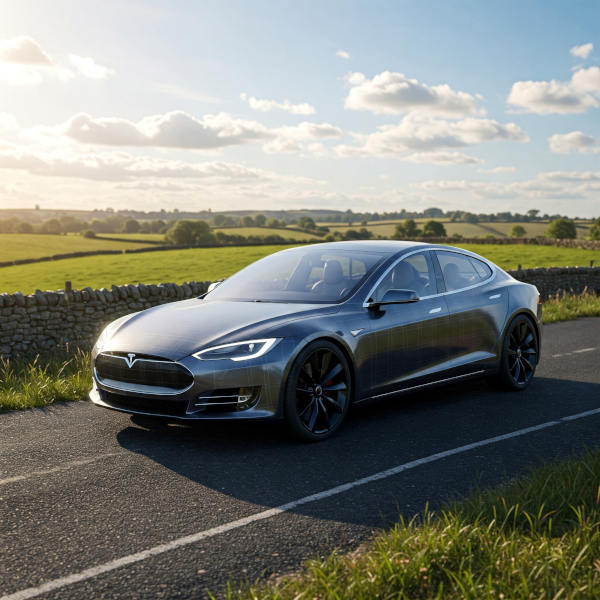
Electric cars are renowned for their instant, silent, and often startling acceleration. A family saloon like a Tesla Model 3 can out-accelerate many high-performance sports cars. Insurers factor this performance into their risk models, as it can increase the likelihood of certain types of accidents, particularly for drivers unaccustomed to it.
Additionally, EVs are still a relatively new part of the UK's vehicle landscape. Insurers have over a century of claims data for petrol and diesel cars, allowing them to price risk with high precision. For EVs, they have less than a decade of mass-market data. This relative lack of long-term, real-world data on accident frequency, claim types, and long-term reliability means insurers often adopt a more cautious, and therefore more expensive, pricing strategy.
Beyond the Battery: Core Factors That Influence Your EV Insurance Quote
While EV-specific issues are significant, the fundamental principles of motor insurance pricing remain unchanged. Your personal circumstances play a huge part in the final quote.
| Factor | How It Impacts Your Premium | Key Considerations for EV Owners |
|---|---|---|
| Your Age and Driving Experience | Younger drivers (under 25) and those with less experience face the highest premiums. Costs typically decrease with age and a clean driving record. | A young driver seeking to insure a high-performance EV will face exceptionally high, and sometimes unaffordable, premiums. |
| Your Postcode (Where you live) | Insurers use postcode data to assess local risks like theft rates, vandalism, traffic congestion, and accident frequency. | Living in a busy urban area with high crime rates will always be more expensive than a quiet rural location. |
| Your Occupation | Your job title can influence your premium. Jobs that involve high mileage or are perceived as high-stress can attract higher rates. | Be accurate with your job title. A "Chef" might have a higher premium than a "Kitchen Assistant" due to different perceived risks. |
| Your Driving History | A history of claims (especially at-fault ones) and driving convictions (like speeding points) will significantly increase your premium. | Past claims will compound the already high base cost of insuring an EV, making a clean licence more valuable than ever. |
| No-Claims Bonus (NCB) | This is a discount earned for each consecutive year you drive without making a claim. It's one of the most powerful tools for reducing costs. | A healthy NCB (e.g., 5+ years) can provide a discount of 60% or more, dramatically offsetting the high EV premium. |
| Vehicle's Insurance Group | Every car in the UK is assigned to an insurance group from 1 (cheapest) to 50 (most expensive), based on its value, repair costs, security, and performance. | Most EVs fall into higher insurance groups due to their high purchase price and repair costs, directly impacting the base premium. |
| Your Annual Mileage | The more miles you cover in a year, the higher your statistical chance of being involved in an accident, leading to a higher premium. | Be honest but realistic. Overestimating your mileage means you're paying for cover you don't need. |
| Your Voluntary Excess | This is the amount you agree to contribute towards the cost of any claim you make. A higher voluntary excess usually results in a lower premium. | Increasing your excess from £250 to £500 can make a noticeable difference, but ensure you can afford to pay it if needed. |
Your Checklist: 10 Actionable Steps to Find Cheaper Electric Car Insurance
The high premiums can be disheartening, but there are numerous practical ways to bring the cost down. Follow this checklist to secure a more affordable motor policy.
-
Never Accept Your Renewal Quote – Shop Around! Loyalty rarely pays in the insurance market. Your existing provider's renewal offer is almost never the best deal available. You must compare prices every single year.
-
Use an Expert Broker Like WeCovr Comparison websites are a good start, but they don't show the whole market. An FCA-authorised independent broker like WeCovr has access to a wider range of mainstream and specialist insurers, some of whom offer exclusive deals not available online. Our experts understand the EV market's complexities and can find a policy that truly fits your needs, often at a better price.
-
Choose Your Electric Car Carefully Before you even buy an EV, research its insurance group. A powerful, expensive model in group 45 or 50 will always cost a fortune to insure compared to a more modest vehicle in group 25.
Illustrative Insurance Groups for Popular UK EVs
Electric Vehicle Model Typical Insurance Group Range Fiat 500e 21-23 Vauxhall Corsa Electric 22-25 MG4 EV 28-33 Volkswagen ID.3 23-31 Kia EV6 34-45 Tesla Model 3 48-50 Polestar 2 39-44 Porsche Taycan 50 -
Pay Your Premium Annually Choosing to pay monthly may seem more manageable, but you are effectively taking out a high-interest loan. Insurers can charge APRs of 20% or more for monthly instalments, adding a significant amount to your total cost. If you can, always pay upfront for the year.
-
Increase Your Voluntary Excess If you have some savings, offering to pay a higher voluntary excess (e.g., £500 instead of £250) tells insurers you are less likely to make small, frivolous claims. They will reward this by lowering your premium. Just be sure the total excess (voluntary plus the compulsory excess set by the insurer) is an amount you could comfortably afford. (illustrative estimate)
-
Build and Protect Your No-Claims Bonus (NCB) Your NCB is your most valuable asset for cheap insurance. Guard it carefully. Consider paying for minor cosmetic damage, like a car park scuff, out of your own pocket rather than making a claim that would wipe out your discount for years. For a small additional fee, you can also add "NCB Protection" to your policy, which allows you to make one or two claims in a period without affecting your bonus.
-
Enhance Your Vehicle's Security Most modern EVs come with excellent factory-fitted alarms and immobilisers. However, telling your insurer where you park it overnight makes a big difference. A locked garage is the gold standard, followed by a private driveway. On-street parking carries the highest risk and the highest premium. For high-value EVs, a Thatcham-approved tracker can also lead to a discount from some insurers.
-
Consider a Telematics (Black Box) Policy This type of policy is ideal for younger drivers or those with a safe and steady driving style. A small device or mobile app monitors your speed, braking, acceleration, and cornering. Good driving is rewarded with lower premiums at renewal. It's a proven way for careful drivers to prove their low-risk profile and escape being penalised for the bad habits of others.
-
Be Accurate and Honest About Usage Ensure you select the correct class of use. If you only use your car for "Social, Domestic & Pleasure," don't pay extra for "Commuting" cover. If you do commute, include it. Lying to an insurer is fraud and can invalidate your entire policy, leaving you personally liable for all costs in an accident.
-
Review and Strip Out Unnecessary Extras Comprehensive policies often come bundled with optional extras. Review them carefully. Do you already have breakdown cover with your bank account? Is the courtesy car provided a basic model when you need a like-for-like replacement? Do you need motor legal protection? Removing extras you don't need can trim the final cost.
Decoding the Fine Print: Specialist Cover for Electric Vehicles
A good EV insurance policy should go beyond the basics. When you're comparing quotes, look for specialist benefits designed for electric car owners. A top-tier provider will include:
- Comprehensive Battery Cover: The policy should explicitly state that it covers your battery (whether you own it outright or it's leased) against all risks, including accidental damage, fire, and theft.
- Charging Equipment Cover: Check that your policy covers your charging cables, adaptors, and home wall box against accidental damage, vandalism, and theft. These items can cost hundreds of pounds to replace.
- Public Charging Liability: This provides valuable protection if, for example, someone trips over your charging cable while it's connected at a public charging station and decides to make a liability claim against you.
- Running Out of Charge Breakdown Cover: Often called "flat battery cover," this is a specific feature of EV breakdown assistance. It ensures that if you run out of battery, the recovery service will take you to the nearest working charge point, not just the nearest garage.
Managing a Fleet of Electric Vans and Cars: A Strategic Approach to Insurance
For UK businesses transitioning their vehicle fleets to electric, the insurance challenge is multiplied. A specialist fleet insurance policy is essential for efficiency and cost control. It allows a business to cover all its vehicles—electric, petrol, and diesel—under a single policy with one renewal date.
When seeking an EV-ready fleet insurance policy, insurers will look favourably on:
- Documented Driver Training: Providing formal training for staff on how to drive EVs safely and efficiently demonstrates a proactive approach to risk management.
- Fleet-Wide Telematics: Installing telematics systems provides a wealth of data to prove your fleet's safety record, optimise routes, and monitor vehicle health, all of which can lead to significant premium reductions.
- Workplace Charging Infrastructure Cover: Ensure your policy includes property damage and public liability cover for your depot and office charging stations.
The commercial motor insurance experts at WeCovr have extensive experience in creating bespoke fleet insurance solutions that cater to the unique risks of mixed and fully electric fleets, helping businesses manage costs effectively. What's more, clients who purchase motor or life insurance through WeCovr may be eligible for discounts on other types of cover, adding even more value. We consistently receive high customer satisfaction ratings for our service and expertise.
Frequently Asked Questions About UK Electric Car Insurance
Is car insurance always more expensive for electric cars in the UK?
Does my home insurance cover my EV home charging point?
How can an expert broker like WeCovr help me find cheaper EV insurance?
Navigating the evolving world of EV insurance can seem daunting, but armed with the right knowledge and expert support, you can find a policy that offers great value and robust protection.
Don't let high insurance premiums take the shine off your electric car experience. Contact the friendly experts at WeCovr for a free, no-obligation quote today. We'll compare the market to find you the right motor policy at a competitive price, whether for your private car, business van, or entire fleet.
Sources
- Department for Transport (DfT): Road safety and transport statistics.
- DVLA / DVSA: UK vehicle and driving regulatory guidance.
- Association of British Insurers (ABI): Motor insurance market and claims publications.
- Financial Conduct Authority (FCA): Insurance conduct and consumer information guidance.
Disclaimer: This is general guidance only and does not constitute formal tax or financial advice. Tax treatment depends on individual circumstances, policy terms, and HMRC interpretation, which cannot be guaranteed in advance. Whenever applicable, businesses and individuals should always consult a qualified accountant or tax adviser before arranging such policies.
Check how protected you really are before you shop for cover
Use the Protection Score to see where your biggest protection gaps may be before deciding what kind of cover or help you need.
Free starting point
Shows where your biggest risk gaps are
Helps you decide what to look at next
Get your score
Your next best move
Get your score in minutes, then decide what kind of protection help would be most useful.
Answer a few quick questions
We look at your household resilience, not just one product in isolation.
See your protection gaps
Find out where income, health or family cover is weakest.
Get the right kind of help
If the gap matters, continue to the most relevant page for quotes or expert support.
What you get
A quick view of your current protection position
A clearer idea of where the biggest gaps may be
A direct route to tailored help if you want it