TL;DR
Yes, you can pay monthly for private healthcare in the UK, typically through monthly private medical insurance premiums or self-pay payment plans. WeCovr is an FCA-regulated broking firm whose broker partners can help you compare suitable options.
Key takeaways
- Private medical insurance allows you to spread the cost of private healthcare through monthly premiums.
- Standard UK health insurance covers acute conditions that begin after your policy starts.
- Self-pay patients can often use hospital payment plans or medical loans to pay monthly.
- Monthly premiums vary based on age, location, and the level of cover you select.
- A specialist broker can help you compare policies and payment options from various insurers.
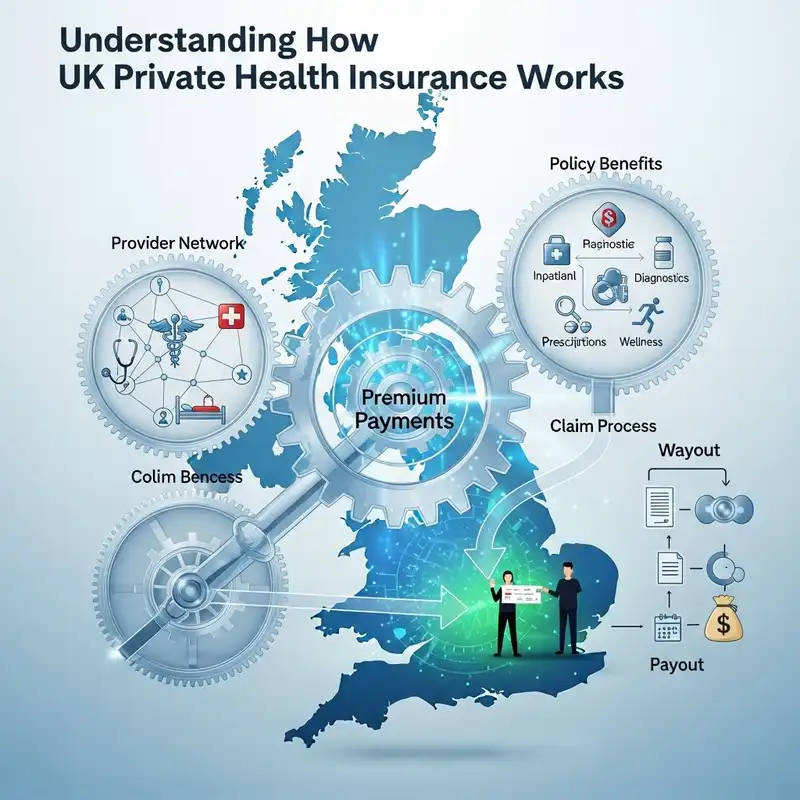
Yes, you can pay monthly for private healthcare in the UK. For most people, the most common way to do this is by taking out private medical insurance (PMI) and paying the premium via a monthly Direct Debit. Alternatively, if you choose to fund a specific operation or treatment yourself, many private hospitals and specialist medical finance companies offer monthly payment plans or medical loans.
Navigating the different ways to fund private healthcare can feel complex. WeCovr is an FCA-regulated broking firm, and a specialist at WeCovr or one of its broker partners can help you compare policies from a range of UK insurers to find an appropriate level of cover for your circumstances.
When you decide to use the private healthcare sector in the UK, you generally have two main routes to manage the costs on a monthly basis: paying for an ongoing insurance policy or paying off a specific medical bill over time.
Understanding the distinction between these two paths is essential for making an informed financial decision.
1. Monthly Private Medical Insurance (PMI) premiums
Private medical insurance is designed to cover the costs of private medical treatment for eligible conditions. Instead of paying a large, unexpected hospital bill if you fall ill, you pay a regular monthly premium to an insurer. If you develop a covered condition, the insurer typically pays the hospital and consultants directly, subject to your policy terms, limits, and any excess you have agreed to pay.
It is important to understand how these policies work. Standard UK PMI is designed to cover acute conditions—diseases, illnesses, or injuries that respond quickly to treatment and aim to return you to your previous state of health—that start after your policy begins. Pre-existing conditions are usually excluded (how they are excluded depends on the underwriting type you choose), and the ongoing management of chronic, incurable conditions (such as diabetes or asthma) is generally not covered.
If you are wondering how much private health insurance costs, it is helpful to know that premiums are calculated based on personal factors and the level of cover you select.
| Factor | How it affects your monthly premium |
|---|---|
| Age | Premiums typically increase as you get older, reflecting a higher statistical likelihood of needing medical care. |
| Location | Living in areas with higher private medical costs (such as Central London) usually results in higher premiums. |
| Excess | Agreeing to pay a higher voluntary excess (the amount you pay towards a claim) can often lower your monthly premium. |
| Cover Level | Comprehensive policies covering outpatient consultations, therapies, and mental health support will cost more monthly than basic inpatient-only plans. |
You can explore these options at no extra cost to you. WeCovr and its broker partners are usually paid a commission by the insurer when a policy is arranged. Most brokers on WeCovr's panel do not charge a separate fee for health insurance, but please confirm this with your broker before you buy.
2. Self-pay hospital payment plans and medical loans
If you do not have health insurance, or if you need treatment for a pre-existing condition that an insurance policy will not cover, you can choose to "self-pay". This means you pay the private hospital directly for your care.
Because operations and diagnostics can be expensive—for example, you might want to check the private MRI scan costs before proceeding—many private hospital groups offer monthly payment options.
- Hospital Payment Plans: Many major UK private hospital groups partner with finance providers to offer monthly payment plans. These often include 0% interest options if the cost is repaid over a short period (typically 10 to 12 months). Longer repayment terms are usually available but may incur interest.
- Medical Loans: You can also apply for a standard personal loan from a bank or a specialist medical finance company to cover your treatment, repaying the borrowed amount plus interest in monthly instalments.
Note: All credit and finance options are subject to status, affordability checks, and the lender's terms and conditions. Missing payments can affect your credit score.
3. Health cash plans
Another way to pay monthly towards your healthcare is through a health cash plan. While different from comprehensive medical insurance, cash plans allow you to claim back the costs of routine healthcare, such as dental check-ups, eye tests, and physiotherapy, up to an annual limit.
If you are unsure which route is a strong fit for your needs, you can read more about health cash plans vs private medical insurance to understand the differences in cover and cost.
Important considerations when paying monthly
When setting up a monthly payment for private healthcare, there are several practical and regulatory points to keep in mind:
- Annual Contracts: Most private medical insurance policies are annual contracts. Even if you pay monthly, you are usually committing to a year of cover. If you cancel mid-year, you may still owe the balance of the annual premium, depending on the insurer's terms and whether you have made a claim.
- Premium Reviews: Health insurance premiums are reviewable annually. Your monthly cost may rise at renewal due to your age, medical inflation, or claims you have made during the year. Cover ends if premiums stop.
- Medical Emergencies: Remember, private medical insurance is not designed for medical emergencies. In any medical emergency, always call 999 or go to A&E. For urgent but non-life-threatening problems, contact NHS 111. Insurer contact comes afterwards to notify them of a claim or to pre-authorise follow-up private treatment.
Employer-funded healthcare and tax
Many people access private healthcare through their employer. Some employers pay the premium in full, while others might subsidise it, leaving the employee to pay a smaller monthly contribution via payroll deduction.
Disclaimer: This is general guidance only and does not constitute formal tax or financial advice. Tax treatment depends on individual circumstances, policy terms, and HMRC interpretation, which cannot be guaranteed in advance. Whenever applicable, businesses and individuals should always consult a qualified accountant or tax adviser before arranging such policies.
If your employer provides private medical insurance, it is typically treated as a "benefit in kind" by HMRC, meaning you may have to pay income tax on the value of the premium.
Added value and multi-policy benefits
When you arrange private medical insurance, many insurers include access to digital GP services, mental health support lines, and wellbeing apps as part of your monthly premium.
Additionally, eligible customers who arrange their cover through WeCovr can receive complimentary access to the AI calorie tracking app CalorieHero. WeCovr may also offer discounts on other types of cover to eligible customers who take out PMI or Life insurance, subject to terms and conditions.
Get a quote through WeCovr, and a specialist from WeCovr or one of its broker partners will help you compare policies from a range of UK insurers.
Frequently Asked Questions
Does paying monthly for health insurance cost more than paying annually?
Can I get private health insurance if I already have a medical condition?
Can I cancel my monthly health insurance policy at any time?
Do monthly payment plans for self-pay treatment require a credit check?
Get a quote through WeCovr, and a specialist from WeCovr or one of its broker partners will help you compare policies from a range of UK insurers.
Sources
- Private Healthcare Information Network (PHIN) — Private market update, 2024
- Financial Conduct Authority (FCA) — Consumer Credit sourcebook (CONC), 2025
Important Information and Risks
No advice: This article is for general information only. It is not financial, legal, insurance, or tax advice, and it is not a personal recommendation. WeCovr does not assess your individual circumstances or recommend a specific product through this article.
Policy exclusions and underwriting: Insurance policies, including life insurance, private medical insurance, critical illness cover, and income protection, are subject to insurer underwriting, eligibility, acceptance criteria, terms, conditions, limits, and exclusions. Pre-existing medical conditions may be excluded, restricted, or accepted on special terms unless an insurer confirms otherwise in writing.
Tax treatment: References to tax treatment, HMRC rules, or business reliefs are based on current UK legislation and guidance, which can change. Tax treatment depends on your personal or business circumstances and may differ from examples in this article.
Before you buy: Always read the Insurance Product Information Document (IPID), policy summary, and full policy terms before buying, renewing, changing, or keeping cover. If you are unsure whether a policy is suitable for you, speak to an insurance adviser.
Start with your Protection Score, then decide whether private health cover is the right fit
Check where health access sits in your overall protection picture before deciding whether to compare private health cover.
Spot whether NHS access risk is the real issue
See if PMI is the gap to fix first
Get health insurance help only if it makes sense for you
Get your score
Start with your protection score
Check your current position first, then get health insurance help if you need it.
Check your current resilience
Score your income, health access and family protection position in a few minutes.
See where private cover helps
Understand whether faster diagnosis and treatment is a priority gap.
Continue to tailored PMI help
If health access is the issue, continue to tailored PMI help.
What you get
A quick view of your current protection position
A clearer idea of where the biggest gaps may be
A direct route to tailored help if you want it