TL;DR
Discover how vaccination coverage maps clarify NHS-funded immunisations and where UK private medical insurance fills gaps with WeCovr, a trusted broker with over 1,000,000 policies issued.
Key takeaways
- The NHS provides a comprehensive routine vaccination schedule for children and adults.
- Private medical insurance UK may cover non-routine vaccines like RSV and MMRV.
- Standard PMI covers acute conditions and does not cover chronic or pre-existing illnesses.
- Health cash plans or specific outpatient add-ons are often required for private immunisations.
- WeCovr helps you compare suitable policies to bridge public and private healthcare gaps.
Navigating the UK healthcare landscape can be complex, but vaccination coverage maps clarify NHS-funded immunisations and where private medical insurance UK steps in. At WeCovr, an experienced broker with over 1,000,000 policies issued, we help families and individuals understand these gaps and find suitable cover for their evolving needs.
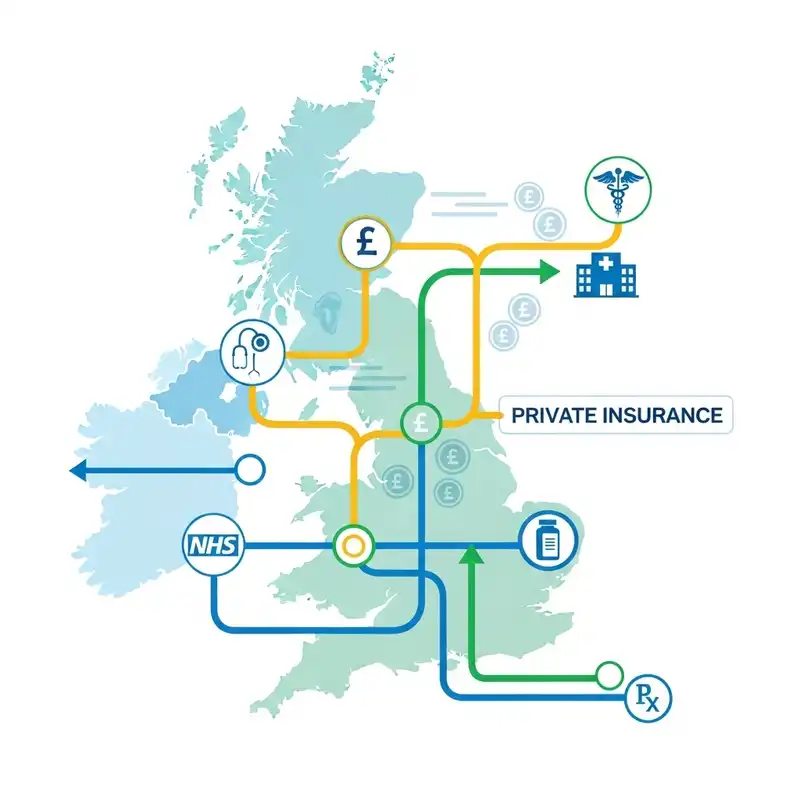
Interactive guides showing which vaccines (RSV, MMRV, MenB) are publicly funded and where PMI fills gaps
Understanding healthcare entitlements in the UK requires a clear view of where public funding ends and where private healthcare begins. Vaccination coverage maps are highly effective visual guides that clarify the distribution of publicly funded NHS immunisations against private-pay alternatives.
These maps and matrices allow UK residents to quickly identify their eligibility for essential preventative care. The Joint Committee on Vaccination and Immunisation (JCVI) determines the NHS routine schedule based on nationwide cost-effectiveness and public health priorities. However, this rigorous criteria means that several highly effective vaccines—such as those for RSV, combined MMRV, and MenB for specific age brackets—fall outside routine NHS provision.
This is where the UK private healthcare sector, often accessed via private medical insurance (PMI) add-ons or health cash plans, fills the gap. By mapping out these provisions, families can make informed decisions about their preventative health strategies, ensuring they secure comprehensive protection against infectious diseases.
The UK Healthcare Landscape: NHS Foundation vs Private Expansion
The UK benefits from a robust public health system. The NHS routine immunisation programme is widely regarded as one of the more comprehensive in the world, successfully suppressing diseases like polio, diphtheria, and measles.
However, because the NHS must allocate resources efficiently across a population of nearly 70 million people, it operates on targeted vulnerability rather than universal access for every available vaccine.
What the NHS Routine Immunisation Programme Covers
The NHS provides a heavily structured, age-based schedule. Below is a simplified overview of key routine childhood and adult vaccines available with no separate broker fee on the NHS:
| Age Group | Key NHS Vaccinations Provided | Target Diseases Protected Against |
|---|---|---|
| 8, 12 & 16 Weeks | 6-in-1 vaccine, Rotavirus, MenB | Diphtheria, Hepatitis B, Hib, Polio, Tetanus, Whooping Cough, Meningococcal B |
| 1 Year | MMR, MenB booster, Hib/MenC | Measles, Mumps, Rubella, Meningitis B & C |
| Primary School | Flu vaccine (annual) | Influenza strains |
| Secondary School | HPV, 3-in-1 teenage booster | Human Papillomavirus (cervical/oral cancers), Tetanus, Diphtheria, Polio |
| Adults (65+) | Pneumococcal, Flu, RSV, Shingles | Pneumonia, Influenza, Respiratory Syncytial Virus, Shingles |
While this schedule is extensive, gaps naturally emerge. For instance, the MenB vaccine is only offered to infants born after a certain date. Older children who missed this rollout are not eligible for NHS catch-up programmes. Similarly, the chickenpox vaccine is only available on the NHS for close contacts of severely immunosuppressed individuals, not for the general public.
Where Private Medical Health Insurance UK Fills the Gap
When individuals fall outside the JCVI eligibility criteria, they must seek vaccines through private GPs or specialist travel clinics. Funding these private-pay immunisations is a primary reason many UK families explore private health cover.
It is vital to understand a fundamental rule of the market: standard UK PMI does not cover chronic or pre-existing conditions; PMI is designed for acute conditions arising after the policy start date.
Furthermore, a basic, core private medical insurance policy generally focuses on inpatient surgeries, cancer care, and specialist consultations. Core policies do not automatically cover routine primary care or vaccinations. To cover vaccines, you typically need specific policy structures:
- Private GP Add-ons: Many comprehensive PMI policies offer an optional Private GP benefit. This covers the cost of a private GP consultation, though you may still need to pay for the vaccine serum itself.
- Health Cash Plans: These are distinct from traditional PMI. Cash plans allow you to may be able to claim back the costs of everyday healthcare expenses, including private prescriptions, dental care, optical care, and often, health screening and inoculations.
- Corporate Healthcare Trusts: High-level employer-funded schemes sometimes include an allowance for preventative healthcare, covering flu jabs and travel vaccines.
Spotlight on Key Private-Pay Immunisations
Let us explore the specific vaccines frequently mapped as "private-pay" for the majority of the UK population, and why patients seek them out.
1. RSV (Respiratory Syncytial Virus)
RSV is a common respiratory virus that usually causes mild, cold-like symptoms but can lead to severe bronchiolitis and pneumonia in infants and older adults. Recently, the NHS began rolling out RSV vaccines, but strict eligibility applies (primarily pregnant women and adults aged 75–79).
- The Private Gap: Adults under 75 who wish to protect themselves, or parents seeking protection for infants outside the specific rollout windows, frequently turn to private clinics. Private GP policies can facilitate faster access, where available, to these consultations.
2. Chickenpox (Varicella) and MMRV
In many countries, the chickenpox vaccine is part of the routine childhood schedule. In the UK, the NHS does not offer it routinely because doing so could increase the risk of shingles in older adults (who naturally boost their immunity by encountering circulating chickenpox).
- The Private Gap: Many parents prefer their children to avoid the discomfort and potential scarring of chickenpox. Privately, parents can access the standalone Varicella vaccine or the MMRV vaccine—a combined jab covering Measles, Mumps, Rubella, and Varicella. Health cash plans are often used to offset the £150–£200 cost of this private course.
3. MenB (Meningococcal Group B)
Meningitis B is a rare but devastating bacterial infection. The NHS introduced the MenB vaccine for infants in 2015.
- The Private Gap: Children born before 2015 are not eligible for an NHS catch-up. Parents of older children and teenagers frequently seek the Bexsero vaccine privately. Given the cost (often exceeding £200 for a two-dose course), leveraging a health cash plan or an outpatient allowance is a common financial strategy.
4. Travel Vaccinations
The NHS provides a limited number of travel vaccines for free (such as Typhoid, Hepatitis A, and Cholera) because they represent a significant public health risk if brought back to the UK.
- The Private Gap: Vaccines for Yellow Fever, Rabies, Japanese Encephalitis, and Tick-borne Encephalitis are strictly private-pay. A comprehensive travel insurance policy alongside a robust health cash plan is the most suitable option for frequent travellers needing regular inoculations.
Understanding Policy Underwriting and Claims for Vaccinations
If you are considering using private medical insurance in the UK to manage the costs of private healthcare and immunisations, understanding how policies are underwritten is essential.
Standard PMI policies use either Moratorium Underwriting or Full Medical Underwriting (FMU). Because standard UK PMI does not cover chronic or pre-existing conditions, any illness you have experienced before taking out the policy will generally be excluded from cover. PMI is exclusively for treating acute conditions that develop after your policy has commenced.
However, because vaccinations are preventative rather than a treatment for an active condition, they are not typically subject to standard medical underwriting exclusions. The deciding factor for a vaccination claim is simply whether your policy features a specific preventative care, private GP, or cash benefit allowance.
Typical Claims Process for Private Vaccines
- Check Your Benefits: Confirm if your policy includes a Health Cash Plan component or a preventative health allowance.
- Book the Appointment: Schedule a visit with a recognised private GP or a registered travel clinic.
- Pay Upfront: For vaccinations, you will typically pay the clinic directly at the point of service.
- Submit the Receipt: Upload your itemised invoice to your insurer's portal to claim cash back up to your annual policy limit.
Common Client Mistakes and Insider Adviser Tips
As an FCA-regulated broking firm — and, where appropriate, our broker partners — WeCovr regularly reviews how clients utilise their health cover. We frequently see misunderstandings regarding preventative care. Here are our top insider tips to maximise your coverage:
- Do not assume core hospital cover pays for jabs: Core PMI covers acute inpatient care (like surgery). You should consider whether you may need to specifically request a primary care add-on or a separate cash plan if you want help funding routine health costs.
- Understand prescription costs: Even if your Private GP consultation may be covered by your PMI, private prescriptions (the actual cost of the vaccine vial) are usually paid out-of-pocket unless you have a cash plan.
- Keep an eye on annual limits: Health cash plans have strict annual optical, dental, and inoculation limits (e.g., £100 per year). Check that the cost of an expensive vaccine like MenB doesn't exceed your expected level of reimbursement.
- Use partner networks: Some insurers partner with specific pharmacy chains or private clinic networks to offer discounted vaccination rates to policyholders. check your provider's app before booking.
Practical Scenarios: Navigating Public vs Private Immunisation
To illustrate how coverage maps and private health cover interact in the real world, consider these practical scenarios:
Scenario 1: The Proactive Parents
James and Sarah have a four-year-old daughter. She received all her NHS routine vaccinations, but the parents wish to immunise her against Chickenpox (Varicella) before she starts primary school. Because the NHS does not fund this, they book an appointment with a private paediatric clinic. The two-dose course costs £180. Fortunately, Sarah’s employer provides a corporate Health Cash Plan, allowing her to may be able to claim back £150 of the cost, making the private-pay gap highly manageable.
Scenario 2: The Older Traveller
David, 68, is planning a prolonged trip to Southeast Asia. While his NHS GP provides his standard Hepatitis A and Typhoid boosters for free, he requires Japanese Encephalitis and Rabies vaccines, which cost nearly £300 privately. David has a comprehensive private medical insurance policy with WeCovr that includes an extensive outpatient and wellness benefit. He uses his private GP app to arrange the prescriptions and uses his wellness allowance to cover the costs, saving him hundreds of pounds while guaranteeing his safety abroad.
Scenario 3: The Health-Conscious Executive
Elena, 45, is highly focused on preventative health. She wants the annual quadrivalent flu vaccine but is not eligible for a free NHS jab. Her tailored private medical insurance UK policy includes a dedicated annual health screen and vaccination allowance. She uses this to fund her private flu jab at a local pharmacy, entirely bypassing NHS waiting rooms and ensuring her immunity is bolstered before the winter season.
Employer PMI Schemes, Corporate Health, and Tax Implications
Many UK businesses now offer health insurance as a core employee benefit to attract and retain top talent. Corporate schemes are often more comprehensive than individual policies and frequently include provisions for preventative health, such as on-site flu vaccination programmes, discounted private GP access, and extensive cash plan benefits.
Employers understand that funding a £15 flu jab or a private RSV vaccine can prevent weeks of costly employee absenteeism during the winter months.
Disclaimer: This is general guidance only and does not constitute formal tax or financial advice. Tax treatment depends on individual circumstances, policy terms, and HMRC interpretation, which cannot be guaranteed in advance. Whenever applicable, businesses and individuals should typically consult a qualified accountant or tax adviser before arranging such policies.
How to Choose a Suitable Policy with WeCovr
Mapping out your family's vaccination needs is the first step toward comprehensive health security. The second step is securing the appropriate cover to fund it.
Finding a suitable option requires navigating complex policy documents, understanding the nuances of outpatient limits, and knowing exactly which providers offer the most robust preventative care benefits. As an experienced broker, WeCovr simplifies this entire process at no separate broker fee where applicable to you.
When you arrange your private medical insurance through WeCovr, you benefit from:
- Expert Market Comparison: We compare the UK insurer panel to find a strong fit for your specific needs, ensuring you don't pay for unnecessary add-ons while securing the preventative cover you desire.
- Complimentary Digital Health Tools: WeCovr clients enjoy complimentary access to our highly-rated AI calorie tracking app, CalorieHero, helping you manage your daily nutrition alongside your healthcare.
- Multi-Policy Discounts: Taking out private medical insurance alongside life insurance with WeCovr can attract significant multi-policy discounts, providing holistic protection for your family.
- Exceptional Service: We pride ourselves on high customer satisfaction ratings, guiding you through underwriting terms clearly and transparently.
Whether you are looking to bridge the gap for paediatric MMRV vaccines, secure private RSV cover, or simply gain faster access to a private GP, WeCovr provides the clarity and expertise you may need.
Frequently Asked Questions (FAQs)
Does standard UK private medical insurance cover routine vaccinations?
How much do private vaccines like MenB or Chickenpox cost in the UK?
What is the difference between an acute and a pre-existing condition?
Will my private health cover pay for travel vaccines?
Can I use a private GP on my PMI to get the RSV vaccine?
Sources
- NHS England
- Office for National Statistics (ONS)
- Financial Conduct Authority (FCA)
- National Institute for Health and Care Excellence (NICE)
- UK Health Security Agency (UKHSA)
- Joint Committee on Vaccination and Immunisation (JCVI)
Important Information and Risks
No advice: This article is for general information only. It is not financial, legal, insurance, or tax advice, and it is not a personal recommendation. WeCovr does not assess your individual circumstances or recommend a specific product through this article.
Policy exclusions and underwriting: Insurance policies, including life insurance, private medical insurance, critical illness cover, and income protection, are subject to insurer underwriting, eligibility, acceptance criteria, terms, conditions, limits, and exclusions. Pre-existing medical conditions may be excluded, restricted, or accepted on special terms unless an insurer confirms otherwise in writing.
Tax treatment: References to tax treatment, HMRC rules, or business reliefs are based on current UK legislation and guidance, which can change. Tax treatment depends on your personal or business circumstances and may differ from examples in this article.
Before you buy: Always read the Insurance Product Information Document (IPID), policy summary, and full policy terms before buying, renewing, changing, or keeping cover. If you are unsure whether a policy is suitable for you, speak to an insurance adviser.
Start with your Protection Score, then decide whether private health cover is the right fit
Check where health access sits in your overall protection picture before deciding whether to compare private health cover.
Spot whether NHS access risk is the real issue
See if PMI is the gap to fix first
Get health insurance help only if it makes sense for you
Get your score
Start with your protection score
Check your current position first, then get health insurance help if you need it.
Check your current resilience
Score your income, health access and family protection position in a few minutes.
See where private cover helps
Understand whether faster diagnosis and treatment is a priority gap.
Continue to tailored PMI help
If health access is the issue, continue to tailored PMI help.
What you get
A quick view of your current protection position
A clearer idea of where the biggest gaps may be
A direct route to tailored help if you want it